Whether a Vizsla Is Reactive on Leash
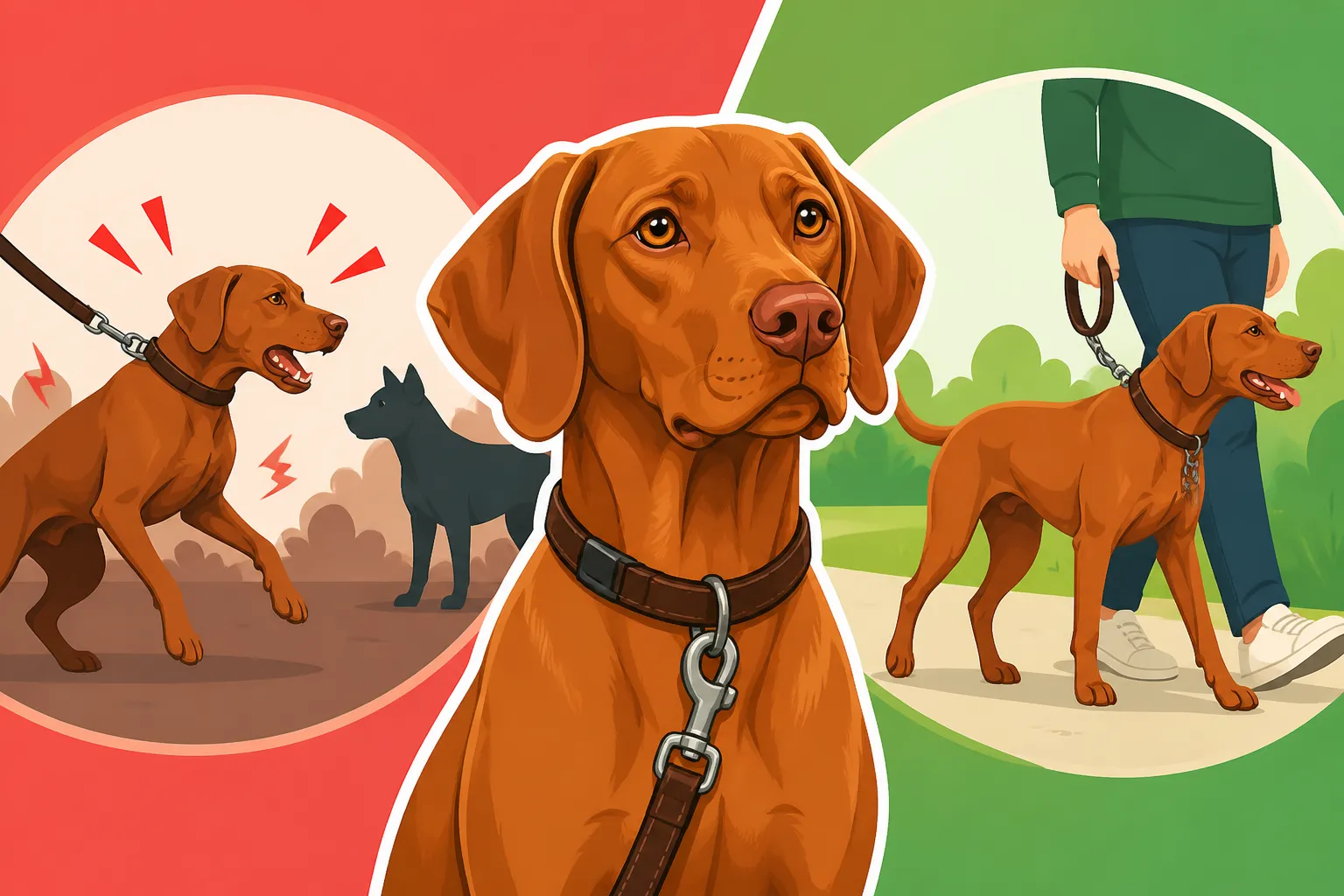
It's incredibly frustrating, isn't it? You step out the door with your beloved Vizsla, ready for a peaceful walk, only for them to turn into a lunging, barking, leash-tugging maniac at the sight of another dog, a jogger, or even a leaf blowing just the wrong way. It feels embarrassing, exhausting, and frankly, a bit heartbreaking when all you want is to enjoy time with your best friend. This guide is here to help you understand why your sensitive, high-energy Vizsla might be reacting this way on leash and, more importantly, what practical steps you can take to manage and improve their behavior, bringing peace back to your walks.
Understanding Why Your Vizsla Reacts on Leash
Vizslas are magnificent dogs, bred for centuries to be keen hunting companions, intelligent, agile, and deeply bonded with their people. However, these very traits, when misunderstood or misdirected, can sometimes manifest as what we call "leash reactivity." It’s not usually aggression in the classic sense, but rather a complex mix of genetics, environment, and learned behaviors.
The Vizsla's High Drive and Energy
Let's be honest, a Vizsla is not a couch potato breed. They were meticulously developed for the field, requiring immense stamina, focus, and a quick response time. This means they come hardwired with a high prey drive, an insatiable curiosity, and a need for significant physical and mental exercise. When they spot something interesting – be it a squirrel, another dog, or a person moving quickly – their instinct is to engage, chase, or investigate. On a leash, that natural impulse is thwarted, leading to immense frustration.
Imagine a coiled spring. That's often what a Vizsla feels like on a walk. If they haven't had sufficient outlets for their energy, that spring is wound even tighter. A quick 15-minute stroll around the block isn't going to cut it for a Vizsla; they need to run, to explore, to work. Without that essential energy release, every walk becomes an overflowing pressure cooker, and any minor trigger can cause an explosive reaction. It’s crucial to remember that The Two Hours a Vizsla Needs Before It Will Settle is not just a suggestion, but a foundational requirement for a calm, well-adjusted Vizsla.
This pent-up energy, combined with their sharp senses, means they often perceive things long before you do. That dog across the street? Your Vizsla saw it three blocks ago. That jogger approaching? They felt the vibrations in the ground. Their intense focus and readiness to act, when restricted by a leash, can result in barking, lunging, and pulling as a desperate attempt to get to whatever has captured their attention, or to release that built-up tension.
Sensitivity and Soft Temperament
Vizslas are known for their incredibly sensitive nature. They thrive on positive reinforcement and crumble under harsh corrections. This "softness" extends to their perception of the world around them. While some dogs might shrug off a loud truck or a child's sudden scream, a Vizsla might interpret these as significant threats or overwhelming stimuli. Their reactivity can often stem from feeling vulnerable or overwhelmed in an environment they perceive as unpredictable or scary.
It's a common misconception that leash reactivity always equals aggression. For many Vizslas, it's a fear-based response. They might bark and lunge to create distance from something that makes them uncomfortable, whether it's an unfamiliar person, a dog with a different play style, or an object that looks odd to them. Think about it from their perspective: they're tethered to you, unable to flee a perceived threat, so their only option is often to make the "threat" go away with noise and display. This is particularly true for The Soft Vizsla That Shuts Down When You Raise Your Voice in other contexts; a dog that sensitive might not handle the perceived pressure of a busy street well.
This sensitivity also means they are deeply attuned to your emotions. If you feel anxious or tense when you see a potential trigger approaching, your Vizsla will pick up on that immediately. Your tension can heighten their own anxiety, creating a feedback loop where your worry inadvertently fuels their reactive response. Learning to stay calm and project confidence, even when your heart is pounding, is a huge step in helping your Vizsla feel safer and less reactive.
Lack of Early Socialization or Training Gaps
A well-socialized puppy learns that the world is a generally safe and interesting place. If a Vizsla puppy misses out on crucial positive exposures to different people, dogs, sights, and sounds during their critical development period, they might grow up to be more cautious or fearful of new experiences. This isn't just about meeting other dogs; it's about experiencing the rumble of a bus, the sound of children playing, the sight of someone on a skateboard, all in a controlled and positive way.
Beyond socialization, gaps in foundational leash training can contribute significantly to reactivity. Many owners unintentionally reinforce pulling or reactive behaviors. For example, if your Vizsla pulls towards another dog and eventually gets to greet it (even briefly), they've just learned that pulling works. Or, if they bark and lunge, and you quickly pull them away from the trigger, they've learned that their outburst effectively makes the "scary thing" disappear.
A lack of consistent, clear communication from you about appropriate leash manners can leave your Vizsla feeling confused and uncertain. They don't understand the "rules" of walking in a human world and often resort to instinctual behaviors when overstimulated or unsure. This doesn't mean they're untrainable; it simply means there's groundwork to be laid, or revisited, to help them understand what you expect from them in various situations.
Common Triggers and What Leash Reactivity Looks Like
Pinpointing what causes your Vizsla to react is the first step toward managing it. Reactivity isn't a blanket behavior; it's specific to certain stimuli and situations. Observing your dog closely will give you invaluable clues.
Identifying What Sets Your Vizsla Off
While every Vizsla is an individual, certain triggers are common for reactive dogs. Other dogs are often at the top of the list. It could be specific breeds, dogs of a certain size, or simply any dog they see. Sometimes it's not the dog itself, but the way that dog is behaving – perhaps another dog is pulling hard or barking, escalating your Vizsla's response. Runners, cyclists, and skateboarders are also frequent culprits, their fast, unpredictable movements mimicking prey and triggering that strong Vizsla chase drive.
People can also be triggers, especially children, men with hats, or anyone moving quickly or making sudden noises. Wildlife, like squirrels, rabbits, or even birds, can send a Vizsla into a frenzy, given their strong hunting instincts. Even environmental factors like loud traffic, construction noises, or crowded areas can be overwhelming. Keeping a small journal on your phone or in a notebook can be incredibly helpful. Note down the date, time, location, what triggered the reaction, what the reaction looked like, and how intense it was. Over time, you'll start to see patterns. Was it always the red truck? Only dogs on flexi-leads? The more detailed you are, the better you can predict and prepare.
It’s also important to consider if your Vizsla is simply over-stimulated. A long walk in a quiet field might be fine, but the same duration in a bustling downtown area could be too much. Their sensitive nature means they absorb a lot of information from their surroundings, and sometimes, that input just becomes too much to process, leading to a meltdown. Understanding these nuances is key to effective management.
Distinguishing Between Reactivity and Aggression
It’s easy to feel panicked when your Vizsla is barking and lunging on leash, leading you to believe they are an "aggressive" dog. However, it's vital to differentiate between true aggression and reactivity, as the approach to each is quite different. Reactivity, especially in sensitive breeds like Vizslas, is frequently rooted in fear, frustration, or over-excitement rather than an intent to harm.
When a Vizsla is reactive out of fear, their body language might include a tucked tail, pulled-back ears, dilated pupils, lip-licking, yawning (in a stressful context), or trying to shrink away, even while barking loudly or snapping at the air. They are trying to make the scary thing go away. If they're reactive from frustration, perhaps because they desperately want to greet another dog but can't, you might see a stiff body, an intense stare, excited vocalizations, and frantic pulling towards the trigger. It’s an "I want that thing!" reaction, not an "I want to hurt that thing!" reaction.
True aggression, which is less common in Vizslas, typically involves deliberate attempts to bite, growling with intent, prolonged intense staring with a hard mouth, or direct charging with stiff body language. While a reactive Vizsla can bite if pushed too far or if their fear turns into self-defense, their initial motivation is usually not to inflict harm. Recognizing these subtle differences in body language and motivation is crucial for choosing the right training path. Many Vizslas are also "Velcro dogs" by nature, as in Why They Call It a Velcro Vizsla, and sometimes their reactivity is a desperate plea for reassurance or a perceived need to protect their beloved human from a perceived threat.
| Reactive Behavior | Potential Motivation | Common Triggers | Immediate Management |
|---|---|---|---|
| Lunging/Straining | Frustration, Desire to greet, High prey drive | Other dogs, Joggers, Squirrels, Cyclists | Create distance, Redirection, High-value treat lure |
| Barking/Growling | Fear, Anxiety, Territoriality, Over-excitement | Unfamiliar people, Strange dogs, Loud noises, Novel objects | U-turn, Shielding, Confident leash handling, Leave it |
| Whining/Frantic movements | Over-excitement, Impatience, Need for attention | Sight of park entrance, Approaching playtime, Familiar friends | Calm voice, Waiting for stillness, Reinforce calm |
| Freezing/Stiffening | Uncertainty, Fear, Intense focus on trigger | Sudden appearance of trigger, Unpredictable situation | Observe body language, Move away slowly, Offer comfort |
Strategies for Managing and Reducing Leash Reactivity
Addressing leash reactivity requires a multi-pronged approach that combines immediate management with long-term behavioral modification. It’s not about quick fixes but consistent effort and patience.
Management Techniques for Immediate Relief
The first step in dealing with reactivity is to manage the environment to prevent your Vizsla from practicing the reactive behavior. Every time your Vizsla has a reactive outburst, the behavior gets stronger. So, the goal is to avoid triggers as much as possible initially. This might mean changing your walking routes to quieter areas, walking at different times of day, or avoiding dog parks entirely for a while. If you know a certain street often has other dogs, take a different path. If you see a trigger approaching, do a quick U-turn, duck behind a car, or step off the path to create distance.
Equipment can also make a significant difference. A standard flat collar often isn't enough to control a lunging Vizsla and can put uncomfortable pressure on their throat. Consider a front-clip harness, which redirects their pulling energy to their side, making it harder for them to lunge forward. Head halters are another excellent tool, providing gentle control over their head, which in turn controls their body. When looking for these, explore options on Amazon for a wide variety to find what fits your Vizsla best. Remember, these are tools to help manage, not a solution for the underlying behavior. The Exercise a Vizsla Needs Every Day is also critical here; a well-exercised Vizsla is often a calmer Vizsla.
High-value treats are your best friend. These are treats your Vizsla adores – think cooked chicken, cheese, or hot dogs – not their regular kibble. Use these to redirect their attention before they react. The moment you spot a potential trigger, start a steady stream of these amazing treats into your Vizsla's mouth, praising them for staying calm and focused on you. The goal is to change their emotional association with the trigger from negative (fear/frustration) to positive (treats!).
Positive Reinforcement and Desensitization Training
Once you have management in place, you can start actively working on changing your Vizsla's emotional response to triggers using positive reinforcement, desensitization, and counter-conditioning. The core idea is to gradually expose your Vizsla to triggers at a distance where they don't react, and then reward them for calm behavior. This is called their "threshold."
Start by finding an ideal distance from the trigger where your Vizsla notices it but remains calm – no barking, no lunging, just a glance. This might be across a park or even across the street. As soon as they look at the trigger calmly, mark that moment (with a clicker or a verbal "yes!") and reward them generously with a high-value treat. Repeat this over and over. The goal is to teach them: "Other dog/person/bike = tasty treats from you!" Slowly, very slowly, you can decrease the distance as your Vizsla consistently stays below their threshold. This kind of systematic training helps improve your Vizsla's ability to focus and learn new cues quickly, as highlighted in How Fast a Vizsla Learns a New Cue.
Beyond specific trigger work, strengthening your general obedience cues like "look at me," "sit," "stay," and a reliable recall (Building a Recall on a Vizsla That Ranges) is crucial. These give you tools to redirect your Vizsla's attention and maintain control in challenging situations. Online training platforms like BAXTER & Bella offer structured programs that can guide you through these steps with positive reinforcement methods, providing valuable resources for every stage of your training journey. Remember to keep sessions short and positive; Vizslas are smart but can get bored if drilled excessively.
Seeking Professional Guidance
While many owners can make significant progress on their own, there are times when professional help is invaluable. If your Vizsla's reactivity is severe, you feel overwhelmed, or you're not seeing improvement with your current methods, don't hesitate to reach out to a certified professional dog trainer or a veterinary behaviorist. These experts can assess your Vizsla's specific situation, identify underlying causes, and develop a tailored training plan.
A professional might notice nuances in your Vizsla's body language or your handling that you've missed, offering insights and adjustments that can make a huge difference. They can also help rule out any underlying medical conditions, like pain or thyroid issues, that could be contributing to the reactivity. Sometimes, physical discomfort can make a dog more irritable and prone to reactive outbursts. What Vizslas Are Most Often Treated For can give you an idea of common health concerns that could impact behavior.
Working with a professional, especially one who uses positive, force-free methods, ensures you're on the right track and not inadvertently causing more stress or fear for your sensitive Vizsla. They can guide you through advanced counter-conditioning techniques and provide support, making the journey less stressful for both you and your dog. Sometimes joining a structured group, like those mentioned in Whether a Vizsla Needs a Training Group, can also provide expert guidance and a safe environment for desensitization.
Long-Term Outlook and Living with a Reactive Vizsla
Managing leash reactivity is often a journey, not a destination. It requires ongoing commitment, understanding, and a willingness to adapt.
Consistency is Key for Vizslas
One of the most important takeaways when dealing with a reactive Vizsla is that consistency is absolutely paramount. There are no shortcuts or magic pills. Every walk, every interaction, is an opportunity to either reinforce positive behaviors or inadvertently strengthen reactive ones. If you have one great walk using all your techniques, but then have a week where you're busy and skip the proactive training, you might find yourself back at square one.
Vizslas thrive on routine and clear expectations. They need to know what to expect from you and from their environment. If your responses to triggers are inconsistent, they won't learn effectively. This means everyone in the household needs to be on the same page with training protocols and management strategies. It might feel tedious at times, but those small, consistent efforts build up over weeks and months into significant improvements. Celebrate every little win – a shorter reaction, quicker recovery, or even just noticing a trigger before your Vizsla does – as these are signs of progress.
Remember, you're helping your Vizsla learn coping mechanisms and trust your guidance. This trust is built on your consistent support and predictability. This breed, known for its intense bond, truly relies on you to be their advocate and guide in a sometimes overwhelming world.
Enhancing Your Vizsla's Overall Well-being
Leash reactivity isn't just about what happens on the walk; it's often a symptom of a dog whose overall needs might not be fully met. A happy, well-adjusted Vizsla is generally less prone to stress and reactivity. This means focusing on their holistic well-being. Ensuring they get ample physical exercise is non-negotiable. Two hours a day of vigorous activity, whether it's running, hiking, or field work, is often the minimum. An under-exercised Vizsla is a bored, frustrated Vizsla, and that pent-up energy will find an outlet, often on leash.
But physical exercise alone isn't enough for these intelligent dogs. They also need significant mental stimulation. Activities like Scent Games Tire a Vizsla or puzzle toys can exhaust them mentally, fulfilling their natural drive to hunt and problem-solve. Regular training sessions, even short ones, keep their minds engaged. Think about it: Whether a Vizsla Needs Mental Work Too is just as important as physical exertion. A dog that is mentally tired is often much calmer on walks.
A stable home environment, a predictable routine, and plenty of positive interaction with their family also contribute to a Vizsla's sense of security. Reducing overall stress in their lives can lower their baseline anxiety, making them less prone to reactive outbursts when confronted with triggers on walks. This might involve creating a safe, quiet space in the home, ensuring they get enough quality sleep, and generally fostering a calm atmosphere.
Embracing Your Vizsla's Unique Personality
It's important to set realistic expectations for your Vizsla. While significant improvement is often possible, some Vizslas, due to their inherent sensitivity, high drive, or past experiences, might always retain a certain level of awareness or caution towards triggers. The goal isn't always to achieve a perfectly oblivious dog, but rather a dog who can calmly cope with their environment and recover quickly if they do react.
Accepting that your Vizsla might always be a bit more "aware" of their surroundings than, say, a laid-back Retriever, is part of loving and understanding the breed. Your Vizsla’s keen senses and high intelligence are part of what makes them so special, and these traits also contribute to their reactivity. It’s about learning to manage those traits effectively and advocating for your dog in situations where they might struggle.
This might mean always choosing quieter walking paths, maintaining a respectful distance from other dogs even after training, or continuing to use management tools like a front-clip harness. It's about finding what works for your Vizsla and celebrating their progress, no matter how small. Living with a reactive Vizsla can be challenging, but with patience, consistency, and a deep understanding of their unique needs, you can transform your walks and strengthen your incredible bond.
Disclaimer
This article is for general informational purposes only and does not constitute professional advice. Laws, prices and regulations vary by location and change over time. Consult a qualified professional for guidance on your specific situation.