Whether a Vizsla Is Soft Mouthed
One common frustration for new Vizsla owners, especially those interested in hunting or just enjoying a good game of fetch in the backyard, is the worry about how their enthusiastic, energetic dog will handle retrieving. You want your Vizsla to bring back that prized bird or beloved toy gently, not crush it or drop it halfway. This guide will dive deep into the concept of a "soft mouth" in Vizslas, exploring whether it's a natural trait, how to cultivate it through positive training, and what to do if your Vizsla isn't quite living up to the gentle retriever ideal.
Understanding What "Soft Mouth" Truly Means for a Vizsla
When we talk about a "soft mouth" in a retrieving dog, it's not just about them not biting down hard on an object. It's a nuanced skill that encompasses a dog's ability to pick up, carry, and deliver an object without damaging it, and often, without reluctance. For a hunting dog like a Vizsla, this is paramount. Imagine your dog retrieving a downed bird, only to deliver it mangled or covered in tooth marks. That defeats the purpose entirely.
More Than Just Gentle Jaws
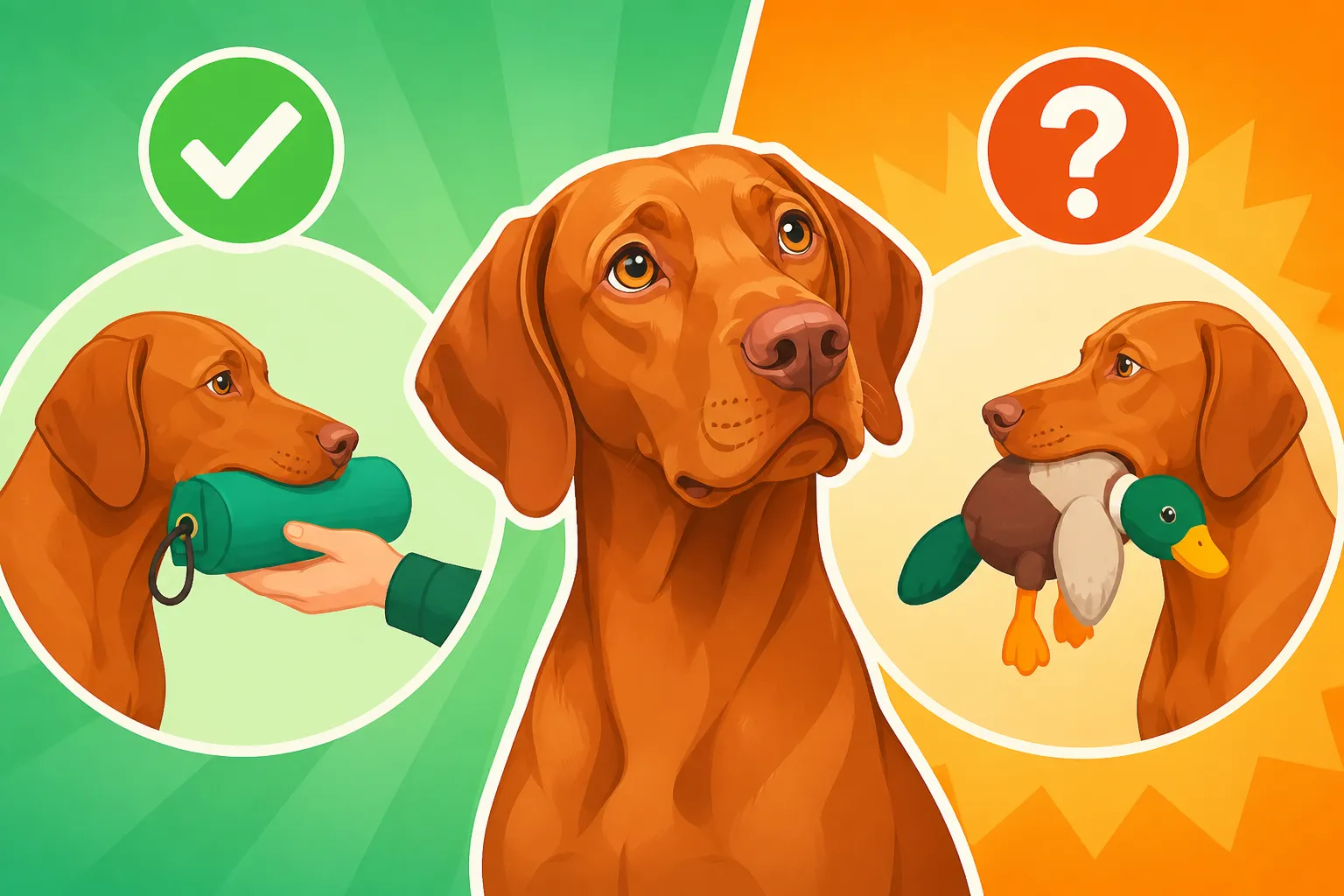
A true soft mouth involves a whole suite of behaviors. It means approaching the retrieve calmly, taking the object gently but firmly enough to maintain a secure grip, holding it patiently during the retrieve, and delivering it directly to hand without mouthing, chewing, or dropping it. It's a testament to good breeding and excellent training, working in tandem. Many people assume a soft mouth is purely about jaw pressure, but it’s just as much about control, focus, and a willingness to cooperate. A Vizsla might have a physically gentle mouth but still be a "hard mouth" dog if they're constantly chewing or playing with the retrieved object instead of delivering it promptly. It's about respecting the object and the process.
The Value of a Soft Mouth in Hunting and Home
For those who hunt with their Vizsla, a soft mouth preserves game. A bird meant for the dinner table or for a taxidermist needs to be brought back in pristine condition. This is why breeders often emphasize this trait in their lines. But even for a companion Vizsla, a soft mouth is incredibly valuable. Think about your child's favorite stuffed animal, or your expensive throwing dummy. A dog that delivers these items gently protects your belongings and makes training much more enjoyable. It builds trust, too. You trust your dog not to damage things, and your dog trusts you with the object once it's delivered. This gentleness extends beyond retrieving, often indicating a dog that is generally more careful and controlled with objects in their mouth, which can be a relief in a household with children or other pets.
Why a Vizsla's Natural Instinct Often Includes a Soft Mouth
Vizslas were bred specifically as versatile hunting dogs, meant to point, retrieve, and track. Their history suggests a strong natural inclination towards a soft retrieve, distinguishing them from breeds that might be harder on game. They've been developed over centuries to be attentive partners in the field, and a gentle retrieve is a core component of that partnership.
A Bred-In Trait for Field Work
Historically, the Vizsla was a noble companion, often working alongside falconers and hunters of upland game. These were situations where the quick, clean retrieval of small, delicate birds was crucial. Breeding programs focused on dogs that naturally demonstrated this gentle handling. While not every individual Vizsla is born with a perfect, ready-made soft mouth, the genetic predisposition is generally strong within the breed. They're typically eager to please and highly biddable, which makes training for a soft mouth much easier than with some other breeds. This inherent desire to bring things to you, often referred to as "retrieve drive," is a huge advantage. They want to fetch, and with guidance, they can be taught to do so with care. Many Vizslas demonstrate an innate gentleness from a young age, picking up toys or even fallen leaves with surprising delicacy. This is a trait to encourage.
Vizsla Temperament and Sensitivity
Vizslas are known for their sensitive, affectionate, and "velcro" temperaments. They crave human companionship and respond best to positive reinforcement and gentle handling. This inherent sensitivity also plays a role in their potential for a soft mouth. A harsh correction or a forceful approach to retrieve training can often backfire with a Vizsla, making them reluctant to retrieve or causing them to mouth objects more, due to stress or confusion. Their willingness to please means they are highly attuned to their owner's reactions. If they perceive that being gentle earns praise and rewards, they will naturally lean into that behavior. This means that The Soft Vizsla That Shuts Down When You Raise Your Voice is a real phenomenon, and a gentle approach is always best when teaching delicate skills like a soft mouth. They don't need a heavy hand; they need clear, consistent, and kind instruction.
Training for a Reliable Soft Mouth Retrieve
Even with a natural predisposition, a reliable soft mouth retrieve is a trained behavior. It requires patience, consistency, and positive reinforcement. Starting early is key, but it's never too late to work on improving your Vizsla's retrieving skills.
Early Introduction and Foundation Work
Begin retrieve training when your Vizsla is a puppy. Start with soft, appealing objects that they are less likely to want to chew, like soft fabric toys or small bumpers. The goal initially is just to encourage them to pick things up and bring them to you. Praise and reward heavily for any movement towards you with the object. Don't worry about the "delivery to hand" at first; just getting them to come back is a win. You can use high-value treats that suit a Vizsla in training to motivate them. As they progress, you can introduce different textures and weights. Make it a fun game, never a chore. Whether a Vizsla Retrieves Without Being Taught is often a yes to some degree, but formalizing it takes work.
A great way to build this foundation is through structured play in a controlled environment. Use a long check cord for gentle guidance, which you can find on Amazon, to prevent your puppy from running off with the item or engaging in a game of keep-away. If you're struggling with the basics, consider an online puppy training course, like those offered by BAXTER & Bella, which often include modules on basic retrieve work and positive reinforcement techniques. These resources can provide structured lessons and support.
Step-by-Step Soft Mouth Training
Formal retrieve training, often called "force fetch" or "conditioned retrieve," isn't about physical force, but about conditioning a reliable, gentle hold and delivery. It breaks the retrieve into small, manageable steps:
- The Hold: Start by gently placing an object in your Vizsla's mouth and saying "Hold." Reward them immediately for holding it, even for a second. Gradually increase the duration. Use a comfortable object, perhaps a soft dowel or a small canvas dummy.
- The Carry: Once they reliably hold, encourage them to take a step or two while holding the object. Walk backward, enticing them to follow.
- The Pick Up: Place the object on the ground and ask them to "Take it" or "Fetch," then immediately follow with "Hold."
- The Deliver: Once they pick up and hold, encourage them to come to you and deliver it directly into your hand. Use a command like "Give" or "Drop." Be ready with a reward as soon as it's in your hand.
Consistency is key, and keep sessions short and positive. How Fast a Vizsla Learns a New Cue is often impressive, but they can also get bored of drilling, so vary your training to keep it engaging.
Here’s a simple table outlining a progression for soft mouth training:
| Stage | Goal | Training Action | Rewards | Common Pitfalls & Solutions |
|---|---|---|---|---|
| I. Introduction | Interest in object, light mouthing tolerated | Roll object, encourage sniffing/chasing. Praise for interaction. | Verbal praise, gentle petting, small treats | Dog ignores object: Use more appealing toys, add scent. |
| II. Basic Retrieve | Bring object back (not necessarily to hand) | Throw short distances, call dog back. Reward for returning. | Exciting praise, a favorite toy as secondary reward | Dog runs off with toy: Use a long line, smaller space. |
| III. The Hold | Gentle, sustained hold on command | Place object in mouth, "Hold." Increase duration slowly. | High-value treat, calm praise | Dog drops object: Start with softer items, shorter durations. |
| IV. To Hand | Delivering object directly to owner's hand | Call dog, present hand, "Give." Reward for release into hand. | Immediate, enthusiastic praise & treat | Dog drops object before reaching hand: Guide with leash, move closer. |
| V. Distraction Proofing | Soft mouth in various environments | Practice in new places with mild distractions. | Variable rewards, real-life "payoffs" | Dog gets distracted: Reduce distraction, go back to basics. |
Remember, Positive Training Alone Works on a Vizsla incredibly well, especially for refining delicate skills like a soft retrieve. Harsh methods can ruin their confidence and lead to a dog that's reluctant to engage.
Addressing Issues: When a Vizsla Isn't Soft Mouthed
While many Vizslas are naturally inclined towards a soft mouth, some might develop behaviors that fall short of the ideal. These can range from crushing objects to dropping them prematurely, or even engaging in a game of keep-away. Understanding the root cause is the first step to correcting the issue.
Identifying the Cause of a "Hard Mouth"
A Vizsla that doesn't exhibit a soft mouth might be doing so for several reasons:
- Lack of Training: Simply put, they might not have been taught how to retrieve gently. They might have a high prey drive and not understand that the goal is gentle delivery, not vigorous shaking or chewing.
- Excitement/Over-stimulation: An overly excited Vizsla might grip too hard, or mouth an object as an outlet for their energy. This often happens when they're particularly hyped up for a game of fetch.
- Frustration/Anxiety: If previous training attempts were too harsh or confusing, a Vizsla might become anxious about retrieving, leading to improper handling or reluctance to engage.
- Dental Issues: Less common, but pain in the mouth could cause a dog to grip awkwardly or too hard. Always rule out medical causes with your vet if behavior changes suddenly.
- Game of Keep-Away: Some Vizslas, especially when young, might find it fun to run off with the retrieved item, turning the retrieve into a chase game. This isn't a "hard mouth" per se, but it's a related retrieve issue.
It’s important to watch your Vizsla carefully during retrieves to pinpoint exactly what behavior they are exhibiting. Are they crushing? Chewing? Refusing to give up the item? Each behavior has a slightly different approach.
Strategies for Correction and Improvement
Once you've identified the issue, you can implement targeted training strategies.
For Crushing or Chewing:
This often stems from over-excitement or a lack of understanding of the desired grip.
- Use Different Objects: Start with objects that are less satisfying to chew or crush. A hard plastic bumper is often better than a soft toy that gives too much. You can also use objects that are slightly too large for them to get a full grip around, encouraging a lighter hold.
- Controlled Release: Practice the "Hold" command extensively. If they start to chew, gently but firmly put your fingers under their chin, supporting their lower jaw, and apply slight pressure. Simultaneously, say "No chew" or "Gentle." The moment they relax, praise and reward.
- Positive Reinforcement for Softness: When they retrieve an object with appropriate softness, make a huge deal about it. Over-the-top praise, their favorite Treats That Suit a Vizsla in Training, and maybe even a short play session (with a different toy) can reinforce the behavior.
For Dropping or Reluctance to Deliver:
This can be a sign of a dog who hasn't fully learned the "to hand" component of the retrieve, or who might be anticipating losing the object.
- Shorten the Distance: Practice retrieves over very short distances initially, just a few feet. This minimizes the chance of them dropping it prematurely.
- Guided Delivery: Use a leash or a long check cord (like those available on Amazon) to gently guide your Vizsla directly to you for delivery. As they approach, kneel down and present your hand, making it easy for them to drop the object directly into it.
- Trade-Offs: If your Vizsla is reluctant to give up the item, teach them a "trade." Offer a higher-value treat or another equally exciting toy in exchange for the retrieved item. This teaches them that giving up the first item leads to something even better, rather than losing it.
For Keep-Away:
This is a common puppy behavior that needs to be nipped in the bud.
- No Chase: Never chase your Vizsla when they have the item. This only reinforces the game.
- Come to Me: Use a long line. When they pick up the item, give your "Come" command. If they don't come, gently reel them in. Reward them as soon as they reach you.
- Controlled Space: Practice retrieving in a small, enclosed area where they can't run far.
- Two-Toy Game: Have two identical toys. Throw one, and when they pick it up, call them back and show them the second toy. Most dogs will drop the first to get the new one.
Remember, Vizslas are sensitive. Whether a Vizsla Is Too Soft for Pressure Training is a crucial consideration. A calm, consistent, and positive approach will yield the best results. If you find yourself consistently struggling, don't hesitate to seek guidance from a professional dog trainer specializing in gun dog work or positive reinforcement. There are many online resources and trainers, like those at BAXTER & Bella, who can provide personalized support to help you and your Vizsla master the art of the soft mouth. A reliable soft mouth will not only make hunting more effective but also enrich your daily life with your incredible Vizsla companion.
Disclaimer
This article is for general informational purposes only and does not constitute professional advice. Laws, prices and regulations vary by location and change over time. Consult a qualified professional for guidance on your specific situation.