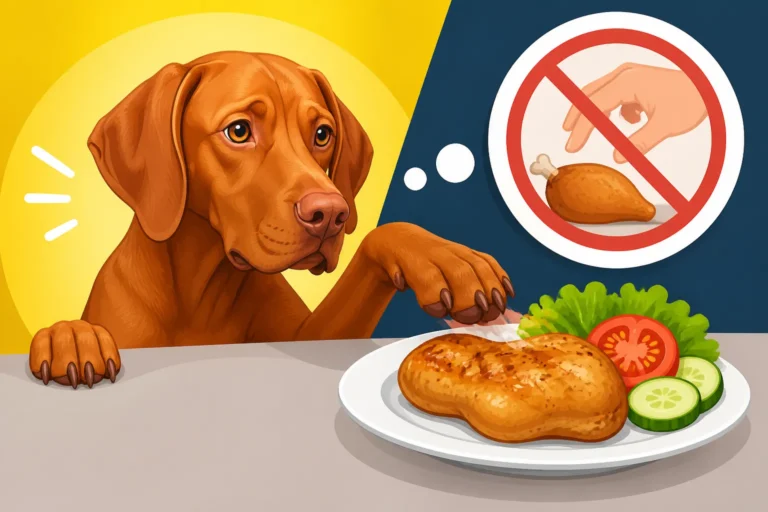
Whether a Vizsla Works for Food or Birds
Anyone who has ever lived with a Vizsla knows they are driven creatures. They aren't content to just sit around; they need a job, a purpose, and a reason to engage with the world. This intense focus often leads owners to wonder: what truly makes my Vizsla tick in training? Is it the promise of a delicious treat, or the exhilarating scent and sight of a bird? The truth is, understanding your Vizsla's primary motivators is key to unlocking their full potential and building a strong, responsive working relationship, whether your goals are competitive field trials or just a well-behaved family companion.
The Deep-Seated Instinct for Birds
Let's be honest, Vizslas were quite literally made for bird work. Their entire history, their very genetic makeup, is geared towards finding, pointing, and retrieving game birds. This isn't just a preference; for many Vizslas, it's an undeniable, primal drive that sits at the very core of their being.
Innate Drive and Genetic Programming
When you see a young Vizsla puppy, even one from purely pet lines, suddenly lock onto a fluttering leaf or stalk a bug in the grass, you're witnessing generations of selective breeding at work. These dogs were developed in Hungary centuries ago as versatile hunting companions, valued for their keen noses, relentless energy, and biddable nature. The desire to hunt, to locate game, and to work cooperatively with a human handler is not something you "teach" a Vizsla; it's something you unleash and refine.
For a Vizsla, the scent cone of a pheasant, the whirring sound of a flushing quail, or the sight of a retrieve dummy arcing through the air isn't just a signal for a reward – it is the reward. This intrinsic motivation means that when you introduce birds into their training, you're tapping into something incredibly profound. It's like asking a fish to swim; it's what they were born to do. This deep-seated instinct is why many Vizslas excel in pursuits like earning championship titles.
The Thrill of the Hunt, Point, and Retrieve
There's a palpable transformation that happens in a Vizsla when birds are involved. The casual energy turns into intense focus, the playful romp becomes a purposeful hunt. Watching a Vizsla creep forward, nose high, tail a blur, then freeze into that classic, statuesque point, is to witness pure canine artistry. The actual act of finding the bird, holding point, and then the subsequent retrieve isn't just a task; it's an incredibly satisfying sequence of behaviors that fulfills their natural calling.
This satisfaction goes beyond mere pleasure. It's a deep sense of accomplishment for the dog. They are performing the very function for which their ancestors were bred, and that connection to their heritage is incredibly powerful. This intrinsic reward means they will often work tirelessly for the opportunity to engage with birds, sometimes to the point of exhaustion. Understanding The Age a Vizsla Starts Pointing is crucial for introducing this work properly.
Leveraging Bird Drive in Field Training
For serious field work, birds are truly non-negotiable. Whether it's live pigeons, chukars, or quail, or even carefully trained bird launchers and scent-soaked dummies, the presence of birds elevates the training intensity significantly. You can use this drive to build a rock-solid recall, teach steadiness to flush, and refine their pointing instinct.
For instance, you might use a check cord to guide your Vizsla into a bird, rewarding their point with praise and the opportunity for a retrieve. Over time, that bird becomes the ultimate jackpot. Many professional gun dog trainers will tell you that while food lays the groundwork, birds are what shape a Vizsla into a polished hunting machine. This is why it's worth considering Whether a Pro Trainer Is Worth It for a Vizsla if you have serious field ambitions.
Food as a Powerful Training Tool
While birds tap into their primal drive, food offers an incredibly versatile and immediate reinforcement that is essential for almost all aspects of a Vizsla's training, from basic manners to complex obedience. Many Vizslas are incredibly food motivated, which is a huge advantage for owners.
An Energetic Metabolism and a Constant Hunger
Vizslas are famously lean, high-energy dogs. They burn calories at an astonishing rate, which often means they seem perpetually hungry. This isn't just a quirky trait; it's a reflection of their athletic build and their need for fuel to power their boundless energy. This high metabolism means that food, for many Vizslas, is a consistently high-value reward. They often look like Whether a Vizsla Looks Underweight When It Is Not even when perfectly healthy and well-fed.
This constant readiness for a snack can be a fantastic asset in training. You're not having to create desire; it's already there. The challenge often lies in finding treats that are healthy enough for frequent use without causing weight gain, which is a common concern for Keeping Weight On a Working Vizsla.
Versatility of Food Rewards for Basic and Advanced Skills
Food is incredibly practical for teaching virtually any behavior. It's easy to carry, can be delivered quickly, and the value can be adjusted based on the difficulty of the task or the level of distraction.
- Foundation Skills: For a young Vizsla puppy, food is perfect for house training, teaching "sit," "stay," "down," and loose-leash walking. Short, frequent training sessions with tasty treats keep their attention. The immediate gratification of a treat helps them quickly associate the desired action with a positive outcome.
- Complex Chains: As training progresses, food can be used to break down complex behaviors into smaller, manageable steps. Each successful step earns a treat, building confidence and understanding.
- Managing Distractions: In more distracting environments, you can pull out higher-value treats. A crumb of plain kibble might work in your quiet living room, but out at the park with squirrels zipping by, you might need a piece of cheese or cooked chicken. Many owners find a wide variety of excellent training treats on platforms like Amazon, ranging from small, soft bites to more robust options for specific situations.
The Role of High-Value Food in Challenging Situations
Sometimes, a Vizsla will encounter a situation so exciting or overwhelming that their normal training cues seem to vanish. This is where high-value food can be a lifesaver. Think about teaching a bomb-proof recall in a high-distraction area, or getting your Vizsla to focus when they're particularly excited to greet another dog.
In these moments, a truly irresistible treat can break through the distractions and redirect their attention to you. It creates a powerful positive association with listening, even when their instincts are pulling them elsewhere. The consistency of using food as a clear, undeniable reward builds a strong understanding of what you're asking, making it an invaluable tool for any Vizsla owner.
Blending Motivations: The Best of Both Worlds
It’s not really an either/or situation when it comes to motivating a Vizsla. The most effective training programs leverage both food and birds, understanding their respective strengths and how they complement each other.
The Hierarchy of Motivation
For many Vizslas, especially those with strong hunting instincts, birds often represent the pinnacle of motivation. They are the ultimate "jackpot" reward. However, food is usually the entry point and the sustaining force for foundational learning.
Consider this: you can use food to teach a reliable "whoa" or "stay" command in a controlled environment. Once that behavior is solid with food reinforcement, you can then introduce birds, using the bird itself (or the opportunity to chase/point it) as the reward for holding that "whoa." The food builds the understanding and consistency of the command, while the bird provides the profound, intrinsic motivation to perform it under real-world, high-excitement conditions. This layering of rewards is powerful. Building a strong Building a Recall on a Vizsla That Ranges often starts with high-value food before progressing to off-leash work with distractions that might include birds.
| Reward Type | Strengths | Ideal Use Cases | Potential Limitations |
|---|---|---|---|
| Food | High consistency, easy to deliver quickly, versatile in value, great for initial teaching, good for shaping new behaviors. | Basic obedience (sit, stay, recall), loose-leash walking, impulse control, trick training, focusing in distracting environments. | Can lead to "bribing" if not faded, may lose value in extreme distractions, some Vizslas can be picky. |
| Birds | Taps into innate drive, incredibly high value, provides intrinsic satisfaction, ideal for specific breed functions (hunting, pointing). | Field training (pointing, retrieving), developing natural hunting instinct, building confidence in game work, advanced off-leash control. | Logistically more complex, requires access to birds, not all Vizslas have equally strong natural bird drive, may over-excite some dogs. |
Building a Strong Work Ethic Through Reinforcement
Think of food as the currency for smaller transactions and birds as the bonus check. By starting with food, you establish a clear communication system. Your Vizsla learns that responding to your cues leads to good things. This builds a foundation of trust and a strong work ethic. They learn that working with you is rewarding.
Once this foundation is in place, you can introduce birds, linking the learned behaviors (like a steady retrieve or a quick recall) to the ultimate reward of game work. For instance, a Vizsla learns that a perfect retrieve to hand, reinforced initially with a high-value treat, now also leads to the chance to find another bird. This creates a powerful reinforcement cycle where the dog is eager to perform the trained behaviors because they know it leads to their highest-value reward. Understanding What a Vizsla Will Work For is about understanding your dog's unique motivation mix.
The Overlooked Value of Praise and Play
While food and birds are fantastic motivators, never underestimate the power of praise, affection, and play for a Vizsla. These dogs are often called "Velcro Vizslas" for a reason; they crave connection and interaction with their people. For them, a game of fetch, a vigorous tug session, or even just genuine, enthusiastic verbal praise can be incredibly rewarding.
Integrating play and praise into your training strategy, alongside food and bird work, creates a well-rounded and deeply bonded relationship. Brands like BAXTER & Bella often emphasize positive reinforcement methods that build a strong relationship through consistent praise and clear communication, which is exactly what a sensitive Vizsla thrives on. This approach helps teach a Vizsla to be confident, eager to please, and deeply connected to their handler. Remember, The Soft Vizsla That Shuts Down When You Raise Your Voice will always respond better to encouragement than harsh correction.
Ultimately, your Vizsla's motivation will be a unique blend, but understanding the powerful pull of their hunting instincts combined with the practical versatility of food rewards will allow you to tailor your training approach for maximum success. By observing your individual dog and experimenting with different rewards, you’ll discover the perfect balance that keeps them engaged, happy, and performing at their very best.
Disclaimer
This article is for general informational purposes only and does not constitute professional advice. Laws, prices and regulations vary by location and change over time. Consult a qualified professional for guidance on your specific situation.