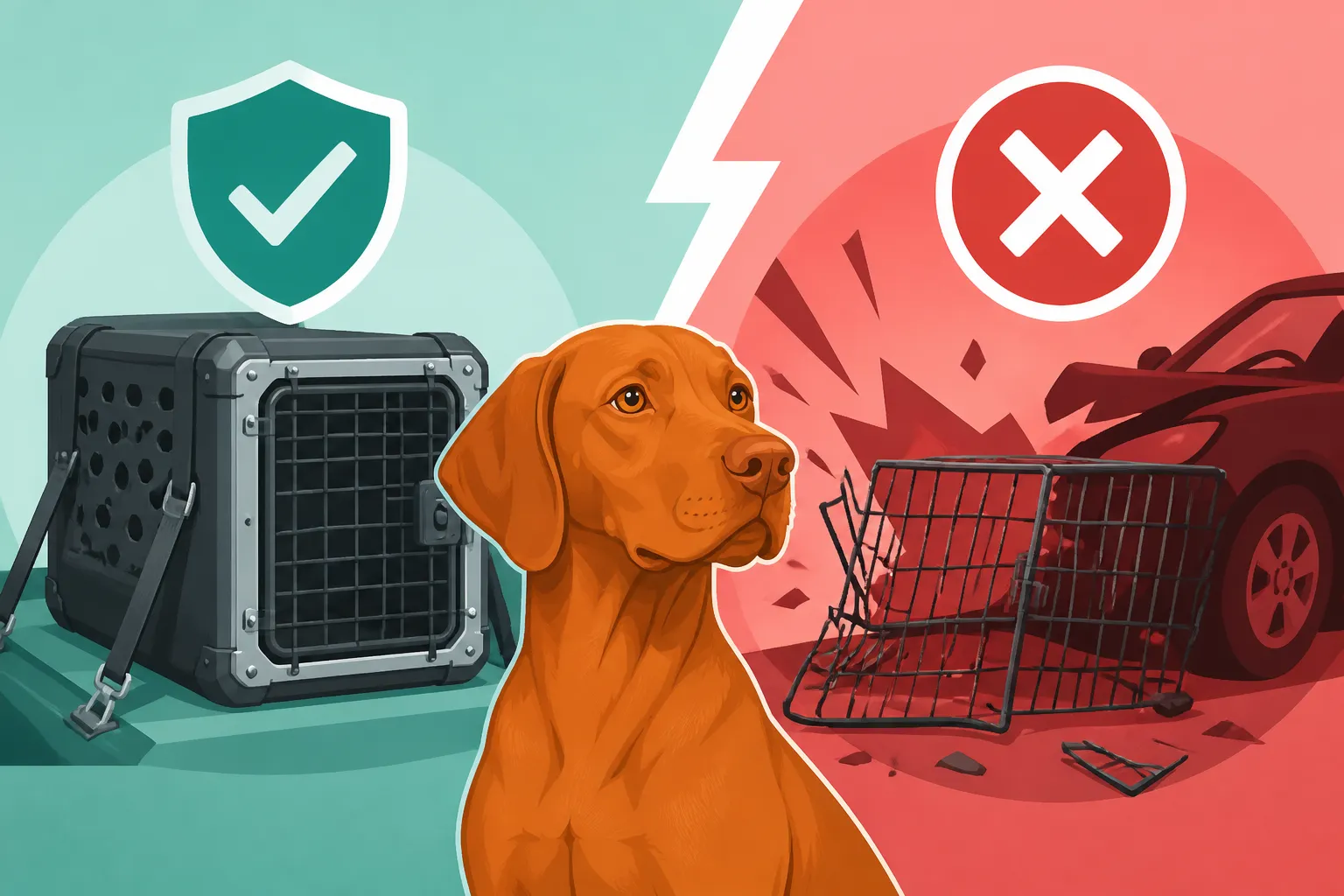
Whether a Vizsla Needs a Crash Tested Crate
Traveling with your active Vizsla can be a joyous experience, a chance to explore new trails or visit family, but let's be honest, it also comes with a unique set of anxieties. Many of us have experienced that heart-stopping moment when our beloved Vizsla, uncontained, shifts suddenly in the back seat, or worse, tries to jump into the front, creating a dangerous distraction. The question of how to keep them safe, and by extension, ourselves, in the car isn't just about preventing naughtiness; it's a genuine concern for their well-being in the event of an unexpected stop or, heaven forbid, an accident. This guide is here to walk you through why a crash-tested crate might just be the peace of mind you're looking for, and what to consider when choosing one for your lean, energetic companion.
The Unique Challenges of Traveling with a Vizsla
Anyone who lives with a Vizsla knows they are not just dogs; they are furry, four-legged missiles of energy and affection. While this makes them incredible companions for hiking, running, and hunting, it also presents some interesting logistical challenges when it comes to car travel. It's not about them being "bad"; it's about their inherent nature and our responsibility to keep everyone safe.
Their Energy and Drive in a Vehicle
Vizslas are bred to move. They have an incredible drive to be active, to explore, and to be engaged with their surroundings. Stick that kind of energy into a confined space like a car, and you're bound to have some wiggles, some whines, and probably some attempts to get closer to you or whatever catches their eye outside the window. A Vizsla might try to climb into the front seat, pace endlessly, or even jump from window to window, all of which are incredibly distracting for the driver.
Imagine you're driving down the highway, and suddenly, a deer darts across the road. Your Vizsla, with its keen hunting instinct, might lunge, bark, or even try to push through the window to chase. This isn't just a minor inconvenience; it's a significant safety hazard. An unrestrained dog, even one as loving as a Vizsla, can become a dangerous projectile in an emergency stop or a collision. The forces involved in a sudden deceleration can be astounding, turning your eighty-pound dog into something weighing many times that, capable of causing serious injury to themselves or any human occupants. We've all seen dogs riding happily with their heads out the window, and while it looks idyllic, the reality is that it only takes one squirrel, one sudden brake, or one minor fender bender for that joyous ride to turn tragic. We want to enjoy our journeys with our dogs, not constantly worry about what they might do next or the potential consequences.
The "Velcro Vizsla" Tendency and Anxiety
The term "Velcro Vizsla" isn't just a cute nickname; it's a testament to their deep bond with their people. These dogs thrive on human connection and often prefer to be touching you, or at least in the same room, at all times. This intense desire for proximity can manifest as anxiety when they are separated or feel confined, even if you are just a few feet away in the front seat.
For some Vizslas, car travel can be stressful. Being contained, even for short periods, might lead to whining, panting, or even destructive behaviors if they're particularly anxious. You might notice them trying to nose their way under your arm, paw at the console, or simply lean their entire body against you while you're trying to navigate traffic. Whether a Vizsla Panics When You Shut a Door can extend to the car environment. This isn't just about misbehavior; it's often a sign of their need for reassurance and closeness. While we love their affectionate nature, it's simply not safe to have a large dog freely moving in the car while you're driving. A crash-tested crate can provide a secure den-like space, giving them a sense of security and containment, which paradoxically, can sometimes reduce their overall travel anxiety once they're accustomed to it. It gives them a designated "safe spot" that they can call their own, minimizing the distractions and keeping them (and you) much safer.
Understanding Crash-Tested Crates
When we talk about crates, it's easy to picture the standard wire or plastic models found at any pet store. However, a "crash-tested crate" is an entirely different beast, engineered with a specific, critical purpose in mind: protecting your dog and your family in a vehicle collision. It's not just a marketing term; it refers to a level of safety engineering that goes far beyond typical pet products.
What Makes a Crate "Crash-Tested"?
A crate that's truly "crash-tested" has been put through rigorous evaluations to determine its ability to withstand impact forces, much like child car seats. Organizations like the Center for Pet Safety (CPS) have established protocols to test pet travel products, including crates, to ensure they provide a reasonable level of protection. This testing often involves dynamic crash simulations, mimicking real-world collision scenarios.
What you'll find with these crates is a noticeable difference in materials and construction. They are typically made from heavy-duty, high-strength materials like aluminum or reinforced steel, designed to absorb and distribute impact energy without collapsing or allowing the dog to escape. Think about the difference between a flimsy plastic carrier and a robust, aerospace-grade container. The latches are often heavy-duty, the joints reinforced, and the overall design is focused on structural integrity. Standard crates, while useful for house training or temporary containment, simply aren't built to withstand the immense forces generated in a car accident. Their plastic can shatter, wire can bend and become impaling hazards, and doors can buckle, allowing your Vizsla to be ejected or injured by flying debris. A crash-tested crate, on the other hand, aims to keep your dog contained and protected within its shell, preventing them from becoming a danger to themselves or other passengers.
Beyond Just a Sturdy Crate: The Safety Difference
The distinction between a "sturdy" crate and a "crash-tested" crate is crucial. Many crates might feel strong to the touch, or even be advertised as "heavy-duty," but without independent, verifiable crash test certifications, those terms are just marketing. A regular crate might survive a minor bump, but in a significant collision, it could easily crumple, fragment, or open, turning into a hazard rather than a protector.
The safety difference lies in the engineering principles applied. Crash-tested crates are designed to prevent catastrophic failure. This means:
- Containment: The crate must remain intact and keep your Vizsla inside, preventing them from being thrown from the vehicle or into other passengers.
- Impact Absorption: The materials and design are engineered to absorb kinetic energy, reducing the force transferred to your dog's body.
- Structural Integrity: The crate should not deform in a way that creates sharp edges or crushes the dog, acting as a protective cage around them.
- Vehicle Integration: Many crash-tested crates are designed with features that allow them to be securely anchored in your vehicle, preventing them from sliding or tipping during impact.
Consider the peace of mind. Knowing that you've done everything you can to protect your furry family member is invaluable. While no product can guarantee 100% safety in every extreme scenario, these crates drastically improve the odds for your Vizsla in an accident, turning a potentially catastrophic situation into one where they have a much higher chance of emerging with fewer, or even no, injuries.
The Practicalities of Owning a Crash-Tested Crate for Your Vizsla
Investing in a crash-tested crate is a big decision, and it comes with practical considerations beyond just the initial purchase. You want this to be a positive and safe experience for your Vizsla, not just another piece of equipment.
Size and Fit for an Energetic Vizsla
Choosing the right size is absolutely critical for a Vizsla, given their lean, athletic build. Unlike some breeds where you might err on the side of a slightly larger crate, with crash-tested crates, the fit is more precise. A crate that's too large allows your Vizsla too much room to be jostled around during a sudden stop or impact, which can actually increase the risk of injury. They need enough space to stand up, turn around comfortably, and lie down in a natural position, but not so much that they can build up momentum within the crate itself.
Think about your Vizsla's specific measurements. A male Vizsla can easily weigh What a Male Vizsla Weighs and stand quite tall, so you'll need a crate that accommodates their full height without them having to hunch. If you're getting a puppy, it's tempting to buy a crate they'll "grow into," but this isn't ideal for crash safety. Ideally, you'd get a size appropriate for their current dimensions, or one with a secure divider that can be adjusted as they grow. Remember, your Vizsla isn't just a house pet; they're an athlete. Their long legs and streamlined body mean they occupy space differently than a bulkier breed. This careful sizing ensures maximum protection and also helps them feel more secure, like a cozy den, which can reduce travel stress. How Tall a Vizsla Stands is important to consider to ensure they can stand up fully without hitting their head on the top.
Integration into Your Vehicle and Routine
A crash-tested crate is only as good as its installation and your Vizsla's willingness to use it. These crates are designed to be secured within your vehicle, typically in the cargo area of an SUV, hatchback, or truck bed. They often come with tie-down points that allow you to strap them firmly to your vehicle's cargo anchors. This prevents the crate itself from becoming a projectile. For truck owners, a sturdy dog box built for a truck bed, often made of aluminum, can also be a crash-tested option. Whether a Vizsla Needs a Crate in the Truck is a question many hunting dog owners grapple with, and crash-tested options provide a safe answer.
Integrating the crate into your routine involves more than just physically placing it in the car. Your Vizsla needs to view this crate as a safe, comfortable space, not a punishment.
- Positive Association: Start by feeding meals in the crate, offering high-value treats (Chewy has a great selection of enrichment toys and treats that can make crate time positive), and making it a place where good things happen.
- Gradual Introduction: Begin with short periods of crating in the car while it's stationary, gradually increasing the duration and introducing short drives.
- Comfort: Add a comfortable, washable pad or blanket to make it inviting. However, avoid anything too bulky that could interfere with safety.
- Consistency: Make crating a consistent part of your travel routine. Your Vizsla will learn what to expect and be less anxious.
It's an investment of time and effort, but ensuring your Vizsla is comfortable and calm in their crash-tested crate makes every journey safer and more enjoyable for everyone. Just like a high-quality food from a company like Ollie might be part of their overall health and well-being, a crash-tested crate is part of their safety and welfare on the road.
Weighing the Investment: Cost and Peace of Mind
There's no getting around it: crash-tested crates represent a significant financial investment compared to your average pet store crate. However, when you frame it in terms of safety, protection, and peace of mind, that investment often feels much more justifiable.
The Initial Outlay and Long-Term Value
Let's be realistic, the price tag on a certified crash-tested crate can be a bit of a shock at first glance. These aren't impulse buys. They are often several times the cost of a standard wire or plastic crate. This higher cost reflects the advanced engineering, higher-grade materials, and the extensive testing required to meet safety standards. You're paying for actual protection, not just containment.
However, consider the long-term value. A well-made, crash-tested crate is built to last. It's designed to withstand not only the forces of an accident but also the wear and tear of regular use by an active Vizsla for many years. Think about it: if an accident were to occur and your Vizsla was seriously injured due to an inadequate crate, the veterinary bills could easily dwarf the cost of even the most expensive crash-tested model. What a Vizsla's Emergency Field Injury Costs can be substantial, especially for complex fractures or internal injuries that an unprotected dog might sustain. While pet insurance from providers like Healthy Paws can help offset these costs, prevention is always the best medicine. The cost of a crash-tested crate is essentially a premium for an additional layer of safety and a profound sense of security for you and your beloved companion. It’s an investment in their continued health and your peace of mind every time you hit the road.
Finding the Right Crash-Tested Crate
When you're ready to make the leap, research is your best friend. There are several reputable brands that specialize in crash-tested pet travel safety, and they often publish their testing results and certifications. Look for crates that specifically mention independent crash testing and review the test data if available.
Here are a few things to consider when shopping:
- Certification: Look for certifications from recognized bodies like the Center for Pet Safety (CPS). This is your assurance that the product has actually been tested.
- Material: Aluminum is a popular choice for its strength-to-weight ratio, while some heavy-duty steel options also exist.
- Ventilation: Ensure adequate airflow, especially for a single-coated breed like the Vizsla, to prevent overheating.
- Ease of Cleaning: Life with a Vizsla means mud, water, and general dog-ness. A crate that's easy to clean is a huge plus.
- Vehicle Fit: Double-check the dimensions of the crate against the cargo space in your specific vehicle. Measure, measure, measure!
Online retailers like Chewy often carry a range of options, allowing you to compare features, read user reviews, and understand the dimensions before committing. Visiting a specialized pet supply store might also allow you to see some models in person, which can be helpful for assessing quality and size. Don't rush the decision. This is a crucial piece of safety equipment, and taking the time to choose the right one for your Vizsla and your vehicle will pay dividends in peace of mind for years to come.
| Feature | Standard Wire Crate | Crash-Tested Crate (e.g., Gunner, Ruffland, Impact) |
|---|---|---|
| Primary Purpose | House training, temporary containment, home use | Vehicle safety, collision protection, secure travel |
| Materials | Thin steel wire, plastic pan | High-grade aluminum, reinforced steel, rotomolded plastic |
| Construction | Foldable, lightweight, open structure | Rigid, robust, often one-piece or securely bolted |
| Safety in Crash | Can collapse, deform, become projectile or hazard | Designed to absorb impact, remain intact, contain pet |
| Ejection Risk | High | Low |
| Securing in Vehicle | May slide or tip, often unsecured | Designed with tie-down points for secure anchoring |
| Ventilation | Excellent (open wire design) | Varies by design, typically good airflow |
| Portability | High | Moderate (heavier, less collapsible) |
| Cost (Relative) | Low to Moderate | High |
| Ideal Vizsla Use | Home confinement, puppy training | All vehicle travel, hunting trips, daily commutes |
Ultimately, for any Vizsla owner who regularly travels with their beloved companion, a crash-tested crate isn't just an accessory; it's a vital piece of safety equipment. Their boundless energy and affectionate nature, while charming, can become dangerous distractions or make them vulnerable in an accident. By investing in a crate specifically designed and tested to withstand collision forces, you're not only protecting your Vizsla from potential injury or ejection, but you're also safeguarding yourself and any other passengers. It provides a secure, predictable space for your dog, often reducing travel anxiety, and gives you the invaluable peace of mind that you've done everything possible to ensure their safety on every journey, big or small.
Disclaimer
This article is for general informational purposes only and does not constitute professional advice. Laws, prices and regulations vary by location and change over time. Consult a qualified professional for guidance on your specific situation.