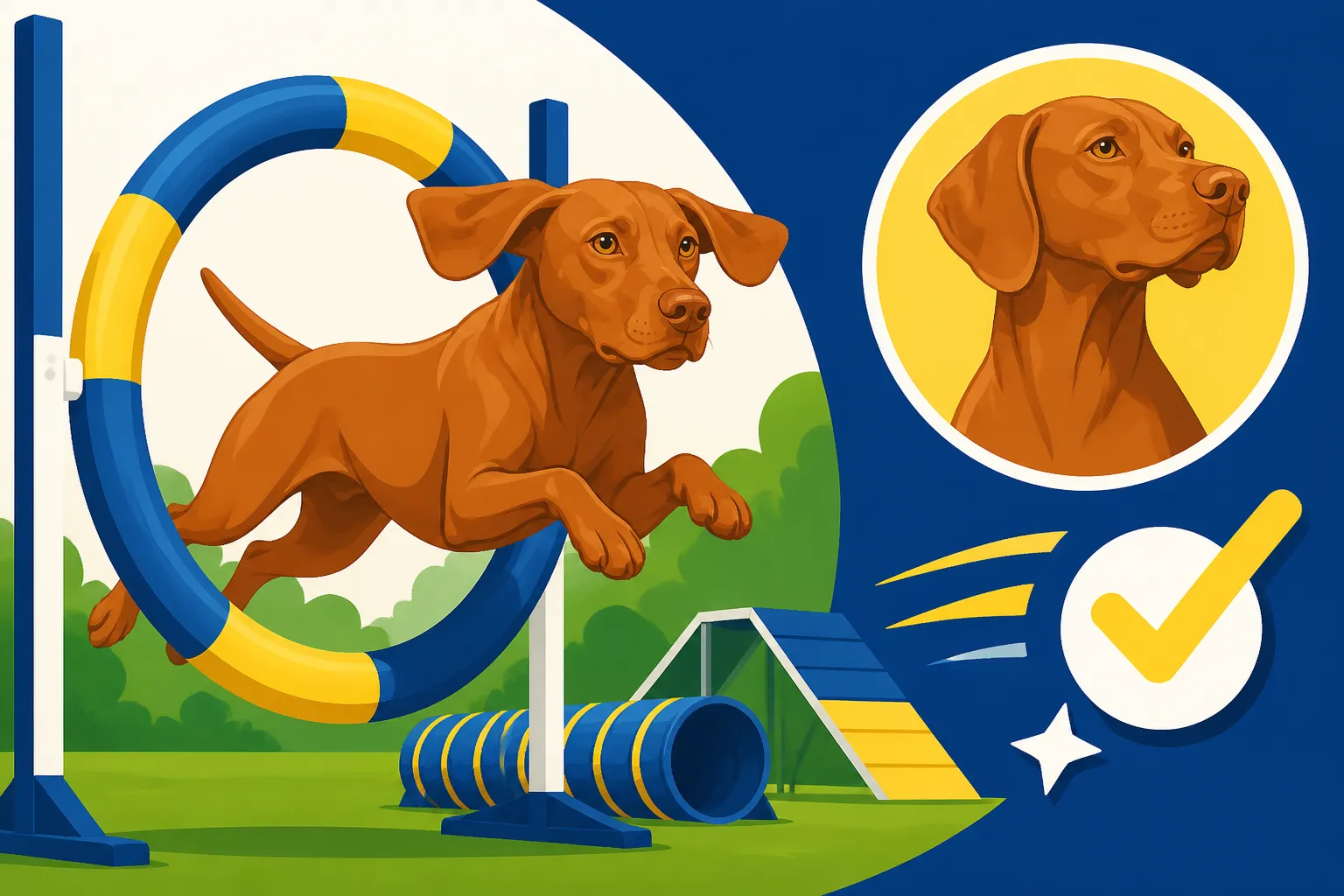
Whether a Vizsla Excels at Agility
If you've ever watched a Vizsla in full flight, a blur of golden-rust energy effortlessly clearing obstacles in your yard, you've probably wondered if they could excel at dog agility. It's a natural question for owners of these intelligent, driven, and incredibly athletic dogs. Many Vizslas possess all the raw ingredients for success, but transforming that natural exuberance into a finely tuned agility machine takes understanding their unique traits and navigating potential challenges. This guide will explore whether your Vizsla has what it takes to shine on the agility course and how to embark on that exciting journey together.
The Vizsla's Natural Aptitude for Agility
Vizslas are often described as canine athletes, and it's no exaggeration. Their very breed standard speaks to an active, intelligent dog bred for speed, stamina, and an enthusiastic desire to please. These inherent qualities make them incredibly well-suited for the demanding sport of agility, where quick thinking, physical prowess, and a strong bond with their handler are paramount.
Energy and Drive: How Their Endless Motor Fuels Success
Let's be honest, Vizslas have energy for days, don't they? It's one of their defining characteristics. While this can sometimes feel like a challenge to manage in daily life, it's an incredible asset on the agility course. Agility demands explosive bursts of speed, sustained focus over multiple obstacles, and the ability to rebound quickly between turns. A Vizsla's seemingly endless motor means they rarely run out of steam, even through a complex, fast-paced course. They love to run, they love to jump, and they love to go. This sheer joy in movement translates directly into a dog that approaches the agility ring with enthusiasm, always ready for the next challenge. That drive to keep moving, coupled with their natural athleticism, allows them to navigate weaves, tunnels, and contact obstacles with impressive speed and grace. For many Vizsla owners, finding an outlet that truly matches their dog's boundless vigor is a quest, and agility often proves to be the perfect fit.
Intelligence and Trainability: Their Sharp Minds and Desire to Please
Vizslas aren't just pretty faces; they're incredibly smart dogs. They pick up new commands and concepts remarkably quickly, often surprising their owners with their ability to problem-solve. This intelligence is a huge advantage in agility, a sport that requires dogs to learn complex sequences, understand nuanced handler cues, and make split-second decisions. Their strong desire to please, often referred to as their "soft" nature, means they genuinely want to work with you and will try their best to understand what you're asking. This isn't to say they are always easy; their intelligence sometimes manifests as a stubborn streak or an inclination to find their own "better" way of doing things. However, with consistent, positive reinforcement, a Vizsla will eagerly soak up agility lessons. They thrive on having a job to do and excel when their minds are engaged alongside their bodies. How Fast a Vizsla Learns a New Cue is often a testament to this inherent intelligence, making them excellent candidates for advanced training.
Athleticism and Body Awareness: Grace and Speed on the Course
Physically, Vizslas are built for performance. They have a lean, muscular build, long legs, and a powerful stride that makes them incredibly fast. Their natural agility and coordination allow them to navigate tight turns and tricky obstacles with ease. They possess excellent body awareness, meaning they generally know where all four paws are at all times, which is crucial for safely clearing jumps, entering tunnels correctly, and performing contact obstacles without fault. This inherent grace, combined with their speed, can be breathtaking to watch on an agility course. They tend to be light-footed, reducing the impact on their joints, and their balanced conformation helps them maintain stability even at high speeds. This natural athleticism is a massive head start for any Vizsla entering the world of agility. Hips and Elbows on a Vizsla That Runs All Day are generally strong, though proper conditioning is always vital to protect them.
Common Challenges and How to Overcome Them
While Vizslas bring a lot to the agility table, they also come with a few quirks that can present challenges. Understanding these potential hurdles and having strategies to overcome them is key to a successful and enjoyable agility journey for both you and your dog. It's not about being discouraged, but about being prepared and adapting your training approach to suit your unique Vizsla.
The "Velcro" Trait and Independence: Balancing Connection with Focus
Ah, the infamous "Velcro Vizsla" trait. It's endearing in daily life, but on the agility course, it can be a double-edged sword. Vizslas are profoundly attached to their people; they want to be right there with you, often literally. This strong bond can be fantastic for building a responsive team, as they are naturally inclined to stay close and watch you. However, this intense focus on you can sometimes mean they struggle with independence on the course. They might stick too close, anticipating your next move rather than driving forward to the next obstacle, or they might get flustered if you send them ahead and then move away.
The key here is to gradually build their confidence and independence on obstacles. Start by sending them short distances, rewarding them heavily for completing the task away from you. Use toys or high-value treats to encourage them to drive ahead. You can also incorporate games like hide-and-seek or "go find it" with a toy, which builds their ability to work slightly independently while still engaging with you. Practicing "send-aways" to a single obstacle, like a tunnel or a jump, with you remaining stationary, helps them learn to trust your cues even when you're not right beside them. Why They Call It a Velcro Vizsla is very real, and it's a trait you'll need to gently manage in the agility context.
Drive and Distraction Management: Keeping Their Eyes on the Prize
Vizslas are high-drive dogs, and while this is a strength, it also means they can be easily distracted by novel smells, sounds, or movements in a busy agility environment. A waft of interesting scent from the grass, a dog barking in the distance, or even a leaf blowing across the ring can pull their attention away from the task at hand. This is a common frustration for many Vizsla owners. Their prey drive, honed over centuries for hunting, can make it difficult for them to ignore the world around them when they are supposed to be focused on weaving poles.
Effective distraction management starts long before you ever step onto an agility course. Begin by practicing in increasingly distracting environments. Start in your quiet backyard, then move to a park during off-peak hours, and eventually to places with more ambient noise and other dogs. Use extremely high-value rewards (think cooked chicken or their favorite squeaky toy) to make you the most exciting thing in the environment. Keep training sessions short, fun, and positive. Focus on building an unbreakable connection and impulse control in all situations. Learning to Build a Recall on a Vizsla That Ranges is also a crucial foundation skill, ensuring that even if they do get distracted, you can bring their focus back to you promptly and reliably. For additional help, online resources like those offered by BAXTER & Bella can provide structured training modules that build focus and reliability in a systematic way, even when faced with distractions.
Physical Considerations: Protecting Their Joints and Bodies
While Vizslas are athletic, their lean build and active nature also mean we need to be mindful of their physical well-being, especially when engaging in a high-impact sport like agility. Jump after jump, tight turns, and rapid stops can put stress on joints. It's vital to ensure your Vizsla is fully grown and physically mature before starting intense agility training, usually around 12-18 months of age, depending on the individual dog and your vet's advice. Starting too young or pushing too hard can lead to injuries.
Proper warm-up and cool-down routines are non-negotiable before and after every training session or competition. Incorporate dynamic stretches and gentle trotting to prepare their muscles and joints. Consider adding joint supplements to their diet, as many Vizsla owners do, especially for active dogs. Whether a Vizsla Needs Joint Supplements Early is a common consideration, and it's wise to discuss this with your veterinarian. Regularly check your dog's paws for wear and tear, and inspect their thin skin for any nicks or scrapes, as The Thin Skin a Vizsla Takes Into the Field can be prone to minor injuries. Conditioning exercises outside of agility, such as swimming or long walks on varied terrain, can also help build core strength and endurance without the high impact. Remember, the goal is a long, healthy career in agility, not just quick wins.
Getting Started with Agility Training
Embarking on the agility journey with your Vizsla can be incredibly rewarding. It's a fantastic way to bond, provide mental and physical stimulation, and channel their energy into something productive and fun. But where do you begin? It’s not just about throwing them over a jump; there's a methodical approach to ensure safety, build confidence, and foster a love for the sport.
Foundation Skills Before the Obstacles: Building Blocks for Success
Before your Vizsla ever sees a set of weave poles or a teeter-totter, there are several foundational skills that are absolutely essential. These aren't just polite manners; they are the building blocks that make agility training smoother, safer, and more enjoyable for both of you.
- Reliable Recall: This is perhaps the most critical. In a busy agility environment, your dog must come when called, especially if they get distracted or zoom off course. Practice this in increasingly distracting environments, making yourself the most exciting thing.
- Solid Stays: Being able to hold a "stay" or "wait" command while you move ahead to cue the next obstacle is vital. This also teaches impulse control.
- Focus and Engagement: Your Vizsla needs to pay attention to you amidst distractions. Use toys, treats, and praise to build strong engagement in various settings. Games that teach them to make eye contact and follow your movements are invaluable.
- Body Awareness: While Vizslas have natural athleticism, introducing simple body awareness exercises can improve their coordination further. Walking on uneven surfaces, stepping over low obstacles, or using wobble boards can help.
- Basic Obedience: Sit, down, stand, and loose-leash walking are foundational. These commands help you control your dog on and off the course. Remember, The Soft Vizsla That Shuts Down When You Raise Your Voice means positive, reward-based methods are always best.
- Handler Motion: Agility is a dance between you and your dog. Practice moving backward, sideways, and in circles while keeping your dog engaged.
Start with these skills in a low-distraction environment, and gradually introduce more challenges. Consistency is your best friend here.
Finding the Right Class and Instructor: Guidance is Key
While there are many resources online, nothing beats in-person instruction when starting agility. A good instructor will guide you through the proper techniques for introducing obstacles safely, help you understand dog body language, and offer personalized feedback on your handling.
Look for classes that:
- Emphasize positive reinforcement: This is crucial for Vizslas, who thrive on praise and rewards.
- Focus on safety: Obstacles should be introduced correctly, and dogs should not be pushed beyond their physical limits. Jumps should be set low, and contact obstacles should be "flatted" initially.
- Have small class sizes: This ensures you and your dog get individual attention.
- Are taught by experienced instructors: Look for instructors who actively compete in agility and understand the nuances of various breeds, including high-drive pointing breeds.
Many local dog clubs, obedience schools, or dedicated agility facilities offer introductory classes. Don't be afraid to observe a class before signing up or ask for recommendations from other Vizsla owners. A good instructor will also help you understand What a Vizsla Will Work For, whether it's a specific toy, a favorite treat, or enthusiastic praise.
Equipment for Home Practice: Making it Fun and Accessible
You don't need a full agility course in your backyard to get started, but having a few pieces of equipment can be incredibly beneficial for home practice and building confidence. It makes learning fun and reinforces skills between classes.
Here's a small table of useful home agility equipment:
| Equipment Item | Purpose | Considerations |
|---|---|---|
| Tunnels | Builds confidence, teaches independence, great for drive. | Lightweight, collapsible tunnels are available. Start with a short, straight tunnel, gradually extending length and adding gentle curves. Ensure it's secured so it doesn't roll. Many affordable options are available on Amazon. |
| Jump Standards | Introduces jumping, teaches body awareness, leads to sequencing. | Use PVC pipe jumps or adjustable plastic jumps. Start with the bar on the ground (no height), gradually raising it as your dog gains confidence and maturity. Never force a dog over a jump; make it a fun game. |
| Weave Poles | Teaches a complex, rhythmic skill. | Very challenging! Start with guide wires or channel weaves, gradually removing aids. Use 6 poles initially, working up to 12. There are various teaching methods, such as the 2×2 method. Patience is key here. |
| Target Stick | Helps guide your dog to specific spots, teaches targeting. | Invaluable for teaching precise positioning, especially for contact obstacles or weave pole entries. Can be extended to help with distant sends. BAXTER & Bella offers excellent resources on using target training effectively. |
| Cones/Markers | Used for setting up mini-courses, directing movement, or creating boundaries. | Simple, inexpensive, and versatile. Can be used to create small circles for body awareness or guide your dog's path between "imaginary" obstacles. |
| Pause Table | Teaches a stationary "pause" command, develops focus. | A low, sturdy platform. Can be a simple wooden box or a manufactured agility pause table. Start with short durations, gradually increasing. Helps with impulse control and waiting for the next command. |
When choosing equipment, prioritize safety and adjustability. Always supervise your dog during home practice. Remember, the goal is fun and building skills, not replicating a competition course instantly. Consistency with The Two Hours a Vizsla Needs Before It Will Settle also means channeling that energy into training helps them relax later.
Beyond the Basics: Competing and Continuing Growth
Once you and your Vizsla have mastered the basics and built a strong foundation, the world of competitive agility opens up. It's a journey filled with learning, challenges, and incredible satisfaction as you watch your dog perform with grace and enthusiasm.
The Agility Journey: From Novice to Advanced
Competitive agility usually has different levels, starting with Novice or Beginner, and progressing through Intermediate, Open, and Advanced or Master levels. Each level introduces more complex courses, higher obstacles, and stricter requirements.
- Novice/Beginner: Courses are simpler, often with fewer obstacles and more straightforward paths. Jumps are set lower, and there might be more leeway for handler errors. This is where you focus on clean obstacle performance and understanding basic sequencing.
- Intermediate/Open: Courses become more challenging, requiring faster speeds, more precise turns, and a better understanding of advanced handling techniques. Obstacles might be set at full height, and judges will be looking for smoother transitions.
- Advanced/Master: These courses are designed to test the limits of both dog and handler. They feature intricate sequences, discriminations (where the dog has to choose between similar obstacles), and require lightning-fast decisions and flawless execution.
The beauty of agility is that you can progress at your own pace. Some teams fly through the levels, while others take their time, perfecting each skill before moving on. The most important thing is to enjoy the process and celebrate every milestone. Whether an Epileptic Vizsla Can Still Hunt is a different context, but it highlights that careful management of a dog's physical and mental state is always paramount for their well-being and performance in any activity.
Celebrating Small Victories: Maintaining Motivation
Agility can be tough. There will be days when your Vizsla seems to forget everything you've taught them, or when you make a handling error that sends them off course. It's easy to get discouraged. This is where celebrating small victories becomes incredibly important.
Did your Vizsla finally get three weave poles in a row? Celebrate it! Did they confidently perform a contact obstacle without hesitation? Throw a party! Every tiny step forward is a win and deserves recognition. This isn't just for your dog; it's for you, too. Maintaining a positive mindset and focusing on progress rather than perfection will keep both of you motivated. Use enthusiastic praise, special treats, or their absolute favorite toy to mark these moments. Remember, for a Vizsla, the bond and the joy of working with you are often the biggest rewards. If you're feeling stuck, stepping back to foundational games or taking a break can often reset motivation. Consider the long game: What a Vizsla Costs a Year to Keep means this is a long-term relationship, and nurturing it through fun activities is part of the investment.
The Unbreakable Bond: Agility as a Partnership
Ultimately, agility is more than just a sport; it's a partnership. It deepens the bond between you and your Vizsla in unique and powerful ways. You learn to read each other, communicate without words, and trust in each other's abilities. The shared experience of training, problem-solving, and competing builds a level of understanding that few other activities can.
When you're running a course, you and your Vizsla become a single unit, moving in sync, anticipating each other's next move. This intense connection, the feeling of working together towards a common goal, is incredibly fulfilling. Agility takes a dog's natural instincts – their speed, their desire to chase, their intelligence – and channels them into a structured, exciting activity that both of you can enjoy for years to come. It’s an adventure that celebrates everything wonderful about the Vizsla breed and the joy of having such an active, intelligent companion. For many, agility becomes a lifelong passion, fostering an even deeper appreciation for their four-legged best friend.
Disclaimer
This article is for general informational purposes only and does not constitute professional advice. Laws, prices and regulations vary by location and change over time. Consult a qualified professional for guidance on your specific situation.