Whether a Vizsla Gets Progressive Retinal Atrophy
It's absolutely heartbreaking to think about our vibrant, energetic Vizslas slowly losing their sight, navigating a world that once was so clear and full of exciting scents and sights. The fear of seeing our beloved companions struggle with vision impairment is a very real one for many Vizsla owners. This comprehensive guide aims to shed light on Progressive Retinal Atrophy (PRA) in Vizslas, explaining what it is, how to spot its subtle onset, what the genetic factors are, and most importantly, how we can support our dogs if they are affected, or take steps to prevent it.
What Exactly is Progressive Retinal Atrophy PRA in Vizslas
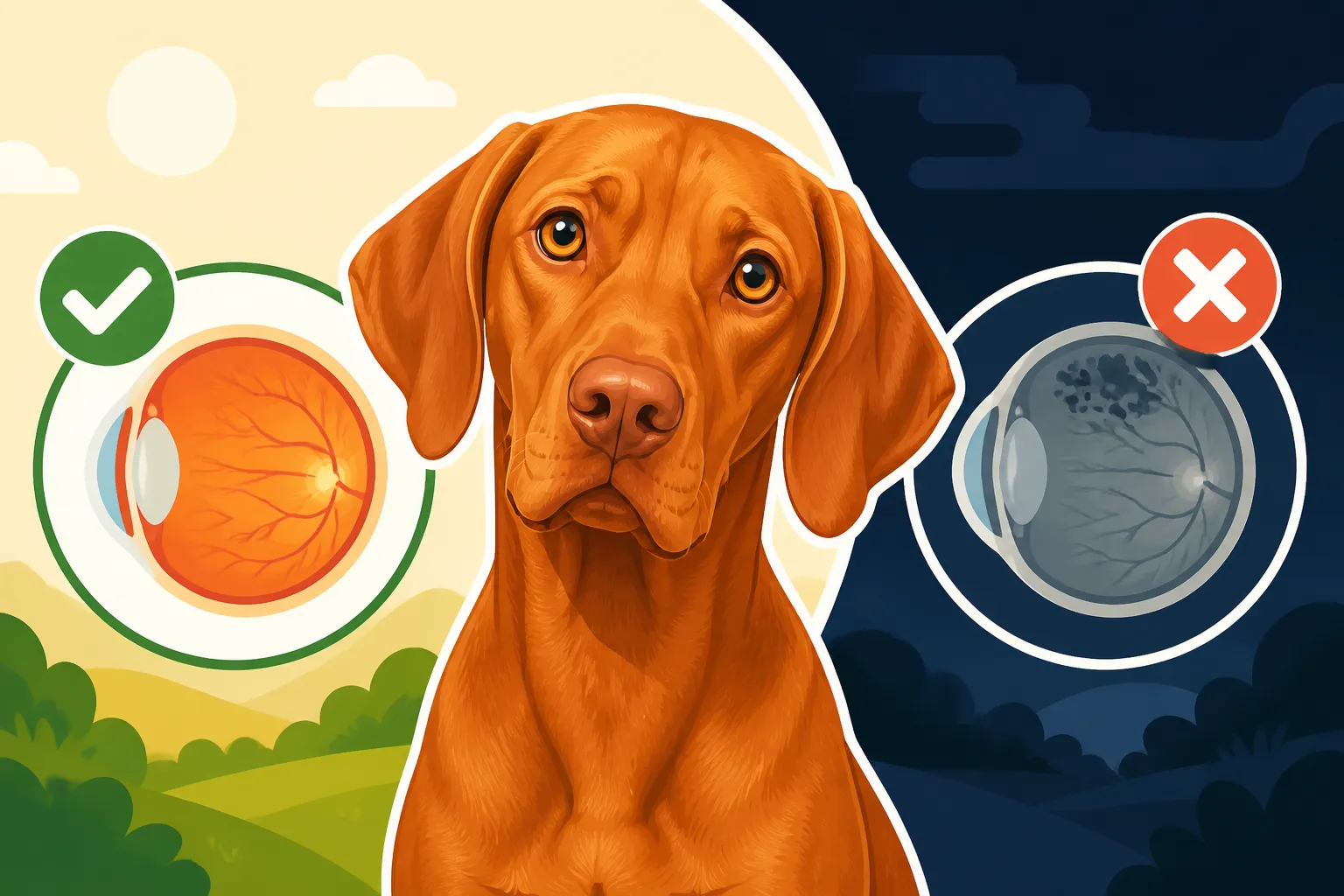
Progressive Retinal Atrophy, often shortened to PRA, isn't a single disease but rather a blanket term for a group of inherited degenerative eye disorders that affect the retina, the light-sensitive tissue at the back of the eye. Think of the retina as the film in an old camera; it's responsible for capturing images and sending them to the brain. When PRA strikes, the cells in this "film"—specifically the photoreceptor cells (rods and cones)—begin to deteriorate. This deterioration leads to a gradual, irreversible loss of vision, eventually resulting in complete blindness. For a breed as active and visually oriented as the Vizsla, this diagnosis can feel incredibly daunting, changing their world in profound ways.
How it Affects the Retina
At a microscopic level, PRA causes the photoreceptor cells in the retina to either develop abnormally from birth (early-onset PRA) or to degenerate over time after initially developing normally (late-onset PRA). Rods are the first to be affected in most forms of PRA. These cells are crucial for vision in low light conditions and for detecting motion. This explains why one of the earliest signs you might notice in your Vizsla is difficulty seeing in dim light or at night. As the disease progresses, the cone cells, which are responsible for day vision and color perception, also begin to fail. This gradual, insidious decline means that your Vizsla's world slowly dims, first at dusk, then in full daylight, until eventually, they are completely reliant on their other senses. It's a cruel progression, especially for a dog that loves to chase a ball or bound through a field, relying on its keen eyesight to track game or its human.
Different Forms of PRA Relevant to Vizslas
While PRA can manifest in various forms across different breeds, genetic testing has helped us pinpoint specific types. In Vizslas, while not as universally prevalent as in some other breeds like Labradors or Poodles, the possibility of PRA is still a concern, particularly for responsible breeders. The disease is generally considered an autosomal recessive trait, meaning a dog must inherit two copies of the affected gene (one from each parent) to develop the condition. If a dog only inherits one copy, they are considered a carrier and will not show symptoms but can pass the gene to their offspring. This makes understanding the genetic lineage incredibly important. Currently, there isn't one universally identified gene marker for all forms of PRA that affect Vizslas, but ongoing research continues to refine our understanding. The Canine Health Information Center (CHIC) program, supported by the Orthopedic Foundation for Animals (OFA) and various breed clubs, often recommends eye examinations by a board-certified veterinary ophthalmologist for breeding Vizslas to screen for observable eye diseases, including PRA. This is crucial because, unlike some conditions where a single genetic test is definitive, the complexity of PRA means regular eye exams remain a vital screening tool for our beloved copper dogs. If you're considering buying a puppy, it’s always wise to ask The Health Tests Both Vizsla Parents Should Have before making a commitment.
Recognizing the Early Signs of PRA in Your Vizsla
Spotting the early signs of PRA can be tricky, especially in a breed as resilient and adaptive as the Vizsla. They are masters at compensating for physical changes, often leading owners to believe their dog is just "getting older" or "a bit clumsy." However, being vigilant and knowing what to look for can make a significant difference in how quickly you can get a diagnosis and start supporting your dog. Remember, early detection won't stop the progression, but it allows you to prepare and help your Vizsla adjust, ensuring they maintain the best possible quality of life.
Night Blindness and Vision Loss
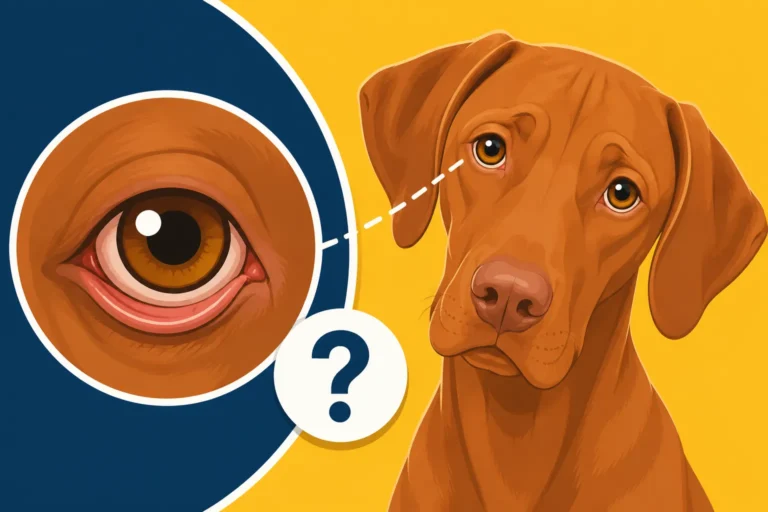
The very first noticeable symptom for most Vizsla owners is usually night blindness, also known as nyctalopia. This happens because the rod photoreceptor cells, which are responsible for low-light vision, are typically the first to degenerate. You might observe your Vizsla becoming hesitant to go out at dusk or after dark. They might bump into furniture they usually navigate with ease, especially if something has been moved. Walking into a dimly lit room, they might hesitate at the doorway or move more slowly, perhaps even tripping on things. One common anecdote from owners is that their dog, who used to fly across the backyard to bark at a squirrel in the dark, now stays closer to the porch light or seems to get disoriented in familiar surroundings once the sun goes down.
As the disease progresses, this night blindness gradually worsens and eventually impacts their day vision too. They might start to misjudge distances, such as when jumping onto the sofa or going down stairs. Their once precise retrieve might become a little less accurate, with them occasionally fumbling for a dropped toy. You might notice their pupils appear more dilated than usual, especially in normal lighting, as their eyes try to let in more light to compensate for the diminishing vision. This dilated pupil can sometimes give their eyes a reflective "glow" when light hits them. It's a slow, often frustrating decline, both for the dog and for the human watching them. For more information on visual challenges, you might be interested in Whether a Vizsla Goes Blind From PRA.
Changes in Behavior and Environment Awareness
Beyond the direct visual cues, PRA can lead to subtle but significant behavioral changes in your Vizsla. As their vision deteriorates, they naturally become more reliant on their other senses – smell, hearing, and touch. They might start to stick closer to you, exhibiting more "Velcro" behavior than usual, as they find comfort and security in your presence. Some dogs become more anxious in new environments or around unfamiliar people, as they can no longer clearly see what's happening.
You might notice they start bumping into objects that have been moved, even slightly, in their familiar home environment. They might also become more easily startled by sudden noises or unexpected touches, as they can't see the source of the sound or the approaching hand. A common sign is an increased startle response to being approached from behind, or a general reluctance to move through cluttered areas. Their once confident stride might become more tentative, their head held lower, constantly sniffing the ground to gain information about their surroundings. It's an adaptation, certainly, but it's also a clear indication that their world is shrinking. When considering the long-term well-being of your companion, it's worth thinking about The Twelve to Fourteen Years a Vizsla Lives and how to support them through all stages of life.
The Genetics Behind Vizsla PRA and Testing Options
Understanding the genetic underpinnings of PRA is crucial for both owners and breeders alike. This isn't just about managing a current diagnosis, but about making informed decisions to protect the future health of the breed. For a condition that is largely inherited, knowing the genetic status of breeding dogs is perhaps the most powerful tool we have in its prevention.
Inherited Patterns
As mentioned, Progressive Retinal Atrophy in many breeds, including what we suspect in Vizslas, follows an autosomal recessive inheritance pattern. This means:
- Affected Dog: A dog with PRA has inherited two copies of the mutated gene, one from each parent.
- Carrier Dog: A carrier dog has inherited one copy of the mutated gene and one normal copy. They will not develop PRA themselves, but they can pass the mutated gene to 50% of their offspring.
- Clear Dog: A clear dog has inherited two normal copies of the gene and will neither develop PRA nor pass on the gene.
The challenge with autosomal recessive conditions is that carriers show no symptoms, making it impossible to identify them without specific genetic tests. This means two healthy-looking carriers, if bred together, have a 25% chance of producing affected puppies, a 50% chance of producing carrier puppies, and a 25% chance of producing clear puppies. This invisible inheritance makes genetic screening absolutely vital. While the specific gene marker for PRA in Vizslas may not be as clearly defined as in some other breeds (where a definitive DNA test exists for that exact PRA type), it underscores the importance of thorough eye examinations by specialists.
Available Genetic Tests and Their Accuracy
For many breeds, direct DNA tests are available that can definitively identify clear, carrier, and affected dogs for specific forms of PRA (e.g., prcd-PRA, PRA-crd). This has revolutionized breeding practices, allowing breeders to make informed pairing decisions to avoid producing affected puppies. For Vizslas, while there isn't one universal "Vizsla PRA test" that covers all potential genetic variations of the disease, comprehensive eye examinations by a board-certified veterinary ophthalmologist remain the gold standard.
These specialized examinations, often performed by veterinary ophthalmologists participating in programs like the American College of Veterinary Ophthalmologists (ACVO) or OFA Eye Certification Registry (formerly CERF), can diagnose observable eye diseases. While these exams can't predict if a dog is a carrier for a disease that hasn't manifested yet, they can identify dogs currently affected by PRA or other Eye Disease in a Vizsla. Annual eye exams are often recommended for breeding dogs. Additionally, as genetic research continues to advance, new breed-specific genetic tests may become available. It's always a good idea for breeders and owners to stay informed through the Vizsla Club of America and veterinary ophthalmology associations for the latest recommendations and available tests. When dealing with unexpected health challenges, having a good safety net like Healthy Paws pet insurance can provide peace of mind, helping to cover the costs of specialist consultations and diagnostics, if needed.
Here’s a simple table outlining the typical progression of PRA symptoms:
| Stage of PRA | Vision Impairment | Behavioral Changes | Eye Appearance |
|---|---|---|---|
| Early Stage | Difficulty seeing in dim light (night blindness), hesitant in dark. | More cautious at night, bumping into familiar objects in low light. | Pupils may appear slightly dilated in dim light. |
| Mid Stage | Significant night blindness, noticeable difficulty in normal daylight conditions. | Increased hesitation, anxiety in new places, bumping into objects even in good light, more clingy. | Pupils more consistently dilated, eyes may appear more reflective. |
| Late Stage | Complete blindness. | Relies heavily on other senses, highly familiar environment preferred, easily startled, requires guidance. | Pupils fully dilated, eyes may have a "glassy" or reflective appearance. |
Living with a Vizsla Diagnosed with PRA
Receiving a diagnosis of PRA for your beloved Vizsla can be devastating. It's natural to feel overwhelmed, sad, and perhaps even a bit helpless. However, a PRA diagnosis doesn't mean the end of a good life for your dog. Vizslas are incredibly resilient and adaptable creatures, and with your help, they can continue to thrive and enjoy life to the fullest. It simply means making some adjustments and understanding how to best support their changing needs.
Adapting Your Home Environment
The most immediate and impactful step you can take is to make your home a safe and predictable environment for your vision-impaired Vizsla. Consistency is key. Avoid rearranging furniture or leaving obstacles in pathways. If you do need to move something, guide your dog around the new layout several times to help them map it in their mind. Consider placing non-slip rugs on slippery floors, especially near stairs, which can become particularly hazardous.
For stairs, you might need to block access or train your Vizsla to use them with verbal cues and a leash, or even carry them if they're comfortable and it's safe. Use scent markers (e.g., a drop of essential oil on a cotton ball near doorways or food bowls) or different textured mats to mark important areas like water bowls, food dishes, or exits. Many owners find a "halo" harness helpful for dogs navigating indoors, as it prevents head bumps. Keep their food and water bowls in the same spot, and ensure their bed is always accessible and familiar. Creating a safe, unchanging "mental map" of your home will significantly reduce their anxiety and increase their confidence. This adaptation becomes even more crucial as they reach the stage of The Old Vizsla That Still Wants to Hunt, though their hunting days may be over.
Supporting Your Vizsla's Emotional Well-being
Beyond physical adjustments, your Vizsla's emotional well-being is paramount. A blind dog relies heavily on its bond with you. Continue to interact with them through touch, scent, and sound. Talk to your Vizsla frequently, letting them know where you are and what you're doing. Use verbal cues consistently ("step up," "watch out," "this way") to guide them. Invest in toys that make noise or are scented to engage their other senses. Interactive puzzle toys can still provide mental stimulation, even if they can't see them clearly.
Maintain a consistent daily routine for feeding, walks, and playtime, as predictability helps reduce anxiety. When approaching your Vizsla, always speak to them first so they aren't startled. Touch them gently from the side rather than reaching directly over their head. Regular exercise, even if it's on a long leash in a familiar, safe area, is still crucial for their physical and mental health. A long-term health condition like PRA can mean increased veterinary visits and potential specialized care. Having pet insurance, like a plan from Healthy Paws, can be incredibly beneficial in managing What a Vizsla Costs a Year to Keep, ensuring you can focus on your dog's care without added financial stress. Your patience, love, and understanding are the most powerful tools you have to help your Vizsla live a happy and fulfilling life, despite their vision loss.
The Importance of Responsible Breeding and Eye Health Screening
Responsible breeding isn't just a fancy term; it's the bedrock of a healthy breed. When it comes to conditions like Progressive Retinal Atrophy, which have a clear genetic component, the choices made by breeders have a profound and lasting impact on the health and welfare of future generations of Vizslas. For anyone passionate about the breed, supporting responsible breeding practices is paramount.
The Role of OFA and ACVO Eye Exams
The Orthopedic Foundation for Animals (OFA) and the American College of Veterinary Ophthalmologists (ACVO) play critical roles in promoting canine eye health. The OFA, through its Canine Health Information Center (CHIC) program, provides a centralized database for health screening results, including eye examinations. A CHIC number signifies that a dog has undergone all recommended health screenings for its breed, as determined by the parent club (in this case, the Vizsla Club of America).
For eye health, this typically involves an annual examination by a board-certified veterinary ophthalmologist. These ACVO eye exams (often informally referred to as "CERF" exams, after the Canine Eye Registry Foundation, which was absorbed by OFA) are crucial. During the exam, the ophthalmologist will thoroughly inspect the dog's eyes for any signs of inherited eye diseases, including various forms of PRA, cataracts, glaucoma, and more. The results are then submitted to the OFA database. While these exams primarily detect present conditions and cannot definitively identify all carriers of recessive traits, they are invaluable for identifying affected dogs and for helping breeders track patterns within their lines. It's a key part of the puzzle in minimizing Eye Disease in a Vizsla.
Choosing a Reputable Breeder for Prevention
When you're looking for a Vizsla puppy, one of the most significant preventative measures against inherited diseases like PRA lies in choosing a truly reputable breeder. A responsible breeder is not just someone who loves dogs; they are dedicated stewards of the breed's health. They will actively participate in health screening programs, be transparent about the health history of their breeding stock, and openly discuss any health concerns in their lines.
Here's what to look for:
- Health Clearances: Insist on seeing current OFA eye certifications (ACVO exams) for both parents, demonstrating they have been screened for inherited eye diseases. Don't just take their word for it; ask for the official certificates or look up the dogs on the OFA website.
- Genetic Testing: Inquire if any genetic tests relevant to Vizsla eye health are performed, and ask for those results. While a specific, comprehensive PRA genetic test for Vizslas may not be widely available, ongoing research means this can change.
- Transparency: A good breeder will be open about any health issues in their extended pedigrees and won't shy away from discussing potential concerns.
- Longevity and Health Records: They should be able to provide information on the health and longevity of the parents' ancestors.
- Vizsla Club Affiliation: Reputable breeders are often members of the Vizsla Club of America or local breed clubs and adhere to their ethical breeding guidelines.
By selecting a breeder who prioritizes health testing and transparency, you significantly increase your chances of bringing home a healthy puppy and contribute to the long-term well-being of the Vizsla breed. This vigilance also supports efforts to understand and combat conditions like Why Vizslas Carry So Much Immune Disease and other prevalent health concerns. It’s an investment not just in a pet, but in the future of the breed itself.
Disclaimer
Please remember that the information provided in this guide is intended for educational and informational purposes only, and does not constitute veterinary medical advice. Always consult with a qualified veterinarian or a board-certified veterinary ophthalmologist for any health concerns or before making any decisions about your Vizsla's health or treatment.