Whether a Vizsla Looks Underweight When It Is Not
A healthy Vizsla can look surprisingly lean beside a stockier dog, especially during adolescence or after a busy stretch of exercise. Visible ribs or a narrow waist can be unsettling, but appearance alone cannot tell you whether your dog is underweight. This guide explains what a naturally athletic Vizsla should look like, how to check body condition, and when a change deserves a vet’s attention.
Why a healthy Vizsla can look so lean
An athletic outline is part of the breed
Vizslas are built for sustained movement, not for a broad, heavy silhouette. A fit adult often has a defined waist when viewed from above and an abdominal tuck when viewed from the side. Their short coat also leaves little to soften the outline, so the ribs, hip contours, or muscle definition can seem more noticeable than they would on a fluffier dog.
That can make a healthy Vizsla look “too thin” to someone used to a Labrador or another more substantial-looking breed. But comparing breeds is not a reliable way to judge weight. A Vizsla may be at a healthy body condition while looking markedly lean beside a dog with a different frame, coat, or body type. For more context on proportions and size, see What a Vizsla Actually Weighs.
A naturally slender outline is different from a dog losing condition. The useful question is not simply whether you can see a rib, but whether the dog’s overall body shape, muscle, appetite, energy, and weight trend are appropriate for that individual.
Age, frame, and activity change the picture
Young Vizslas can look especially leggy and narrow as they grow. Their height and limbs may seem to arrive before the rest of their body fills out, creating an adolescent “all legs” phase. A puppy or young adult’s outline can therefore look lean without indicating a problem, though steady growth and good health still matter. Whether a Vizsla Should Grow Slowly offers more on why gradual development is preferable to trying to make a young dog look bigger.
Adult build also varies. Two healthy Vizslas of similar height can have different frames and muscle definition. Sex, family lines, age, and the amount and type of exercise can all affect how a dog looks. A working dog in active training or hunting season may develop more visible muscle and burn more energy than a less active companion, while a senior may gradually lose muscle even if the number on the scale changes little.
If your Vizsla has always been slim, eats normally, has a bright and energetic manner, and has maintained a stable weight, that history is reassuring. A sudden change from that familiar shape is more informative than a single comparison with another dog. For an overview of how body weight relates to breed size, Whether a Vizsla Stays Too Lean may also be useful.
How to tell a lean Vizsla from an underweight one
Check the ribs, waist, and muscle together
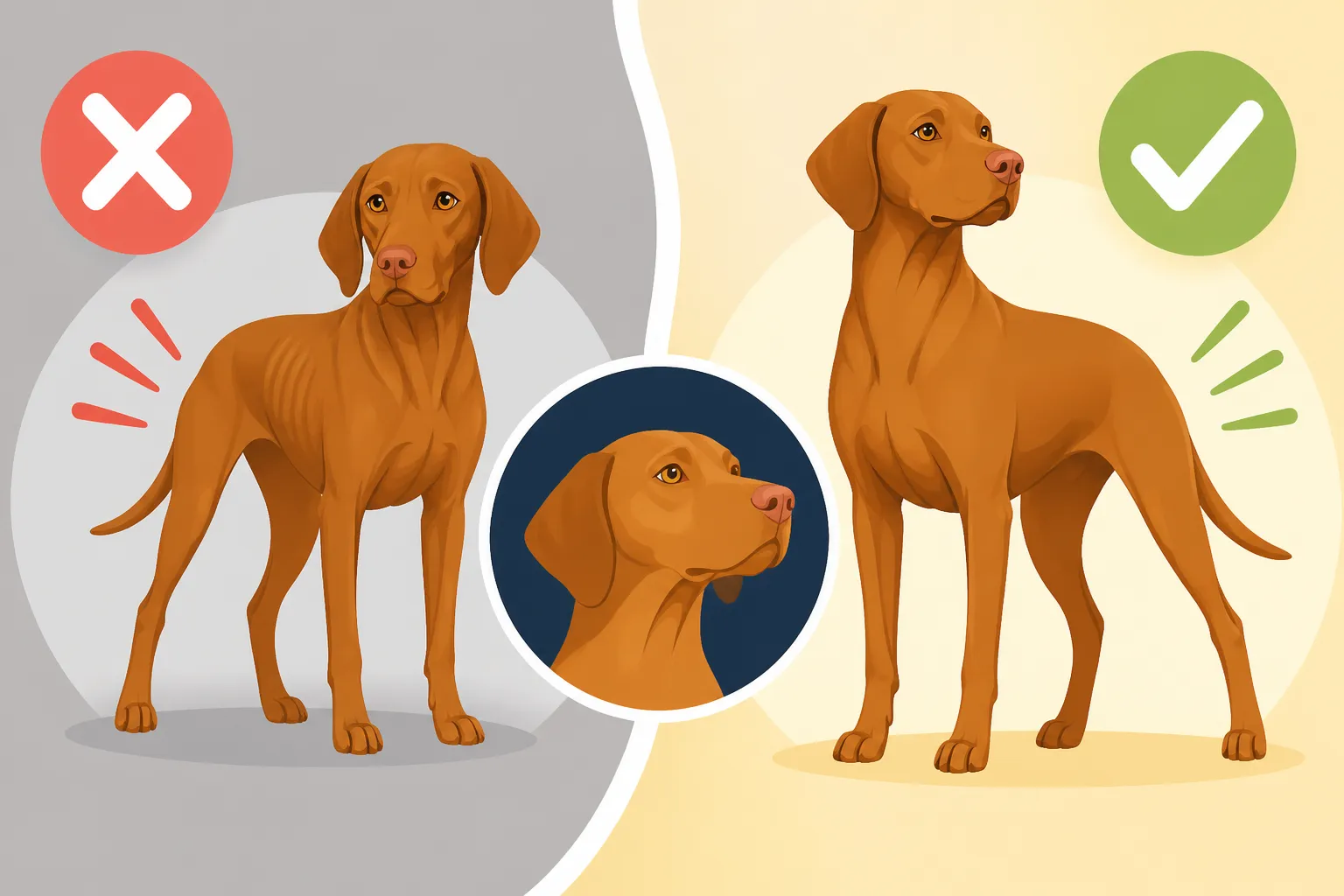
A hands-on check is more useful than relying on a quick glance. Run your fingertips gently over your dog’s rib cage. On a dog in good condition, you should generally be able to feel the ribs without pressing hard, but they should not feel extremely sharp or stick out prominently. Look from above for a waist behind the ribs, then from the side for an abdominal tuck rather than a straight or sagging underside.
Also look at the spine, hips, and muscles over the shoulders and thighs. A defined shape is not automatically a warning sign; pronounced bones combined with a hollow or visibly wasted appearance are more concerning. If you are uncertain, ask your veterinarian to assess body condition and show you what is normal for your dog’s frame. Whether Ribs Should Show on a Vizsla focuses on this common point of confusion.
| What you notice | More consistent with a healthy, lean build | More concerning for low body condition |
|---|---|---|
| Ribs | Easy to feel, with a light covering | Very prominent or sharp-looking |
| Waist | Defined when viewed from above | Extremely pinched or hollow |
| Abdomen | Tucked up behind the ribs | Markedly drawn in, especially with other signs |
| Spine and hips | Outlined but not sharply protruding | Bones stand out distinctly |
| Muscles | Firm, even muscle over shoulders and thighs | Noticeable loss of muscle or a sunken look |
| Weight trend | Stable for the individual | Unintended, ongoing decline |
These are general observations, not a diagnosis. A dog can be lean and still be unwell, and an individual dog’s ideal condition may not match a chart perfectly. A body-condition score is most useful when your vet assesses it alongside the dog’s history, age, and build.
Track change rather than judging one moment
A single weigh-in can be misleading. The number may vary with the scale, time of day, a recent meal, or whether your dog has just exercised. If you are monitoring a concern, use the same scale under similar conditions and record the date and weight. Weighing at a regular interval can help you notice a pattern without reacting to every small fluctuation.
Photos can help too. Take side and overhead pictures in similar lighting and stance, rather than comparing a relaxed photo with one where your dog is stretching or twisting. If you use a pet scale, or order one through a retailer such as Chewy, make sure it is appropriate for your dog’s size and gives repeatable readings. The number is only one part of the picture: appetite, stool, energy, and muscle condition matter as well.
A simple log can include food type, approximate portions, treats, unusual exercise, and any digestive changes. If you buy the same food through Chewy or another retailer, keep the product name and feeding instructions consistent in your notes. That makes it easier to spot whether a change in diet or routine lines up with a change in weight.
Food, exercise, and maintaining healthy condition
Don’t assume a slim dog simply needs a larger meal
Food needs differ between dogs, even when they are the same breed and size. Activity, age, reproductive status, health, food energy density, and treat intake can all affect how much a dog needs. A Vizsla that runs, trains, or hunts regularly may need a different feeding plan from a dog whose routine is mostly walks and time at home. Start with the food’s feeding guidance, but treat it as a starting point rather than a personalized prescription. How Much an Adult Vizsla Eats Daily explains why feeding amounts can vary.
If you are concerned that your dog is too thin, first measure the food you currently serve rather than estimating by eye. Check whether treats, training rewards, chews, and food shared by other household members are included in the daily total. Keep the diet consistent while you observe the dog, unless your veterinarian recommends a change. Switching foods repeatedly can make it harder to understand whether appetite or digestion is part of the issue.
For a working Vizsla, extra activity may change energy needs, but adding food should be based on the dog’s condition and workload rather than a desire to make the ribs disappear. Keeping Weight On a Working Vizsla covers the particular challenge of maintaining condition during an active season. If you use Chewy to reorder your dog’s regular food, check the label and product details when a package arrives; formulations or packaging can change, and consistency helps when you are tracking intake.
Consider workload and recovery, not just exercise minutes
A dog can be very active and still maintain healthy weight if food intake matches the work and recovery is adequate. On the other hand, a sudden increase in field time, running, or training can lead to a gradual drop in condition if meals and recovery routines remain unchanged. Keep an eye on your Vizsla during demanding periods, especially if the dog is covering lots of ground or working in challenging weather.
It helps to note what “normal” looks like for your own dog during quieter weeks. If the waist becomes much more pronounced during a busy period, or the ribs and hip bones grow sharper, bring that observation to your veterinarian. They can help determine whether the change reflects increased energy needs, an underlying health issue, or a combination of factors.
Avoid trying to build weight quickly with rich additions or large, sudden increases in food. Abrupt diet changes may upset digestion, and feeding decisions should account for your dog’s overall health. If a change in food is advised, ask your vet how to transition and what signs to monitor. A gradual, measured approach gives you better information than changing several things at once.
When a lean appearance deserves veterinary attention
Watch for a new or unexplained change
A naturally slim dog who has looked much the same for months is different from a dog who has recently lost weight. Contact your veterinarian if your Vizsla’s weight is declining without an obvious explanation, if the ribs or spine have become more prominent, or if muscle appears to be disappearing. It is also worth seeking advice when a dog’s appetite, thirst, stool, energy, or normal behavior changes along with body shape.
Pay particular attention to persistent vomiting or diarrhea, difficulty eating, unusual tiredness, weakness, or reduced interest in activities your dog normally enjoys. These signs do not point to one specific cause, but they help explain why a visual check alone is not enough. If your dog seems acutely unwell or is rapidly worsening, contact a veterinary clinic promptly rather than waiting to see whether extra food helps.
When you call, share the timeline: when you first noticed the change, any recent activity or food changes, how much your dog is eating, and any digestive or behavior symptoms. Bring your weight log or photos if you have them. Clear, practical details can help the veterinary team decide what needs checking.
Ask for an individual body-condition assessment
At a routine appointment, ask your veterinarian to score your Vizsla’s body condition and show you how they assess the ribs, waist, abdomen, and muscle. This is especially helpful if household members disagree about whether the dog looks thin. Having a professional explain what is normal for your particular dog gives you a more useful reference than a generic ideal weight or an online photo.
The vet can also interpret weight changes in context. A dog may have a naturally light frame, while another with a similar scale reading may have lost muscle or body fat. If the appearance or weight change is unexplained, your veterinarian can decide whether a physical examination or further evaluation is appropriate.
A healthy-looking Vizsla is not required to match a stockier dog. Look for a balanced body shape, easy-to-feel ribs, retained muscle, steady weight, and normal appetite and energy. If those pieces do not fit together, or your dog’s familiar outline changes, get an individualized assessment instead of trying to solve it by sight alone.
Disclaimer
This article is for general informational purposes only and does not constitute professional advice. Laws, prices and regulations vary by location and change over time. Consult a qualified professional for guidance on your specific situation.