Whether a Vizsla Is Fine Boned
A Vizsla can look remarkably slender beside a stockier dog, so it is easy to wonder whether that fine-boned appearance is normal or a sign your dog is underweight. This guide explains what “fine boned” means in the breed, how to assess your Vizsla’s body condition, and when a change in shape deserves a veterinary check.
What fine boned means in a Vizsla
A lean, elegant build is part of the picture
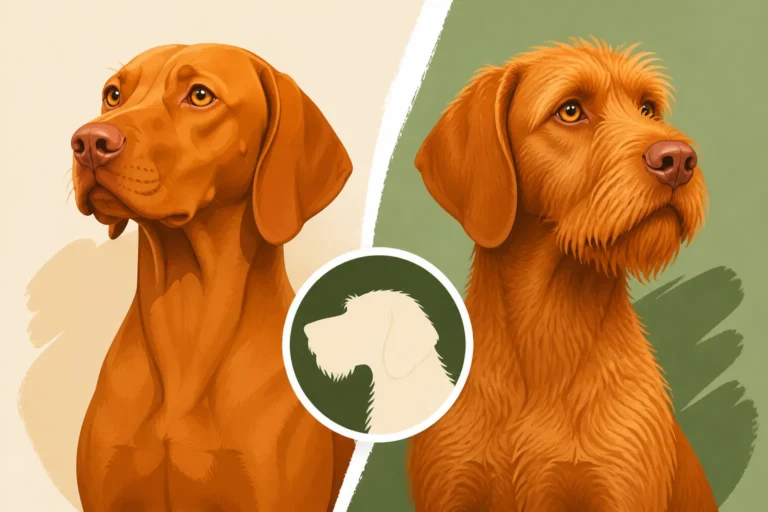
Vizslas are athletic, medium-sized sporting dogs with a streamlined outline. Their legs are long, their frame is relatively light, and their coat is short and close to the body. Without a thick coat or heavy build to soften their outline, a healthy Vizsla may look more angular than a Labrador Retriever or other sturdier dog.
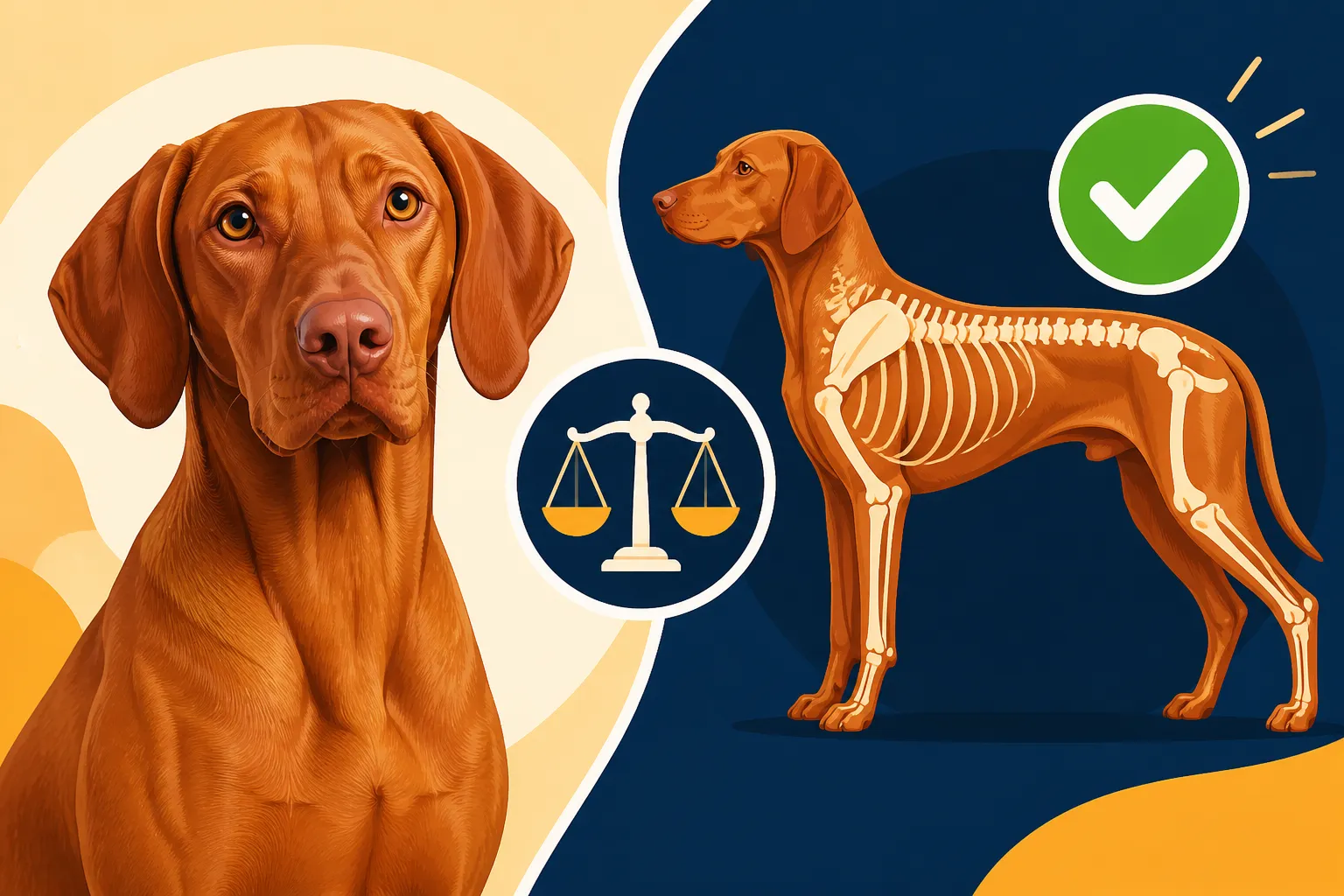
“Fine boned” usually describes the apparent thickness of the dog’s frame, especially the legs and joints. It does not mean the dog has weak bones, is automatically fragile, or is unhealthy. A Vizsla can have a light-looking skeleton and still be strong, muscular, and capable of vigorous activity. The breed’s outline is meant to look athletic rather than bulky.
A lean appearance can be particularly striking when a Vizsla is standing beside a heavier breed. That comparison is not a reliable health assessment: dogs vary in body shape, coat, muscle, and natural proportions. For a closer look at normal size and weight, see What a Vizsla Actually Weighs and How Big a Vizsla Gets.
Light in frame does not mean lacking muscle
Bone structure and muscle condition are different things. A dog’s bones make up its frame; muscle gives shape and power to areas such as the shoulders, thighs, and back. A fit Vizsla may have a narrow-looking waist but still show clear, firm muscle over the hindquarters and shoulders.
The same dog can also look different depending on its activity. A Vizsla that regularly runs, hunts, or trains may develop more visible muscle than one whose routine is mostly neighborhood walks. A dog returning to activity after an injury or a long break may look less defined until its conditioning improves. That does not necessarily mean its bones are unusually fine or that it is underweight.
Age matters, too. Puppies and adolescents can go through lanky stages as they grow, and young dogs may look a little out of proportion before they fill out. Adult dogs can also lose muscle with age or reduced activity, sometimes changing their silhouette without a major change on the scale. For those growth and proportion questions, Whether a Vizsla Fills Out After Two and Whether a Vizsla Is Leggier Than a Shorthair offer useful context.
How to tell a naturally slim Vizsla from an underweight one
Check the body rather than judging by appearance alone
A quick visual check can help, but touch gives you more information. Run your hands gently over your dog’s ribs and along the back. In a healthy, lean dog, you should generally be able to feel the ribs without pressing hard, while a layer of tissue still covers them. The ribs may be visible in some positions or lighting, but they should not look sharply prominent all the time.
Look at your Vizsla from above and from the side. From above, a defined waist behind the ribs is normal. From the side, the abdomen usually slopes upward toward the hind legs. Those contours are not automatically evidence of poor body condition. In contrast, very prominent ribs, a sharply visible spine or hip bones, and a lack of muscle over the back and thighs can be reasons to investigate further.
| What you notice | What it may mean | A sensible next step |
|---|---|---|
| A visible waist and an upward abdominal tuck | Often part of an athletic outline | Check how the ribs feel and track body condition over time |
| Ribs that are easy to feel but not sharply exposed | Common in a lean, fit dog | Keep observing weight, appetite, energy, and muscle |
| Ribs, spine, or hip bones that look pronounced | Possible loss of body fat or muscle | Arrange a veterinary assessment, especially if this is new |
| A thinner-looking rear end or back | Could relate to conditioning, age, pain, or illness | Note when it started and discuss it with your vet |
| Sudden weight or muscle loss | May have a medical cause | Contact your veterinarian rather than changing food alone |
These are general observations, not a diagnosis. A dog can lose muscle while maintaining a similar weight, and a single photograph can make a healthy dog look unusually thin because of posture, lighting, or the angle of view. If you are unsure whether your Vizsla is simply slender or genuinely underweight, Whether a Vizsla Looks Underweight When It Is Not discusses why the distinction can be confusing.
Track changes instead of relying on one weigh-in
A single number on the scale rarely tells the whole story. Your dog’s frame, age, sex, activity level, and muscle condition all affect how a particular weight looks. A body-condition score from your veterinary team can be more useful because it considers both what you see and what you feel.
At home, try to make observations consistent. Weigh your Vizsla using the same scale when possible, and write down the date, weight, appetite, activity, and any notable changes. A monthly note is more useful than trying to remember whether your dog looked thinner several weeks ago. If your Vizsla is a working dog, compare its condition across the season rather than assuming its food needs stay constant as exercise rises or falls.
For example, a dog may look leaner after several active weeks in the field, but that change should be assessed alongside its energy, appetite, recovery, and muscle. If the ribs become increasingly prominent or the dog seems tired, weak, or reluctant to work, do not treat the change as a normal consequence of being athletic. Mention the timeline to your veterinarian and bring your weight notes.
Why two Vizslas can look very different
Sex, age, and individual build all affect the outline
Male and female Vizslas can differ in size and proportion, but individual variation matters as much as broad expectations. Some dogs have a more substantial chest or stronger-looking legs; others have a lighter outline. A dog can be within a healthy range without matching the build of a particular show dog, field dog, or social-media photo. For more on typical differences, see What a Male Vizsla Weighs and What a Female Vizsla Weighs.
Age changes appearance as well. Puppies may look leggy while growing, and mature adults can gain muscle as their training develops. Older dogs may lose muscle if they become less active or have discomfort that limits movement. A slim silhouette in a young, energetic dog is not the same situation as a noticeable loss of muscle in a senior dog.
It also helps to compare your dog with its own previous condition rather than with another Vizsla. If your dog has always had a narrow frame, eats normally, maintains steady energy, and has a stable body condition, that pattern is more reassuring than a new change. If its shape has shifted, especially along with changes in appetite, stools, thirst, or activity, it is worth discussing with a vet.
Activity and conditioning influence visible muscle
Vizslas are bred for athletic work, and regular exercise can shape their bodies. A dog that runs, hikes, trains, or hunts may have more defined muscles than a dog doing less activity. But exercise alone does not guarantee healthy condition: workload, recovery, food intake, and medical issues all matter.
A sudden increase in exercise can make a dog burn more energy than its usual meals provide. Conversely, a quieter period may reduce energy needs. Rather than assuming every lean Vizsla needs more food, watch the dog’s condition and adjust its feeding plan with veterinary guidance if its weight or muscle is changing. Whether a Vizsla Is Built for Speed or Stamina gives additional context on the breed’s athletic character.
If you are comparing harnesses, coats, or other fitted gear for a narrow-chested dog, measure your Vizsla rather than choosing by breed label alone. When looking through listings on Chewy, compare the item’s measurement guide with your dog’s chest and body measurements; a slim outline can make sizing less predictable than the product photo suggests. Recheck fit as your dog grows or changes condition.
When a fine-boned appearance needs a closer look
Know the signs that deserve a veterinary call
A naturally light frame is usually consistent over time. A change is more concerning when your dog loses weight or muscle without an obvious explanation, stops eating normally, has persistent vomiting or diarrhea, seems unusually tired, or becomes less interested in exercise. Pain can also affect muscle condition: a dog that avoids stairs, jumping, or using one leg may gradually lose muscle in the area it is protecting.
Contact your veterinarian if you notice a sudden or continuing change, particularly when several signs appear together. Do not wait for a dog to look severely thin before asking for help. Early evaluation can help identify whether the issue relates to diet, parasites, dental discomfort, pain, or another health problem. Your vet can assess body condition, review the dog’s history, and recommend whether further checks are appropriate.
If your dog seems otherwise well but you are uncertain, it is still reasonable to ask at a routine appointment. Bring a recent weight history, describe any change in exercise or food, and explain what you have noticed when feeling the ribs and back. A clear timeline is often more useful than saying only that the dog “looks skinny.”
Support healthy condition with steady routines
Feed a complete diet suited to your dog’s life stage and activity, and use measured portions rather than guessing from the bowl. Treats used in training count toward daily intake, especially when a session involves many repetitions. If weight needs to change, make adjustments gradually and review the plan with your veterinarian instead of making a large food change based solely on appearance.
Keep exercise regular and appropriate for your dog’s age, fitness, and health. Conditioning should build progressively, with recovery time after hard work. If your Vizsla’s activity changes substantially—such as moving from a quiet routine to a hunting season—pay attention to body condition and discuss feeding needs with your vet. When comparing food or feeding supplies through Chewy, product labels and portion guides can help you gather information, but your dog’s condition and veterinary advice should guide the actual plan.
The main point is that a Vizsla’s fine-boned look is often a natural part of its streamlined build, not proof of weakness or poor health. What matters most is how the dog feels and functions: whether its weight is stable, its ribs are appropriately covered, its muscles are maintained, and its energy matches its normal self. If you are considering a Vizsla for your household, Whether a Vizsla Suits a First Time Owner can help you think through the breed’s broader needs beyond appearance.
Disclaimer
This article is for general informational purposes only and does not constitute professional advice. Laws, prices and regulations vary by location and change over time. Consult a qualified professional for guidance on your specific situation.