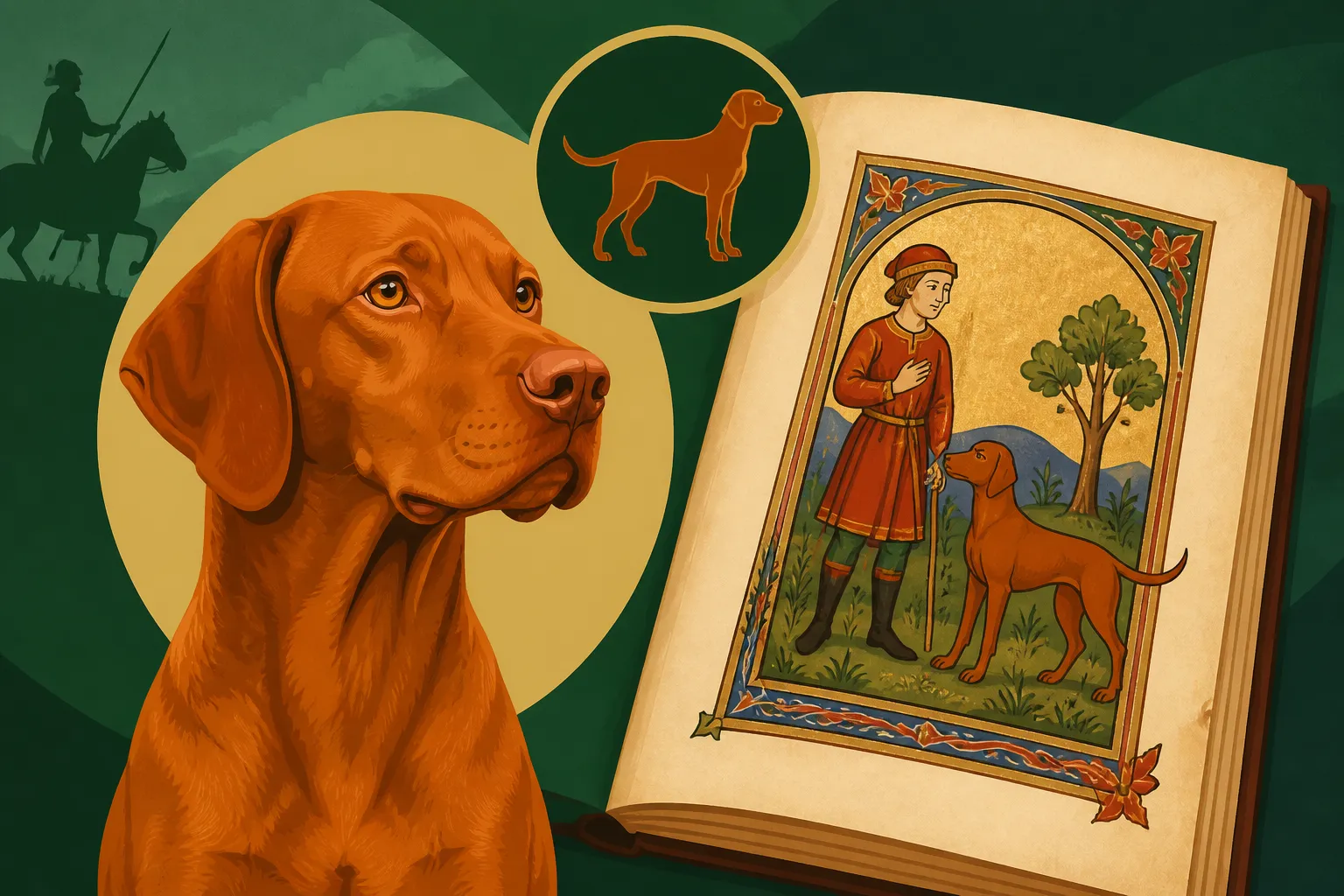
Whether Vizslas Appear in Medieval Hungarian Texts
It’s a natural curiosity for any Vizsla owner: you look at your loyal, energetic companion, and you wonder just how far back their lineage stretches. Many of us are drawn to breeds with deep historical roots, and there's a certain pride in imagining our dogs' ancestors roaming ancient lands. But when we try to connect our modern Vizslas directly to specific mentions in medieval Hungarian texts, we often hit a wall of vague references and a lack of clear-cut evidence. This guide dives into the fascinating, yet often challenging, quest to find the Vizsla in the historical records of medieval Hungary, exploring what we might expect to find and why definitive answers are so hard to come by.
Tracing the Vizsla's Ancient Roots Beyond Modern Breeding
The desire to find our beloved Vizslas etched into the annals of history is a powerful one. We see their distinctive golden-rust coats, their athletic build, and their keen hunting instincts, and it just feels like they’ve been around forever. And in a sense, they have – or at least, dogs very much like them have. However, the path from ancient canine companions to the formally recognized Vizsla breed we know today is far from a straight line.
The Elusive Origins of the Vizsla
When we talk about the "Vizsla" appearing in medieval texts, we run into an immediate hurdle: the concept of formalized dog breeds, with specific names and written standards, is a relatively modern invention. Medieval societies didn't categorize dogs in the same way we do now. Instead, dogs were often described by their function – a "hunting dog," a "herding dog," a "watchdog" – or by more generic physical descriptors. So, to expect to find a clear mention of "Vizsla" by name in a 13th-century manuscript is often asking too much of history.
This doesn't mean dogs resembling Vizslas didn't exist; it simply means the specific nomenclature hadn't been established. We're looking for ancestral types, for the spirit of the Vizsla, rather than the breed's modern designation. It’s a bit like searching for a specific brand of car in an ancient chariot race – the function is there, the intent is there, but the brand name is completely out of place for the era. The frustration often comes from this disconnect between our modern understanding of breeds and the historical reality of dog keeping.
The Magyar Connection and Early Canine Companions
The story of the Vizsla is intrinsically linked to the Magyar people, the nomadic tribes who migrated into the Carpathian Basin, which is now modern-day Hungary, around the 9th century. These were people who relied heavily on hunting for survival, and swift, skilled canine partners would have been indispensable. It’s widely accepted that the ancestors of the Vizsla arrived with these tribes, developing alongside them as versatile hunting dogs suited to the plains and forests of their new homeland.
The types of dogs the Magyars would have needed were not merely companions; they were tools for survival. They would have required dogs capable of scenting game, pointing to its location, and retrieving it, often in harsh conditions. While there might not be detailed descriptions of their appearance, we can infer their functional characteristics. Archaeological findings can give us clues about canine sizes and skull shapes from these eras, but rarely do they come with written labels like "Vizsla ancestor." The true challenge lies in making a definitive textual leap from these ancient, functional dogs to the specific breed identity we hold dear today. If you're curious about how far back these connections go, you might find some answers in Whether the Magyars Brought the Vizsla to Hungary.
Searching for the Vizsla in Medieval Hungarian Texts
The quest to find direct mentions of the Vizsla in medieval Hungarian texts is fascinating, but it's important to approach it with a clear understanding of the historical context. Unlike today's extensive records, medieval documents were often sparse, focused on different priorities, and didn't categorize the natural world in the same way we do.
What Constitutes "Medieval Hungarian Texts"?
When we talk about medieval Hungarian texts, we're generally referring to documents produced roughly between the 9th and 15th centuries. This includes royal chronicles, legal codes, monastic records, land grants, and sometimes personal correspondence or hunting treatises. Many of these texts were written in Latin, the lingua franca of scholarship and administration in medieval Europe, before Hungarian became more prevalent in written form.
The content of these texts was typically concerned with matters of state, church, and nobility. Detailed descriptions of dog breeds, especially those not central to a major political or religious narrative, would have been rare. Moreover, the survival rate of such documents over centuries of wars, fires, and natural decay is incredibly low. Researchers today sift through what remains, often encountering fragmented records and ambiguous language, which makes definitive identification of a specific dog breed exceedingly difficult.
The Challenge of Naming and Description
The primary obstacle in finding "Vizslas" in medieval texts is the lack of a standardized breed name. Dogs were known by their utility or by general terms. A common word for "hunting dog" or "pointer" might appear, but a specific breed designation like "Vizsla" simply wasn't in common use. Imagine trying to find "Golden Retrievers" mentioned by name in a 17th-century English diary – you might find "yellow retrievers" or "water dogs," but not the formal breed name we use now.
Even when descriptions of dogs do appear, they tend to be functional rather than detailed about appearance. They might describe a dog as "swift," "brave," or "good on scent," but rarely will they elaborate on coat color, ear set, or specific body proportions in a way that allows us to confidently identify it as a Vizsla. This historical linguistic gap is what often leaves Vizsla enthusiasts feeling a bit disappointed when trying to pinpoint their breed's exact textual origin. For more on early appearances, check out Which Century the Vizsla First Appears In.
Visual Evidence versus Written Records
While explicit textual mentions are rare, visual evidence can sometimes offer a glimpse into the past. Think about medieval tapestries, illuminated manuscripts, frescoes, or even stone carvings. These artistic representations might depict hunting scenes featuring dogs that bear a striking resemblance to the modern Vizsla – lean, athletic, with a short coat and distinct head shape. It's often in these visual cues that we find the strongest hints of our breed's ancient lineage.
However, even visual evidence comes with caveats. Artistic styles can distort reality, and without accompanying text, we can only infer. Is that dog pointing because it's an ancestor of a pointer, or is the artist simply depicting a common hunting stance? It's an interpretive dance between what we see and what we know. While The Stone Carvings That Show Early Vizslas might offer some tantalizing insights, they rarely come with captions explicitly naming the breed. The blend of art and historical context helps us form a picture, but it's seldom as precise as a written record from that era explicitly naming the Vizsla.
Interpretations and the Spirit of the Early Vizsla
Even if we don't find the exact word "Vizsla" in medieval texts, that doesn't diminish the rich history and lineage of the breed. Instead, it encourages us to think about the function and characteristics that have been passed down through centuries, culminating in the dog we adore today.
Understanding "Vizsla-Like" Dogs in History
It’s far more accurate to speak of "Vizsla-like" dogs during the medieval period. These would have been robust, keen-nosed hunting dogs, prized by the Magyar nobility for their versatility in the field. They needed dogs that could work birds and small game, endure long hunts, and be amenable to training. While not formally named, a dog fitting the physical and temperamental profile of an early Vizsla would have been invaluable. They likely possessed that unique blend of athleticism and biddability that still defines the breed.
These dogs weren't just working animals; they were often symbols of status and prowess. Owning a fine hunting dog reflected the owner's skill and wealth. So, while a chronicler might not write a detailed description of the dog's coat color, the presence of these dogs in the noble households and hunting parties is undeniable. The deep bond between hunter and dog, the intelligence and endurance required for medieval hunting, these are the traits that would have been nurtured and passed down, shaping the ancestors of our modern Vizslas. After all, the Vizsla was a Whether the Vizsla Was a Nobleman's Dog, a testament to its historical significance.
The Rebirth and Documentation of the Breed
The Vizsla, as a distinct, named breed, faced immense challenges throughout history, almost vanishing entirely on more than one occasion. The most critical period was arguably around the turn of the 20th century, when the breed's numbers dwindled to perilously low levels. It was through the dedicated efforts of a small group of Hungarian breeders that the Vizsla was revived, meticulously bred back from a handful of surviving individuals. This pivotal moment is a key reason why much of the formal documentation of the Vizsla as a breed, with specific standards and pedigrees, largely dates from the early to mid-20th century.
This concerted effort to preserve and standardize the breed means that while we can trace ancestral types further back, the continuous, recorded lineage of the Vizsla as a distinct breed truly begins with these revival programs. It was a conscious decision to save and define what they recognized as a unique Hungarian treasure. If you're interested in this remarkable recovery story, you can read more about The Vizsla Came Back From Extinction Twice and How the Vizsla Nearly Died Out by 1900. It highlights that the lack of medieval textual proof isn't due to the absence of the dog, but rather the nature of historical record-keeping and later periods of near extinction.
The Enduring Legacy of the Hungarian Pointer
Despite the absence of explicit medieval textual mentions, the Vizsla's legacy as the Hungarian Pointer is deeply ingrained in the country's cultural identity. It is a living, breathing connection to centuries of hunting tradition and national pride. The breed embodies the spirit of the Hungarian plains – elegant, robust, and always ready for action. Modern Vizsla owners often feel this connection strongly, appreciating their dog not just as a pet, but as a piece of history.
This connection is fostered through everything from dedicated breed clubs to the everyday care we give our dogs. Finding the right food and supplies, perhaps from a trusted source like Chewy, allows us to nourish and support these amazing animals, ensuring their health and vitality. Their status as a national dog, recognized globally, solidifies their place in history, even if written evidence from distant centuries is scarce. This isn't just a pet; it's a testament to endurance and loyalty, a truly Whether the Vizsla Is Hungary's National Dog.
Why This Historical Quest Matters to Vizsla Owners Today
For many of us who share our lives with a Vizsla, understanding their background isn't just an academic exercise. It deepens our appreciation for the breed and helps us understand their unique traits, needs, and behaviors. The historical quest, even with its elusive answers, enriches the ownership experience.
Connecting to a Rich Heritage
There's an undeniable allure in owning a dog breed with such a storied past. Knowing that a lineage of dogs similar to your own has been at the side of hunters and nobility for over a thousand years creates a profound connection. It explains the Vizsla's exceptional intelligence, their unwavering loyalty, and their sometimes demanding energy levels – traits honed over centuries to make them perfect working partners. This heritage gives us context for their strong instincts and their desire to be involved in everything you do.
This connection to a rich heritage is often a significant draw for potential owners. It’s not just about getting a dog; it’s about becoming a part of a historical narrative. It fosters a sense of responsibility to uphold the breed's characteristics and to understand the historical purpose for which they were originally developed. This shared history makes the bond with a Vizsla even more special, knowing you're part of a living tradition.
Preserving the Breed's Purpose
Understanding the Vizsla's historical role as a versatile Hungarian hunting dog is crucial for its preservation. It reminds us that while they make wonderful companions, their innate drive and intelligence are rooted in their original purpose. This historical understanding influences responsible breeding practices, ensuring that the working abilities, temperament, and health for which the breed is known continue to thrive. It also guides owners in providing the mental and physical stimulation their Vizsla needs to truly flourish, recognizing that a bored Vizsla is often a destructive one.
Many Vizsla owners choose to engage in activities that tap into their dog's natural instincts, whether it's hunting, field trials, agility, or extensive hiking. This commitment helps preserve the breed's functional integrity. Providing high-quality nutrition, perhaps by exploring the wide range of specialized foods available on Chewy, is another way owners support their Vizsla's active lifestyle, honoring its athletic heritage. It's all part of ensuring the Vizsla remains true to its versatile roots, a concept explored in What Versatile Means for a Vizsla.
The Vizsla as a Cultural Icon
Even in the absence of definitive medieval textual references, the Vizsla stands as a powerful cultural icon for Hungary. It's a national treasure, symbolizing elegance, loyalty, and the country's rich hunting traditions. This iconic status means that the Vizsla's story is told through oral traditions, art, and the passion of its fanciers, transcending the need for specific ancient written records. This enduring cultural significance is a testament to the breed's deep impact on its homeland and its people.
For owners around the world, the Vizsla's status as a cultural icon adds another layer of appreciation. They are not just dogs; they are ambassadors of a proud history. This means many owners go the extra mile to learn about Hungarian culture, history, and even language, further connecting themselves to their dog's origins. When you see a Vizsla, you're looking at a living piece of Hungarian heritage, a testament to the fact that some stories are told through actions and enduring presence, even if they aren't always explicitly written down. You can even find them depicted on Whether the Vizsla Appears on Hungarian Stamps, showing their modern cultural significance.
To summarize the search for Vizslas in medieval Hungarian texts:
| Aspect of Search | Medieval Hungarian Texts (approx. 9th-15th century) | Modern Breed Records (post-1900) |
|---|---|---|
| Breed Name "Vizsla" | Highly unlikely to appear explicitly | Standardized and consistently used |
| Description Focus | Functional (e.g., "hunting dog," "swift") | Detailed physical traits, temperament, origin |
| Identification | Inferential, based on context/visual art | Clear, based on written standards/pedigrees |
| Primary Language | Latin, Old Hungarian | Hungarian, English, other modern languages |
| Survival Rate | Fragmented, rare | Extensive, well-preserved |
This table helps illustrate why finding our specific breed name in ancient texts is such a difficult, though compelling, endeavor.
Disclaimer
This article is for general informational purposes only and does not constitute professional advice. Laws, prices and regulations vary by location and change over time. Consult a qualified professional for guidance on your specific situation.