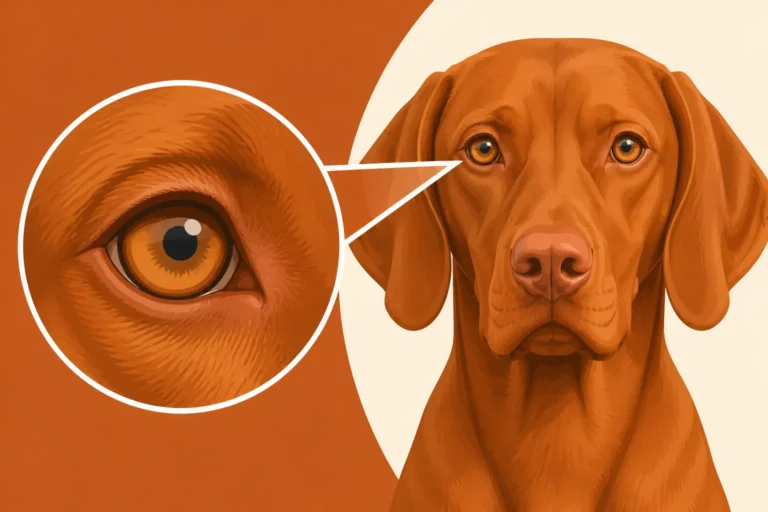
How the Vizsla Nearly Died Out by 1900
It’s truly sobering to think that the vibrant, energetic Vizsla we cherish today almost wasn't here. Many of us fall in love with their stunning golden-rust coats and their unparalleled zest for life, but few realize just how close this incredible breed came to vanishing completely. This guide will take you on a journey through the challenging times leading up to the turn of the 20th century, exploring the specific factors that pushed the Vizsla to the very brink of extinction and the quiet heroism that began its long, hard road back.
The Echoes of Ancient History: Vizslas Before the Brink
To truly appreciate the Vizsla's near-extinction, we need to understand just how long and storied their history actually is. These dogs weren't some new fad; they were an integral part of Hungarian culture for centuries. Their roots run deep, intertwining with the very fabric of the country's hunting traditions and aristocratic life. Imagine a lineage stretching back through countless generations, nearly erased by the tides of change. It's a testament to their inherent qualities that they survived at all.
Tracing the Magyar Hounds Through Time
The ancestors of today's Vizslas arrived in the Carpathian Basin with the nomadic Magyar tribes over a thousand years ago. These were not simply "dogs" but specialized hunting companions, crucial for survival and sport. These early Magyar hounds were likely varied in appearance and type, but the consistent thread was their purpose: to find, point, and retrieve game. They weren't just pets; they were partners in a very real sense, indispensable for putting food on the table and providing entertainment for the nobility. We can even find The Stone Carvings That Show Early Vizslas, giving us a glimpse into their ancient past and proving their long-standing presence.
Over time, these dogs adapted to the Hungarian landscape and hunting styles. They were prized for their speed, endurance, and keen scenting abilities, able to navigate dense cover and open plains alike. The evolution of the Vizsla was a slow, natural process, shaped by the demands of their environment and the selective breeding efforts of dedicated hunters. They developed that distinctive short, dense coat, perfect for shedding water and briars, and their elegant, muscular build that allows them to move with such grace and power today. It's truly incredible to consider the thousands of years of adaptation that built this breed, only for it to almost disappear.
A Breed Tied to Nobility and the Hunt
For centuries, the Vizsla was predominantly the companion of Hungarian aristocracy and landed gentry. Owning one was often a mark of status, and their lineage was carefully guarded. These were dogs bred for a specific purpose: to assist in upland bird hunting, working closely with their human partners. The close bond between hunter and dog was paramount, and the Vizsla's sensitive, biddable nature made it an ideal choice for this partnership. They were known not only for their hunting prowess but also for their devotion and gentle temperament within the home. This duality — fierce hunter, gentle companion — has always been a hallmark of the breed.
The rich history meant that the Vizsla was somewhat insulated from the whims of popular canine trends. They were valued for their performance and their heritage, rather than simply their looks. This strict association with the nobility and their hunting grounds was a double-edged sword, however. While it ensured a certain level of purity and dedicated breeding efforts for a long time, it also meant that their fate was heavily tied to the fortunes of the noble class. When those fortunes began to wane, so too did the security of the Vizsla. It's a sad irony that the very thing that protected them for so long eventually became a vulnerability. You can delve more into their early history by reading The Magyar Hunting Dogs Behind the Vizsla.
The Winds of Change: Why the Vizsla Faced Extinction
The 19th century brought about significant social, economic, and technological shifts across Europe, and Hungary was no exception. These changes had a profound impact on rural life, hunting practices, and ultimately, the survival of many traditional dog breeds, including our beloved Vizsla. It wasn't one single catastrophic event, but rather a perfect storm of converging factors that pushed them to the edge.
The Shifting Sands of Hunting Practices
One of the primary drivers of the Vizsla's decline was the change in hunting methods. Traditionally, hunting had been a somewhat slower, more methodical affair, often involving walking hunters who appreciated a close-working dog that could point and retrieve with precision. The Vizsla, with its excellent nose and natural biddability, excelled in this role. However, as the century progressed, new firearms and a desire for faster, more widespread hunting began to favor dogs that could cover vast expanses of land quickly, often ranging much further from the hunter.
This meant a growing preference for breeds like the English Pointer and German Shorthaired Pointer, which were renowned for their wide-ranging abilities and intense points. These breeds, often perceived as "more efficient" for the new style of hunting, started to gain popularity, overshadowing the traditional Hungarian pointer. The demand for the Vizsla simply began to diminish, and with less demand, fewer were bred, and fewer still were bred with the same dedication to preserving their unique traits. It's a classic example of market forces impacting a living breed, and it was a devastating blow. Whether the Vizsla Was Crossed With the Pointer is a related topic that explores some of these influences.
The Influx of "New and Improved" Breeds
Beyond just changes in hunting styles, there was a significant influx of foreign dog breeds into Hungary during the 19th century. As communication and transportation improved, various European breeds became more accessible. Many of these breeds arrived with established reputations, often seen as superior for specific tasks or simply as more fashionable. For example, the aforementioned Pointers, but also Retrievers and other versatile gun dogs, started to capture the attention of Hungarian hunters and dog enthusiasts.
This "breed fever" led to widespread cross-breeding, often with little regard for the preservation of native Hungarian types. Breeders might try to improve speed, add retrieve drive, or enhance a certain look by mixing in blood from these imported breeds. While some of these crosses might have produced capable hunting dogs, they diluted the unique genetic characteristics of the Vizsla. The distinct golden-rust coat, the fine boning, the gentle temperament – these traits, honed over centuries, were at risk of being lost in a sea of mixed genetics. It wasn't malicious intent, but rather a lack of foresight and a focus on immediate, perceived improvements that endangered the Vizsla's very identity. Imagine trying to find a purebred Vizsla on Chewy or at a specialty store if everyone was just mixing them!
Economic Hardship and Changing Lifestyles
The 19th century in Hungary was also marked by periods of significant political and economic upheaval. The Austro-Hungarian Empire saw various changes, and particularly for the landed gentry, financial stability was not always guaranteed. Maintaining a kennel of specialized hunting dogs became an expensive luxury that many could no longer afford. When resources are scarce, "working" animals must demonstrate exceptional utility, and if a "foreign" breed was perceived to offer more for less, it was often chosen over the native option.
Furthermore, as society industrialized and urbanization increased, traditional aristocratic estates and their hunting grounds dwindled. The demand for hunting dogs in general lessened for the common person, and fewer individuals had the time, land, or means to pursue extensive hunting. Dogs that could serve multiple purposes, or simply cost less to acquire and keep, became more attractive. This socio-economic shift meant fewer dedicated homes for Vizslas, contributing significantly to their declining numbers. It’s a sad reality that sometimes, the most magnificent breeds suffer when the lifestyle they were created for undergoes a radical transformation. Whether the Vizsla Was Only Owned by Landowners highlights this critical link.
The Grim Reality of 19th Century Decline
By the end of the 19th century, the cumulative effect of these pressures had pushed the Vizsla to the brink. It wasn't just a reduction in numbers; it was a crisis of identity and genetic diversity. The breed faced a genuine threat of disappearing entirely, becoming just a footnote in the history of Hungarian canines.
Dwindling Numbers: A Frighteningly Small Gene Pool
The most alarming aspect of the Vizsla's decline was the sheer drop in their population. Reliable figures from the late 1800s indicated that purebred Vizslas were incredibly rare, perhaps numbering in the dozens rather than hundreds or thousands. Imagine trying to find a purebred specimen when there were so few left! This meant that the existing gene pool was frighteningly small. When a breed has such limited genetic diversity, it becomes highly vulnerable to various issues. Inbreeding becomes a necessity for reproduction, which can lead to a host of health problems, reduced vigor, and an increased susceptibility to genetic diseases. It's a very precarious situation for any breed to be in.
The dwindling numbers meant that dedicated breeders, those who truly understood and valued the Vizsla, had an immense challenge on their hands. Finding unrelated, healthy breeding stock was like searching for a needle in a haystack. Each remaining Vizsla became precious, a potential lifeline for the entire breed. It's truly incredible to think that the vibrant Vizsla population we see today, active in field trials, obedience, and as cherished family companions, sprang from such a tiny genetic bottleneck. You can learn more about this critical point by exploring How Few Vizslas Were Left in 1900.
The Disappearing Distinctive Traits
Beyond just the quantity of dogs, the quality and distinctiveness of the breed were also rapidly eroding. The widespread cross-breeding mentioned earlier meant that many of the unique Vizsla characteristics were becoming diluted. It wasn't uncommon to see dogs advertised as Vizslas that exhibited traits from other breeds – perhaps a slightly different coat color, a heavier build, or a different ear set. The iconic golden-rust color, so specific to the breed, was at risk, as were their characteristic temperament and hunting style.
The danger here was not just aesthetic. The unique combination of traits that made the Vizsla such a superb versatile hunting dog – their scenting ability, biddability, natural point, and soft retrieve – was also being lost. If these specific working characteristics were bred out, then the very purpose for which the Vizsla was developed would cease to exist. It became a race against time to identify and preserve those remaining individuals who still embodied the true essence of the Hungarian Vizsla, before their unique heritage faded into history. This battle to retain core traits while rebuilding numbers is a fascinating and crucial part of the Vizsla's survival story.
| Factor of Decline | Description | Impact on Vizsla |
|---|---|---|
| Changing Hunting Styles | Shift from close-working walking hunts to wide-ranging, faster methods. | Vizslas, typically close workers, became less preferred. |
| Influx of Foreign Breeds | Introduction of popular Pointers and Retrievers from other countries. | Led to cross-breeding, diluting Vizsla genetics and traits. |
| Economic Hardship | Financial strains on aristocracy and changes in land ownership. | Reduced ability to maintain specialized kennels; hunting dogs became a luxury. |
| Urbanization & Industrialization | Decline in traditional rural lifestyles and hunting as a primary activity. | Decreased overall demand for traditional hunting dogs. |
| Genetic Dilution | Loss of distinct Vizsla characteristics due to rampant cross-breeding. | Threatened the unique appearance, temperament, and working abilities. |
| Small Gene Pool | Dramatically reduced number of purebred individuals. | Increased risk of inbreeding depression and loss of genetic diversity. |
The Whispers of Hope: Early Efforts to Save the Vizsla
Just when it seemed the Vizsla might be lost forever, a small but dedicated group of Hungarian enthusiasts refused to let that happen. Their efforts, often against great odds, marked the beginning of the breed's incredible resurgence. It’s a powerful reminder that passion and dedication can truly save a species, even one as domesticated as a dog.
Passionate Breeders Refuse to Let Go
In the late 1800s and early 1900s, a handful of committed individuals recognized the dire situation facing the Vizsla. These weren't just casual dog owners; they were deeply knowledgeable hunters, aristocrats, and patriots who understood the historical and cultural significance of the breed. They saw the Vizsla not just as a dog, but as a living piece of Hungarian heritage, a testament to their nation's history and sporting tradition. Their refusal to surrender to the prevailing trends was the first, crucial step in the breed's survival.
These early saviors took on the monumental task of identifying and acquiring any remaining purebred Vizslas they could find. They were driven by a singular purpose: to gather enough breeding stock to stabilize the population and rebuild the breed's distinct characteristics. This wasn't a commercial venture; it was a labor of love, fueled by a deep respect for the Vizsla and a desire to ensure its future. Their dedication laid the groundwork for the more organized efforts that would follow, setting the stage for the Vizsla to, incredibly, come back from extinction twice. You can read more about this journey in The Vizsla Came Back From Extinction Twice.
Scouring the Countryside for Survivors
The effort to save the Vizsla was essentially a widespread detective mission. These dedicated individuals, often acting independently at first, began to scour the remote regions of Hungary, particularly on large estates and in isolated villages where traditional hunting practices might have persisted longer. They looked for dogs that still possessed the unmistakable golden-rust coat, the athletic build, and the characteristic temperament of the true Vizsla. It was a painstaking process, often involving traveling long distances and negotiating with skeptical farmers or isolated landowners who might have had an "old-fashioned" dog tucked away.
Imagine the excitement of finding a genuine Vizsla in a remote part of the countryside, a dog whose lineage might trace back centuries, a living link to the past. Each discovery was a victory, each addition to the nascent breeding program a glimmer of hope. These dogs, often humble farm dogs rather than grand kennel residents, became the foundation stock for the modern Vizsla. Their health, their temperament, and their adherence to the breed standard were meticulously evaluated. This grassroots effort, driven by genuine concern and a touch of national pride, proved that even when a breed seems lost, there's always a chance for revival if enough passionate people are willing to search for and protect its last remaining representatives. The story of The Twelve Dogs the Vizsla Was Rebuilt From in 1900 speaks volumes about this desperate search and the tiny foundation stock that saved the breed.
Looking Back and Moving Forward: Lessons from the Brink
The Vizsla's near-extinction by 1900 is more than just a historical anecdote; it's a powerful lesson about breed preservation, the impact of societal changes on animal populations, and the incredible resilience of a dedicated group of people. Understanding this critical period helps us appreciate the Vizsla even more today.
The Enduring Legacy of the Vizsla's Survival
The fact that the Vizsla not only survived but thrived after such a dramatic decline is a testament to its inherent qualities and the vision of those who saved it. The meticulous efforts of those early breeders, who carefully selected and propagated the remaining purebred dogs, ensured that the Vizsla's unique combination of hunting prowess and gentle companionship was preserved. This legacy means that today, we get to experience the joy of these incredible dogs, whether they're working the field or curling up on the sofa. It highlights the importance of responsible breeding and maintaining genetic diversity within any purebred line.
The survival of the Vizsla also serves as a reminder of the cultural significance that breeds can hold. For Hungary, the Vizsla is a national treasure, a symbol of their hunting heritage. Its comeback story is interwoven with the nation's own identity. It teaches us that some things are worth fighting for, even when the odds seem insurmountable. This enduring legacy also means that modern Vizsla breeders often emphasize health testing and careful pairings, acutely aware of the breed's past genetic bottleneck. You can often find detailed health information for specific dogs on platforms like Chewy's breeder resources or directly from reputable breeders, who understand the importance of safeguarding the breed's future. Whether the 1900 Rebuild Narrowed the Vizsla Gene Pool delves into this crucial aspect of genetic health.
What This History Means for Modern Vizsla Owners
For us, as modern Vizsla owners, this history should instill a profound sense of responsibility and appreciation. Every Vizsla we welcome into our homes is a direct descendant of those few precious individuals saved from the brink. It means understanding that this breed, while robust and energetic, has a history of vulnerability. It encourages us to support ethical breeders who prioritize health, temperament, and adherence to the breed standard. It also helps us understand some of the Vizsla's unique characteristics. Their "Velcro" nature, for example, might stem partly from generations of being such close companions to their hunters – a bond that was essential for their survival and performance.
This historical context also encourages us to engage with our Vizslas in ways that honor their heritage. Whether it's through field work, dog sports, or simply long hikes in nature, providing them with outlets for their intelligence and athleticism keeps their spirit alive. It’s a reminder that their purpose-bred traits are deeply ingrained. When you see your Vizsla point at a bird, retrieve a dummy, or simply cuddle up close on the couch, remember the long journey that brought them to you. It's a connection to a past that was nearly lost, but thankfully, was fiercely reclaimed. From the essential gear on Chewy that supports their active lifestyle to the careful veterinary care for their health, every choice we make as owners contributes to the ongoing story of this magnificent breed's survival.
Disclaimer
This article is for general informational purposes only and does not constitute professional advice. Laws, prices and regulations vary by location and change over time. Consult a qualified professional for guidance on your specific situation.