How Much Hair a Vizsla Leaves on Furniture
One of the most common, and sometimes infuriating, realities of living with a Vizsla is the constant battle against their hair. You love your dog, absolutely, but you’re probably tired of finding that short, bristly copper-gold hair woven into your sofa cushions, stuck to your favorite sweater, or mysteriously appearing on your kitchen counter. It’s a unique challenge, isn’t it? This guide is here to shed some light (pun intended!) on exactly how much hair a Vizsla leaves on furniture and, more importantly, what you can do about it.
Understanding the Vizsla Coat and Its Shedding Habits
Many prospective Vizsla owners hear "single coat" and breathe a sigh of relief, imagining a life free from dog hair tumbleweeds. Oh, if only that were entirely true! While they don't have the fluffy undercoat of a retriever or a husky, their short, sleek coat presents its own distinct challenges when it comes to shedding.
The Vizsla's Single Coat: What It Means for Shedding
Unlike breeds with a dense, insulating undercoat that "blows" seasonally in massive clumps, Vizslas possess a single, short, smooth coat. This means they don't have that secondary layer of soft, downy fur. This is fantastic for a few reasons: they tend to dry quickly after a swim, they generally have less "doggy smell," and you won't be raking out enormous wads of fluff.
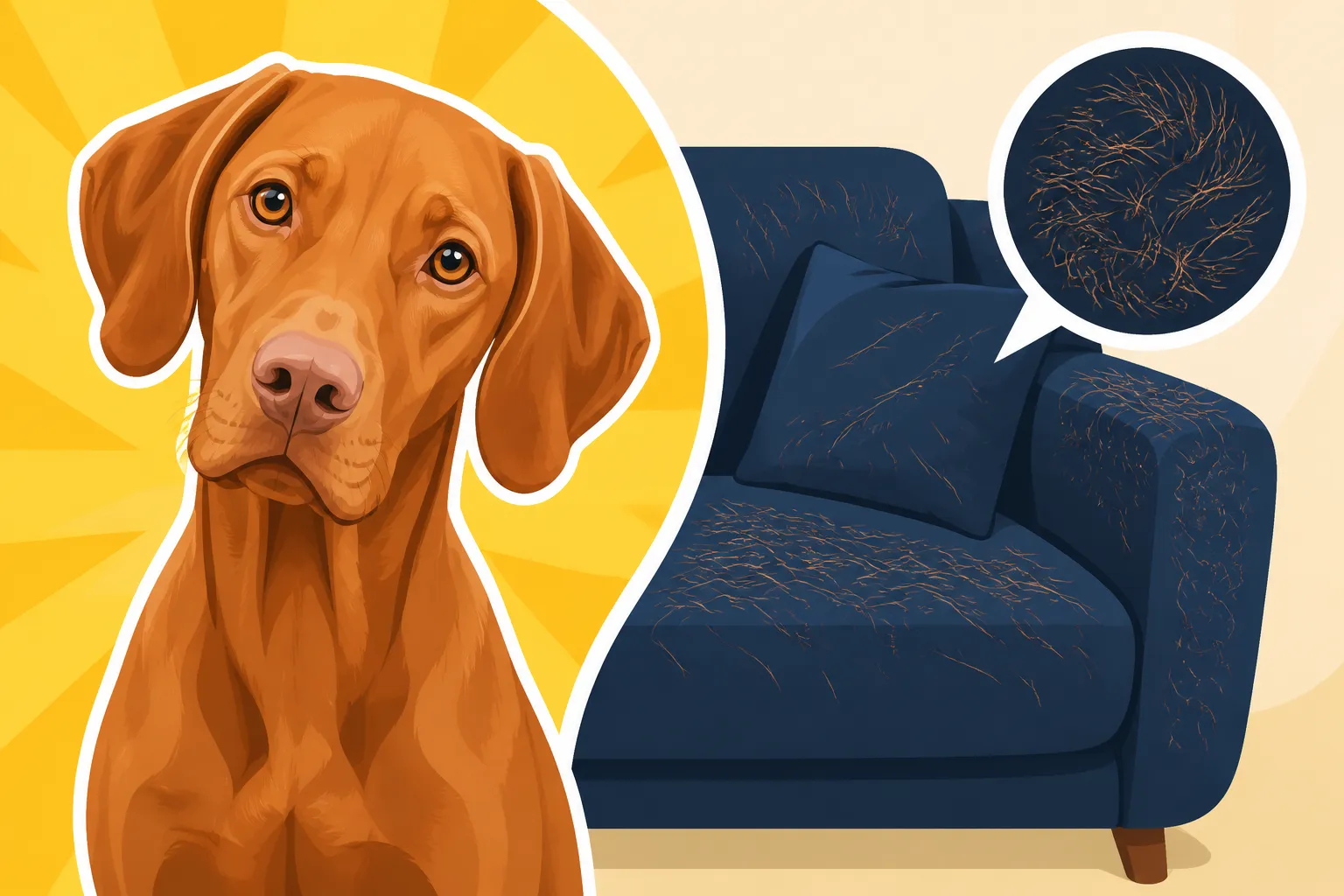
However, the lack of an undercoat does not mean they don't shed. It just means how and what they shed is different. Their individual hairs are short, fine, and stiff. Instead of floating around like dandelion seeds, these hairs are prone to embedding themselves deeply into fabric fibers. Think of it like tiny, coppery needles that are perfectly designed to weave themselves into your upholstery, carpets, and clothes, making them incredibly difficult to remove with a simple shake or brush. That moment you sit down on a beautiful black velvet sofa, only to stand up covered in a fine dusting of ginger-gold? Yeah, that's the Vizsla coat in action.
When and Why Vizslas Shed
Vizslas are, unfortunately, pretty much year-round shedders. While they might have slight seasonal increases, particularly in spring as they lighten their coat for warmer weather, or in fall to prepare for winter, don't expect a dramatic shedding "season" followed by months of peace. For most Vizsla owners, it's a constant, low-level release of hair that occasionally spikes.
Several factors can influence how much a Vizsla sheds. A high-quality diet rich in omega fatty acids can contribute to a healthier coat and potentially less shedding, whereas a poor diet can lead to a duller coat and more hair loss. Stress, allergies, underlying health conditions like thyroid imbalances, or even hormonal changes (especially for intact females) can all cause an increase in shedding. If you notice a sudden, significant increase in hair loss, especially if accompanied by skin irritation or dullness, it's always wise to consult your vet. Maybe you switched to a cheaper kibble from Chewy, or your dog had a stressful experience; sometimes these things can manifest in their coat.
The Reality of Vizsla Hair on Furniture
Let's be brutally honest: if you own a Vizsla and allow them on your furniture, your furniture will have Vizsla hair on it. It's not a question of "if," but "how much" and "how deeply embedded." The unique texture and length of their hair make it a particularly tenacious opponent in the battle for a clean home.
How Vizsla Hair Differs from Other Breeds
When people talk about dog hair, they often picture the long, fluffy strands from a Golden Retriever or the dense wool of a Samoyed. These hairs tend to sit on top of surfaces, making them relatively easy to vacuum or sweep up. Vizsla hair is a different beast entirely. It's short, straight, and has just enough stiffness to act like a barb. This means that instead of floating gracefully, it tends to burrow.
Imagine a microscopic forest of fabric fibers on your couch. A long hair from another breed might lay across the canopy. A Vizsla hair? It dives right into the undergrowth, intertwining itself with the fibers, almost weaving itself into the fabric. This makes it incredibly difficult to simply brush or vacuum away. It’s not just sitting on the couch, it's becoming part of the couch. This is why you'll find yourself needing specific tools and techniques to effectively remove it, rather than just a quick run-over with a standard vacuum head. It’s a common frustration, and many Vizsla owners will tell you Whether a Vizsla's Short Hair Sticks to Fabric is a definitive "yes, absolutely."
Common Problem Areas in the Home
Anywhere your Vizsla spends time, you'll find their hair. The most obvious culprits are sofas and armchairs, especially if your Vizsla is permitted to lounge there. Many Vizslas are "Velcro dogs" by nature, meaning they crave proximity to their humans and will seek out the comfiest spot right next to you, often leading to a significant deposit of hair. They love to burrow and snuggle, meaning those hairs get worked even deeper into the fabric. Whether a Vizsla Sleeps Under the Covers can also tell you how much hair might end up in your bed.
But it doesn't stop there. Think about rugs and carpets, especially those in high-traffic areas where your Vizsla loves to nap or zoom. Your car seats are another major hot spot – transporting your Vizsla to the park or hunting grounds ensures a persistent layer of coppery fuzz. And, of course, your clothing. It's an almost daily ritual for many Vizsla owners to grab a lint roller before leaving the house, only to find a new strand moments later. Even if you don't allow your Vizsla on the furniture, simply brushing against them as they walk by can transfer hair to your clothing or soft furnishings.
Practical Strategies for Managing Vizsla Hair on Furniture
The good news is that while you can't eliminate shedding entirely, you can significantly manage the amount of hair that ends up on your furniture and make cleaning much easier. It's all about consistent effort and using the right tools.
Regular Grooming as a First Line of Defense
The single most effective way to reduce hair on your furniture is to remove it from your Vizsla before it has a chance to fall off. Regular grooming is absolutely essential. Aim for daily brushing, even if it's just a quick five-minute session. A rubber curry brush or a grooming mitt works wonders on their short coats, effectively grabbing loose hairs without irritating their skin. You'd be surprised how much hair comes off even a seemingly sleek Vizsla with a good brush. This process not only minimizes shedding but also promotes healthy skin and a shiny coat. How Often a Vizsla Needs Brushing is definitely more often than you might think!
Bathing also plays a role. While you don't want to over-bathe and strip their natural oils, a bath every few weeks or once a month, combined with a good shedding shampoo, can help release a lot of dead hair. Follow up with a thorough brushing while they're drying. For quality grooming tools or specialized shedding shampoos, online retailers like Chewy or Amazon often have a wide selection, and customer reviews can guide you towards what works best for other Vizsla owners. Taking proactive steps in grooming will always be more effective than trying to clean up after the fact.
Protecting Your Furniture
If you allow your Vizsla on furniture, consider investing in washable furniture covers or throws. These can be easily removed, shaken out, and tossed into the washing machine, saving your actual upholstery from the brunt of the hair. Look for materials that hair doesn't cling to as easily, like tightly woven denim or certain microfibers, rather than static-prone fleece or open weaves.
Another strategy is to give your Vizsla a designated, comfortable dog bed – or several – strategically placed in areas where they like to relax. If their bed is cozy and inviting, they might be more inclined to use it instead of the sofa. For those who prefer a completely hair-free sofa, consistent training from a young age is key to teaching your Vizsla that furniture is off-limits. This can be challenging for such a "Velcro" breed, but it's certainly possible with patience and consistency. Remember, some Vizslas will try to sneak under blankets even on the floor to get cozy, so a comfy, warm bed is paramount.
Effective Cleaning Tools and Techniques
When it comes to cleaning, a standard vacuum cleaner might not cut it for deeply embedded Vizsla hair. Look for vacuums designed for pet hair, often featuring stronger suction and specialized attachments. A good upholstery attachment with a rotating brush can work wonders. Many Vizsla owners swear by simple, inexpensive tools too. A damp rubber glove rubbed across upholstery can effectively ball up hair, as can a clean window squeegee or a lint roller designed for heavy-duty pet hair removal.
For fabric items like blankets or clothing, a run through the dryer on a low-heat, no-heat, or air-only cycle before washing can help loosen and collect a surprising amount of hair in the lint trap. Then, wash as usual. Remember, consistency is key. A quick daily clean of high-traffic dog areas on your furniture will prevent hair from building up to overwhelming levels. You'll find a wide array of specialized brushes and vacuum attachments for pet hair on Amazon, often with great reviews from other owners of short-haired, shedding breeds.
Minimizing Shedding Through Diet and Health
Beyond direct grooming and cleaning, what goes into your Vizsla's body can significantly impact the health of their coat and, consequently, the amount of hair they shed. A healthy dog often has a healthier coat with less excessive shedding.
The Role of Nutrition in Coat Health
A high-quality diet is fundamental for a healthy coat. Look for dog foods where real meat is the first ingredient, and that contain essential fatty acids, particularly Omega-3 and Omega-6. These fats nourish the skin and hair follicles, leading to a stronger, shinier coat and reduced shedding. Many owners find a noticeable difference when they switch from a budget kibble to a premium brand. Consider supplementing your Vizsla's diet with fish oil, which is packed with Omega-3s. Whether a Vizsla Needs Fish Oil is a question many ask, and for coat health, the answer is often yes.
Some brands, like Ollie, offer fresh, human-grade dog food options that can provide superior nutrition, and many owners report improvements in coat health and reduced shedding with such diets. While fresh food isn't always feasible for every budget, even adding a spoonful of pureed pumpkin or a boiled egg to their regular kibble can provide beneficial nutrients. Pay attention to how your Vizsla's coat looks and feels; a dull, dry, or excessively shedding coat can be a sign that their diet needs an upgrade.
Addressing Health Issues That Cause Excessive Shedding
Sometimes, excessive shedding isn't just "Vizsla nature" but a symptom of an underlying health problem. If you notice a sudden, dramatic increase in shedding, patchy hair loss, skin redness, itching, or dullness, it's time for a vet visit. Conditions like allergies (environmental or food-related), parasites (fleas, mites), fungal infections, bacterial skin infections, or endocrine disorders like Thyroid Failure in a Vizsla can all manifest as poor coat quality and increased shedding.
Your veterinarian can perform tests to diagnose any underlying issues and recommend appropriate treatment. Managing allergies, for example, might involve special diets, medications, or environmental changes. For skin conditions, your vet might suggest specific medicated shampoos or supplements to support skin health. A comprehensive approach that combines proper nutrition, regular grooming, effective cleaning, and vigilant attention to your Vizsla's overall health will give you the best chance at keeping their beautiful, coppery coat where it belongs – on your dog, not your couch. Maintaining healthy skin for life is a commitment, but it pays off in a happier, less itchy dog and fewer hairs on your furnishings.
Here's a quick comparison of popular tools for tackling Vizsla hair on furniture:
| Tool/Method | Best For | Pros | Cons |
|---|---|---|---|
| Rubber Curry Brush | Direct on dog (daily grooming) | Highly effective at removing loose hair before it falls off. Gentle. | Requires consistent use. Only for the dog, not furniture. |
| Grooming Mitt | Direct on dog (gentle grooming, massage) | Good for sensitive dogs, removes hair, provides massage. | Less aggressive than a curry brush, might not get all loose hair. |
| Washable Throws/Covers | Sofas, chairs, beds (protection) | Easy to remove, wash, and replace. Protects upholstery directly. | Can shift or look messy. Requires frequent washing. |
| Pet-Specific Vacuum | Carpets, rugs, upholstery (deep cleaning) | Strong suction, specialized attachments for embedded hair. | Can be expensive. Still requires effort for deeply woven hair. |
| Rubber Glove (damp) | Upholstery, car seats (quick spot cleaning) | Very effective for pulling embedded hair. Inexpensive. | Hands-on, can be time-consuming for large areas. |
| Window Squeegee | Upholstery, carpets (pulling hair to surface) | Inexpensive, excellent for gathering hair into piles. | Can require some elbow grease. Best on flat surfaces. |
| Lint Roller (heavy-duty) | Clothing, small fabric items (quick touch-up) | Convenient, fast for surface hair. | Rolls can run out quickly for larger jobs. Less effective for embedded hair. |
| Dryer (air/low heat cycle) | Blankets, washable covers (pre-wash prep) | Loosens hair before washing, collects in lint trap. | Only for machine-washable items. May not remove all hair. |
Disclaimer
This article is for general informational purposes only and does not constitute professional advice. Laws, prices and regulations vary by location and change over time. Consult a qualified professional for guidance on your specific situation.