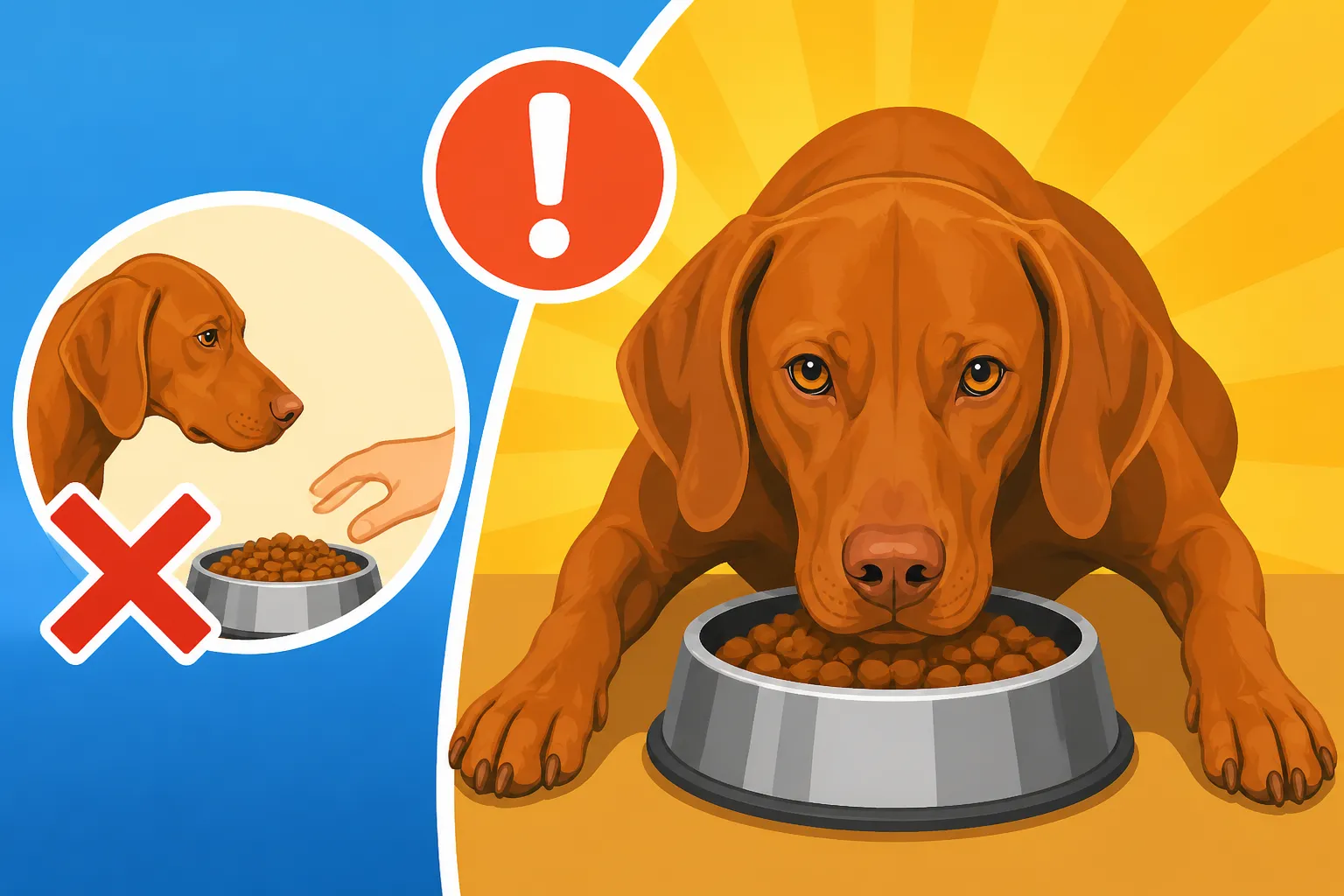
Whether a Vizsla Guards Its Food
It's incredibly disheartening and frankly, a bit scary, when your usually affectionate Vizsla shows teeth or growls over their food bowl. You might be thinking, "But my Vizsla is a total 'Velcro dog' – why would they ever act like this towards me?" This behavior, known as resource guarding, can feel like a betrayal of the bond you share, leaving you confused and even worried about your dog's true nature. This guide will help you understand why your Vizsla might be guarding their food, how to spot the subtle signs, and practical, empathetic ways to manage and prevent this challenging behavior, ensuring mealtimes are safe and stress-free for everyone.
Understanding Resource Guarding in Vizslas
Resource guarding, at its heart, is a perfectly natural canine instinct. While it can be alarming for us humans, it's how dogs, going back to their ancestral roots, ensure their survival by protecting valuable items like food, toys, or even prime sleeping spots. It’s not about being "mean" or "aggressive" in a malicious sense; it's a deeply ingrained defense mechanism.
What is Resource Guarding, Really?
Imagine you’ve just gotten home from a long day, you’re starving, and someone tries to snatch your dinner plate. You’d probably put up some resistance, right? For a dog, especially a Vizsla who might already be feeling insecure or anxious, food is a high-value resource. Resource guarding is a spectrum of behaviors aimed at retaining possession of something the dog values. It can range from very subtle cues, like a slight stiffening of the body or a hard stare, all the way to more overt displays such as growling, snarling, snapping, or even biting.
With a breed like the Vizsla, often dubbed Why They Call It a Velcro Vizsla due to their intense attachment to their people, resource guarding can feel particularly out of character. You expect a dog that wants to be with you, not one that pushes you away. But remember, beneath that affectionate, people-oriented exterior, they are still dogs with primal instincts. A Vizsla might not guard their food because they dislike you, but because they perceive a threat to something they consider essential, even if that threat is completely unintentional on your part. It's a misunderstanding of intentions, often fueled by underlying anxiety or past experiences.
Why Your Vizsla Might Be Guarding Their Food
There's rarely one single reason a Vizsla starts guarding their food. It's often a cocktail of factors that converge, leading to this protective behavior. Understanding these potential roots is the first step toward compassion and effective management.
- Early Experiences and Food Insecurity: This is a big one. A Vizsla puppy from a chaotic breeding environment, perhaps a puppy mill or a home where they had to compete fiercely with many littermates for food, might develop guarding behaviors out of necessity. Similarly, rescue Vizslas, especially those who might have experienced neglect or hunger, often come with an ingrained fear that their meals could be taken away at any moment. This isn't about your home, but their past.
- Genetics: While Vizslas are generally known for their biddable and gentle nature, individual lines or specific dogs can have a stronger genetic predisposition to certain behaviors, including resource guarding. A responsible breeder will screen for such tendencies, but it's not always foolproof.
- Inadvertent Training or Learned Behavior: Sometimes, we accidentally reinforce guarding. If a dog growls, and we back off, the dog learns that growling works to keep the "threat" (us) away. Conversely, if we constantly take things away without trading for something better, the dog learns to defend their possessions more vigorously. For a soft Vizsla, this can be particularly damaging. The Soft Vizsla That Shuts Down When You Raise Your Voice reminds us that harsh corrections can cause them to shut down or, in the case of guarding, escalate their defensive behaviors.
- Underlying Stress or Anxiety: A Vizsla who is generally anxious, perhaps due to Teaching a Vizsla to Be Alone for too long, changes in routine, or a stressful environment, might exhibit guarding as one symptom of their overall discomfort. When a dog is feeling insecure, any perceived threat to a valuable resource can trigger a defensive reaction. What an Anxious Vizsla Destroys often stems from this underlying anxiety, and resource guarding can be another manifestation of that same internal unease.
- Pain or Illness: Although less common, pain can make a dog irritable and defensive. If eating is uncomfortable, they might guard their food more intensely. It's always worth ruling out any medical issues with your veterinarian if resource guarding suddenly appears or worsens.
Identifying the Signs of Food Guarding in Your Vizsla
Resource guarding isn't always a dramatic growl and snap. Often, it begins with subtle cues that many owners miss, especially if they're not familiar with canine body language. Learning to recognize these early warnings is crucial for prevention and safe intervention.
Subtle Cues You Might Be Missing
Your Vizsla is constantly communicating with you, even when they’re just eating their dinner. Before any overt aggression, there are usually several nuanced signals that indicate they're feeling uncomfortable about someone approaching their food.
- Freezing Over the Bowl: If your Vizsla suddenly stops eating and freezes with their head over the bowl when you approach, this is a clear sign. They're telling you, "Don't come closer, this is mine."
- Eating Faster: You walk into the kitchen, and your Vizsla, who was previously enjoying a leisurely meal, suddenly starts gobbling their food at warp speed. They're trying to consume the resource before you can take it.
- Hard Stare or Averted Gaze: Your Vizsla might give you a direct, hard stare that feels intense and challenging, or conversely, they might purposefully avert their gaze, showing the whites of their eyes (whale eye) while tensing up, hoping you'll just go away.
- Stiff Body Language, Tucked Tail: Their body might become rigid, their ears might be slightly back, and their tail, instead of its usual happy wag, might be held stiffly or even tucked between their legs, indicating stress.
- Low Growl or Lip Curl: These are often the first vocalizations or facial expressions owners notice. A low rumble in the throat or a slight curl of the lip, revealing a tooth, are undeniable warnings. It's their way of saying, "Back off."
- Standing Over the Bowl as a Barrier: They might position their body directly over the bowl, shielding it with their chest and head, essentially creating a physical barrier between you and their food.
It’s easy to dismiss some of these as "just being quirky," but it's vital to acknowledge them. Ignoring these early signs only teaches your Vizsla that they need to escalate their warnings for you to understand.
Escalation: When Guarding Becomes Dangerous
When subtle warnings are ignored or misunderstood, a Vizsla might feel compelled to escalate their defensive behaviors. This is when food guarding moves from being a concern to a genuine safety risk, particularly in a busy household with children or other pets.
- Snapping in the Air: This is a clear warning shot. The dog might snap their jaws in the air near your hand or face, without making contact, to clearly communicate their boundaries. They're saying, "This is your last chance to back off before I make contact."
- Lunging: A sudden forward lunge towards you, often accompanied by a growl or bark, is another strong escalation. It's an attempt to push you away physically.
- Biting (Inhibited or Full Contact): This is the point where the behavior is no longer just a warning. An inhibited bite might mean they make contact but don't apply full pressure, which can still break the skin. A full-contact bite, of course, is a serious injury. Any bite, even a "minor" one, must be taken extremely seriously.
- Guarding Other Resources: Once a Vizsla starts guarding food, it’s not uncommon for the behavior to generalize to other high-value items. This could include favorite toys, chews, sleeping spots, or even specific people (like guarding their primary human from another family member). While the immediate query is Whether a Vizsla Guards Its Food, understanding that this behavior can spread is important for comprehensive management. If you notice your Vizsla acting protectively over a special toy or their bed, it's a strong indicator that their general resource guarding tendencies are broad.
Proactive Steps for Preventing Food Guarding in Vizsla Puppies
The best way to deal with food guarding is to prevent it from ever becoming an issue. For Vizsla puppies, laying down a strong foundation of trust and positive association around food is paramount. The First Year With a Vizsla Puppy is a critical time for shaping these behaviors.
Building Positive Associations with Food and People
Your goal is to teach your Vizsla that human presence near their food bowl is a good thing – it adds value, it doesn't take it away. This flips their ingrained instinct on its head and builds immense trust.
- The "Trade Up" Game: This is the golden rule for prevention. While your Vizsla puppy is eating, approach their bowl, but instead of reaching for it, drop an even higher-value treat near the bowl (something truly irresistible like a tiny piece of cooked chicken or cheese). Then, walk away. Repeat this several times during each meal, varying your approach. The puppy learns, "Human near food = even better food appears!" Never take food away without offering an immediate, better trade. This gentle, consistent positive reinforcement is far more effective than trying to show dominance.
- Hand Feeding Portions of Meals: Occasionally, hand-feed your Vizsla puppy a portion of their kibble directly from your hand. This reinforces that you are the source of their food and builds a strong positive association with your hands near their mouth.
- Family Participation: Ensure everyone in the household, including older, respectful children, participates in these positive interactions. Consistency across all family members is key.
- Making Mealtime Predictable and Calm: Always feed your Vizsla at consistent times in a quiet, safe spot. A predictable routine reduces anxiety. Avoid loud noises, sudden movements, or other dogs/people crowding them during meals.
- Teaching "Leave It" and "Drop It": Start teaching these essential commands with low-value items and gradually work up to higher-value objects (but not their food bowl for training "drop it" initially if guarding is a concern). These commands provide a non-confrontational way to manage resources. What a Vizsla Will Work For often involves high-value treats, which can be invaluable in teaching these cues.
- Absolutely No Force or Punishment: A Vizsla is a sensitive breed. Whether a Vizsla Needs a Firm Hand at All is a common question, and the answer, especially with guarding, is a resounding no when it comes to force. Forcibly taking food away or punishing a growl will only escalate the behavior, making your Vizsla more fearful and defensive. It breaks trust and teaches them that humans are a threat to their resources.
Choosing the Right Feeding Environment
The environment where your Vizsla eats can significantly impact their sense of security around their food. Setting them up for success means creating a space where they feel relaxed and unthreatened.
- Quiet, Low-Traffic Area: Designate a specific spot for your Vizsla's meals that is away from the main thoroughfare of your home. This could be a corner of the kitchen, a quiet hallway, or a utility room. This minimizes unexpected approaches or disruptions from family members, visitors, or other pets.
- Separate From Other Pets: If you have multiple dogs, always feed them in separate locations, ideally in separate rooms or crates. Even if they seem to get along fine, the presence of another dog can introduce subtle competition and stress, triggering guarding behavior. This is crucial for preventing problems before they start.
- Using a Slow-Feeder Bowl: If your Vizsla tends to wolf down their food, a slow-feeder bowl (easily found on Amazon, with countless styles and sizes) can be a great investment. It forces them to eat more slowly, which can reduce anxiety associated with finishing their meal quickly before it's "taken." It also aids digestion and can prevent issues like bloat. Whether a Deep Chested Vizsla Bloats is a real concern for the breed, and slow feeders can help mitigate risks.
- Ensuring the Dog Feels Safe and Unthreatened: Ultimately, the environment should communicate safety. If your Vizsla is Whether Crate Training Helps a Vizsla, their crate can be an ideal, secure place for meals, as it's their personal den where they feel safe. Avoid placing the bowl in a high-traffic area, under a table where people might inadvertently kick it, or anywhere they might feel cornered.
| Approach | Goal | Key Techniques | Why it Works |
|---|---|---|---|
| Proactive | Prevent guarding from starting | "Trade Up" game, hand-feeding, consistent positive reinforcement, safe feeding zone. | Builds trust; dog associates humans with gaining resources. |
| Reactive | Modify existing guarding behavior | Controlled feeding, desensitization, counter-conditioning, professional guidance. | Changes emotional response to triggers; systematic re-education of associations. |
Managing and Modifying Existing Food Guarding Behavior in Adult Vizslas
If your adult Vizsla is already guarding their food, it’s a more complex issue than prevention, requiring careful management and a structured approach to modification. The key is to never directly challenge the guarding, but to change your dog's emotional response to your presence around their food.
Safety First: Creating a Controlled Feeding Plan
Until the behavior is significantly improved, your absolute priority must be safety. This means eliminating all situations that trigger the guarding behavior.
- Feed Alone in a Separate Room or Crate: This is non-negotiable. Always feed your Vizsla in a secure, private space where no one, human or animal, can approach them while they are eating. Close the door or ensure the crate is secure. This removes the "threat" and prevents practice of the guarding behavior.
- Avoid All Triggers: Do not approach their bowl, do not reach for it, do not hover over them. If you cannot offer an immediate, higher-value trade, then don't interact with them while they are eating. You might be tempted to try to "dominate" them out of it, but with a Vizsla's sensitive nature, this will likely lead to further escalation. Whether a Vizsla Remembers a Bad Experience is a critical point; one negative interaction can set back weeks of progress.
- Supervise Children and Other Pets Rigorously: This cannot be stressed enough. Children, especially toddlers, don't understand canine body language and can inadvertently trigger a severe guarding response. Teach children to never approach a dog that is eating. Keep other pets away entirely during meal times. Even if your Vizsla is normally Whether a Vizsla Is Safe With Toddlers, guarding behavior changes the equation entirely.
- Consult a Certified Professional Behaviorist: If guarding is established and showing any signs of escalation (growling, snapping, biting), working with a certified professional is paramount. Organizations like BAXTER & Bella often have trainers and programs that can guide you through these complex issues, providing personalized strategies. They can also help you understand if there are underlying anxieties contributing to the guarding.
Desensitization and Counter-Conditioning Techniques
Once safety protocols are in place, you can begin the slow, methodical process of changing your Vizsla's emotional response to your presence near their food. This is about building new, positive associations.
- Start at a Distance: Identify the distance at which your Vizsla shows no signs of guarding (no freezing, no hard stare, no growl). This might be across the room, or even just seeing you from another doorway.
- The "Approach and Treat Toss" Game:
- Place your Vizsla's food bowl down.
- Stand at your chosen safe distance.
- Toss a high-value treat (like a small piece of cooked meat or cheese) past the bowl, so your dog has to move away from the bowl to get it. This teaches them that your approach adds value, and moving away from the bowl is rewarded.
- Retreat to your starting position.
- Repeat this several times, at each meal, from the same safe distance.
- Gradual Distance Reduction: Over many, many sessions (potentially weeks or months), you can slowly, incrementally, reduce the distance you approach. Only move closer if your Vizsla remains completely relaxed and shows no guarding signs. If they show any tension, you've moved too quickly, and you need to go back to a greater distance.
- Avoid Staring, Looming, or Sudden Movements: When you approach, keep your body language relaxed and non-threatening. Avoid direct eye contact, leaning over them, or making any sudden gestures that might be perceived as a threat.
- The Goal: The ultimate aim is for your Vizsla to look up happily when you approach their food bowl, perhaps even wag their tail, because they anticipate getting something even better than what's in their bowl. How Fast a Vizsla Learns a New Cue when positive reinforcement is used is often quite surprising, but consistency is key for emotional changes.
This process requires immense patience, consistency, and a commitment to positive reinforcement. Never try to rush it.
When to Seek Professional Help
Recognizing when you need expert assistance is a sign of responsible pet ownership, not failure. Food guarding can be a deeply ingrained and potentially dangerous behavior, and a professional can provide invaluable guidance.
Recognizing Your Limits and Your Vizsla's Needs
It's natural to want to handle everything with your beloved Vizsla yourself. However, some behaviors, especially those involving potential aggression, are beyond the scope of DIY training.
- Escalation or Lack of Progress: If your Vizsla's guarding behavior escalates (e.g., from growling to snapping or biting), or if you’ve been consistently applying management and modification techniques for weeks with no improvement, it’s time to call in a professional. Your safety, and the safety of those in your home, is paramount.
- Feeling Unsafe or Overwhelmed: If you ever feel apprehensive, fearful, or overwhelmed by your Vizsla's behavior around food, don't hesitate. A professional can provide a sense of control and a clear plan, reducing your stress levels and enabling you to approach the situation with confidence.
- Vizslas and Intensity: Vizslas are known for their intensity and sometimes their stubbornness. What might be a mild guarding issue in one breed can quickly become more pronounced in a high-drive dog like a Vizsla. Their intelligence means they learn quickly, for better or worse. Addressing guarding early and correctly is vital. Whether an Untested Vizsla Litter Is Worth Buying can sometimes indicate potential behavioral issues down the line if parents haven't been screened for temperament.
- Breed Specific Knowledge: Many Vizsla breeders and rescue organizations maintain lists of recommended trainers or behaviorists who have specific experience with the breed's temperament. Whether a Vizsla Handles a Professional Trainer is less about the dog's capability and more about the trainer's approach; a good professional will use positive, force-free methods that suit a Vizsla's sensitive nature.
What a Qualified Professional Can Offer
A certified professional dog behaviorist (look for certifications like CBCC-KA or CPDT-KA, or veterinary behaviorists) brings a wealth of knowledge and experience to the table.
- Individualized Assessment: They will conduct a thorough assessment of your Vizsla's behavior, looking at the triggers, the intensity of the guarding, and any potential underlying causes (including stress, anxiety, or even pain). This might involve observing your dog in their home environment.
- Tailored Behavior Modification Plan: Based on their assessment, they will create a specific, step-by-step plan for your Vizsla and your household. This isn't a one-size-fits-all approach but a customized strategy to safely and effectively modify the guarding behavior.
- Guidance on Safety Protocols: A professional can help you implement the safest management strategies, especially if you have children or other pets, ensuring everyone in the home remains safe during the modification process.
- Ruling Out Medical Issues: While not their primary role, a good behaviorist will often suggest a veterinary check-up to rule out any physical discomfort or illness that might be contributing to the guarding. For instance, dental pain or gastrointestinal upset could make a dog protective of their food.
- Ongoing Support and Adjustment: Behavior modification is rarely linear. A professional will provide ongoing support, help you troubleshoot challenges, and adjust the plan as your Vizsla progresses.
Working with a professional is an investment in your Vizsla's well-being and the harmony of your home. It’s about building a trusting relationship where your Vizsla feels secure enough not to feel the need to guard their precious resources.
Disclaimer
This article is for general informational purposes only and does not constitute professional advice. Laws, prices and regulations vary by location and change over time. Consult a qualified professional for guidance on your specific situation.