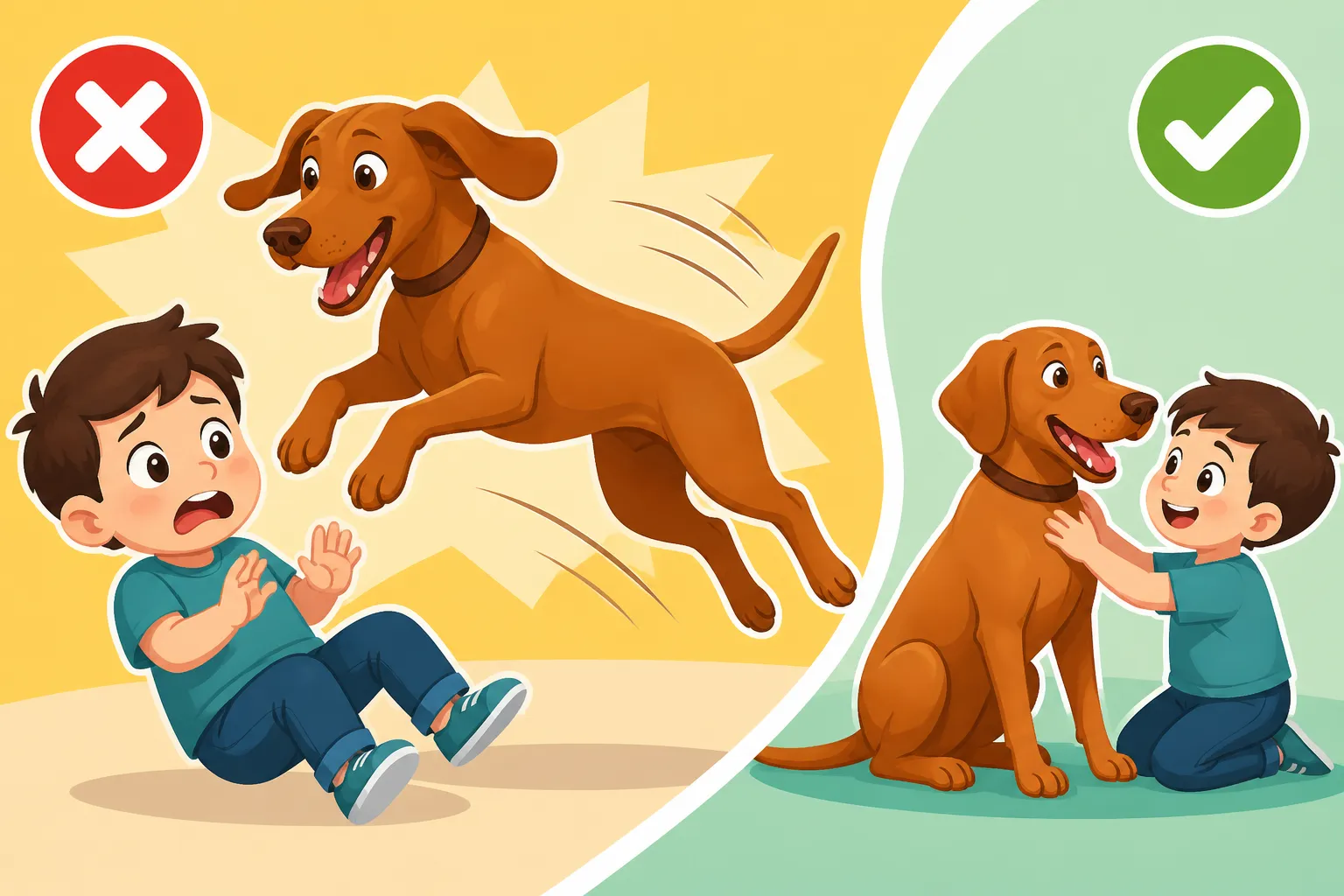
Whether a Vizsla Is Too Bouncy for Small Kids
Oh, the joy and absolute chaos of a Vizsla puppy or young adult in a home with small children! It’s a completely legitimate concern that keeps many potential Vizsla owners up at night. You envision those beautiful, gentle photos you see online, but then you meet an actual Vizsla, and it’s a whirlwind of golden energy. You wonder if that boundless enthusiasm is just "too much" for a tiny human. Rest assured, you're not alone in that thought. This guide is going to dig deep into the reality of Vizsla bounciness around little ones, offering practical advice and setting realistic expectations so you can navigate this delightful, albeit sometimes dizzying, dynamic.
Understanding the Vizsla's Innate Energy and Exuberance
Vizslas are magnificent, athletic creatures, bred for demanding work in the field. This heritage means they come with an abundance of energy and a deeply ingrained need for connection. Understanding these core traits is the first step in managing their interactions with the smallest members of your family.
The "Velcro Vizsla" and Its Need for Proximity
If you've spent any time researching Vizslas, you've undoubtedly heard the term "Velcro Vizsla." It's not just a cute nickname; it’s a defining characteristic of the breed. These dogs bond intensely with their people and crave constant physical proximity. They want to be where you are, doing what you're doing, and often, being on you while you do it. This isn't just about affection; it's deeply wired into their genetic makeup.
When a Vizsla expresses this desire to be close, it can often manifest as leaning, nudging, or, yes, jumping up to get closer to your face or lap. For an adult, this might be a mild annoyance, easily corrected. But when that same enthusiastic desire to connect is directed at a small child, who might be unsteady on their feet or caught off guard, it can easily lead to them being knocked over. It's rarely, if ever, an act of aggression or malice. Instead, it's an over-the-top, joyful, and sometimes clumsy greeting, or an insistent plea for attention and interaction. They simply want to participate, to be part of the little human's world, and their way of showing it can be a bit much. Knowing that this isn't a behavior born of naughtiness, but rather an intense need for connection, can help you approach it with more patience and a focus on redirection rather than punishment. For more insight into this unique trait, explore What Velcro Behavior Looks Like in a Vizsla.
The High-Octane Nature of the Breed
Vizslas are purpose-bred hunting dogs, designed for endurance, speed, and agility across challenging terrains. This background means they possess an incredible amount of physical energy that needs a constructive outlet. Picture them galloping through fields, leaping over obstacles, and then pausing instantly to hold a precise point—that’s the combination of power and control they inherently possess.
Translate that to a home environment, especially one where there’s excitement, and you can see why they might appear "bouncy." A sudden sound, the arrival of a favorite family member, or even just the joy of a dropped toy can trigger bursts of speed and frantic movement. We call them "zoomies" for a reason! An adult Vizsla, weighing in the 45-65 pound range, moving at full speed around a toddler is a recipe for accidental tumbles. They aren't trying to be destructive or harmful; they're simply expressing their innate vitality. This isn't a breed that’s content with a gentle stroll around the block. They require significant, vigorous exercise to truly be calm indoors. Without it, that pent-up energy will manifest in less desirable ways, often involving excited jumping and running into things, including small children.
Puppies and Adolescents – The Peak of Bounciness
While all Vizslas have energy, the puppy and adolescent phases are where bounciness reaches its absolute zenith. A Vizsla puppy is a delightful bundle of sharp teeth and endless enthusiasm. They jump, they nip playfully, they bounce off furniture, and they see everything as an invitation to wrestle or chase. They simply don't have the impulse control to understand that a small child isn't a littermate or a chew toy.
Then comes adolescence, which for Vizslas can last well into their second year. This is often the most challenging period. You have a dog that has reached its adult size and strength, but whose brain is still very much a puppy. They're testing boundaries, prone to making impulsive decisions, and experiencing a surge of hormones that can make them even more energetic and easily distracted. A six-month-old Vizsla puppy can easily be 40 pounds of pure muscle, and by a year old, they're often at their full weight. Imagine that force launching itself at a wobbly toddler or a crawling infant. During these formative months, vigilance and consistent, positive training are paramount to shape their behavior and teach them appropriate interactions. If you’re embarking on The First Year With a Vizsla Puppy, prepare for a spirited journey!
Strategies for Managing Bounciness Around Children
Managing a Vizsla’s natural exuberance around small children isn't about stifling their spirit; it's about channeling it safely and constructively. This requires dedication, consistency, and a proactive approach to both training and exercise.
Prioritizing Consistent Training and Impulse Control
Training is absolutely non-negotiable when you have a Vizsla and small children. From day one, your Vizsla needs to learn impulse control, focusing on commands like "sit," "stay," and, crucially, "off." The "off" command isn't just for jumping; it's for any inappropriate contact. You need to consistently reward all four paws on the floor when greeting people, especially children. Start teaching this behavior before the kids are even in the picture, or immediately if they are.
Positive reinforcement is key for Vizslas because they are incredibly sensitive. Yelling or harsh corrections will often cause them to shut down, become fearful, or even more anxious and therefore more prone to impulsive, bouncy behavior. Instead, reward calm behavior heavily. If your Vizsla is about to jump, redirect them to a "sit" and reward that. If they manage to walk past a child without jumping, praise them like they just won Best in Show. Many online resources, like those offered by BAXTER & Bella, provide excellent, structured programs for teaching these foundational manners to puppies and young dogs, which can be invaluable for busy families. Building a solid foundation of obedience instills respect and control, making your Vizsla a much safer and calmer companion for your little ones. Remember, a sensitive breed like this responds best to encouragement, not intimidation; they are truly The Soft Vizsla That Shuts Down When You Raise Your Voice.
Meeting the Vizsla's Exercise Needs
An under-exercised Vizsla is a problem Vizsla, and around small children, it can be a recipe for disaster. These dogs are built to run, retrieve, and explore for hours. If they don't get sufficient physical and mental stimulation, that pent-up energy will find an outlet, usually in the form of destructive chewing, frantic pacing, or, you guessed it, explosive bounciness. No amount of training can fully compensate for a lack of appropriate exercise.
For a Vizsla, "sufficient" exercise often means two solid hours of vigorous activity daily. This isn't just walking on a leash; it means off-leash running, chasing balls, playing vigorous fetch, or activities like canicross or bikejoring. Mental stimulation through scent games, puzzle toys, and training sessions is also vital. A tired Vizsla is a good Vizsla – and a much calmer one around children. Imagine the difference between a child who's been at the park all afternoon versus one who's been cooped up inside all day. The same applies to your Vizsla. When they are physically and mentally satiated, they are far more likely to lie down calmly, observe, or engage in gentle play, rather than careening through the house like a cannonball. For guidance on appropriate daily activity, read The Two Hours a Vizsla Needs Before It Will Settle.
Creating Safe Zones and Supervised Interactions
Even with the best training and exercise, management is crucial, especially with very young children. Physical barriers are your best friend. Baby gates are not just for babies; they are essential for keeping dogs and children safely separated when you can't offer 100% direct, undivided supervision. Consider a playpen for your child to provide a safe space where they can play without being accidentally bowled over. There are many sturdy gates and playpen options available on Amazon that can create these vital boundaries.
Always supervise interactions between your Vizsla and children, even if your dog is usually calm. This isn't about distrusting your dog; it's about preventing accidents that can happen in a split second, sometimes due to the child's actions as much as the dog's. During supervised interactions, consider having your Vizsla on a leash, even indoors. This gives you immediate physical control to prevent jumping or overly enthusiastic greetings. You can calmly redirect them to a "sit" or "down" before they have a chance to get too excited. Teach your children to be gentle and to respect the dog's space, which we'll delve into further. The goal is to set up an environment where both your Vizsla and your children can thrive safely.
Setting Realistic Expectations and Ensuring Safety
Integrating a high-energy dog like a Vizsla into a family with small children requires a commitment to safety first. It's about proactive prevention and understanding that even the best intentions can go awry without proper safeguards.
The Importance of Never Leaving Them Unattended
This is perhaps the most critical rule, one that cannot be stressed enough: never leave a Vizsla, or any dog, unsupervised with small children. Accidents can happen in an instant, even with the calmest, best-trained dog. A child might accidentally step on a paw, pull an ear, or stumble into the dog while it's sleeping, startling it into a reactive nip. Conversely, an excited Vizsla might accidentally knock over a child, even without any aggressive intent, simply in its exuberance.
It's not about whether you trust your dog; it's about acknowledging that both children and dogs are unpredictable creatures. A child's actions can be spontaneous and sometimes provocative (from a dog's perspective), and a dog's reaction, even a well-meaning one, can have serious consequences. Always ensure there is a responsible adult actively monitoring the interaction, ready to intervene before an incident occurs. This means no quick trips to the bathroom, no turning your back to answer the phone. If you need to step away for even a moment, separate the dog and child using a gate or by putting the dog in a crate. This vigilant approach ensures that everyone remains safe and comfortable. For more on this critical topic, consider reading A Vizsla in a House With Children.
Teaching Children How to Interact Respectfully
While much of the focus is on training the dog, teaching children appropriate behavior around dogs is equally vital. Small children, by nature, don't understand dog body language. They don't recognize the subtle signs of stress or discomfort that a dog might display. They might approach a dog while it's eating, try to pull its tail, climb on it, or hug it tightly, all of which can be upsetting or even painful for a dog.
Start teaching children, as soon as they are old enough to understand, the concept of "gentle hands." Show them how to pet the dog calmly on its back or shoulder, rather than grabbing its face or pulling its ears. Teach them to recognize when the dog wants to be left alone – perhaps it's walked away, is sleeping, or has its toys. Explain that dogs need their own space, just like people do. Never allow children to take food or toys from the dog, or to tease it. Consistent reinforcement of these rules from parents can help create a harmonious environment where both dog and child feel respected and safe. This reciprocal respect is the foundation of a good relationship.
Managing High-Energy Play and Overstimulation
Vizslas thrive on play, but certain types of play can quickly escalate their bounciness and energy levels to an unsafe point, especially indoors. High-energy games like chasing, wrestling, or intense tug-of-war are best reserved for outdoor spaces or designated playtimes where an adult is actively engaging with the dog, separate from the children. Allowing children to initiate or participate in these types of games with a Vizsla can lead to overstimulation for the dog, making it much harder for them to control their impulses.
Instead, encourage calmer, more structured activities when children are present. This could be practicing "sit" and "stay" with treats, gentle petting, or having the child toss a treat for the dog to catch while the dog remains in a "down" position. After any period of excitement, whether it's visitors arriving or a brief outdoor play session, implement a "calm down" routine. This might involve the dog going to its bed with a chew toy, or a quiet period of rest. Establishing clear boundaries around play and actively managing the dog's energy levels will help prevent the bounciness from becoming an issue indoors, keeping interactions with small children safe and pleasant. It is important to remember that Whether a Vizsla Knocks a Toddler Over is a real concern to be actively managed, not simply hoped away.
Long-Term Management and Lifestyle Considerations
Bringing a Vizsla into a family with young children is a marathon, not a sprint. It involves ongoing commitment to their well-being, training, and integration into your home life. Thinking long-term helps set everyone up for success.
Consistent Routine and Predictable Environment
Vizslas, like many intelligent and sensitive breeds, thrive on routine and predictability. A consistent daily schedule helps manage their energy levels and can significantly reduce anxiety and hyperactive behaviors, including bounciness. Knowing when they will eat, when they will get their exercise, and when they are expected to rest helps them feel secure and settled.
Imagine a typical day: a vigorous morning run to burn off that initial energy, followed by breakfast. Then, perhaps a quiet time in their crate or on their bed while the children play. Mid-day might involve a training session or a walk, and evening brings another exercise session before a calm family dinner. Disruptions to this routine can often lead to increased bounciness, barking, or destructive behaviors as the dog seeks an outlet for its confusion or pent-up energy. A predictable environment fosters a calmer, more adjusted Vizsla, which, in turn, creates a safer and more harmonious home for your children. When your Vizsla knows what to expect, they are better able to regulate their own excitement and respond to your cues. For tips on managing their alone time, consider Teaching a Vizsla to Be Alone.
Considering a Second Dog or Professional Help
Sometimes, people consider getting a second dog, hoping it will alleviate the first dog's energy and direct its play away from the children. This can be a double-edged sword for a Vizsla. While a compatible canine companion might provide a much-needed outlet for play, it could also mean you now have two energetic, bouncy dogs to manage around your children. Before considering another dog, thoroughly research Whether a Second Dog Fixes a Vizsla's Anxiety and consult with a reputable trainer or breeder. The added responsibility and potential for increased chaos often outweigh the perceived benefits, especially when young children are involved.
If you find that despite your best efforts with training and exercise, your Vizsla's bounciness or general high energy around children remains a significant challenge, it’s time to seek professional help. A certified professional dog trainer or a veterinary behaviorist can assess your specific situation, identify triggers, and develop a tailored management and training plan. They can offer insights into canine body language, help you refine your communication, and introduce advanced techniques to build better impulse control. Don't view seeking professional help as a failure; view it as a responsible and proactive step to ensure the safety and well-being of both your dog and your children.
The Evolution of the Vizsla-Child Relationship
It’s crucial to remember that the dynamic between your Vizsla and your children will evolve. While the puppy and adolescent stages are undoubtedly the bounciest and most challenging, a well-trained, well-socialized Vizsla can mature into an incredibly gentle, devoted, and tolerant companion for children. As your children grow, they will also become more capable of understanding and respecting the dog, and their interactions will become more sophisticated.
Many Vizsla owners report that their dogs become incredibly patient and protective of their human "puppies" once everyone has matured and learned to communicate. They can become the loyal, gentle shadows, content to The Vizsla That Sits On You Rather Than Beside You or quietly supervise playtime. The early years require significant investment in time, training, and management, but the payoff is a deep, loving bond that can last over a decade. Patience, consistency, and a commitment to safety will allow this beautiful relationship to flourish, making your Vizsla a treasured member of the family for years to come.
Here's a quick overview of key considerations:
| Factor | Vizsla's Natural Tendency | Impact on Small Children | Management Strategy |
|---|---|---|---|
| Energy Level | Very High (bred for stamina and speed) | Accidental bumps, knocks, or being bowled over | 2+ hours vigorous exercise daily, mental stimulation |
| "Velcro" Nature | Craves constant physical proximity and attention | Jumps, leans, nudges for contact; can push kids down | Teach "off" command, reward "four on the floor" |
| Impulse Control | Lower in puppies/adolescents, needs teaching | Inability to regulate excitement, leads to jumping/mouthing | Consistent positive reinforcement training |
| Play Style | Enthusiastic, often physical, enjoys chasing and roughhousing | Can be overwhelming, accidentally injures during play | Redirect high-energy play outdoors, supervise all play |
| Size & Strength | Medium-large (45-65 lbs), muscular, agile | Significant force if they collide with a small child | Physical barriers (gates), leash control indoors |
| Sensitivity | Responds poorly to harsh corrections | Can become fearful or more anxious with rough handling | Use positive reinforcement, gentle guidance |
Disclaimer
This article is for general informational purposes only and does not constitute professional advice. Laws, prices and regulations vary by location and change over time. Consult a qualified professional for guidance on your specific situation.