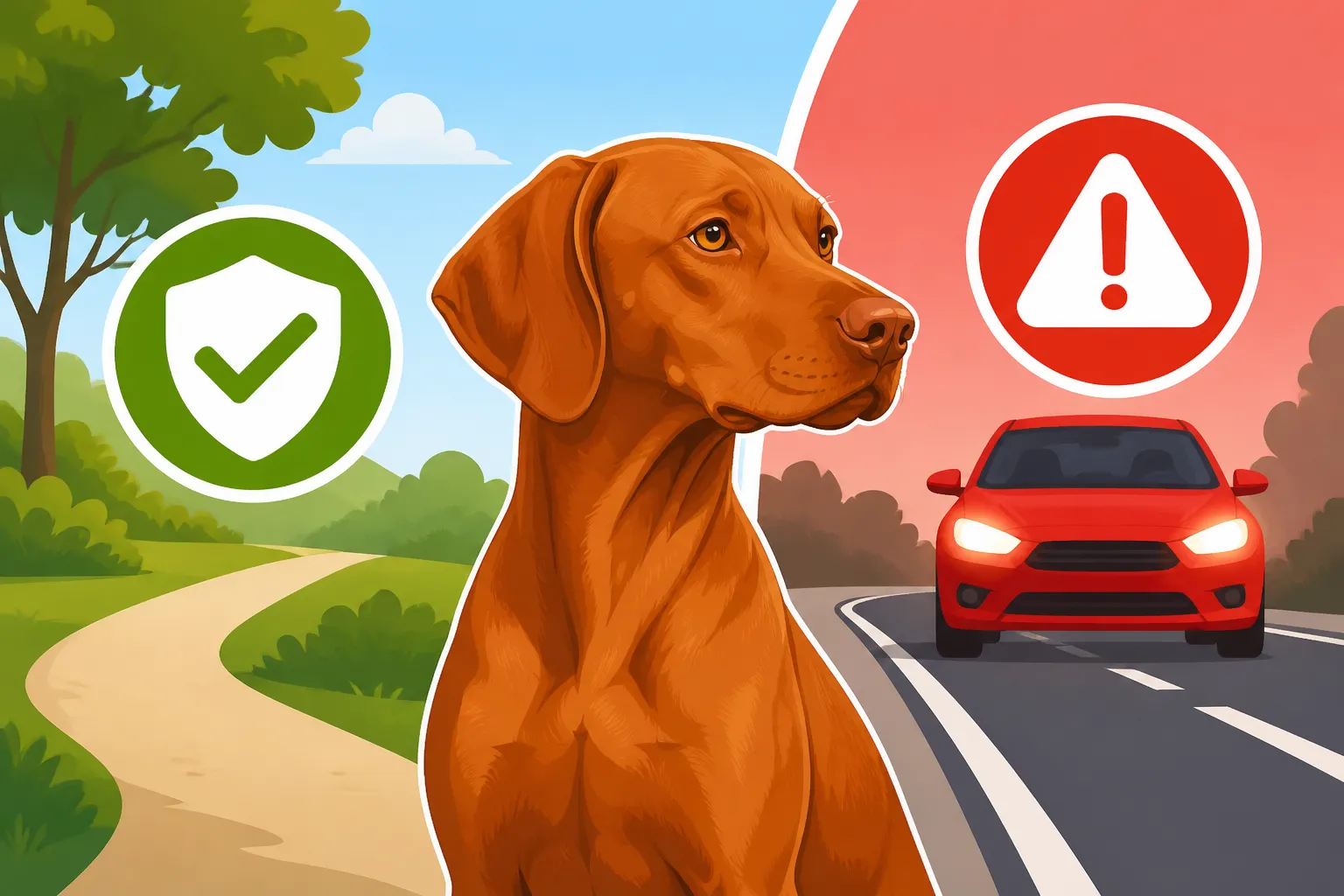
Whether a Vizsla Is Safe Near Roads
One of the most heart-stopping moments for any Vizsla owner is the split second when their dog, usually so connected, suddenly fixates on something across a busy street or sees an opening in a fence. These incredible dogs are bred for speed, prey drive, and an independent hunting spirit, traits that, while magnificent in the field, can become terrifying liabilities when roads are involved. This guide will delve deep into why Vizslas pose a unique challenge near traffic and provide actionable strategies to ensure your beloved companion remains safe, sound, and by your side.
Understanding the Vizsla's Instincts Around Roads
It’s easy to get frustrated when your Vizsla seems to "ignore" you near a road, but it's rarely defiance. More often, it's their ingrained instincts taking over, instincts that are incredibly powerful and difficult to override without consistent, thoughtful training and management.
The Unstoppable Prey Drive
Vizslas were quite literally born to hunt. Their ancestors spent centuries tracking and pointing game, a task that demanded intense focus, speed, and a single-minded dedication to the target. This potent prey drive doesn't just switch off when they're in a suburban park or walking down a sidewalk. A scurrying squirrel, a bird taking flight, or even a leaf skittering across the pavement can trigger that ancient instinct. In that moment, the world shrinks to the prey object, and everything else – including your voice, the leash in your hand, or the cars whizzing by – fades into irrelevance.
Imagine you're walking along, and suddenly, a rabbit darts from a bush directly across a two-lane road. For your Vizsla, that rabbit isn't just a fleeting distraction; it's a primal call to action. Their body language shifts instantly: ears forward, nose down, muscles tensed, ready to spring. They are wired to pursue, and the concept of "road safety" simply doesn't compute in that heightened state of instinctual chase. This isn't them being "bad dogs"; it's them being perfectly bred Vizslas, which means you, as their human, must be even more vigilant and prepared.
Speed and Stamina as a Double-Edged Sword
Vizslas are athletes. They are lean, muscular, and incredibly fast. A Vizsla can go from a standstill to full sprint in what feels like a blink of an eye. This incredible speed, while exhilarating to watch in an open field, becomes a major hazard near roads. If they bolt, even a tiny gap in a fence or a momentarily unsecured leash can give them enough time to be in the street before you've even fully registered what's happening.
Their stamina is equally impressive. A Vizsla isn't going to tire out after a short dash. If they get loose and decide to run, whether it's after a scent or just for the sheer joy of it, they can cover significant distances. Trying to catch a free-running Vizsla who is fully engaged in their environment is often a futile exercise, as they can easily outpace most humans. This means preventing the escape in the first place, or ensuring an immediate, reliable recall, is paramount. Relying on your ability to "just catch them" if they get loose near traffic is a dangerous gamble.
Independence Versus the "Velcro" Paradox
We all adore the "Velcro Vizsla" nickname because it perfectly describes their intense desire to be physically close to their humans. Inside the home, they are often leaning, cuddling, and following you from room to room. However, this affectionate clinginess can sometimes give owners a false sense of security about their dog's outdoor behavior.
When a Vizsla is out in the world, especially when stimulated by scents, sights, or sounds, that independent hunting spirit can resurface with surprising force. On a bird hunt, for example, a Vizsla is expected to range, to work independently, checking in occasionally but primarily focused on finding game. This innate drive to explore and work "out there" means that even the most devoted "Velcro dog" can, under the right circumstances, seem to temporarily forget their human's existence when a compelling distraction appears. Understanding this duality is critical; the dog who sleeps under your blankets might be the same dog who suddenly takes off after a deer track, completely deaf to your frantic calls, especially if a busy road lies between them and the scent. This is why a solid Building a Recall on a Vizsla That Ranges is essential.
Essential Training for Road Safety
Given their inherent drives, relying solely on physical containment isn't enough. Your Vizsla needs a strong foundation of training that specifically addresses the challenges of being near roads. This isn't just about obedience; it's about life-saving communication and control.
Building an Iron-Clad Recall
This cannot be overstated: a rock-solid recall is the single most important command for a Vizsla, especially around roads. Their natural inclination to range and chase means that if they ever slip their leash or find an open gate, your ability to call them back can literally be the difference between life and death.
Start recall training in a low-distraction environment, like your backyard, using incredibly high-value rewards – think cooked chicken, cheese, or their absolute favorite squeaky toy. Practice frequently, making it a fun game. Call them, reward them exuberantly when they come, and then release them to play again. As they improve, gradually increase the distractions, but always stay in a safe, enclosed area. Use a long line, say 30 or 50 feet, for practice in open fields before attempting off-leash work. This allows you to reinforce the recall while still having physical control. The goal is for your Vizsla to turn on a dime and sprint back to you, no matter what captivating smell or sight is pulling them away. You might also find that Whether a Whistle Recall Works on a Vizsla can be an incredibly effective tool, as a whistle's sound cuts through distractions more consistently than a voice.
Leash Manners and Heeling
A Vizsla who pulls on the leash isn't just annoying; they're a danger near roads. A sudden lunge after a squirrel can pull the leash right out of your hand, or worse, cause you to lose your balance and drop it. Teaching loose-leash walking and a reliable "heel" command is crucial.
Start by rewarding them heavily for walking calmly by your side. If they pull, stop immediately. Only move forward when the leash is slack. Consistency is key here. Practice walking past increasingly distracting elements. If you see a potential distraction ahead – another dog, a person, a patch of interesting smells – give a "watch me" command and reward them for making eye contact with you and continuing to walk calmly. Vary your pace and direction to keep them engaged. Remember, a Vizsla needs to learn that walking nicely on a leash is more rewarding than pulling towards perceived excitement. A good quality front-clip harness can also provide immediate, gentle leverage to redirect their attention without causing discomfort.
The Power of "Leave It"
The "leave it" command is your invaluable tool for preventing your Vizsla from investigating tempting (and potentially dangerous) items on the roadside, or from lunging at a passing dog or person. This command teaches impulse control and can be a literal lifesaver.
Begin training "leave it" indoors with a low-value treat on the floor. Cover it with your hand and say "leave it." When your Vizsla looks away from the treat, reward them with a higher-value treat from your other hand. Gradually progress to leaving the treat uncovered, then dropping it, and eventually practicing with distractions outdoors. This includes things like discarded food wrappers, sticks that look too interesting, or even small animals that might be on the side of the road. Your Vizsla needs to understand that "leave it" means don't touch, don't look, turn your attention to me.
Physical Management and Equipment for Road Walks
Even with the best training, physical safeguards are non-negotiable when a Vizsla is near roads. The right equipment can prevent accidents, provide control, and offer peace of mind.
The Right Collar, Harness, and Leash
Not all collars and leashes are created equal, especially for a dog with a Vizsla's strength and drive.
- Flat Buckle Collars: Great for holding ID tags but offer limited control if your Vizsla is determined to pull or back out. They are easily slipped.
- Martingale Collars: These collars tighten gently when your dog pulls, preventing them from backing out over their head. They offer more security than a flat collar but can still allow a strong Vizsla to pull.
- Front-Clip Harnesses: These are excellent for reducing pulling, as they redirect your dog's momentum back towards you when they try to lunge forward. Brands like the Ruffwear Front Range Harness or the Easy Walk Harness are popular choices. They distribute pressure more evenly across the chest, away from the throat.
- Head Halters (Gentle Leaders): These provide maximum control by gently guiding your dog's head, which in turn steers their body. They require a bit of conditioning for your Vizsla to accept them, but they can be incredibly effective for very strong pullers.
- Leashes: Opt for a standard 6-foot nylon or leather leash. Never use a retractable leash near roads. They offer zero control, encourage pulling, and can lead to dangerous situations where your dog sprints into traffic before you can react. For maximum security, consider attaching two leashes – one to the collar and one to a harness – for what's known as "double leashing." This gives you a backup if one attachment point fails or if you momentarily lose your grip on one leash.
GPS Trackers for Peace of Mind
For those who live near busy roads, or whose Vizslas have a particularly strong wanderlust, a GPS tracker can be an invaluable investment. These devices attach to your dog's collar and allow you to track their location in real-time via an app on your phone. While they are not a substitute for training or physical containment, they offer a critical safety net if the unthinkable happens and your Vizsla gets loose. Knowing their precise location can drastically improve the chances of a swift and safe recovery, potentially before they encounter road hazards. You might want to consider Whether a Vizsla Should Wear a GPS Collar for more information.
Visibility Gear
Vizslas are a beautiful golden rust, but that color doesn't stand out well in low light, fog, or against certain natural backgrounds. If you walk near roads during dawn, dusk, or at night, high-visibility gear is essential.
- Reflective Vests: Both for you and your dog. A blaze orange vest for your Vizsla makes them easily spotted by drivers. What a Blaze Orange Vest Costs for a Vizsla can give you an idea of the expense.
- Light-Up Collars or Clip-On Lights: LED collars or small clip-on lights that attach to their existing collar can significantly increase visibility. Many pet supply stores, and even major retailers like Amazon, offer a wide range of options.
- Reflective Leashes: Some leashes incorporate reflective stitching, adding another layer of visibility.
| Equipment Type | Road Safety Benefit | Considerations |
|---|---|---|
| Flat Buckle Collar | Holds ID tags; basic leash attachment. | Very easy for a Vizsla to slip out of; provides minimal control for pulling. |
| Martingale Collar | Prevents dog from backing out; gentle tightening action. | Still allows for some pulling; needs proper fitting to be effective. |
| Front-Clip Harness | Redirects pulling; better control; reduces neck strain. | Can sometimes cause rubbing; requires careful fitting; can still be slipped if not snug. |
| Head Halter | Excellent control; redirects dog's head and focus. | Many dogs initially resist; requires positive introduction and training. |
| Standard 6ft Leash | Provides consistent control; avoids entanglement. | Ensure strong hardware; avoid cheap, flimsy materials. |
| Retractable Leash | None – actively dangerous near roads. | Never use near roads. Encourages pulling, offers no control, high injury risk. |
| GPS Tracker | Real-time location tracking if escape occurs. | Requires subscription; battery life is a factor; not a substitute for training. |
| Visibility Gear | Increases visibility to drivers in low light. | Needs to be comfortable for the dog; check batteries for lights regularly. |
Creating a Safe Environment and Routine
Training and equipment are vital, but they must be part of a larger strategy that focuses on prevention and consistent routines.
Secure Fencing and Gates
Your home environment is the first line of defense. A Vizsla can be surprisingly adept at finding weaknesses in fencing. They can jump impressive heights, dig under fences, and squeeze through surprisingly small gaps.
- Height: A standard 4-foot fence might not be enough for a determined Vizsla. Consider a 6-foot fence, or ensure your existing fence has no easily climbable points.
- Depth: Bury chicken wire or a concrete footer along the base of your fence to prevent digging escapes.
- Gaps: Regularly inspect your fence line for any loose boards, holes, or gaps. Even a small opening can be an invitation for a curious Vizsla.
- Gates: Ensure all gates are securely latched and that they self-close if possible. Train your Vizsla a "wait" command before going through any gate or door. This creates a moment of pause and reinforces that you control access to the outside world.
Supervised Outdoor Time
Never assume your Vizsla is "safe" in a fenced yard, especially if that yard is near a road, without direct supervision. A passing delivery truck, a child on a bicycle, or a small animal on the other side of the fence can all trigger an escape attempt. Their drive is often stronger than their common sense. Supervised time means you are actively watching them, engaging with them, and can intervene immediately if they show signs of interest in an escape route or a distant distraction. This also applies to securing them when you open your car door – a quick leap can land them directly in harm's way.
Controlled Access to the Outdoors
This might seem obvious, but it’s a critical habit to enforce: always put a leash on your Vizsla before opening the door or gate that leads to an unsecured area or a sidewalk near a road. This prevents those impulsive dashes out the door that can happen in a split second. A "wait" or "stay" command at the threshold, where they only pass through when given permission, is incredibly valuable. This not only keeps them safe but also reinforces your leadership and control, which is important for their overall training.
Mental and Physical Stimulation
A tired Vizsla is a well-behaved Vizsla, and a well-behaved Vizsla is a safer Vizsla. These dogs are high-energy athletes who need a significant outlet for their physical and mental capabilities. If their needs aren't met, they can become bored, anxious, and destructive, which often leads to them seeking their own entertainment – and that entertainment might involve trying to escape and explore.
Ensure your Vizsla gets plenty of appropriate exercise every single day. This isn't just a leisurely walk; it means intense, off-leash running in safe, enclosed areas, or activities like running with a cyclist or canicross. Beyond physical exertion, they also need mental stimulation through training, puzzle toys, and scent work. A Vizsla who has burned off their energy and engaged their mind is far less likely to bolt or obsess over external stimuli when you are near a road. Consider the article The Two Hours a Vizsla Needs Before It Will Settle to understand their daily requirements. An under-exercised Vizsla might be more prone to chasing perceived dangers, or even destructive behaviors like Whether a Vizsla Chews the Door Frame, as they seek ways to alleviate their boredom and excess energy. A balanced routine of exercise, training, and supervision is your best defense against road accidents.
Disclaimer
This article is for general informational purposes only and does not constitute professional advice. Laws, prices and regulations vary by location and change over time. Consult a qualified professional for guidance on your specific situation.