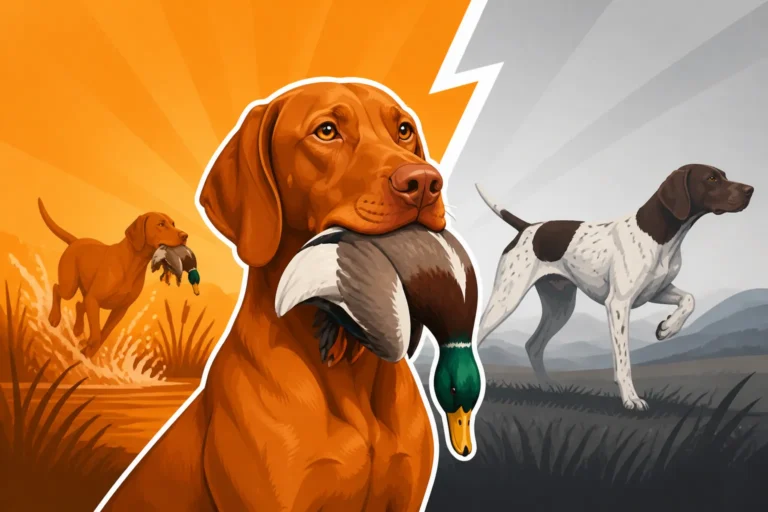
Whether a Vizsla Is Easier Than a Malinois
A Vizsla may look like the easier choice beside a Belgian Malinois, but both can be demanding dogs in very different ways. The Malinois often brings intense working drive and a need for clear, consistent direction; the Vizsla brings stamina, hunting instincts, and a strong need for company. This guide compares their training, exercise, and home-life needs so you can judge which fits your real routine.
Is a Vizsla easier to train than a Malinois
Their working instincts create different challenges
A Belgian Malinois is a herding and working dog with a strong capacity for focus, speed, and sustained activity. Many are bred for demanding work, and they may be quick to notice movement, respond to environmental changes, and seek a task. Those traits can be impressive in experienced hands, but they can also make everyday life feel intense if the dog has no suitable outlet or guidance.
A Vizsla is a hunting dog developed to search, point, and retrieve. It may be highly motivated by scent, birds, and movement, and a walk around the block does not necessarily satisfy those instincts. A Vizsla can also be hard to manage when excitement takes over, especially if recall and self-control have not been practiced around distractions.
So the question is not simply which breed learns faster. Both can learn quickly, but a fast learner can also learn unwanted habits quickly. A Malinois may need careful channeling of its working intensity; a Vizsla may need steady practice around wildlife, scent, and the temptation to range ahead. For more on the Vizsla’s bird-related development, see Starting a Vizsla on Birds.
Sensitivity and training style matter
Vizslas are often sensitive to pressure. A harsh correction or frustrated tone may make some dogs hesitant, confused, or less willing to engage. That does not mean a Vizsla needs no boundaries. It means training tends to work best when expectations are consistent and the dog understands how to succeed. Short sessions, rewards, and calm repetition can help build reliable behavior without turning every mistake into a confrontation.
Malinois can also be sensitive, though their intensity may make that sensitivity less obvious. A dog that looks bold and energetic can still become stressed, reactive, or difficult to handle if training relies on intimidation or inconsistent rules. Because the breed is powerful and quick, sloppy handling can create serious practical problems. Experience with high-drive dogs can be valuable, especially when the dog’s needs extend beyond basic household manners.
Neither breed is automatically easy for a first-time owner. If you are comparing their temperaments with other common sporting dogs, Whether the Vizsla Suits a First Time Owner is a useful related read. The important question is whether you can offer patient, structured training every week—not whether one breed has a reputation for being smart.
What “easy” looks like in daily training
A Vizsla may feel easier if you want a close companion and are willing to train around hunting instincts. The same closeness can become a challenge if the dog struggles to settle independently or becomes overly dependent on constant company. A Malinois may feel easier to someone who enjoys building precise skills and can provide suitable work, but much harder to someone who wants a dog that will simply fit into a low-key routine.
For either breed, prioritize practical foundations: recall, loose-leash walking, settling on a mat, waiting at doors, and leaving tempting items alone. Practice around distractions gradually. A recall that works in the kitchen may fail near squirrels, birds, or a running dog, so training needs to grow in difficulty step by step.
Exercise and mental work for each breed
A long walk does not solve every need
Both breeds need regular activity, but exercise is not just a matter of covering distance. A Malinois may need work that engages its mind and gives its energy a clear purpose. A Vizsla often benefits from a blend of movement, scent work, retrieving, and opportunities to use its hunting abilities safely. Repeating the same walk every day may keep a dog moving without fully meeting its need to think and engage.
A dog that is under-stimulated may invent its own activities: barking at the window, chasing movement, chewing household items, or pestering family members. The exact behavior varies, and it should not be treated as proof that the dog simply needs to run farther. Rest, training, enrichment, and a predictable routine all matter. See The Exercise a Vizsla Needs Every Day for more on planning activity around a Vizsla’s needs.
Puppies and adolescent dogs need age-appropriate activity rather than an adult dog’s exercise schedule. Long forced runs and repeated high-impact exercise are not a shortcut to a calm dog, particularly while a young dog is still growing. Ask your veterinarian for guidance about exercise suited to your individual dog’s age and health.
Choose activities that fit the breed
For a Vizsla, appropriate options may include scent games, retrieving practice, hiking on safe trails, and structured field training. These activities can let the dog use its nose and body while strengthening communication with you. If you live near public trails or open spaces, check local leash rules and wildlife restrictions before letting a dog work off leash. A strong hunting instinct does not disappear because a dog is friendly with people.
For a Malinois, training games, sport work, obedience practice, and other structured jobs may be more satisfying than unplanned, high-arousal play. Activities should be chosen with a qualified trainer if you are unsure how to channel the dog’s drive safely. The goal is not to keep the dog constantly wound up. Good activity should be balanced with the ability to relax.
A Vizsla that races around a yard for an hour may still need training and companionship afterward. Likewise, a Malinois that has practiced a demanding task may need help learning to settle. Both breeds need an off-switch taught and reinforced as part of daily life. Whether a Vizsla Needs Mental Work Too explores why thinking activities matter alongside physical exercise.
Which breed fits your household better
Consider how each dog handles companionship
Vizslas are known for being people-oriented, and many want to stay close to their family throughout the day. That can be delightful if you want a companion who follows you from room to room. It can be difficult if your workday involves long stretches away from home or if the dog becomes distressed when left alone. Independence and calm alone-time should be built gradually rather than assumed.
Malinois are also deeply connected to their people, but their needs are not just about closeness. They may require a household able to provide structure, training, and appropriate work, while managing their alertness and energy. A busy home is not automatically a good match: constant noise and activity can make it harder for some dogs to settle.
Think through a normal weekday rather than your ideal weekend. Who exercises the dog before work? How long will it be alone? What happens on rainy days, during travel, or when a family member is sick? If the answer depends on the dog entertaining itself, either breed may be a poor fit. For a closer look at the Vizsla’s need for closeness, read Why They Call It a Velcro Vizsla.
Space is less important than routine and management
A large yard does not replace supervision, training, or companionship. A Vizsla can live in a smaller home if its daily needs are met and it has safe opportunities for activity; a yard that is not securely fenced may be risky for a dog inclined to chase. A Malinois also needs more than room to sprint. Household routines, reliable barriers, and a plan for visitors and high-excitement moments can matter more than acreage.
Consider children and other pets individually. Neither breed should be left unsupervised with young children, and dogs need a quiet place where they can rest without being crowded. Introductions to resident pets should be gradual and managed. Hunting instincts in a Vizsla or chasing and herding tendencies in a Malinois can complicate life with cats, poultry, or small animals, even when the dog has been raised around them.
If you are preparing for a Vizsla, practical supplies such as a well-fitted harness, food, training treats, and enrichment items can help you build a consistent routine. Some owners arrange recurring purchases locally or through retailers such as Chewy; the useful choice is the one that makes it easier to keep essential supplies on hand. Retailers such as Chewy can also be one option for replenishing familiar food or treats, but check product suitability with your veterinarian when your dog has dietary or health needs.
A practical way to decide between a Vizsla and a Malinois
Compare the demands honestly
The table below is a broad comparison, not a guarantee about any individual dog. Breeding, early experiences, health, age, and training all affect temperament. Talk with responsible breeders, rescue organizations, and trainers who know the breed and the specific dog you are considering.
| Consideration | Vizsla | Belgian Malinois |
|---|---|---|
| Original work | Hunting, pointing, and retrieving | Herding and demanding working roles |
| Common challenge | Hunting drive, high activity needs, and difficulty being apart from people | Intensity, alertness, and need for structured work |
| Training approach | Patient, consistent, reward-based practice; build reliable control around scent and wildlife | Clear, consistent handling and carefully selected outlets for working drive |
| Home-life fit | Often suits people seeking a close, active companion | Often suits experienced owners prepared for a high-engagement working dog |
| Important question | Can you meet its exercise, training, and companionship needs? | Can you provide appropriate work, structure, and management consistently? |
If your main goal is a companion for ordinary walks and occasional play, neither breed should be chosen based on appearance alone. Meet adult dogs where possible, ask what their daily routine looks like, and discuss the dog’s response to being alone, unfamiliar people, other animals, and busy environments.
If a Malinois appeals to you because it seems exceptionally trainable, ask what kind of work you are genuinely prepared to do with it. If a Vizsla appeals because it seems affectionate and easiergoing, ask how you will meet its activity needs and help it settle when you are busy. For broader comparisons with other sporting breeds, The Vizsla Against the Weimaraner and the Shorthair can help put the Vizsla’s role and temperament into context.
Use a realistic trial week before deciding
Before bringing home either breed, write out a sample week. Include work hours, exercise, training, rest, grooming, veterinary visits, and backup care. Then identify the hardest day, not the easiest one. A breed may fit your lifestyle on a free Saturday but feel overwhelming on a wet Tuesday when you have meetings, errands, and limited daylight.
If you already have a dog, assess how introductions and shared routines would work. If you travel, identify who can care for a high-energy dog and whether that person is comfortable managing its needs. If you plan to use daycare or a professional trainer, ask about their experience with the breed and how they handle individual behavior rather than relying on a generic package.
For prospective Vizsla owners, it may also help to explore What Vizsla Owners Wish They Had Known and The Household a Vizsla Was Built For. Those topics can prompt useful questions about companionship, energy, and the realities of living with a hunting breed.
The better choice depends on your experience and expectations
A Vizsla is not automatically easier than a Malinois. It may be the more suitable option for someone who wants an affectionate sporting dog and can provide regular activity, training, and company. A Malinois may suit an experienced handler looking for an exceptionally engaged working partner and prepared to manage the dog’s needs thoughtfully. Neither is a low-effort choice, and an individual dog’s temperament matters more than a breed stereotype.
If you are leaning toward a Vizsla, plan for its need to move, explore, and stay close to its people. If you are leaning toward a Malinois, be honest about whether you can offer the structure and work that a high-drive dog may need. For either dog, choose reputable guidance, use humane training methods, and make the decision around the life you can sustain—not the one you hope to have someday.
Disclaimer
This article is for general informational purposes only and does not constitute professional advice. Laws, prices and regulations vary by location and change over time. Consult a qualified professional for guidance on your specific situation.