Whether a Vizsla Was the Right Choice
Vizsla ownership challenges help owners separate normal breed intensity from mismatches and decide on practical routine changes.

Vizsla ownership challenges help owners separate normal breed intensity from mismatches and decide on practical routine changes.

Vizsla owners consider whether high energy, constant closeness, and daily exercise needs make this breed right for them.

Vizsla ownership realities including constant closeness, structured exercise needs, and daily time commitments for prospective buyers.

Vizsla exercise needs, intense people attachment, and high sensitivity explain why this hunting dog breed is surprisingly hard to own.
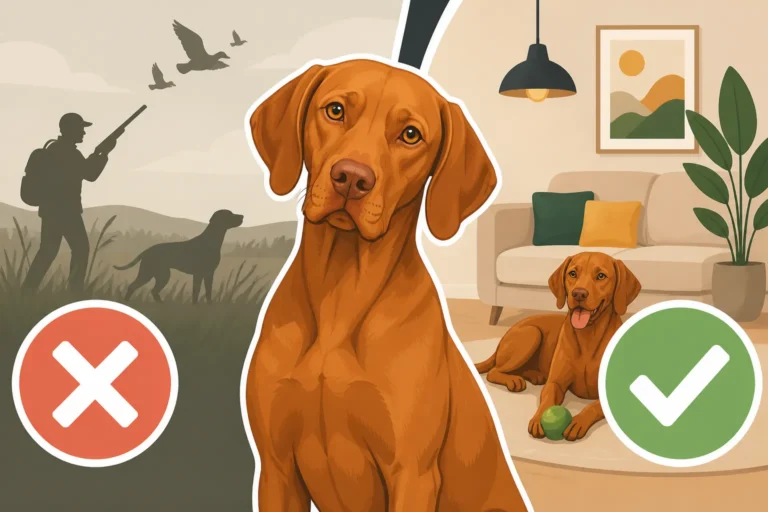
Vizsla ownership in non-hunting homes requires daily exercise, training routines, and mental stimulation to keep dogs happy.

Vizsla compatibility with cats depends on prey drive, individual dog temperament, safe introductions, and cat behavior.

Whether a Vizsla needs a second dog depends on household readiness, individual temperament, and behavior when left alone.

A solo Vizsla can thrive without a canine companion when owners provide daily exercise, training, and mental work.

Vizsla exercise needs, training routines, and daily activities matter more for this athletic dog than owning large property acreage.

Vizsla ownership for full-time workers requires exercise, gradual alone-time training, and reliable midday visits during the standard workday.