Whether a Vizsla Escapes a Crate
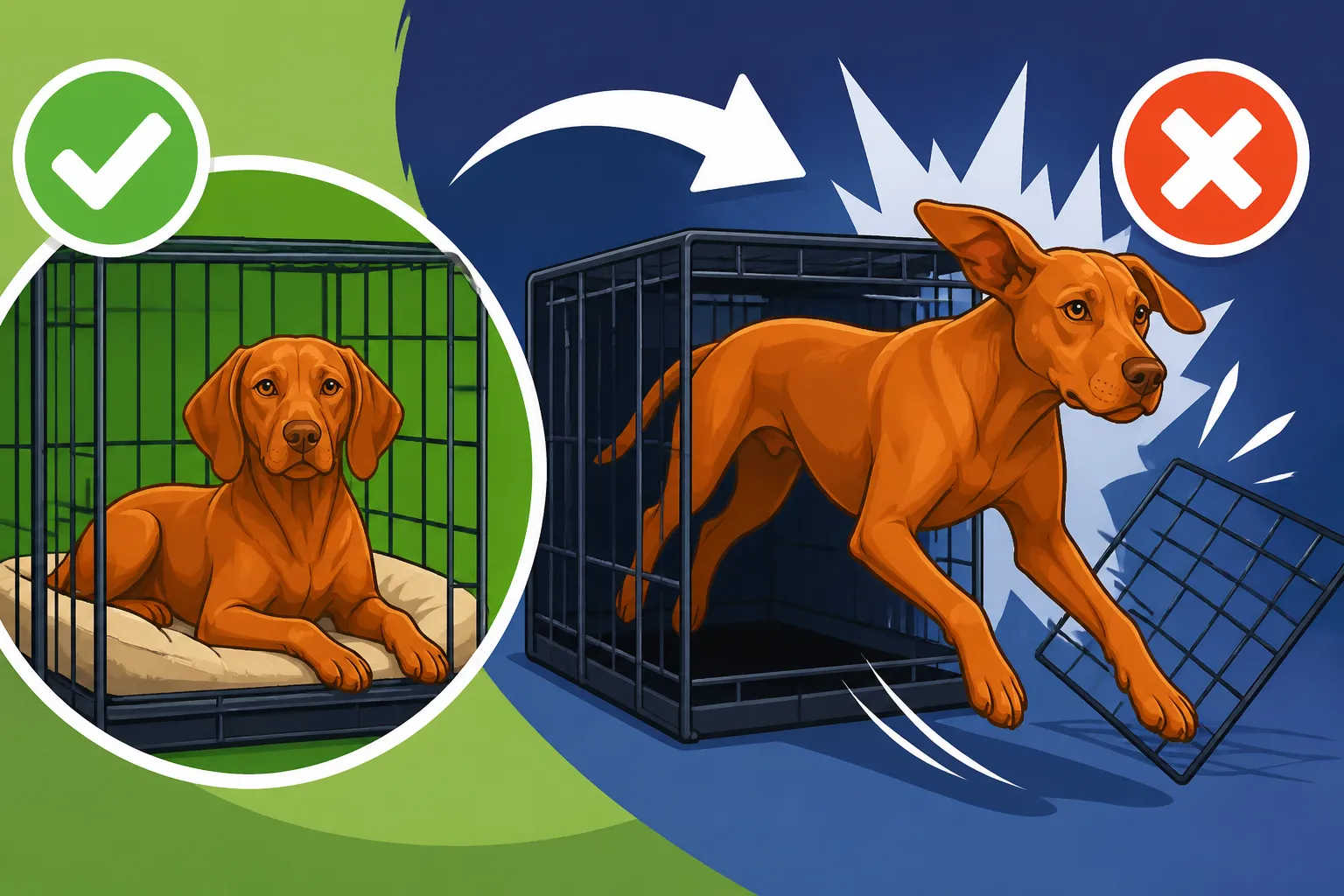
Coming home to find your Vizsla has somehow bent the bars, sprung the latch, or even outright dismantled their crate is a shock. It's not just the damage to the crate or the house that's frustrating; it's the gnawing worry about their safety and the feeling of utter disbelief that such a clever, determined dog could manage such a feat. This guide aims to thoroughly explore the reasons behind a Vizsla's escape attempts, help you choose a truly secure crate, and provide effective training strategies to ensure your energetic companion feels comfortable and safe in their space, rather than compelled to break free.
Understanding the Vizsla's Motivation to Escape
Vizslas are a unique breed, known for their incredible intelligence, boundless energy, and profound attachment to their human families. When a Vizsla attempts to escape a crate, it's rarely out of malice or simple naughtiness; it's almost always a symptom of an underlying need or distress that isn't being met. Understanding these core motivations is the first step toward finding a lasting solution.
The Vizsla's Intense Desire for Connection
If you own a Vizsla, you already know they're often called "Velcro Vizslas" for a very good reason. They thrive on human companionship and are deeply connected to their people. This strong bond, while wonderful, can lead to significant distress when they are left alone, especially if they are confined. For many Vizslas, being crated when their family is absent feels like an unbearable separation, activating their instinct to seek you out at all costs. It's not just boredom; it's a deep-seated desire to be part of the pack, to be with you. This intense need for connection can manifest as genuine separation anxiety, where the dog experiences panic, fear, and a strong urge to escape confinement to reunite with their beloved humans. Why They Call It a Velcro Vizsla delves deeper into this unique bond. When your Vizsla is suffering from loneliness or anxiety, the crate becomes the barrier between them and their comfort, making escape attempts a desperate measure. It's heartbreaking to realize that what you intended as a safe space has become a source of immense stress for them.
High Energy and Intelligence
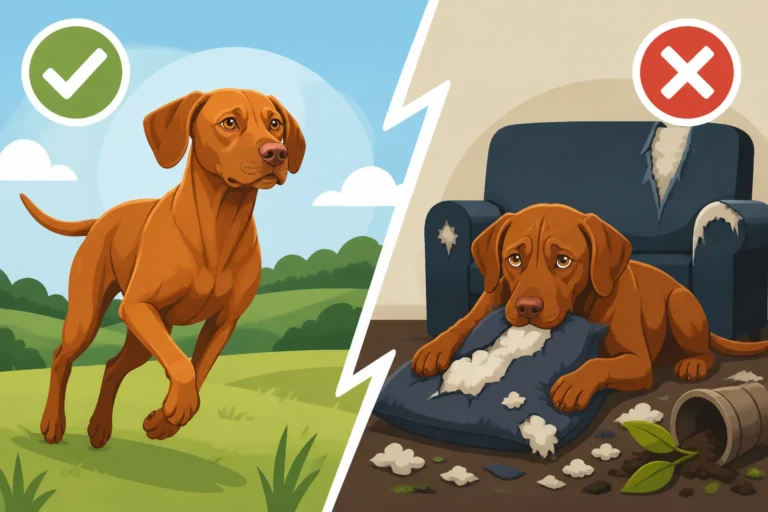
Vizslas are bred to be active, intelligent hunting dogs, and these traits don't magically disappear when they're confined. They possess incredible problem-solving abilities and a persistent nature. If your Vizsla isn't getting enough physical exercise or mental stimulation, that pent-up energy and clever mind will look for an outlet. A crate, particularly one that isn't sufficiently robust or well-designed, can quickly become a puzzle to solve. They might meticulously test every joint, every latch, every weak point until they find a way out. They learn quickly, often remembering exactly how they managed their last escape. Imagine a dog with the stamina to hunt all day, cooped up with nothing to do; their creative energy will absolutely be channeled into escape efforts. This isn't just a physical need; it's a mental one. An unfulfilled Vizsla brain is a dangerous thing for crate security! If you're wondering if your Vizsla is showing signs of distress when left alone, you might want to read Signs a Vizsla Is Suffering Alone.
Previous Negative Crate Experiences
Sometimes, a Vizsla's desire to escape stems from past experiences that have created a negative association with the crate. Perhaps they were crated for too long as a puppy, used as punishment, or left in a crate that was too small or uncomfortable. A single traumatic experience, such as getting a paw caught or struggling to get out of an unstable crate, can instill a lasting fear or aversion. Even if you've done everything right, a rescue Vizsla might come with a history that makes them crate-averse. This can mean that every time they are placed inside, they don't see it as a safe den, but as a place where bad things happened or where they felt trapped and alone. Overcoming such ingrained fear requires immense patience and a complete re-framing of the crate experience. This is especially true for a soft, sensitive breed like the Vizsla, who can be easily put off by negative associations.
Choosing the Right Crate for Your Clever Vizsla
Once you understand why your Vizsla might be attempting escapes, the next step is to ensure that the crate itself isn't making their job easier. Not all crates are created equal, and a Vizsla's strength and determination can quickly expose the weaknesses of a standard model.
Material Matters: From Wire to Heavy-Duty
For a determined Vizsla, a flimsy wire crate is often seen less as a barrier and more as a bendable sculpture. Many owners have shared stories of coming home to find wire bars twisted, expanded, or completely separated. Your average, thin-gauge wire crate sold at a big box store just won't cut it for an escape artist. When looking for a crate, you need to consider the material and construction.
- Standard Wire Crates: Often too light and easily manipulated. A Vizsla can learn to leverage their weight against the door or side, bending the wire enough to slip through or break a weld. These are best for puppies just learning or adult Vizslas who are already very comfortable and secure in their crate and have no history of escape.
- Heavy-Duty Wire Crates: These use thicker gauge wire and often have more secure latching mechanisms. They're a step up but still might not be enough for a true escape artist.
- Plastic Crates (Airline Style): These are generally more escape-proof than basic wire crates, as the plastic shell provides a solid, less flexible barrier. However, a persistent chewer can still damage the door or vents, and the plastic latches can sometimes be worked loose.
- Heavy-Duty Steel or Aluminum Crates: These are often marketed as "escape-proof" or "impact-resistant" crates. They feature thick steel bars, reinforced welds, and multiple, robust locking latches. They are significantly more expensive but can be a godsend for owners of highly intelligent and persistent escape artists. Many options are available through online retailers like Amazon, specifically designed for strong breeds or those with separation anxiety. These crates often feature materials like industrial-strength steel, which are far more difficult for a dog to bend or chew through. They also tend to have solid panels or very thick bars, making it hard to find a purchase point for leverage.
The key is to think like your Vizsla. Where are the weak points? Can they get their teeth around a bar? Can they push against the door? Can they wriggle through a small opening? If the answer is yes, they will likely try.
Secure Latches and Construction
Even with the strongest materials, a weak latch is an open invitation for a clever Vizsla. Many standard crates come with simple slide-bolt latches that can be nudged open with a nose or paw, or even vibrated open with enough persistent shaking. Vizslas are incredibly adept with their paws and mouths, and they can often figure out complex mechanisms. Look for crates with:
- Multiple Locking Points: Crates with two or more latches, ideally on different parts of the door, are much harder to defeat.
- Spring-Loaded or Multi-Point Latches: Some heavy-duty crates feature latches that require a human-like squeeze and pull action, or a double-locking mechanism that's almost impossible for a dog to manipulate.
- Reinforced Doors: The door itself should be sturdy and not easily bent inward or outward, creating a gap for escape. Many escape attempts start with a dog pushing or pulling on the door until it warps just enough to allow them to slip out.
When examining a crate, pay attention to how the door fits into the frame. Are there large gaps? Can it be lifted slightly out of alignment? For a true escape artist, even a millimeter of play can be enough.
Here's a quick comparison of common crate types and their suitability for a Vizsla escape artist:
| Crate Type | Pros | Cons | Escape Artist Suitability |
|---|---|---|---|
| Standard Wire Crate | Affordable, collapsible, good airflow | Bars easily bent, simple latches | Low |
| Heavy-Duty Wire Crate | Stronger wire, improved latches | Still potentially bendable by determined dogs | Medium |
| Plastic (Airline) Crate | Enclosed, den-like, solid barrier | Can be chewed through (door/vents), latches may fail | Medium-High |
| Heavy-Duty Steel/Aluminum | Extremely robust, multiple secure latches | Expensive, heavy, less collapsible, can be less den-like | High |
Correct Sizing and Placement
While less about escape ability and more about escape motivation, the size and placement of the crate play a crucial role in your Vizsla's comfort and willingness to stay inside.
- Size: A crate should be large enough for your Vizsla to stand up, turn around, and lie down comfortably. It shouldn't be so large that they can use one end as a bathroom, as this defeats the purpose of crate training (dogs instinctively avoid soiling their sleeping area). Conversely, a crate that is too small will be uncomfortable and increase their desire to get out. Think "cozy den," not "cramped cage."
- Placement: Where you put the crate matters. A Vizsla's "Velcro" nature means they want to be near you. Placing the crate in a busy common area, like the living room or your bedroom, can help them feel less isolated. If they are accustomed to your presence and suddenly find themselves alone in a quiet, distant part of the house, their anxiety might spike, fueling escape attempts. Whether a Vizsla Copes With a Home Office touches on the importance of proximity. Ensure the area is safe, free from drafts, and not directly in sunlight or near heat sources.
Crate Training Strategies to Prevent Escapes
A secure crate is just one piece of the puzzle. The most robust crate in the world won't solve the problem if your Vizsla is genuinely terrified or stressed inside it. Proper, positive crate training is paramount, transforming the crate from a place of confinement into a comforting den.
Building a Positive Association
The goal is to make the crate your Vizsla's favorite place – a sanctuary they choose to enter, not a prison they're forced into. This takes time, patience, and consistency.
- Introduce Gradually: Start by simply having the crate open in a common area. Let your Vizsla explore it at their own pace. Never force them in.
- High-Value Rewards: Entice them with irresistible treats, a favorite toy, or even their meals placed just inside the crate. Every positive interaction with the crate should be heavily rewarded.
- "Crate Games": Make the crate a fun place. Toss treats in and let them retrieve them. Say "crate" or "kennel" in a happy voice. You can find excellent resources for positive reinforcement techniques through trainers or online platforms like BAXTER & Bella, which emphasize making learning fun and rewarding.
- Short, Positive Stays: Begin with very short periods of crating, literally a few seconds, with you right there. Gradually increase the duration as your Vizsla remains calm and comfortable. Never let them out when they are whining or barking, as this teaches them that those behaviors lead to release. Wait for a moment of quiet.
- Comfort and Familiarity: Line the crate with a soft, comfortable bed or blanket that smells like you. A familiar scent can be incredibly calming for an anxious Vizsla. Some owners even put an old t-shirt of theirs in the crate. For more on the benefits of positive crate training, read Whether Crate Training Helps a Vizsla.
Gradual Separation Training
Once your Vizsla is happy to go into the crate, the next step is to teach them to be calm when you leave their sight. This is where many escape artists are born if not handled correctly.
- Practice Departures: Start with very brief absences. Crate your Vizsla, give them a high-value chew or puzzle toy, and then simply step out of the room for a few seconds. Return before they show any signs of distress. As they remain calm, slowly extend the time you're out of sight.
- Vary Your Routine: Don't make a big fuss when you leave or return. Your emotional state can easily transfer to your Vizsla. Keep departures and arrivals low-key to avoid building anticipation or anxiety. Pick up your keys, put on your coat, but don't say goodbye or make eye contact. The goal is for them to see these actions as normal, not as a precursor to panic.
- White Noise or Music: For some Vizslas, background noise can help muffle outside sounds that might trigger anxiety, or simply provide a comforting auditory presence. Gentle classical music or a white noise machine can make a difference.
- Install a Camera: A pet camera allows you to monitor your Vizsla's behavior when you're gone. This insight is invaluable for understanding when they start to get anxious and how long they can truly cope before escalating to escape attempts. This helps you adjust your training plan effectively.
Providing Enrichment in the Crate
A bored Vizsla is a destructive Vizsla. Mental stimulation is just as important as physical exercise in preventing escape attempts. A dog that is mentally engaged is less likely to focus their energy on breaking free.
- Long-Lasting Chews: Offer durable, safe chews that will keep them occupied for an extended period. Look for robust options that can withstand a Vizsla's strong jaws.
- Puzzle Toys: KONGs stuffed with peanut butter, yogurt, or wet food and then frozen can provide hours of mental and physical engagement as your Vizsla works to extract the treat. There are many interactive puzzle toys available on Amazon that challenge dogs to figure out how to get a reward. This type of mental work is exhausting and can help them settle.
- Interactive Feeder Toys: Instead of a bowl, consider using a food-dispensing toy for their meals while crated. This makes mealtime a game and extends the activity.
- Safe Toys: Ensure any toys left in the crate are completely safe, durable, and pose no choking hazard. Many Vizslas, especially as puppies, are enthusiastic chewers. What a Vizsla Chews Through as a Puppy can offer more insight into their chewing habits.
Addressing Underlying Issues and Long-Term Solutions
If, despite all your efforts, your Vizsla continues to be an escape artist, it's crucial to acknowledge that there might be deeper issues at play, most commonly severe separation anxiety or insufficient overall management of their energy and needs.
Managing Separation Anxiety
True separation anxiety is more than just a little whining when you leave; it's a full-blown panic attack for your dog. If your Vizsla exhibits extreme distress, persistent escape attempts, self-harm, or incessant barking and howling when alone, professional intervention is likely needed.
- Certified Professional Dog Trainer (CPDT): A trainer specializing in separation anxiety can develop a tailored desensitization and counter-conditioning program. This involves gradually exposing your Vizsla to isolation cues and building positive associations, all at a pace they can handle.
- Veterinary Behaviorist: For severe cases, a veterinary behaviorist (a DVM with specialized training in animal behavior) can be invaluable. They can diagnose the severity of the anxiety and, if necessary, prescribe medication to help reduce panic levels, making it possible for behavioral modification training to be effective. Whether Medication Helps an Anxious Vizsla can provide more information on this option. Medication is rarely a standalone solution but can be a powerful tool in conjunction with behavioral therapy.
- Patience and Empathy: This journey requires immense patience. Understand that your Vizsla isn't acting out of spite; they are genuinely struggling. Your empathy will be their greatest comfort.
Ensuring Adequate Exercise and Mental Stimulation
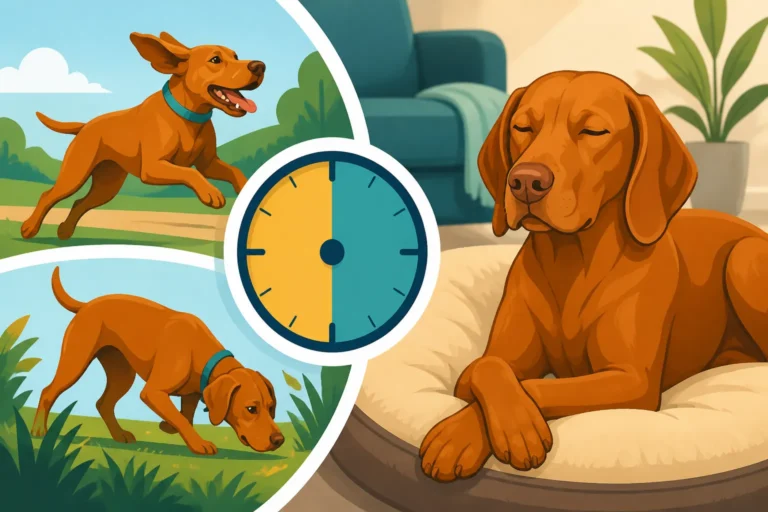
We often hear "a tired dog is a good dog," and for a Vizsla, this couldn't be more true. They are a high-energy breed designed for sustained activity. Two hours a day of brisk walking might sound like a lot, but for many Vizslas, it's just a warm-up.
- High-Intensity Physical Activity: Think beyond walks. Daily runs, cycling (canicross), long hikes, swimming, or off-leash romps in a secure area are essential. A Vizsla needs to truly stretch their legs and burn off their abundant energy. The Exercise a Vizsla Needs Every Day provides a comprehensive look at their exercise requirements.
- Purposeful Work: Vizslas thrive when they have a job to do. Consider activities like scent work, agility, or actual field work. Engaging their natural instincts for hunting, pointing, and retrieving can be incredibly satisfying and mentally tiring for them. Even backyard "hunts" for hidden treats or toys can make a difference.
- Consistency: Daily exercise is key. A few days of intense activity followed by days of minimal exercise can be detrimental. They need a consistent outlet for their energy. A Vizsla that is not sufficiently exercised and stimulated will find ways to entertain itself, often through destructive behaviors, including crate escapes.
Considering Alternatives to Crating
While crating can be an invaluable tool for house training and providing a safe space, it's not the only option, especially if your Vizsla is an unrepentant escape artist or suffers from severe crate-related anxiety.
- Dog-Proofed Room: For some Vizslas, having a larger, yet still contained, space can reduce anxiety. A dedicated "Vizsla room" can be set up with a secure gate, durable flooring, and only safe items. Remove anything they could chew, destroy, or get into trouble with.
- Secure Outdoor Run: If you have a very secure, escape-proof outdoor kennel run that provides shelter from the elements, this could be an option for limited periods. However, Vizslas are extremely sensitive to cold, so this is only suitable in warmer weather and for dogs who are truly comfortable being outside alone. The Cold a Vizsla Genuinely Cannot Handle is a good read if you are considering this.
- Dog Walker or Daycare: If you work long hours, a mid-day dog walker can provide a crucial break, exercise, and companionship. Dog daycare can be an excellent option for highly social Vizslas, providing hours of supervised play and interaction, ensuring they are mentally and physically exhausted by the time they come home. Whether Daycare Is Cheaper Than a Destroyed Sofa and Whether a Vizsla Settles at Daycare are helpful resources when considering these options. These alternatives allow your Vizsla to be safely occupied and less likely to feel the intense loneliness that fuels escape attempts.
Ultimately, preventing a Vizsla from escaping their crate comes down to a combination of factors: a truly secure crate, consistent positive training, adequate exercise and mental stimulation, and addressing any underlying anxiety with professional help if necessary. It's a journey that requires patience and dedication, but seeing your Vizsla comfortable and content in their safe space is well worth the effort.
Disclaimer
This article is for general informational purposes only and does not constitute professional advice. Laws, prices and regulations vary by location and change over time. Consult a qualified professional for guidance on your specific situation.