Whether a Vizsla Attaches to the Whole Family
One of the most common worries new Vizsla owners have is whether their affectionate, energetic dog will spread that love around or become a "one-person dog." It's a valid concern, especially if you have a bustling household and want every family member to experience that special bond. This guide will dive deep into the Vizsla's unique attachment style, explore what influences how they bond with a family, and offer practical ways to foster a strong, loving connection with everyone under your roof.
Understanding the Vizsla's "Velcro" Nature
If you've spent any time researching Vizslas, you've undoubtedly heard the term "Velcro Vizsla." It's not just a cute nickname; it’s a deeply ingrained behavioral trait that truly defines the breed. These dogs thrive on constant physical and emotional proximity to their people. They aren't content to be merely in the same room; they want to be on you, next to you, or at the very least, touching you. This intense need for connection often leads owners to wonder if this bond extends to everyone or if it's reserved for one lucky individual.
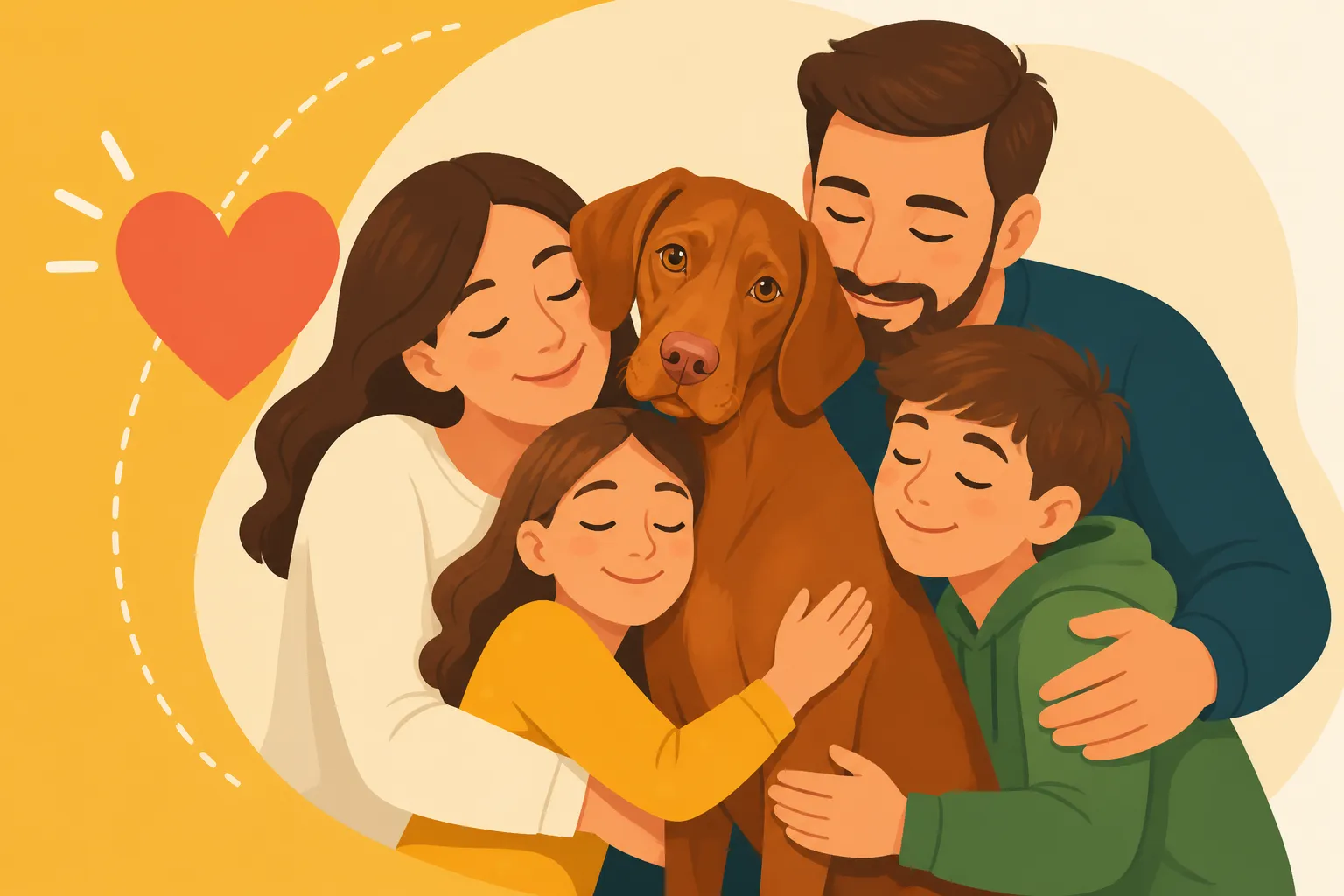
The reality is, a Vizsla's Velcro nature can extend to the whole family, but it often manifests differently with each person. Imagine your Vizsla as a complex web of connections rather than a single, fixed bond. They might have a primary attachment, often to the person who provides the most consistent care, training, or goes on the most adventures with them. However, this doesn't mean they don't adore and seek comfort from other family members. It simply means the intensity or expression of that bond might vary. You might find your Vizsla follows one person into the bathroom, but cuddles up to another on the couch for an evening nap. This isn't a sign of less love, but rather different roles and relationships within the pack. For a deeper look into this unique trait, you might find Why They Call It a Velcro Vizsla particularly insightful.
What "Velcro" Looks Like in a Family Setting
In a family environment, a Vizsla's "Velcro" behavior might look like a canine shadow, following each person from room to room, regardless of what they're doing. They might push their head under your hand for a pet while you're cooking, or nudge your laptop for attention during a work call. This isn't necessarily demanding, but rather their way of staying connected and involved. With children, this might mean leaning against them while they watch TV, or resting their head on their lap during quiet time. It's a constant, gentle presence that sometimes feels overwhelming but is always rooted in affection and a desire to be part of the action.
It’s easy to feel like your Vizsla is only attached to you if you're the one who always takes them out, feeds them, and handles their training. But watch closely. Do they greet everyone at the door with equal enthusiasm? Do they seek out cuddles from different family members at different times of the day? Do they initiate play with one person and then settle for a chew toy near another? Often, the bond is spread, but we, as humans, tend to interpret it based on our own expectations of what "attachment" should look like. Understanding What Velcro Behavior Looks Like in a Vizsla can help decode these subtle signals and appreciate the breadth of their family connections.
Factors Influencing a Vizsla's Family Attachment
Several key elements play a significant role in how a Vizsla distributes its affections and forms attachments within a family unit. It's not always about who buys the most expensive treats or gives the loudest praise; it's often a combination of consistent interaction, early experiences, and even the Vizsla's individual personality.
The Impact of Early Socialization and Puppyhood Experiences
The first few months of a Vizsla puppy's life are incredibly formative. Proper socialization during this period is paramount. A puppy exposed positively to various people – men, women, children, different ages, different voices – is more likely to grow into an adult dog comfortable and affectionate with a diverse range of individuals. If a puppy primarily interacts with one person during this critical window, it might naturally lean towards a stronger initial bond with that individual. However, even if initial socialization was limited, consistent positive reinforcement from all family members can still broaden their attachments.
Consider a Vizsla puppy that spends its first year mostly with one parent who works from home, while the other parent and children are only present in the evenings or on weekends. It's natural for that puppy to form its strongest initial bond with the stay-at-home parent, simply due to sheer volume of interaction. However, if the other family members actively engage with the puppy through play, feeding, and short training sessions, the puppy will still develop strong, albeit perhaps different, attachments to them. This is why involving everyone in The First Year With a Vizsla Puppy is so crucial. Every positive interaction builds a brick in the wall of their family bond.
Consistency in Care, Training, and Affection
Vizslas thrive on routine and consistency. If only one person consistently feeds, walks, trains, and provides affection, that person will likely become the central figure in the Vizsla's world. This isn't to say other family members can't form strong bonds, but the primary caregiver will often be seen as the ultimate provider of resources and security. To encourage a broader family attachment, it's vital that all family members participate in the dog's daily care and training.
Think about it: if one person always takes the Vizsla for its stimulating morning run and evening training sessions, while another only offers a quick pat on the head, the dog will naturally gravitate towards the one who fulfills its deep-seated needs for exercise and mental engagement. Sharing these responsibilities, even in small ways, can make a huge difference. For instance, the BAXTER & Bella online puppy school emphasizes involving the entire family in training, providing a structured way for everyone to build a connection through positive reinforcement and shared learning. This kind of consistent, shared engagement helps solidify the idea that the entire family unit is a source of good things and reliable interaction.
Individual Vizsla Personality and Preferences
Just like people, every Vizsla has a unique personality. Some are naturally more outgoing and eager to shower affection on anyone who will offer it, while others might be a bit more reserved and take time to warm up to new people or even specific family members. A highly sensitive Vizsla might bond very strongly with the calmest, most gentle family member, especially if they have had negative experiences or are naturally a bit timid. On the other hand, a boisterous, confident Vizsla might thrive on the energy of the most playful family member.
It's also worth noting that some Vizslas might develop a slight preference based on gender or even voice tone. Some anecdotal evidence suggests Vizslas can be particularly sensitive to a raised voice, and a "soft" Vizsla might "shut down" if one family member is consistently stern or loud, which could impact their bond. The Soft Vizsla That Shuts Down When You Raise Your Voice explores this sensitivity in more detail. Observing these individual quirks and adapting how each family member interacts with the dog can foster a stronger, more widespread attachment.
Nurturing a Strong Family Bond with Your Vizsla
Creating a truly family-oriented Vizsla is an intentional process, not something that happens purely by accident. It requires conscious effort from everyone in the household to engage with the dog in meaningful, positive ways. The goal is for your Vizsla to see every family member as a valued part of their pack, a source of comfort, fun, and security.
Shared Activities and Playtime
One of the most effective ways to build strong bonds across the family is through shared activities. Vizslas are high-energy dogs that absolutely thrive on activity and interaction. If different family members take turns with walks, runs, hikes, or even just intense fetch sessions in the yard, it helps the Vizsla associate positive, exhilarating experiences with each person. This doesn't mean everyone has to be a marathon runner; even 15-20 minute bursts of engaging play, like tug-of-war or hide-and-seek, can make a huge impact.
Think about varying the activities too. One family member might be the designated "ball thrower," another the "hiking buddy," and another the "cuddle and gentle play" person. This diverse interaction ensures the Vizsla experiences different facets of their needs being met by various family members. For example, a sturdy long-line from Amazon can enable even younger family members to safely participate in outdoor exercise with a high-energy Vizsla, building their confidence and bond. Remember, a tired Vizsla is a happy Vizsla, and sharing the responsibility of their exercise needs creates a powerful collective bond. You'll find that The Two Hours a Vizsla Needs Before It Will Settle isn't just about physical exertion; it's about mental engagement and shared experience.
Inclusive Training and Reinforcement
Training is an incredible bonding tool, and it should absolutely be a family affair. When all family members use the same cues, commands, and reward systems, the Vizsla learns to respect and respond to everyone. This prevents confusion and reinforces the idea that all humans in the household are leaders. Even basic commands like "sit," "stay," or "come" can be practiced by everyone, using positive reinforcement methods. Children, under supervision, can also participate in giving simple commands and rewarding the dog.
Many online training platforms, like BAXTER & Bella, are designed to be family-friendly, offering modules that can be worked through by multiple household members. This ensures consistency in methods and creates a shared language between the dog and its people. When your Vizsla understands that listening to anyone in the family leads to good things – treats, praise, play – it strengthens their attachment to the entire unit. Exploring What a Vizsla Will Work For can give you ideas on how to make training rewarding for all.
Daily Routines and Affection Rituals
Beyond structured activities, incorporating all family members into the Vizsla's daily routines is crucial. This includes feeding times, grooming sessions, and quiet cuddle moments.
- Feeding: Rotate who feeds the dog. Even if one person prepares the meal, another can be the one to place the bowl down. This helps the Vizsla see everyone as a provider.
- Grooming: Vizslas have a simple coat, but a quick brush, a paw check after a walk, or even just a belly rub can be a special moment shared with any family member. How Often a Vizsla Needs Brushing might give you some ideas for a quick daily ritual.
- Quiet Time: Encourage different family members to have quiet cuddle sessions with the Vizsla. This could be reading on the couch with the dog leaning against them, or a gentle petting session before bed. These calm interactions build a different, but equally important, layer of trust and affection.
By distributing these moments throughout the day and across different family members, you ensure your Vizsla feels valued and connected to everyone, reinforcing their role as an integral part of the family pack.
Addressing Perceived Favoritism or Single-Person Attachment
It's a common scenario: despite your best efforts, your Vizsla seems to have chosen one person as their ultimate favorite. Maybe they ignore everyone else when that special person walks in the room, or they only bring their favorite toy to that specific individual. This can be frustrating for other family members, and it's important to address it with understanding and strategy, rather than resentment.
Understanding the Root Cause
Before you try to change the dynamic, try to understand why your Vizsla might gravitate towards one person more strongly. Often, it boils down to:
- Primary Caregiver: Is one person consistently responsible for feeding, walking, and veterinary visits?
- High-Value Interactions: Does one person offer the most exciting play, the most delicious treats, or the most stimulating adventures?
- Consistency in Training: Is one person the most consistent and fair trainer, leading to a strong communication bond?
- Personality Match: Does one person's energy level or demeanor naturally align better with the Vizsla's individual personality?
It's rarely about a lack of love for others; it's more about who fulfills the dog's needs in the most consistent or rewarding way. If you suspect your Vizsla is bonding primarily with one person, it's worth taking a look at Whether a Vizsla Bonds to One Person for more perspectives on this common Vizsla trait.
Redistributing Responsibilities and Quality Time
Once you've identified potential reasons for the favoritism, the solution often lies in redistributing responsibilities and creating more high-quality interactions with other family members.
- Shared Chores: Assign different family members specific care tasks. For instance, one person always does the morning walk, another the evening feed, and someone else handles the mid-day play.
- Dedicated One-on-One Time: Encourage each family member to spend at least 15-30 minutes of undivided attention with the Vizsla daily. This means no phones, no TV – just focused interaction, whether it's gentle petting, a training session, or a game of tug.
- "Special Treat" Giver: Designate different family members to give out particularly high-value treats or toys. This helps the Vizsla associate each person with desirable rewards.
- Weekend Adventures: If one parent is typically home during the week, the other parent could take the Vizsla on special weekend outings, like a new hiking trail or a swim at the lake.
Consistency in these efforts is key. It might take time, but over weeks and months, your Vizsla will start to recognize that everyone in the family is a source of good things and meaningful interaction.
Strategies for Promoting Multi-Person Attachment
When a Vizsla clearly favors one person, it's important not to force interactions, but rather to make interactions with other family members incredibly positive and rewarding.
| Strategy | Description | Benefit for Vizsla |
|---|---|---|
| "Arrival Rituals" | When the less-favored person arrives home, they immediately engage in a high-value activity: favorite toy, special treat, or exciting short walk. | Associates their arrival with immediate positive reinforcement. |
| "The Gatekeeper" | The favored person sometimes defers dog interactions. For example, if the Vizsla seeks attention, the favored person gently directs them to another family member who then offers a rewarding interaction. | Teaches the Vizsla that good things can come from anyone. |
| Interactive Play from All | All family members initiate and participate in games like fetch, tug, or hide-and-seek. Use different toys or play styles to keep it fresh. | Builds playful bonds and associates fun with everyone. |
| Training Sessions with Everyone | Short (5-10 minute) training sessions where each family member practices basic commands and rewards success. | Reinforces respect and communication with all family members. |
| Calm Cuddle Time | Encourage quiet, relaxed petting and cuddle sessions with different family members, especially before bed or during quiet moments. | Builds trust and comfort, showing all are sources of soothing presence. |
If you have children, special attention should be paid to ensuring they know how to interact respectfully and safely with the Vizsla. A child who consistently pulls ears or is overly rough will inadvertently weaken the bond. Teaching children how to be gentle and understanding is paramount for a strong, positive relationship. A Vizsla in a House With Children offers more advice on fostering this crucial dynamic. By consistently applying these strategies, you can help your Vizsla develop strong, loving attachments to every member of your family.
Disclaimer
This article is for general informational purposes only and does not constitute professional advice. Laws, prices and regulations vary by location and change over time. Consult a qualified professional for guidance on your specific situation.