Whether a Vizsla Is Safe Off Leash
It's the dream, isn't it? Watching your magnificent Vizsla gracefully quarter a field, nose to the ground, only to turn on a dime and sprint back to you with joy in their eyes when you call. But the reality can often feel miles away from that idyllic vision, especially when your dog seems to be deaf the moment a squirrel appears. This guide is all about navigating the challenges and joys of allowing your Vizsla to be safely off-leash, covering training, tools, and understanding their innate instincts.
Understanding the Vizsla's Instinctual Drive
Let's be honest, the Vizsla was bred for a job, and that job involved ranging far and wide, independently finding and pointing game. This means that while they are incredibly biddable and keen to please you, they also have centuries of instinct telling them to follow their nose and chase anything that moves. Dismissing these deep-seated traits is a recipe for frustration and potential danger.
The Hunter's DNA and Range
Vizslas are bird dogs through and through, descendants of ancient Hungarian hunting companions. This isn't just a fun fact; it's a fundamental aspect of their being that dictates much of their behavior, especially when off-leash. Their lean, muscular bodies are built for speed and endurance, allowing them to cover vast amounts of ground with effortless grace. When you unleash them in an open field, they aren't just running for fun; they're often engaging their natural drive to hunt, exploring every scent and movement. It's a truly beautiful thing to witness, but it also means their definition of "close" might be quite different from yours. They can, and often will, range much farther than many other breeds.
This inherent desire to "work" a field can be a source of constant anxiety for owners who haven't adequately prepared for it. You might find yourself shouting their name, your voice getting increasingly frantic, as your beloved copper shadow disappears over a rise, completely engrossed in a scent trail. It's not defiance; it's their breed history kicking in. Understanding this helps us approach their training with empathy and realistic expectations, rather than simply getting angry when they follow their powerful noses. Whether a Vizsla Ranges Wider Than a Shorthair is a question many owners ponder, and the answer often comes down to their individual prey drive and training.
Prey Drive and Distractions
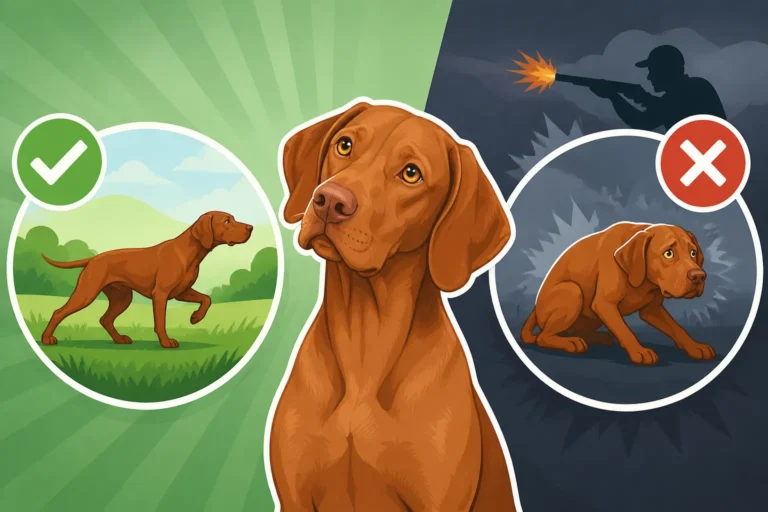
The strength of a Vizsla's prey drive cannot be overstated. A fluttering bird, a bounding rabbit, or even a leaf caught just right in the wind can instantly transform your attentive companion into a focused hunter. In that split second, the world shrinks to just them and their target. Your carefully practiced recall command can simply vanish from their consciousness, overridden by that primal urge to chase. This isn't a flaw in your dog; it's a feature of the breed.
This intense focus on prey is perhaps the biggest hurdle to consistent off-leash safety. Imagine you're walking in a relatively safe park, feeling confident in your Vizsla's recall. Suddenly, a rabbit darts across their path. In a blink, they're gone, galloping at full speed, ears flattened, eyes locked. The danger here is obvious: a road, another dog, a cyclist, or even sharp underbrush. Until you can reliably break that chase instinct with a recall, any environment with potential prey remains a risk. It's why building an emergency recall that overrides everything is so critical, a topic we'll touch on later.
Building a Rock-Solid Recall: The Foundation of Off-Leash Safety
If there’s one command that every Vizsla owner needs to master for off-leash safety, it’s the recall. This isn't just about yelling "Come!" and hoping for the best; it's about building an unbreakable bond of trust and making coming back to you the most rewarding thing in your dog's universe. Without a solid recall, allowing your Vizsla off-leash is simply irresponsible, no matter how much you wish they could run free.
Starting Early and Being Consistent
The journey to a reliable recall begins the moment your Vizsla puppy comes home. Those early weeks are precious for laying the groundwork. Start by practicing in a low-distraction environment, like your living room or a fenced yard. Use high-value treats (think cooked chicken, cheese, or hot dogs) and make a big, happy fuss every single time they come. Never use your recall cue for anything negative, like calling them to put them in their crate or to give them medicine, unless you immediately follow it with a massive reward and praise. You want "come" to always mean "something wonderful is about to happen!"
Consistency is absolutely key. Every family member needs to use the same cue word, the same enthusiastic tone, and offer the same level of reward. A patchy recall where sometimes it works and sometimes it doesn't is actually more dangerous than no recall at all, as it gives a false sense of security. Make it a game, practice often, and celebrate every successful return, no matter how short the distance. Building a Recall on a Vizsla That Ranges requires dedication, but the payoff is immense.
Gradual Exposure and Proofing the Recall
Once your Vizsla is reliably coming to you in distraction-free settings, it's time to "proof" their recall. This means gradually introducing distractions and different environments, always setting them up for success. Start with a long line in a safe, enclosed area, like a schoolyard after hours or a quiet dog park during off-peak times. When they're focused on something else, give your recall cue. If they hesitate, gently reel them in with the long line, giving the cue again as they come towards you, then reward lavishly. The long line prevents them from practicing ignoring you, which is the fastest way to erode a recall.
Slowly increase the level of distraction: a park with distant people, then other dogs, then maybe a field where you know squirrels might be present but are not right under their nose. The goal is to make coming back to you more appealing than any distraction, no matter how tempting. This takes time, patience, and a willingness to retreat to an easier environment if your Vizsla struggles. Never push them into a situation where you know they will fail, as this only teaches them that your recall isn't always important.
Essential Tools and Training Aids for Off-Leash Work
While training is the absolute backbone of off-leash safety, there are several tools that can significantly aid your efforts and provide invaluable peace of mind. These aren't shortcuts, but rather extensions of your training, allowing you to gradually introduce more freedom while mitigating risks.
The Indispensable Long Line
Before you even consider letting your Vizsla truly off-leash in an unfenced area, a long line is your best friend. These lines, typically 20 to 50 feet in length, allow your Vizsla to explore and practice ranging while still giving you a crucial physical connection and control. It's the perfect bridge between on-leash walks and full off-leash freedom. You can use it to practice your recall cue from a distance, reeling them in if they get too distracted, and ensuring they associate the command with returning to you, even when temptations abound.
When selecting a long line, look for something durable yet lightweight enough not to drag too heavily on your dog. Flat webbing lines are generally preferred as they are less likely to tangle or cause rope burn than thin cord. You can find a good selection of various lengths and materials on platforms like Amazon, making it easy to pick one that suits your needs and your Vizsla's size. It’s an investment in safety and training that will pay dividends. Always attach the long line to a sturdy harness, not just a neck collar, to prevent injury if your Vizsla hits the end of the line at speed.
GPS Trackers and Whistles
Even with a perfectly trained recall, the unpredictable nature of a Vizsla's prey drive means there's always a slight risk of them getting lost or taking off after something. This is where a GPS tracker becomes an invaluable tool. These small devices attach to your dog's collar and allow you to track their location via an app on your phone. For a wide-ranging breed like a Vizsla, who can cover ground incredibly quickly, this is more than just a gadget; it's a safety net that can prevent heart-wrenching scenarios. What a GPS Collar Costs for a Vizsla is a small price to pay for the peace of mind it offers.
Another often-underestimated tool is a whistle. Unlike your voice, which can vary in tone and volume due to emotion or distance, a whistle produces a consistent sound that carries well over long distances. It's less likely to be associated with your frustration or anger and cuts through environmental noise effectively. Teach your Vizsla to recall to a specific whistle pattern from day one, treating it as an emergency recall – something that means "drop everything and come back NOW for the biggest reward ever." Many trainers, including those that influence programs like BAXTER & Bella, advocate for whistle training as a highly effective recall method, especially for sporting breeds.
Assessing Risk and Choosing Safe Environments
The decision to let your Vizsla off-leash isn't a blanket "yes" or "no" for all situations. It’s a dynamic assessment that depends on your dog's training, temperament, and crucially, the environment you're in. What's safe one day might be perilous the next, and understanding these nuances is critical for responsible ownership.
Identifying Safe Off-Leash Locations
Finding truly safe off-leash areas for a Vizsla can be a challenge, especially considering their natural inclination to explore. Ideal locations are large, securely fenced dog parks or private land far removed from roads, livestock, and dense residential areas. These spaces allow your Vizsla to stretch their legs at full speed, burn off that endless energy, and engage their senses without the immediate threat of traffic or getting truly lost. Always double-check fencing in dog parks; Vizslas are athletic and can be surprisingly good at finding weak spots or scaling lower fences if sufficiently motivated.
As your Vizsla's recall matures, you might consider expanding to open fields or hiking trails that are known to be quiet and have minimal distractions. However, exercise extreme caution. Before venturing into such areas, observe them first. Are there obvious signs of wildlife? Are there hidden hazards like steep drops, bodies of water (which Vizslas often love), or areas where they could easily get out of sight and potentially into danger? Remember, even a well-trained Vizsla can have a lapse in judgment when their prey drive is triggered. Always be aware of local leash laws and etiquette; respecting other park users and wildlife is paramount.
Factors Influencing Individual Vizsla Reliability
Every Vizsla is an individual, and their off-leash reliability will be a unique blend of their inherent traits and your training efforts. Factors like age play a huge role: a rambunctious adolescent Vizsla, bursting with hormones and curiosity, will likely be far less reliable than a mature, well-schooled adult. Temperament is also key; some Vizslas are naturally more confident and independent, while others are more handler-focused and less inclined to stray.
Their training level, of course, is paramount. A Vizsla that has consistently been rewarded for recall, in a variety of challenging scenarios, will naturally be more dependable. However, don't underestimate the impact of external factors. A Vizsla under stress, in a brand new environment, or even one whose hormones are fluctuating (if intact) might have a temporarily diminished recall. Be honest with yourself about your dog's current capabilities and don't push them beyond their limits. It’s better to err on the side of caution and keep them on a long line than to risk a dangerous encounter or losing them. How Far a Vizsla Should Run Daily is a lot, but that doesn't always mean it should be off-leash.
Managing Challenges and What to Do When Things Go Wrong
Even with the best training and the most vigilant ownership, situations can arise where your Vizsla's instincts take over, or an unforeseen event occurs. Being prepared for these moments isn't about expecting the worst, but about being a responsible owner who can act decisively to ensure your dog's safety and the safety of others.
The Bolting Vizsla and Emergency Protocols
The heart-stopping moment your Vizsla bolts, deaf to your frantic calls, is every owner's nightmare. It happens, and knowing what to do before it happens can make all the difference. First, do not chase them. Vizslas love a chase, and pursuing them will likely only make them run faster and further. Instead, turn and run the other way, enthusiastically calling their name. Many Vizslas, being velcro dogs who hate to be separated from their people, will often turn to follow.
Beyond this, you absolutely need an emergency recall cue – a unique word or whistle command that is reserved only for life-or-death situations and is always associated with the absolute highest value reward imaginable. This isn't your everyday "come" command; it's the "drop everything and get back here RIGHT NOW" command. Practice it rarely, but always with incredible reinforcement. Ensure your Vizsla is always microchipped and wears a collar with up-to-date ID tags. This is your last line of defense if they do get away. Make sure your local authorities and shelter have your current contact information. Whether a Vizsla Comes Back Off Game is the ultimate test of this training.
Socialization and Off-Leash Interactions
Allowing your Vizsla off-leash means they will inevitably encounter other dogs, people, and perhaps even wildlife. Positive socialization from a young age is crucial for these interactions to be safe and pleasant. Your Vizsla needs to learn appropriate dog-to-dog greetings, how to ignore distractions, and how to remain calm around strangers. They are generally friendly dogs, but their enthusiasm can sometimes be overwhelming for others.
Always be vigilant. Before letting your Vizsla greet another dog, ask the owner if it's okay. Observe both dogs' body language; look for signs of tension or discomfort. If you see any, recall your Vizsla immediately. Never let your Vizsla run up to children or people without their explicit permission, as not everyone is comfortable with an exuberant dog approaching them. Being proactive and managing these interactions is part of being a responsible off-leash owner. A Vizsla Meeting the Dog You Already Have highlights the importance of careful introductions.
Lifelong Commitment to Training and Awareness
Owning a Vizsla is a journey, not a destination, especially when it comes to training. The work you put into building off-leash reliability isn't a one-time task; it's an ongoing commitment that evolves as your dog ages and as life circumstances change.
Continuing Education and Refreshers
Think of off-leash training as a muscle: if you don't use it, it atrophies. Even the most perfectly recalled Vizsla benefits from regular refresher sessions. Make recall practice a fun game, even in your fenced yard, several times a week. Randomly call them when they're distracted by a toy or a scent, and reward them handsomely for coming. This keeps their recall sharp and reinforces that you are always the source of good things.
Life changes can also impact a Vizsla's reliability. Moving to a new home, a new routine, or even simply the onset of old age can affect their focus and responsiveness. Be prepared to adjust your expectations and training methods accordingly. If you notice their recall slipping, dial back the freedom, use the long line more often, and go back to basics in a controlled environment. Continuing education for you as an owner is also beneficial; attending advanced training classes or joining a local Vizsla club can provide new insights and support. Whether a Vizsla Needs a Training Group is often a resounding yes for continued success.
Being a Responsible Vizsla Owner
Ultimately, the decision of whether a Vizsla is safe off-leash rests squarely on the owner's shoulders. It’s a privilege, not a right, and it requires a deep understanding of your dog, their breed-specific traits, and the environment. You are responsible not only for your Vizsla's safety but also for the safety and comfort of other people, dogs, and wildlife. This means sometimes making the difficult choice to keep your Vizsla on a leash or long line, even if you desperately want them to run free.
Embrace their breed instincts, but work with them through consistent, positive training. Understand that their boundless energy and powerful prey drive are what make them such magnificent companions, but also what necessitates diligent management. By committing to ongoing training, utilizing appropriate tools, and being constantly aware of your surroundings, you can enjoy many happy, safe moments of off-leash freedom with your cherished Vizsla.
| Factor | High Off-Leash Safety | Moderate Off-Leash Safety | Low Off-Leash Safety |
|---|---|---|---|
| Recall Training | Rock-solid, proofed | Generally reliable | Inconsistent/Non-existent |
| Prey Drive | Low/Manageable | Moderate | High/Easily triggered |
| Environment | Securely fenced, quiet | Open fields, few distractions | Near roads, high wildlife, busy parks |
| Temperament | Handler-focused, calm | Enthusiastic, sometimes distracted | Easily distracted, independent, high energy |
| Tools Used | GPS, whistle, long line training | Long line for new areas | None/Reliance on hope |
| Owner Vigilance | Constant, proactive | Good | Passive/Reactive |
| Socialization | Excellent | Good | Limited/Poor |
Disclaimer
This article is for general informational purposes only and does not constitute professional advice. Laws, prices and regulations vary by location and change over time. Consult a qualified professional for guidance on your specific situation.