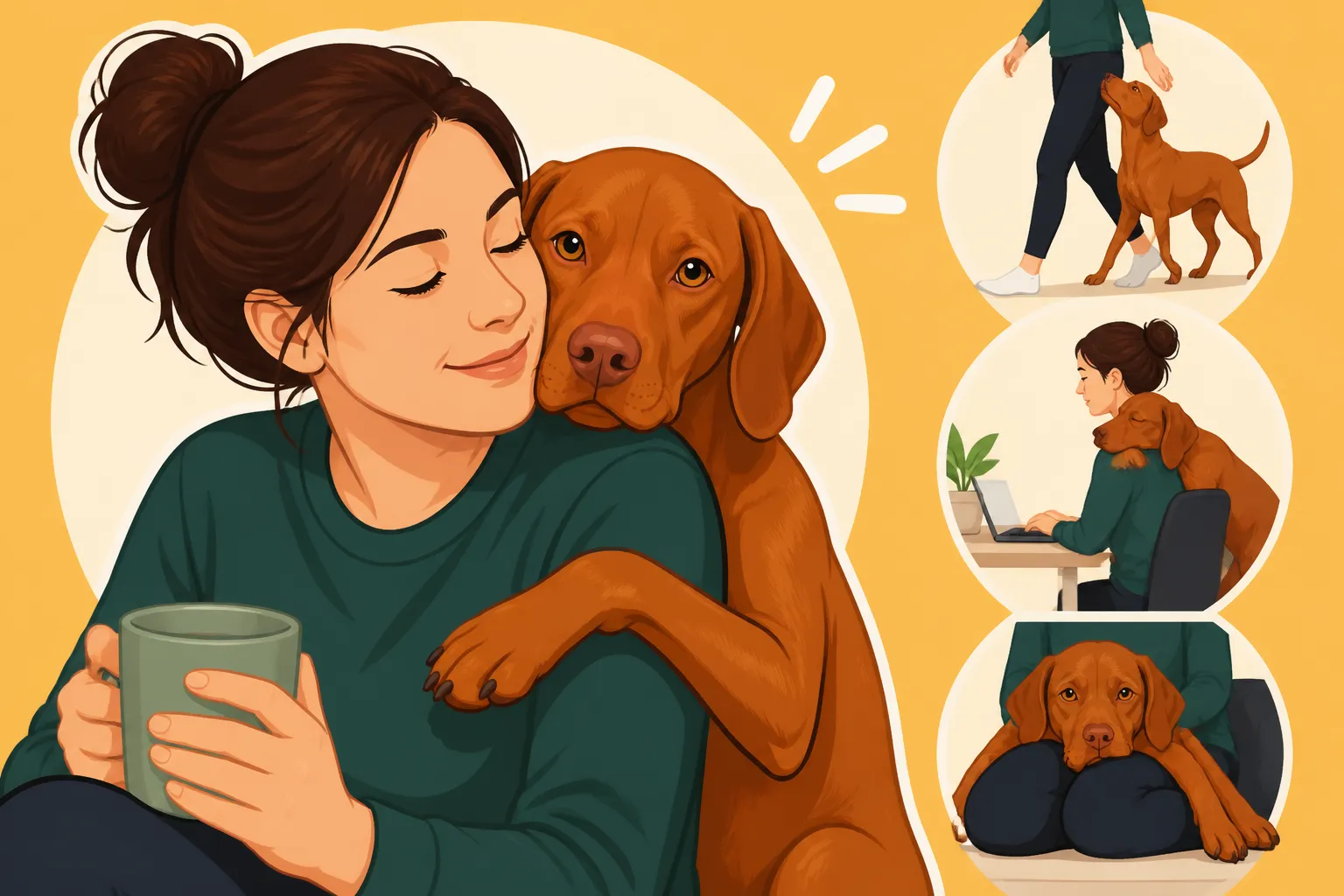
What Velcro Behavior Looks Like in a Vizsla
If you live with a Vizsla, you’ve probably experienced that unwavering presence, the constant shadow, and the undeniable need for physical closeness that defines what we lovingly — and sometimes exasperatedly — call "Velcro behavior." It’s more than just a dog who likes to be near you; it’s an intrinsic part of the breed's personality that can feel both incredibly endearing and occasionally overwhelming. This guide will dive deep into exactly what this unique trait looks like in your Vizsla, helping you understand its roots, recognize its everyday manifestations, and learn how to manage it in a way that respects your dog’s needs while preserving your own sanity.
Understanding the "Velcro" Phenomenon in Vizslas
The term "Velcro Vizsla" isn't just a cute nickname; it's a remarkably accurate descriptor for a fundamental aspect of this breed's personality. These dogs aren't just fond of their people; they are intensely, almost profoundly, attached to them. This isn't a flaw in their character; it's a deeply ingrained trait stemming from their history and inherent temperament. They are simply built to be with you, often on you, and ideally, doing whatever you're doing, no matter how mundane.
More Than Just Following You Around
When we talk about a Vizsla being "Velcro," we're not just talking about a dog that follows you from room to room. Many breeds do that to some extent. With a Vizsla, it's about the intensity of that presence. It's the dog who positions themselves so close that you constantly trip over them, the one who nudges your hand for pets even when you're clearly busy, or the one who physically leans their entire weight into you as if trying to merge with your very being. It's a pervasive, all-encompassing desire for physical and emotional proximity. They often don't just want to be in the same room; they want to be in the same personal space bubble, and ideally, touching you. You might find yourself wondering, Whether a Vizsla Sits in Your Lap at Sixty Pounds, because the answer is almost always yes, regardless of their size.
This isn't necessarily a sign of insecurity in a well-adjusted Vizsla, though it can certainly morph into anxiety if their need for connection isn't appropriately managed. Instead, it's often an expression of their profound bond and their highly social nature. They thrive on interaction and being an active participant in your life. For many Vizsla owners, this constant companionship is one of the most cherished aspects of the breed, a testament to their loyalty and affection.
The Constant Shadow
A Vizsla truly earns its "Velcro" moniker by acting as your constant shadow, a four-legged extension of yourself. This means no solitary trips to the kitchen for a snack, no quiet moments in the bathroom, and certainly no relaxing on the sofa without a warm, insistent presence by your side, or often, on your lap. They might lie just outside the bathroom door, nose pressed against the crack, or they might simply push the door open and join you inside, settling at your feet with a contented sigh.
This shadowing isn't performed from a distance; they prefer to be right underfoot, turning even a simple walk across the living room into an obstacle course. You'll quickly learn to shuffle your feet rather than lift them, lest you accidentally trip over your ever-present companion. It's a charming quirk for many, but it can also be a source of minor exasperation, especially when you're carrying a hot cup of coffee or hurrying to answer the door.
Why Vizslas Are So Prone to This Intense Attachment
Understanding the roots of Velcro behavior in Vizslas helps us appreciate that it's not a quirk but a characteristic, deeply woven into their very being. It’s not something they can easily switch off, nor should we expect them to. Their history and genetic predispositions have shaped them into the intensely bonded companions they are today.
A History of Close Partnership
Vizslas were bred in Hungary to be versatile hunting dogs, working closely with their human partners in the field. Unlike some hounds that might range far and wide, or terriers that work independently to dispatch vermin, the Vizsla’s role required constant communication and cooperation. They were bred to be within sight and often within earshot of their hunter, flushing and retrieving game. This meant they needed to be highly attuned to human cues, eager to please, and deeply connected to their handler. Their survival and success depended on this close partnership.
This historical role fostered a genetic predisposition for intense loyalty and a profound desire to be near their people. It wasn't just about efficiency in hunting; it was about forming an unbreakable bond that translated into seamless teamwork. This is a dog that needed to check in constantly, to instinctively understand its handler's intent. This close working relationship naturally evolved into the strong emotional attachment we see in pet Vizslas today. They didn't just hunt with you; they lived with you, ate with you, and probably slept with you, cementing that deep connection.
The "Sensitive Soul" Reputation
Beyond their working history, Vizslas are widely known for being incredibly sensitive dogs. They respond poorly to harsh training methods, preferring positive reinforcement and gentle guidance. This sensitivity extends to their emotional landscape; they are highly attuned to their owners' moods and can easily become distressed if they feel separated or neglected. This emotional depth contributes significantly to their Velcro nature. They crave reassurance, companionship, and constant validation from their human family.
This sensitivity also means they can pick up on subtle cues, often anticipating your next move before you even make it. If you so much as glance towards the door, your Vizsla is likely already springing to attention, ready to join you on your next adventure, whether it's a grand hunt or just a trip to the mailbox. Their emotional intelligence and need for connection make them exceptional companions, but also give rise to their persistent desire for proximity. The Soft Vizsla That Shuts Down When You Raise Your Voice is a testament to this inherent sensitivity, highlighting why a gentle approach is always best with this breed.
Genetics Versus Environment
While some might wonder if Velcro behavior is purely a result of how a Vizsla is raised, it's largely an intrinsic breed characteristic. Of course, a dog's environment and early experiences can certainly amplify or temper these tendencies. A Vizsla puppy that is consistently left alone for long periods without proper preparation will likely develop severe separation anxiety, manifesting as extreme Velcro behavior when the owner is present, coupled with destructive tendencies when alone.
However, even Vizslas raised in ideal environments with consistent training and appropriate socialization will still display a strong inclination towards closeness. It's simply part of their genetic makeup. Breeders often select for temperament traits that include a strong desire to please and bond closely with humans, further embedding this characteristic within the breed. It’s important for prospective Vizsla owners to understand this inherent trait, rather than hoping to train it out entirely. Instead, the focus should be on managing it and channeling it into healthy, manageable forms of attachment.
Everyday Scenarios of the Velcro Vizsla
Living with a Vizsla means embracing a life with a constant companion. Their "Velcro" nature manifests in countless adorable, and sometimes challenging, ways throughout the day. It's these everyday scenarios that truly paint the picture of what it means to share your home with this intensely affectionate breed.
The Bathroom Buddy
This is perhaps one of the most universal experiences for a Vizsla owner. Privacy becomes a distant memory when you have a Vizsla. A trip to the restroom often involves your dog following you right to the door, perhaps nosing it open, or simply lying just outside, waiting patiently (or not so patiently) for your return. They might even decide to join you inside, settling on the bathmat or pushing their head under your arm while you're otherwise occupied.
It’s not uncommon to hear stories of Vizslas pushing their way past the closing bathroom door or whining mournfully from the hallway if they're completely shut out. Their logic seems to be: if you're doing something, they should be involved, or at the very least, physically present and accounted for. This is a classic example of Whether a Vizsla Follows You Into the Shower, confirming that no sanctuary is truly off-limits to your devoted companion.
The Kitchen Co-Pilot
Meal prep and cooking become a team sport when a Vizsla is around. They'll be right there, underfoot, watching your every move with intense focus. Dropped a pea? They're on it before it even hits the floor. Chopping vegetables? Their nose might just be resting on the counter edge, silently hoping for a taste. This can be endearing, but it also creates a significant tripping hazard, especially when you're carrying hot pans or sharp knives.
Their presence can range from a silent observer to an active participant, nudging your hand with their nose or letting out a soft whine to remind you they're still waiting for a stray crumb. Managing this requires consistent training, teaching them a "place" command, or perhaps using a baby gate to keep them safely out of the immediate cooking zone. Otherwise, you'll perpetually feel like you're navigating a culinary minefield with a furry, four-legged shadow.
The Office Assistant (or Distractor)
For those who work from home, the Vizsla's Velcro tendencies become incredibly apparent during office hours. They rarely understand the concept of personal workspace. Your lap becomes their preferred napping spot, your feet become a headrest, and your keyboard is an excellent surface for a chin rest while they gaze lovingly into your eyes. Forget about a quiet video call; a soft sigh, a head nudge, or a paw on your arm for attention is almost guaranteed.
While it's lovely to have a devoted co-worker, it can make concentration difficult. You might find yourself constantly petting with one hand while typing with the other, or taking frequent "snuggle breaks" to satisfy their need for connection. This dynamic often leads owners to realize that Whether a Vizsla Panics When You Shut a Door isn't just about leaving the house, but even leaving them outside your office for a moment.
Nighttime Snuggles and Bedtime Invasions
When night falls, the Vizsla's desire for closeness doesn't wane; it often intensifies. Many Vizslas are not content to sleep in their own bed on the floor. They aspire to be in your bed, ideally under the covers, spooning with you, or draped across your legs. Their thin coats make them prone to feeling the cold, and the warmth of their human's bed is often irresistible.
This isn't just about warmth, however. It's a deep-seated need for secure, physical contact. You might wake up with a Vizsla head on your pillow, or find yourself slowly pushed to the edge of the mattress as they spread out in luxurious comfort. The question of Whether a Vizsla Sleeps Under the Covers is often answered with a resounding "yes" by most Vizsla owners, even if it means sacrificing personal space and a good night's sleep for the sake of their beloved companion.
The Farewell Fanfare
Perhaps the most telling sign of a Vizsla's Velcro nature is their reaction when you prepare to leave the house, even for a short errand. The moment they sense your departure – keys jingling, coat going on – their demeanor changes. They might start to whine, pace, or block the door. Their eyes will be wide with a mixture of hope and impending doom, pleading with you not to go.
This isn't just mild disappointment; it's often genuine distress at the thought of separation. If not managed properly, this can quickly escalate into full-blown separation anxiety, leading to destructive behaviors, excessive barking, or self-mutilation when left alone. This extreme form of Velcro behavior highlights the importance of teaching your Vizsla how to cope with solitude, even if it's just for a few hours.
The Emotional Impact of Constant Closeness
Living with a Velcro Vizsla is a deeply emotional experience, affecting both the dog and the human. It brings immense joy and comfort, but also its fair share of challenges and even guilt. Understanding these emotional impacts is crucial for fostering a healthy relationship and ensuring the well-being of everyone in the household.
Owner Frustration and Guilt
While the unwavering devotion of a Vizsla is incredibly flattering, the constant physical presence can, at times, become overwhelming for owners. Imagine trying to work, cook, or simply walk through your home without tripping over a canine shadow. There are moments when you just want a few minutes of personal space, a quiet trip to the bathroom, or an uninterrupted conversation. This is a common and completely valid frustration, and it's important for owners not to feel guilty about having these feelings.
The guilt often creeps in when owners feel they can't meet their Vizsla's seemingly insatiable need for attention and closeness. You might feel bad for shooing them away from the kitchen, for closing a door, or for simply wanting to sit on the couch alone. This guilt can be exacerbated by the Vizsla's expressive nature – their deep sighs, mournful eyes, and soft whines can tug at the heartstrings, making you question if you're doing enough. It’s a delicate balance to find, wanting to cherish their affection while also needing to maintain boundaries for your own mental space.
Dog's Anxiety and Stress When Alone
For the Vizsla, the intense desire for closeness can quickly tip into genuine anxiety when separated from their human. This isn't just a preference; for many Vizslas, being alone can be a source of significant stress. What starts as "Velcro" behavior, a strong bond, can become full-blown separation anxiety. When left alone, they might display a range of distress signals, from incessant barking and howling to destructive chewing of furniture, doors, or even self-harm.
This anxiety stems from their deeply ingrained need for companionship and their sensitive nature. They are dogs that thrive on interaction and security, and when that security is removed, they can panic. It's crucial for owners to differentiate between a dog who prefers company and one who is genuinely distressed by solitude. Recognizing the signs of anxiety, such as excessive drooling, pacing, vocalizing, or destructive behavior, is the first step in addressing this challenge. It's not just about managing the destruction, but about alleviating the underlying fear and stress your Vizsla experiences. Owners often find that What an Anxious Vizsla Destroys can range from simple items to entire doorframes, highlighting the severity of their distress.
Misinterpretations: Love or Insecurity?
It’s easy to interpret a Vizsla's constant proximity purely as an outpouring of love and devotion, which it certainly is, in part. However, it's also important to consider the potential underlying insecurity, especially if the Velcro behavior is extreme or accompanied by signs of anxiety. A healthy bond involves trust and confidence, where the dog feels secure even when their owner isn't within arm's reach.
If your Vizsla cannot settle unless they are physically touching you, becomes panicky when you leave the room, or exhibits distress when you prepare to depart, it might be more than just "love." It could be a reliance that borders on dependency, indicating a need for greater independence and self-soothing skills. A truly confident dog, while still affectionate, can relax and enjoy their own company for periods. The goal isn't to eliminate their loving nature, but to help them develop the confidence to be content even when you're not their immediate shadow.
Managing and Channeling Velcro Tendencies
Living harmoniously with a Vizsla's strong "Velcro" tendencies requires a proactive and consistent approach. It's not about eradicating their loving nature, but rather channeling it into healthy forms of attachment and teaching them valuable life skills for independence. This involves a blend of training, environmental management, and thoughtful consideration of their emotional needs.
Establishing Healthy Boundaries and Independent Play
One of the most effective ways to manage Velcro behavior is by establishing clear, consistent boundaries. This doesn't mean being harsh or cold; it means teaching your Vizsla that there are times and places for snuggles, and times when you need space. Commands like "place" or "bed" can be invaluable here. Train your Vizsla to go to a designated spot (a dog bed, a mat) and stay there for increasing durations, even while you move around the room. Reward them calmly for staying, rather than for coming to you.
Encouraging independent play is also crucial. Provide puzzle toys, long-lasting chews (many great options available on Amazon), or snuffle mats that engage their minds and keep them occupied away from you. This teaches them that they can entertain themselves and find satisfaction without constant human interaction. Rotate these toys to keep them novel and exciting. The goal is to build their confidence in their own company, even when you're nearby.
Structured Downtime and Calming Routines
Vizslas are high-energy dogs, and an under-exercised Vizsla will often be a more demanding, clingy, and potentially destructive one. Ensuring your Vizsla receives adequate physical and mental stimulation is paramount. However, equally important is teaching them how to relax and have structured downtime. After a good run or training session, encourage them to settle in their bed or crate with a chew.
Implement calming routines, especially before periods of separation. Avoid making a big fuss when you leave or return. Instead, keep departures and arrivals low-key. A quiet departure can help reduce their anticipation and anxiety. Consider diffusing calming scents or playing soft music when you're away. For consistent guidance on building a calm, independent dog, online training programs like those offered by BAXTER & Bella can provide structured lessons and support, helping you implement these routines effectively.
Crate Training and Creating a Safe Space
Crate training, when done correctly, is not a punishment but a powerful tool for managing a Vizsla's Velcro tendencies and fostering independence. A crate should be introduced as a safe, comfortable den where your Vizsla can relax undisturbed. Make it inviting with soft bedding, a favorite toy, and occasional treats. Never use the crate for punishment.
By teaching your Vizsla to be content in their crate, you provide them with a secure space where they can feel safe when you can't be directly supervising them. This is especially important for preventing destructive behaviors that stem from anxiety when left alone. Gradually increase the time they spend in the crate, always ensuring it's a positive experience. Over time, the crate becomes their personal sanctuary, a place they willingly go to when they need quiet time, even when you're home. This directly addresses the question of Whether Crate Training Helps a Vizsla by providing a clear path to building comfort with solitude.
Gradual Desensitization for Alone Time
The ultimate goal is to teach your Vizsla that being alone is okay. This is achieved through gradual desensitization. Start by leaving them alone for very short periods, literally seconds, while you step out of sight, then immediately return before they show any signs of distress. As they become comfortable, slowly increase the duration. Practice stepping out the door, closing it, and coming back in after a minute. Build up to longer absences over days and weeks.
It's vital to pair these absences with positive associations. Before you leave, give them a high-value, long-lasting chew toy or a food puzzle that they only get when you're gone. This helps them associate your departure with something rewarding. It’s also important to ensure they've had ample exercise and a potty break before any period of alone time. Consistent practice and patience are key to helping your Vizsla develop the confidence to be content when you're not there. This process is integral to Teaching a Vizsla to Be Alone.
Seeking Professional Guidance
If your Vizsla's Velcro behavior is severe, leading to significant anxiety, destructive tendencies, or affecting your quality of life, don't hesitate to seek professional help. A certified professional dog trainer or a veterinary behaviorist can assess your specific situation and provide tailored strategies. They can help you identify the root cause of the behavior, differentiate between normal Vizsla clinginess and genuine separation anxiety, and guide you through effective modification programs.
Sometimes, a multi-faceted approach involving training, environmental changes, and even medication (in severe cases of anxiety, under veterinary guidance) may be necessary. Remember, addressing these issues is not a sign of failure but a responsible act of care for your beloved companion. Many online resources and courses, such as those from BAXTER & Bella, offer fantastic starting points for owners who want professional advice at their fingertips before seeking in-person help.
Comparison Table: Healthy Attachment vs. Problematic Velcro Behavior
| Characteristic | Healthy Attachment in a Vizsla | Problematic Velcro Behavior (Potential Anxiety) |
|---|---|---|
| Owner's Presence | Enjoys proximity, seeks occasional physical contact, settles nearby. | Constantly physically touching, underfoot, prevents free movement. |
| When Owner Moves | May follow into another room, then settles down. | Panics if owner is out of sight, follows into bathroom, blocks doors. |
| Alone Time | Can be left alone for reasonable periods, settles after initial goodbyes, occupies self. | Shows intense distress upon owner's departure, incessant vocalization, destructive behavior, refusal to eat. |
| Owner's Departure | Recognizes departure cues, but remains calm or just slightly disappointed. | Shows significant anxiety (pacing, whining, panting, trembling) at departure cues. |
| Crate/Designated Space | Accepts and often enjoys their crate/bed as a safe haven when told to "place." | Resists going into crate/bed, tries to escape, shows distress inside. |
| Independent Activity | Will engage with toys/chews independently, even if owner is nearby. | Rarely engages with toys unless owner is actively playing with them, ignores chews unless owner holds them. |
| Owner's Feelings | Appreciates the bond, occasional gentle nudges are endearing. | Feels overwhelmed, frustrated, guilty, constantly walking on eggshells. |
Conclusion: Embracing the Vizsla Bond
Living with a Vizsla means embracing a level of companionship that few other breeds offer. Their "Velcro" nature is undeniably part of their charm, a testament to their deep capacity for love and connection. While it can present its challenges, understanding why they are this way—their history as close working partners, their sensitive souls—helps us navigate these moments with empathy and patience.
By establishing clear boundaries, encouraging independent activities, utilizing tools like crate training, and gradually desensitizing them to alone time, you can help your Vizsla become a confident, well-adjusted companion who loves being with you, but can also thrive when you're not directly by their side. It's about nurturing their inherent loyalty while also fostering their individual resilience. With the right approach, your Vizsla will continue to be that cherished shadow, filling your life with warmth, devotion, and just the right amount of golden-rust closeness.
Disclaimer
This article is for general informational purposes only and does not constitute professional advice. Laws, prices and regulations vary by location and change over time. Consult a qualified professional for guidance on your specific situation.