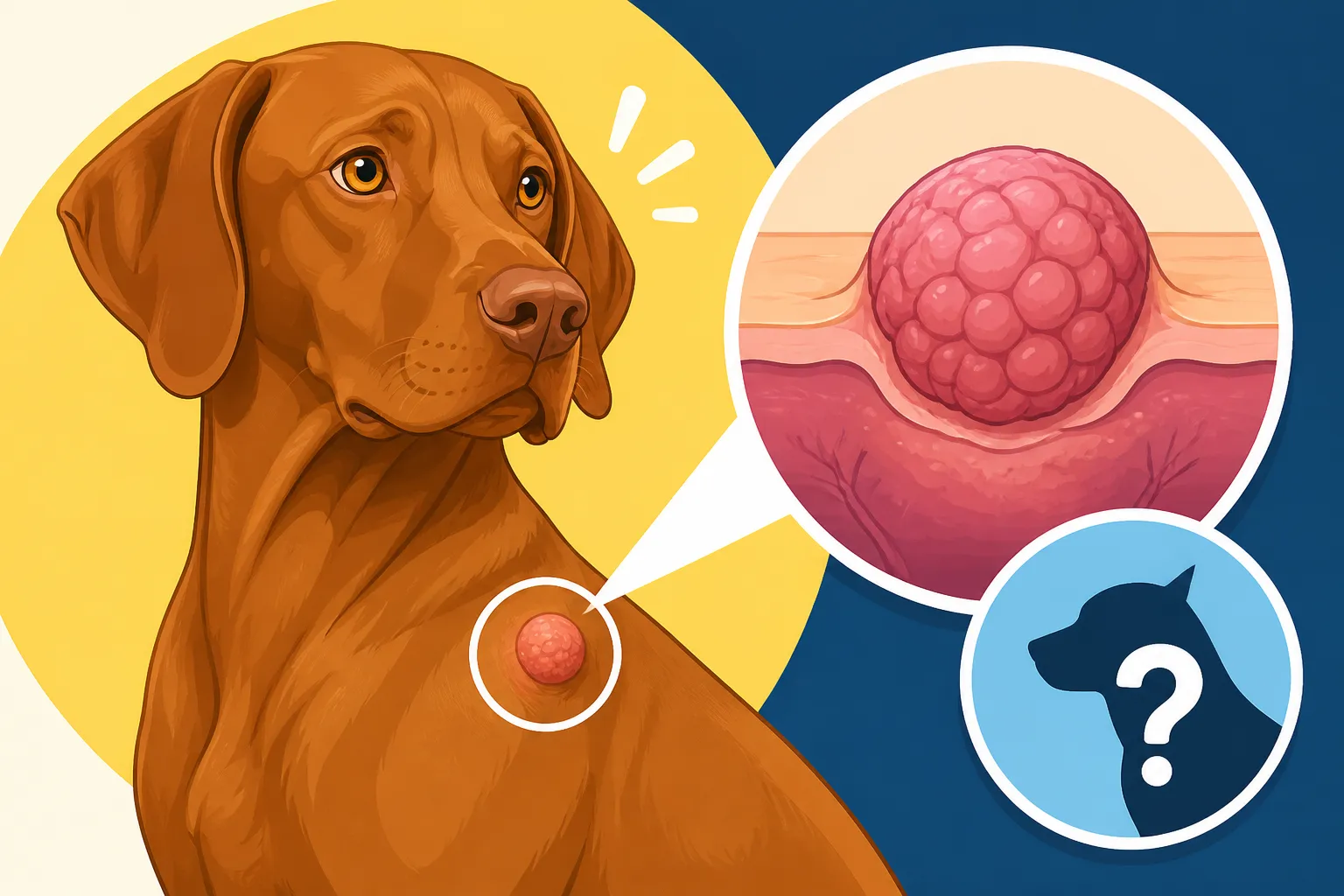
Whether a Vizsla’s Skin Lump Is a Mast Cell Tumor
Finding a new lump or bump on your beloved Vizsla can send any owner into an immediate spiral of worry. One moment you're giving them a loving scratch behind the ears or a rub on their belly, the next your fingers brush against something new and unexpected. Is it just a harmless fatty lump, a tiny wart, or could it be something much more sinister, like a mast cell tumor? This guide is here to help you navigate those anxious moments, understand what mast cell tumors are, how they might appear on your Vizsla, and most importantly, what steps you need to take to get definitive answers and care for your furry family member.
The Worry of a Skin Lump on Your Vizsla
The unique characteristics of our Vizslas often mean we're more tuned into their physical well-being than owners of other breeds. That short, sleek coat, coupled with their incredibly affectionate and often "velcro" nature, means we're constantly touching them, petting them, and generally being in close physical contact. This closeness is wonderful for bonding, but it also means any new skin anomaly tends to be discovered quickly, leading to immediate concern.
Why Vizsla Owners Are Especially Alert to Lumps
Vizslas have a distinctive, almost paper-thin single coat that lies very close to their bodies. This beautiful, practical coat means there's no thick fur to hide even the smallest bump or irritation. Unlike breeds with dense double coats, a Vizsla's skin is constantly visible and accessible. This makes us hyper-aware of any changes – a new mole, a small scratch, or, most concerningly, a mysterious lump. Our vigilance is also heightened by the knowledge that Vizslas, like many purebreds, can have certain health predispositions. While we love their athletic build and affectionate personalities, we also carry the awareness of potential health challenges. This often leads us to worry about The Cancers That Take a Vizsla Early, and skin lumps are a common manifestation of that worry.
The Spectrum of Skin Lumps: Not All Are Cancer
It's natural for your mind to jump to the worst-case scenario when you discover an unexpected lump on your dog, especially on a breed like the Vizsla. However, it's incredibly important to remember that not every lump is cancerous. In fact, many common skin growths are entirely benign and pose little to no threat to your dog's health.
For instance, you might find a lipoma, which is simply a fatty tumor that feels soft and movable under the skin. These are very common in older dogs and are usually harmless. Then there are sebaceous cysts, which are blocked oil glands that can feel firm or squishy and sometimes rupture, oozing a cottage cheese-like substance. Warts (papillomas), usually caused by a virus, can appear as small, cauliflower-like growths, particularly in younger dogs. Even insect bites or localized infections can cause a temporary bump that might feel concerning at first. While it's crucial not to dismiss any lump, it's equally important not to let immediate panic cloud your judgment. The goal is always proactive investigation, not reactive despair.
Understanding Mast Cell Tumors in Vizslas
When we talk about concerning skin lumps, mast cell tumors (MCTs) often come up, and for good reason. They are one of the most common skin cancers in dogs, and unfortunately, Vizslas are a breed that can be predisposed to them. The unpredictable nature of these tumors is what makes them so particularly vexing for owners and veterinarians alike.
What Exactly Is a Mast Cell Tumor?
To understand a mast cell tumor, we first need to understand mast cells themselves. These are normal, healthy immune cells found throughout a dog's body, particularly in the skin, respiratory tract, and gastrointestinal tract. Their job is to release chemicals like histamine when the body detects an allergen or pathogen, playing a key role in inflammatory and allergic responses. Think of them as tiny alarm bells for the immune system.
A mast cell tumor occurs when these mast cells grow out of control and form a mass. These tumors are problematic for a few reasons. First, they can be locally invasive, meaning they spread into the surrounding tissues, making complete surgical removal challenging. Second, they have the potential to metastasize, or spread to other parts of the body, such as lymph nodes, spleen, liver, and bone marrow. Third, and perhaps most characteristic, is their tendency to "degranulate." This means the tumor cells can spontaneously release their chemical contents (like histamine) into the body, causing localized redness, swelling, itching, and even systemic issues like vomiting, ulcers, and allergic reactions. This degranulation can also cause the tumor itself to change size or appearance, sometimes appearing to shrink or swell overnight, which can be very confusing for an owner.
How Mast Cell Tumors Present on a Vizsla's Skin
This is where the real frustration and anxiety often set in for Vizsla owners. Mast cell tumors are famously known as "the great imitators" in veterinary medicine because they can look like almost anything. There is no single, tell-tale appearance that screams "mast cell tumor!" This means you can't rely purely on what a lump looks like to determine its nature. This uncertainty is why the question of Whether a Vizsla Gets Mast Cell Tumors is so pressing.
On a Vizsla's sleek, short coat, an MCT might appear as:
- A small, red bump: Easily mistaken for an insect bite or allergic reaction.
- A firm, raised nodule: Could be confused with a wart or a benign growth.
- A soft, movable mass under the skin: Similar to a lipoma or fatty tumor.
- An ulcerated or irritated area: It might look like a chronic hot spot or a wound that won't heal.
- A lump that fluctuates in size: One day it might seem smaller, the next larger and redder, due to degranulation. This phenomenon is sometimes called "Darier's sign."
They can occur anywhere on your Vizsla's body – on their trunk, limbs, head, or even between their toes. Because of this wide range of presentations, the only way to definitively identify a mast cell tumor is through microscopic examination of cells from the lump. This inability to visually distinguish a dangerous tumor from a harmless bump is why prompt veterinary attention for any new growth is non-negotiable.
The "Tip of the Iceberg" Phenomenon: Internal Mast Cell Tumors
While we primarily focus on skin lumps because they're visible, it's important to understand that mast cell tumors aren't exclusive to the skin. These aggressive cells can also form tumors on internal organs such as the spleen, liver, and intestines. When this happens, the symptoms can be much more vague and harder to pinpoint, often manifesting as general malaise, loss of appetite, vomiting, or diarrhea. While less common than cutaneous (skin) forms, the possibility of internal MCTs underscores the seriousness of the disease and why a comprehensive approach to diagnosis and staging is so vital if a skin MCT is confirmed.
When to Be Concerned and What to Do Next
The key to successfully managing any lump on your Vizsla, especially a potential mast cell tumor, is vigilance and swift action. Delaying investigation can significantly impact prognosis, particularly with aggressive cancers.
Red Flag Signs to Watch For
While no visual cue is foolproof, certain characteristics of a lump should raise a red flag and prompt immediate veterinary consultation. Keep an eye out for:
- Rapid Growth: A lump that appears to get noticeably bigger in a short period (days to weeks).
- Changes in Appearance: Any alteration in shape, color, or texture. For instance, if a previously smooth lump becomes irregular or a skin-colored lump turns red or bruised.
- Ulceration or Bleeding: If the skin over the lump becomes broken, raw, or starts to bleed.
- Redness or Inflammation: Swelling, heat, or persistent redness around the lump.
- Itching or Pain: If your Vizsla frequently licks, chews, or scratches at the lump, or shows signs of discomfort when it's touched.
- Fluctuating Size: Lumps that seem to shrink and swell cyclically can be a strong indicator of an MCT due to degranulation.
- Any New Lump: The simple appearance of a new lump, regardless of its characteristics, warrants examination.
It’s always better to be overly cautious. If you notice any of these signs, or even just a new lump that makes you feel uneasy, contact your veterinarian right away. Don't play the waiting game, hoping it will disappear.
The Diagnostic Process: What Your Vet Will Do
When you present your Vizsla with a suspicious lump, your veterinarian will follow a systematic diagnostic process to identify it. This process is crucial because, as we've discussed, you can't tell an MCT by sight alone.
- Initial Physical Examination: Your vet will thoroughly examine your Vizsla, assessing the lump's size, location, texture, and attachment to underlying tissues. They'll also check surrounding lymph nodes, as these are often the first place cancer spreads.
- Fine Needle Aspiration (FNA) and Cytology: This is almost always the first diagnostic step. Your vet will insert a small, fine needle into the lump and extract a sample of cells. This is usually done quickly, with minimal discomfort for your Vizsla, and often doesn't require sedation. The cells are then spread onto a slide and examined under a microscope (cytology). Mast cell tumors often have a characteristic appearance under the microscope, allowing for a preliminary diagnosis. However, sometimes the sample might not be diagnostic, or the cells might be too reactive to interpret clearly, requiring further steps.
- Biopsy: If the FNA is inconclusive, or if the vet strongly suspects an MCT (especially if surgical removal is planned), a biopsy will be recommended. This involves surgically removing a small piece of the mass (incisional biopsy) or the entire mass (excisional biopsy) and sending it to a specialized veterinary pathologist. The pathologist will not only confirm the type of tumor but also "grade" it (Grade I, II, or III), which indicates how aggressive the tumor is likely to be. Grading is vital for determining prognosis and guiding treatment. It’s also important to consider the potential costs associated with this. A Vizsla's Whether a Vizsla's Skin Biopsy Costs can vary, but it's an essential investment in their health.
- Staging Tests: If an MCT is confirmed, especially a higher-grade one, your vet will likely recommend "staging" tests. These tests determine if the cancer has spread. This usually includes:
- Blood work and urinalysis: To assess overall health and organ function.
- Abdominal ultrasound: To look for spread to internal organs like the spleen or liver.
- Aspiration of local lymph nodes: Even if they feel normal, cells from regional lymph nodes might be checked for cancer spread.
- Bone marrow aspiration: Less common but may be recommended in high-risk cases.
This diagnostic journey can feel overwhelming, but remember, each step provides critical information. This is also where having pet insurance, such as Healthy Paws, can be incredibly helpful. Policies like theirs are designed to help alleviate the financial burden of unexpected illnesses, ensuring you can make decisions based on your Vizsla's health needs rather than solely on cost. It's a wise investment, especially for managing conditions that require extensive diagnostics and treatment. You might be interested in researching Insuring a Vizsla Against Immune Disease for a broader understanding.
Treatment Options and Prognosis for Vizslas
Once a mast cell tumor is definitively diagnosed and staged, your veterinary oncology team will work with you to develop a treatment plan tailored to your Vizsla's specific situation. The goal is always to achieve the best possible quality of life and prognosis.
- Surgical Removal: For most cutaneous mast cell tumors, surgical removal is the primary and most effective treatment. The aim is to remove the entire tumor along with a wide margin of healthy tissue surrounding it. This "wide margin" is crucial because mast cell tumors can have microscopic extensions that aren't visible to the naked eye. If margins are not clear, a second surgery or additional treatments might be needed.
- Radiation Therapy: If a tumor cannot be completely removed surgically (e.g., due to its location) or if the surgical margins are very narrow or "dirty" (meaning cancer cells are found at the edge of the removed tissue), radiation therapy may be recommended. Radiation targets and kills any remaining cancer cells in the localized area.
- Chemotherapy: For high-grade tumors, tumors that have spread to lymph nodes or internal organs, or those with a high risk of recurrence, chemotherapy may be considered. Chemotherapy aims to kill cancer cells throughout the body. While the word "chemotherapy" can sound frightening, veterinary chemotherapy protocols are generally designed to be much gentler than human protocols, focusing on quality of life. Side effects are often mild and manageable. Understanding What Chemotherapy Costs for a Vizsla can help you prepare financially.
- Targeted Therapies and Other Medications: Newer targeted therapies, often in pill form, are available for certain types of mast cell tumors. Additionally, medications like antihistamines (e.g., Benadryl) and stomach protectants (e.g., Pepcid) are often used to manage the effects of mast cell degranulation, such as stomach ulcers, which can occur with MCTs.
- Prognosis: The prognosis for a Vizsla with a mast cell tumor varies significantly depending on several factors:
- Tumor Grade: Lower-grade tumors (Grade I or II) generally have a much better prognosis than high-grade (Grade III) tumors.
- Location: Tumors on certain areas, like the muzzle, paw pads, or mucous membranes, tend to be more aggressive.
- Completeness of Removal: If the tumor can be completely removed with clean margins, the prognosis is significantly better.
- Presence of Metastasis: If the cancer has already spread to lymph nodes or internal organs, the prognosis is more guarded.
Many Vizslas with low-grade, completely removed skin mast cell tumors can live long, healthy lives with no recurrence. For more aggressive tumors, the goal shifts to managing the disease and maintaining a good quality of life for as long as possible. Your veterinary oncologist will be your best resource for understanding your Vizsla's specific prognosis and treatment options. This journey is part of The Twelve to Fourteen Years a Vizsla Lives, and navigating health challenges is a part of responsible ownership.
Proactive Care and Peace of Mind for Your Vizsla
While we can't prevent all health issues, especially complex ones like cancer, there's a lot you can do as a Vizsla owner to stay ahead of the curve and ensure your dog receives the best possible care. Proactive measures are your best defense.
Regular Home Examinations
One of the most powerful tools you have is your own hands. Because of their short coats, Vizslas are prime candidates for regular, thorough home examinations. Make it a routine part of your bonding time:
- Monthly "Lump Checks": Set aside time once a month to systematically run your hands over every inch of your Vizsla's body. Start at the head and work your way down to the tail, including their ears, neck, armpits, belly, inner thighs, and paws (don't forget between the toes!). Feel for any bumps, lumps, scabs, or changes in skin texture.
- Know What's Normal: The more you handle your Vizsla, the more familiar you'll become with their normal skin and body contours. This will make it much easier to detect anything new or unusual.
- Keep a Log: If you find a lump, don't panic. Instead, make a note. Jot down the date you found it, its exact location (e.g., "left rear thigh, just above the hock"), its size (you can even measure it with a ruler), and a description of how it feels (soft, firm, movable, fixed). Take a picture if it's visible. This log will be invaluable information for your vet. Many Vizsla owners also deal with other skin concerns like Whether a Vizsla Gets Hot Spots, so being attentive to skin health is a continuous process.
The Role of Veterinary Check-ups and Early Intervention
Regular veterinary care is not just about vaccinations; it's about preventative health and early detection. Your annual or biannual vet visits are crucial opportunities for a professional "once-over."
- Routine Vet Visits: During these visits, your vet performs a thorough physical examination, often detecting subtle changes you might have missed. They might recommend Whether a Vizsla Needs a Yearly Blood Panel, which can catch underlying issues before symptoms appear.
- Early Detection is Key: For mast cell tumors and many other cancers, early detection is absolutely critical. A small, low-grade tumor that is promptly and completely removed has a vastly better prognosis than a larger, more advanced tumor or one that has already spread. Don't hesitate to bring up any concerns you have with your vet, no matter how minor they seem.
- Pet Insurance Benefits: As mentioned earlier, pet insurance, particularly from providers like Healthy Paws, can be a game-changer when facing unexpected health issues. Diagnostic tests, surgeries, chemotherapy, and radiation can be expensive. Having a policy that covers these costs means you can pursue the best available treatment options for your Vizsla without financial stress adding to your emotional burden. It’s an investment in peace of mind and your Vizsla’s future. It's helpful to know What a Vizsla's Yearly Checkup Costs and how insurance can help.
Supporting Your Vizsla's Overall Health
While there's no guaranteed way to prevent cancer, maintaining your Vizsla's overall health can contribute to their resilience and well-being.
- Quality Nutrition: Feed a high-quality, balanced diet appropriate for their age and activity level. Good nutrition supports a healthy immune system and overall body function.
- Regular Exercise: Vizslas are active dogs and thrive on plenty of exercise. A fit body is generally a healthier body.
- Stress Reduction: A happy, well-adjusted dog experiences less chronic stress, which can positively impact their immune system.
- Good Grooming: Regular brushing and checking for skin issues can help you spot problems early. Keep an eye on their skin, as Whether a Vizsla's Thin Skin Tears Easily means they are prone to minor injuries that can sometimes mask or complicate the appearance of a lump. Consider practices for Managing a Vizsla's Skin for Life.
By being observant, seeking prompt veterinary advice, and embracing comprehensive care, you are giving your Vizsla the best possible chance at a long, healthy, and happy life, even in the face of concerning health challenges like skin lumps.
Understanding Lumps: Benign vs. Suspicious
To help you categorize potential lumps you might find on your Vizsla, here's a quick comparison of common characteristics. Remember, this is for general guidance only; always consult your veterinarian for a definitive diagnosis.
| Characteristic | Potentially Benign Lumps (e.g., Lipoma, Cyst, Wart) | Potentially Suspicious Lumps (e.g., Mast Cell Tumor) |
|---|---|---|
| Feel/Texture | Soft, movable, sometimes squishy (lipoma/cyst). Firm, wart-like (papilloma). | Can be soft or firm. May feel irregular. Can be fixed or movable. |
| Appearance | Skin-colored, smooth, or bumpy (lipoma/cyst). Cauliflower-like (wart). | Highly variable: red, inflamed, skin-colored, ulcerated, swollen. Can resemble anything! |
| Growth Rate | Slow-growing or stable over long periods. | Can grow rapidly in days/weeks. May also fluctuate in size (Darier's sign). |
| Changes over time | Generally stable; cysts might rupture and then heal. | May change shape, color, or size significantly. Can ulcerate or bleed. |
| Pain/Itchiness | Usually painless. Cysts can become inflamed or infected if ruptured. | Can be itchy, painful, or cause local swelling due to degranulation. |
| Location | Common on trunk, limbs. Warts on head/face (young dogs). | Anywhere on the body, including digits, muzzle, inner thighs, groin. |
| Color | Often matches surrounding skin. | Can be red, pink, bruised, or discolored. |
Disclaimer
The information provided in this article is for educational and informational purposes only and does not constitute veterinary advice. It is not a substitute for professional veterinary care. Always consult with a qualified veterinarian regarding any health concerns or before making any decisions about your pet's medical care.