Whether a Wirehaired Vizsla Is Bigger
A Wirehaired Vizsla can look bigger than a smooth-coated Vizsla, thanks to its heavier build, beard, and protective coat. But the two breeds are closer in height than many people expect, and individual dogs vary. This guide explains how their size compares, what the measurements mean in daily life, and how to assess a puppy or adult without judging by appearance alone.
Are Wirehaired Vizslas Bigger Than Smooth Vizslas
Height differences are usually modest
Wirehaired Vizslas are generally a little taller than smooth Vizslas, especially among males, but the difference is not dramatic. Breed standards give a useful frame of reference: male Wirehaired Vizslas are commonly described in the low-to-mid 20-inch range at the shoulder, while female Wirehaired Vizslas are somewhat shorter. Smooth Vizslas are also medium-sized dogs, with height ranges that overlap substantially.
That overlap matters. A tall smooth Vizsla may stand higher than a smaller Wirehaired Vizsla, so breed type alone will not tell you which individual dog is taller. When comparing dogs, measure from the floor to the top of the shoulder blades while the dog stands naturally. Measuring to the top of the head or ears can make the result look larger than it is.
If you are choosing between the two, think in terms of a similar general footprint rather than expecting the Wirehaired dog to be a much larger animal. For more on how the two breeds differ beyond size, see The Wirehaired Vizsla Is a Different Breed.
Weight and build can make the bigger difference
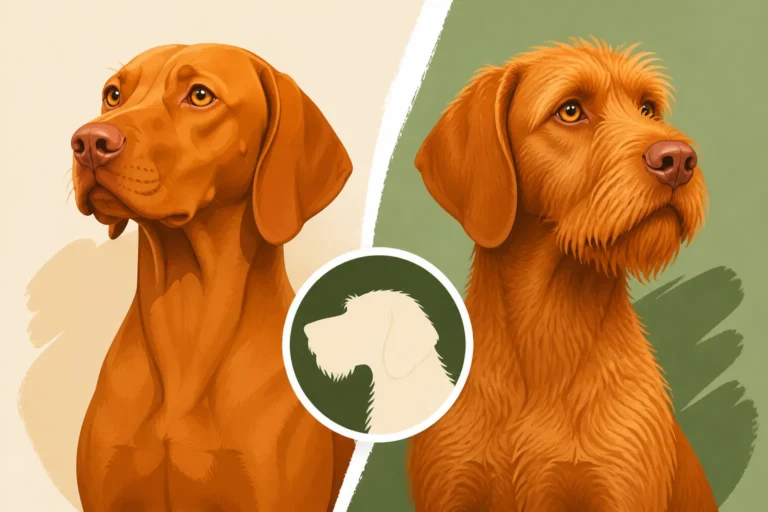
Wirehaired Vizslas often appear heavier or more substantial because they tend to have a stronger, more rugged outline. Their coat also adds visual volume around the face and body. A beard and pronounced eyebrows can make the head look broader, while the wiry coat can disguise the dog’s actual shape.
Smooth Vizslas usually have a lean, close-fitting coat that makes their contours easy to see. That can make a healthy smooth Vizsla look smaller or more delicate beside a Wirehaired Vizsla of similar height. In reality, the difference may be more about bone, muscle, coat, and proportions than a large jump in body weight.
Healthy body condition is more useful than a number on the scale. You should be able to feel the ribs without pressing hard, and the dog should have a visible waist when viewed from above. A dog that is heavier because it is carrying excess fat is not simply “the bigger type.” For a broader overview of typical proportions, see What a Vizsla Actually Weighs and How Big a Vizsla Gets.
| Comparison point | Wirehaired Vizsla | Smooth Vizsla |
|---|---|---|
| Overall size | Medium-sized, often sturdy in appearance | Medium-sized, often leaner in appearance |
| Height | Often slightly taller, with overlap between individuals | Slightly shorter on average, but individual heights overlap |
| Visual impression | Coat and facial furnishings can make the dog look larger | Short coat shows the body outline more clearly |
| Build | Commonly looks more robust | Commonly looks more fine-boned and streamlined |
| Best way to compare | Measure shoulder height and assess body condition | Measure shoulder height and assess body condition |
These are general breed tendencies, not a promise about any particular dog. A dog’s sex, family line, age, fitness, and body condition all influence its size.
Why a Wirehaired Vizsla Can Look Larger
The coat changes the outline
A Wirehaired Vizsla’s coat is one of the biggest reasons people overestimate its size. The harsh, protective coat is more prominent than the smooth coat of its close counterpart, particularly around the muzzle, eyebrows, and legs. The extra texture creates a broader silhouette even though coat does not add meaningful height or body mass.
The difference becomes especially noticeable in photographs. A close-cropped image of a smooth Vizsla may show a narrow waist and fine outline, while a Wirehaired dog’s facial furnishings and rougher coat make its head and chest appear broader. If the dogs are standing at different angles, the comparison can be even less reliable.
For a fair comparison, look at the shoulder height, length of the body, and condition of the dog rather than the coat alone. If you are shopping for a coat, harness, or crate, use the item’s measurement guide instead of assuming the Wirehaired dog needs a larger size. Retailers such as Chewy may organize dog coats by chest measurement, but the product’s own sizing chart is what matters; a shaggy coat can affect the fit even when the dog’s frame is similar.
Bone, muscle, and proportions matter
A dog can look bigger without being much taller. A broader chest, stronger legs, heavier bone, or more developed muscle can make a Wirehaired Vizsla seem more solid than a smooth Vizsla standing beside it. Those traits are particularly noticeable in an adult dog that gets regular exercise, compared with a lanky adolescent still filling out.
Proportions can also change how size reads. A long-legged, narrow-bodied dog may look taller and lighter, while a more compact dog can seem heavier. Neither impression is a reliable weight estimate. If you need to monitor a dog’s condition, ask your veterinarian to assess body condition and track weight over time rather than judging by a quick side-by-side glance.
Age is another factor. Young dogs may go through a leggy stage before their bodies mature, and adult dogs can continue to develop muscle after their height has mostly settled. A puppy’s current appearance is therefore a poor guarantee of its eventual build. When possible, ask the breeder about the sizes and builds of the puppy’s parents and close relatives, while remembering that a litter can still include individual variation.
What Size Means in Everyday Life
Space, exercise, and handling
The difference between these breeds is unlikely to determine whether a dog fits comfortably in a home. Both are active, athletic hunting dogs, and daily exercise needs are more important than a small difference in height or weight. A compact house can work if the dog receives appropriate activity, training, and time with its people; a large yard alone does not make up for a lack of engagement.
In practical terms, think about handling rather than square footage. Can you safely manage the dog on leash when it spots wildlife? Can you lift it into your vehicle if it is injured? Can you provide a crate or resting area where it can stretch out comfortably? If the dog will travel frequently, measure the crate space and vehicle opening rather than relying on a general breed-size label.
A larger-looking dog may need a different harness or coat fit, but not necessarily a fundamentally different home setup. Measure chest girth, neck circumference, and back length before buying equipment. Chewy and other retailers may provide product-specific sizing charts; check those charts carefully and leave room for comfortable movement, especially if the coat is thick or the dog is between sizes.
Feeding and health should follow the individual dog
Do not feed a Wirehaired Vizsla more simply because it looks larger. Food needs depend on body weight, age, activity, metabolism, and the energy density of the diet. A dog that hunts, runs, or trains regularly may need a different feeding plan from a less active companion, even if both dogs weigh the same.
Use the feeding directions as a starting point, then adjust with your veterinarian based on the dog’s body condition and weight trend. Measure meals rather than repeatedly topping up a bowl, and be mindful of training treats. If you compare food options through Chewy or another retailer, compare the feeding guidance and nutritional information, not just the bag size or the breed label on the packaging.
Size alone also does not determine a dog’s health risks. Keep up with routine veterinary visits and discuss concerns based on the individual dog’s history, activity, and symptoms. If you are still learning about the breed’s general health considerations, The Vizsla Against the Weimaraner and the Shorthair provides useful breed context, while Whether Hungarian and American Vizslas Are Priced Differently is not a size comparison and should not be used to infer body size from a dog’s background. (The relevant comparison for breed build is Whether the Vizsla Is Lighter Than a Weimaraner.)
How to Judge a Wirehaired Vizsla’s Adult Size
Compare measurements, not photos
Photos can distort size because of camera angle, distance, posture, and coat. A dog photographed close to the lens can look larger than one farther away, and a standing dog may appear taller than a relaxed dog sitting on the same floor. For a clearer comparison, measure both dogs on level ground and use the same method.
Record shoulder height and weight separately. Height describes the dog’s vertical size; weight reflects the combined effect of frame, muscle, body fat, and other factors. If a dog is growing, record the date and age with each measurement so you can see the trend rather than focusing on one reading.
If you are looking at a puppy, adult relatives can offer context, but they are not a precise prediction. Ask the breeder about the parents’ height, weight, build, and condition. Also ask whether the adults are measured or simply described as “large” or “small,” since those words can mean different things to different people.
Use a practical checklist before choosing equipment
Before buying a crate, harness, bed, or coat, take the dog’s actual measurements and compare them with the product instructions. For a crate, check that the dog can stand without crouching, turn around, and lie down comfortably. For a harness, fit around the chest and neck matters more than a general label such as medium or large.
For coats, pay special attention to chest girth and back length. A Wirehaired Vizsla’s coat may affect how easily a garment slips on or fastens, but sizing up too far can leave fabric loose or interfere with movement. Chewy listings may include measurement instructions, but the manufacturer’s chart should guide your choice. If the dog falls between sizes, consider the style of the item and whether adjustability is available.
The same measuring habit helps with travel gear. Check the vehicle, crate, and restraint manufacturer’s requirements, and make sure the dog can travel safely and comfortably. This is more dependable than guessing from a breed description or assuming every Wirehaired Vizsla needs the same equipment.
Overall, a Wirehaired Vizsla is often somewhat taller or sturdier-looking than a smooth Vizsla, but they are not separated by a dramatic size gap. The coat, build, sex, family line, and individual condition can all shape how large a dog seems. For a related look at the breed’s distinct appearance, see What a Wirehaired Vizsla Looks Like, and for more on the smooth-coated breed’s general suitability and temperament, explore Whether the Vizsla Suits a First Time Owner and What Vizsla Owners Wish They Had Known.
Disclaimer
This article is for general informational purposes only and does not constitute professional advice. Laws, prices and regulations vary by location and change over time. Consult a qualified professional for guidance on your specific situation.