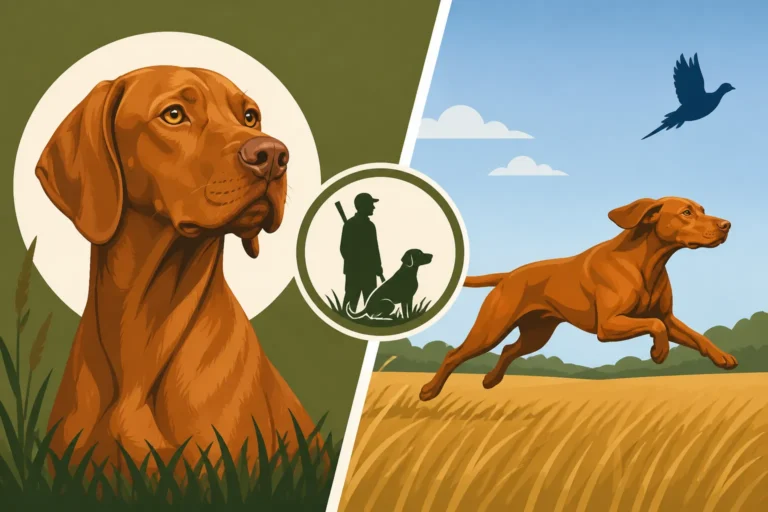
Whether the Vizsla Worked With Falcons
It’s a common image, isn't it? The noble hunter, often with a powerful bird of prey on their arm, and a faithful dog at their side. When we think of the Vizsla, we envision that distinctive golden-rust coat blazing through fields, pointing with intensity, or gracefully retrieving a downed bird. But an interesting question that sometimes crops up is whether this ancient Hungarian breed played a role in the equally ancient art of falconry. It's a valid curiosity, especially considering the Vizsla's deep hunting roots and exceptional bird-dog abilities. This guide will delve into the historical interplay between hunting dogs and falconry, and specifically examine where our beloved Vizsla might have fit into that picture.
The Historical Context of Falconry and Hunting Dogs
Falconry, the hunting of wild animals in their natural state and habitat using a trained bird of prey, is one of humanity’s oldest hunting partnerships. It's a practice steeped in tradition, requiring immense skill, patience, and a profound understanding of both the raptor and the environment. And for centuries, dogs have been an integral part of this intricate dance.
Falconry as an Ancient Hunting Art
Imagine a time before firearms, when putting food on the table, or simply engaging in sport, meant relying on the sharp instincts of animals. Falconry wasn't just a hobby; for many noblemen across Europe and Asia, it was a vital skill and a symbol of status. Birds like falcons, hawks, and eagles were trained to pursue game, often flushing birds or small mammals from cover and bringing them down with incredible speed and precision. The falconer's role was to manage the bird, but also to work in concert with other tools and companions – and often, that meant dogs.
This wasn't a casual pursuit; it was a deeply committed lifestyle. A falconer spent years training a bird, understanding its temperament, and perfecting the synchronized hunt. Every element, from the wind direction to the type of game being pursued, had to be considered. And just like the birds, any canine companions involved needed to be highly specialized and disciplined, capable of working in a specific, often nuanced, way to assist the raptor.
The Role of Dogs in Traditional Falconry
In traditional falconry, dogs served several crucial functions. They weren't just running around; they had specific jobs designed to maximize the success of the hunt and ensure the safety of the valuable bird of prey. The most common roles included flushing game from cover, retrieving downed quarry, and sometimes even pointing out hidden birds for the raptor to spot from above.
Picture a field dense with tall grass or thick brush. A falconer would cast their bird into the sky, where it would circle, waiting for a signal. Meanwhile, a flushing dog, often a Spaniel or a Terrier type, would work through the cover, pushing birds into the open. As the game flushed, the raptor would dive, making its strike. Once the bird of prey had secured the quarry, a retrieving dog might be sent in to bring the game back to the falconer, preventing the raptor from eating it whole or flying off with it. Sometimes, even pointing dogs were used, holding game steady for the falcon to swoop in on, much like they would for a hunter with a net or an early firearm. This cooperative hunting method, where different animals each played a specific, vital role, showcases the incredible bond and understanding between humans and their animal partners throughout history.
The Vizsla's Ancestry and Early Hunting Role
To understand the Vizsla's place in this historical tapestry, we need to look back at their origins. Our golden-rust companions weren't just any hunting dog; they were meticulously developed over centuries by the Magyar people of Hungary, evolving to meet very specific hunting needs in a particular landscape.
The Magyar's Companions
The Vizsla's story is deeply intertwined with the nomadic Magyar tribes who settled in the Carpathian Basin over a thousand years ago. These were people who lived off the land, and reliable hunting dogs were not just pets, but essential partners for survival. Imagine the wild, untamed landscapes of medieval Hungary – vast plains, dense forests, and marshlands teeming with game. The Magyars needed a dog that could keep up, hunt a variety of birds and small game, and handle different terrains. These early dogs, ancestors of our modern Vizsla, were prized for their keen senses, endurance, and quiet, persistent hunting style. They needed to be tough enough for the field, but also gentle and biddable enough to live closely with their human families. This blend of attributes is something we still cherish in the Vizsla today. You can learn more about their ancient lineage in The Magyar Hunting Dogs Behind the Vizsla.
Vizslas as Pointers and Retrievers
From these early beginnings, the Vizsla was specifically refined to excel in two primary functions: pointing and retrieving. These are the cornerstones of their breed identity. A Vizsla's natural instinct is to range out in front of the hunter, using its incredible nose to locate game birds. Once a bird is scented, the Vizsla will freeze, nose extended, tail rigid, body still – a classic "point." This allows the hunter to approach and flush the bird. After the shot, the Vizsla would then be sent to retrieve the downed bird, bringing it back softly and undamaged. This dual capability, often referred to as being a "versatile" hunting dog, made them invaluable to hunters on foot.
Their short, single coat, while not ideal for extreme cold, allowed them to move silently through cover and kept them relatively free of burrs and debris. Their athleticism meant they could cover vast distances without tiring, a crucial trait for a walking hunter. This specialization in pointing and retrieving for the gun, or earlier, for nets and slings, became the hallmark of the breed. It wasn't about driving game towards a trap or a large pack hunt; it was about precision, partnership, and silent efficiency in locating and recovering game birds.
Did the Vizsla's Skills Align with Falconry?
So, back to our original question: did the Vizsla work with falcons? While their skills certainly had some overlap, the Vizsla wasn't primarily developed as a falconer's dog. Their main role was always for the hunter using other methods.
Flushing and Pointing for the Falcon
Let's consider the potential for a Vizsla in a falconry scenario. A well-trained Vizsla's ability to quarter a field, systematically searching for game, and then freeze on point could, in theory, be beneficial. Imagine a falcon circling high above. A Vizsla could point a pheasant or quail hidden in thick cover, allowing the falconer to position their raptor for the perfect dive. Once the bird flushed, the falcon could strike. Then, the Vizsla's retrieving instinct would come into play, bringing the downed game back to the falconer, or assisting in locating it if the falcon dropped it in dense brush. This type of cooperation would require an exceptionally disciplined dog, one that understood its role was to work with the raptor, not chase after it or the quarry indiscriminately.
There are historical accounts of various pointing breeds being used to flush game for falconers, acting as the "ground crew" to get the birds airborne. The Vizsla's ancestors, being pointing dogs for centuries, would undoubtedly have possessed the innate drive for this. However, their primary development trajectory focused on working with a human hunter, not necessarily a bird of prey.
The Practical Realities of Falconry and Vizsla Strengths
Despite the theoretical overlap, the historical evidence suggests that the Vizsla's primary purpose was honed for a different kind of hunt. The breed was developed to work in tandem with a human hunter, typically using a gun or, in earlier times, nets and traps, for upland birds and small game. The goal was to locate, point, and retrieve specifically for that human. Whether the Vizsla Worked With Falcons is a nuanced question. While a Vizsla could certainly be adapted to assist a falconer due to their general bird dog instincts, they were not selectively bred for it in the same way some other breeds, like certain spaniels or setters, might have been.
The Vizsla's keen desire to be a "Velcro dog" – to stay close to its person and seek constant direction and approval – aligns more with working directly with a handler on the ground, rather than as a secondary aid to a raptor working overhead. Their softness and sensitivity, while making them incredibly biddable and trainable, might also make them less suited to the loud, intense, and sometimes chaotic nature of a falcon's strike, which could be startling to a highly sensitive dog. Moreover, the specific needs of a falconer often involved dogs that were either strong flushers (like some terriers or spaniels) or dedicated retrievers from water or thick cover where the raptor might struggle. The Vizsla excels at both pointing and retrieving, making them supremely versatile for the gun hunter, but perhaps not uniquely necessary for the falconer's specific demands compared to other specialized breeds.
The Vizsla's Enduring Legacy as a Versatile Hunter
Regardless of their direct involvement in historical falconry, the Vizsla's development as an all-around bird dog has cemented their place as one of the most cherished and capable hunting companions. Their legacy is one of adaptability, intelligence, and an unwavering desire to work alongside their human partners.
Modern Vizsla Versatility
Today, the term "versatile" is almost synonymous with the Vizsla breed. They are not just pointers; they retrieve on land and from water, they have exceptional noses for tracking, and they possess incredible stamina. This means a Vizsla can take on a variety of hunting roles, from upland bird hunting for pheasant and quail to waterfowl retrieval. They excel in various canine sports too, demonstrating their intelligence and athleticism in events like agility, obedience, rally, and even scent work.
It's this inherent versatility that makes them so attractive to active families, even those who don't hunt. The core traits that made them superb field dogs – their drive, intelligence, biddability, and eagerness to please – translate beautifully into companions for hikers, runners, and competitive dog sports enthusiasts. When we talk about What Versatile Means for a Vizsla, we're talking about a dog that can do almost anything its human asks, with gusto and a wagging tail. Their dedication to their people, often described as their "Velcro" nature, means they thrive on shared activities and thrive when they have a job to do, even if that "job" is just being a devoted running partner or a diligent participant in a weekly obedience class.
Respecting the Breed's Original Purpose
Understanding the Vizsla's history, their development as a pointer and retriever for the gun, is crucial for anyone considering bringing one of these magnificent dogs into their home. Their energetic nature, high intelligence, and strong prey drive are not quirks; they are ingrained traits that were essential for their original purpose. A Vizsla isn't content to be a couch potato; they need outlets for their physical and mental energy. Without proper exercise and mental stimulation, these clever dogs can become bored and destructive, which is a common reason why some Vizslas end up in rescue situations.
Their sensitivity, another inherited trait, means they respond best to positive, consistent training methods. Harsh corrections can easily shut down a Vizsla, making them fearful and less willing to work. Respecting their original purpose means providing them with opportunities to run, explore, and use their incredible noses. Whether that's through hunting, dog sports, long hikes, or even just daily structured walks and scent games, giving a Vizsla a "job" that taps into their instincts is key to a happy, well-adjusted dog. It's a reminder that these dogs were bred for thousands of years to be active partners, and their needs haven't changed, even if our lifestyles have. You might even discover a new passion for activities like Starting a Vizsla on Birds if you truly embrace their heritage.
| Role in Hunting History | General Description | Vizsla Alignment | Specific Falconry Use |
|---|---|---|---|
| Flushing Dog | Drives game from cover, forcing it into the open. | High prey drive, energetic, covers ground well. | Could flush for a raptor, but not their primary historical development. |
| Pointing Dog | Locates game and freezes, indicating its position to the hunter. | Highly Aligned: Core Vizsla trait, developed for precise game location. | Could hold game steady for a falcon to spot and dive on. |
| Retrieving Dog | Recovers downed game, bringing it back to the hunter. | Highly Aligned: Strong natural retrieve, soft mouth. | Essential for recovering game that the falcon brings down, especially in dense cover. |
| Tracking Dog | Follows scent trails of wounded or lost game. | Excellent nose, used for tracking wounded game. | Not a primary role in falconry, but useful for lost quarry. |
| Falconry Ground Dog | Specifically bred or trained to work in harmony with a bird of prey. | Adaptable, biddable, but not historically specialized for falconry as their main role. | Could perform supportive roles, but not the definitive "falcon dog" in historical terms. |
Conclusion
While the romantic image of a Vizsla standing staunchly on point as a falcon circles above might appeal, the historical record indicates that the Vizsla's specific development was overwhelmingly geared towards working as a pointing and retrieving dog for human hunters using traditional methods like guns or nets. Their versatile skills, keen nose, biddable nature, and incredible stamina made them perfect companions for the Magyars who needed an efficient, close-working partner in the field.
This doesn't mean a Vizsla couldn't be trained to assist a falconer today; their intelligence and eagerness to please mean they can learn almost anything. But their primary historical niche, the one they were bred for and the one that shaped their very instincts, was as the "golden ghost" of the Hungarian plains, pointing and retrieving for their human companion. Understanding this heritage is key to appreciating the Vizsla for what they are: a truly magnificent and versatile hunting dog, deeply bonded to their people, and perfectly suited for the active life they were born to lead.
Disclaimer
This article is for general informational purposes only and does not constitute professional advice. Laws, prices and regulations vary by location and change over time. Consult a qualified professional for guidance on your specific situation.