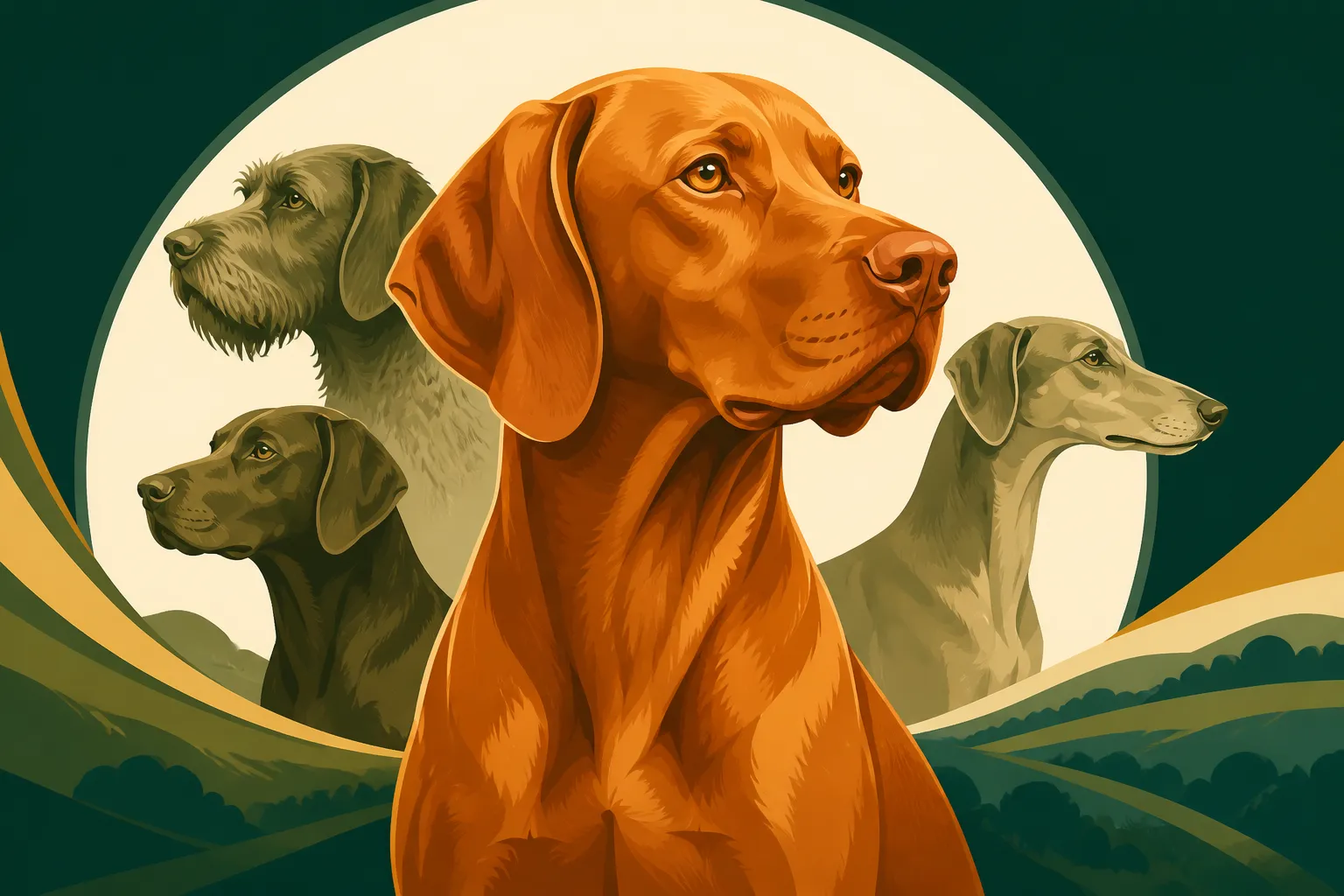
The Magyar Hunting Dogs Behind the Vizsla
For many of us who share our lives with a Vizsla, there's an undeniable connection to something ancient and profound. Yet, it's easy to get caught up in the daily joys and challenges of our energetic, velcro-loving companions without fully appreciating the incredible journey of their ancestors. If you've ever wondered where that unique blend of athleticism, intelligence, and deep loyalty comes from, or why they possess such specific hunting instincts, you're looking at the living legacy of the Magyar hunting dogs. This guide will take you on a deep dive into the fascinating history of these incredible canines, tracing their lineage back through centuries of Hungarian history to understand the very foundations that shaped the Vizsla we cherish today.
The Ancient Roots of Hungarian Hunting Dogs
Long before the modern Vizsla, or even its immediate predecessors, Hungarian lands were home to various hunting dogs, inextricably linked to the cultures that settled there. These weren't simply pets; they were vital partners in survival, helping nomadic tribes and later, established communities, secure food and protect livestock. The very land itself, with its vast plains, dense forests, and winding rivers, demanded dogs with specific attributes, favoring keen senses, endurance, and an innate drive to work alongside humans.
Pre-Magyar Hunting Practices and Early Canines
Before the arrival of the Magyar tribes, the Carpathian Basin was already a crucible of cultures, each bringing their own dogs and hunting techniques. Archaeological evidence suggests that indigenous peoples and subsequent waves of migrants, including Scythians, Celts, and various Germanic tribes, relied heavily on dogs for hunting game such as deer, wild boar, and smaller animals like hares and birds. These early canines were likely a diverse group, adapted to local conditions, perhaps more akin to pariah dogs or primitive landraces than distinct breeds as we understand them today. They would have been valued for their hardiness, their ability to track by scent, and their loyalty to their human families. The concept of "selective breeding" in a formal sense was still far off, but natural selection and the demands of survival would have favored the strongest, most intelligent, and most cooperative animals.
The Arrival and Influence of the Magyar Tribes
The true genesis of the Vizsla's direct ancestors begins with the arrival of the Magyar tribes in the Carpathian Basin around the 9th century CE. These semi-nomadic warriors and herdsmen migrated from the Eurasian steppes, bringing with them their horses, their distinct culture, and, crucially, their own dogs. These "Magyar dogs" were not just random companions; they were highly specialized hunting partners, honed over centuries of life on the steppes. They were likely fast, agile, and possessed excellent scenting abilities, perfect for hunting small game and tracking larger quarry across open grasslands. Their close bond with their human masters was paramount, as they often shared encampments and were indispensable for securing sustenance in new territories. This deep partnership between dog and hunter became a defining characteristic that would echo through the Vizsla's entire history, forging the "velcro" bond many owners still describe today.
Adapting to a New Landscape
Upon settling in Hungary, the Magyars and their dogs faced a new environment, different from the vast steppes they had left behind. While still featuring open plains, Hungary also presented more varied terrain, including marshlands, dense forests, and agricultural fields. This demanded a new set of skills from their hunting dogs. The dogs needed to adapt from wide-ranging steppe hunters to versatile partners capable of working in different cover, flushing game from thickets, and perhaps even retrieving from water. Over generations, through natural selection and intentional choices by hunters, the dogs evolved. Those that could adapt their hunting style, show patience, and work more closely with a foot hunter rather than purely a horseman, would have been highly prized. This period marked a subtle but significant shift in the canine population, laying the groundwork for the adaptable and multi-talented gundog that the Vizsla would eventually become.
Characteristics of the Early Magyar Dogs
The early Magyar hunting dogs, the direct predecessors of the Vizsla, were shaped by the specific needs of their human companions in the challenging landscape of medieval Hungary. These were not show dogs or simply companions; they were working animals whose survival, and indeed the survival of their human families, depended on their keen abilities and unwavering dedication. Their characteristics were a direct reflection of the rigorous demands placed upon them.
Physical Traits Suited for the Hunt
Imagine a dog built for both speed and stamina, but also agile enough to navigate diverse terrain. That's what the early Magyar hunter needed. These dogs were likely medium-sized, leaner than some of the heavier scent hounds, with a muscular yet elegant build. Their coats would have been short and dense, providing some protection against brush and weather without being cumbersome. A practical color, blending into the Hungarian landscape of amber fields and woodlands, would have been beneficial for camouflage during the hunt. This practicality extended to their overall conformation; strong legs for covering ground, a deep chest for lung capacity, and a tail that could be used as a rudder for balance during quick turns or when pointing. Every physical attribute was geared towards efficiency in the field. This early emphasis on a functional, streamlined body form is something we still see in the lithe, athletic frame of the modern Vizsla.
Distinct Hunting Style and Instincts
The defining characteristic of these early Magyar dogs was their versatile hunting style. They were expected to do it all: locate game by scent, point to its presence, flush it from cover, and retrieve it once shot. This "jack-of-all-trades" approach was born out of necessity; a single hunter could not afford multiple specialized dogs. Therefore, the dogs developed an innate pointing instinct, freezing upon scenting game, often with a rigid body and an outstretched tail, indicating the game's location to the hunter. They also possessed a strong retrieve drive, essential for recovering fallen birds from dense vegetation or water. This comprehensive skill set made them invaluable partners for various types of game, from upland birds to waterfowl and even smaller furred game. This blend of pointing and retrieving is a hallmark of the modern Vizsla and is a direct inheritance from these ancient working dogs, cementing their reputation as truly versatile gundogs.
Temperament and the Human Connection
Perhaps one of the most enduring legacies of the early Magyar hunting dogs is their distinctive temperament. These were dogs bred for close cooperation with their human masters. Life was harsh, and a dog that ranged too far or was too independent wouldn't have been as effective. Instead, traits like tractability, intelligence, and an intense desire to please were highly valued. They needed to be biddable and responsive to their hunter's commands, often working silently and subtly. This close working relationship fostered an incredibly strong bond, where the dog was not just a tool, but a cherished member of the hunting party, and by extension, the family. This deep emotional connection, often described as a "velcro" nature, where the dog constantly seeks physical proximity and reassurance from its human, is a direct inheritance from those times. This sensitivity also meant they responded best to fair, consistent, and gentle handling, a trait that continues to define The Soft Vizsla That Shuts Down When You Raise Your Voice. Modern owners recognize this inherent need for connection and thrive on it, often finding products for their sensitive dogs through trusted retailers like Chewy.
The Crossroads of History: Influences on the Vizsla's Ancestors
The lineage of the Vizsla is not a straight, uninterrupted line but rather a tapestry woven with threads from various historical periods and canine influences. As Hungary interacted with other European powers and faced numerous conflicts, the genetic pool of its native hunting dogs inevitably changed, absorbing new traits while retaining the core qualities that made them so prized.
Ottoman Occupation and Eastern Influences
The centuries of Ottoman rule in Hungary, from the 16th to the 18th century, brought significant cultural and societal changes, and with them, new types of dogs. While the Magyars fiercely guarded their hunting traditions, it's highly probable that some intermingling occurred between the native Hungarian dogs and breeds or landraces brought by the Ottoman Turks. These could have included various types of hounds or sighthounds, known for their speed and endurance in open terrain. While specific records are scarce, the introduction of different genetic lines would have subtly influenced the Hungarian dogs, perhaps refining their speed or enhancing certain scenting capabilities. This period was a melting pot, and while the core Vizsla type persisted, it likely became richer in its genetic diversity and potential.
The Rise of European Pointers
As hunting evolved across Europe, especially with the advent of firearms, the specialized "pointing dog" came into prominence. Breeds like the German Shorthaired Pointer and various English Pointers were developed to precisely locate game, allowing the hunter to approach for a shot. As Hungary began to look westward culturally and politically, these highly refined European pointers were introduced into the country. Hungarian noblemen and landowners, keen to improve their hunting dogs for a new era, likely outcrossed their native Magyar dogs with these imports. This was a critical juncture. The goal was to imbue the Hungarian dog with the superior pointing abilities and finer noses of the Western pointers, while retaining the hardiness, versatility, and close working style of the indigenous lines. This period of deliberate cross-breeding was instrumental in refining the Vizsla's characteristic "point" and its overall gundog prowess.
Selective Breeding by Hungarian Nobility
With the influence of European pointers and a growing appreciation for distinct dog breeds, Hungarian nobility took on a more active role in the selective breeding of their hunting dogs. They began to consolidate the desired traits: the striking golden-rust color, the elegant yet powerful build, and most importantly, the dual ability to point and retrieve with natural flair. Breeders would carefully select dogs that excelled in the field, demonstrated good temperaments, and passed on the distinctive physical characteristics. This was a process of refinement, aiming to create a dog that was not only an exceptional hunter but also aesthetically pleasing and a symbol of their noble status. The result was a recognizable type of Hungarian pointing dog, increasingly uniform in appearance and ability, which was explicitly referred to as a "Vizsla" – a term believed to mean "to search" or "to track" in old Hungarian. This dedication by the nobility ensured the continuity and development of the breed's unique attributes, preventing it from being diluted entirely by foreign influences.
Near Extinction and the Fight for Survival
The history of the Vizsla is not just one of development and refinement; it's also a dramatic tale of survival against incredible odds. Twice, this magnificent breed faced the brink of extinction, testament to the turbulent history of Hungary itself. These periods of crisis forged a deep appreciation for the breed and spurred dedicated efforts to ensure its continuity.
World Wars and Their Devastating Impact
The 20th century brought unprecedented devastation to Europe, and Hungary was deeply impacted by both World Wars. For dog breeds, wartime meant extreme hardship. Food scarcity was rampant, making it difficult to feed large, active hunting dogs. Many dogs were lost to bombings, disease, or simply had to be abandoned as families fled conflict zones. What Two World Wars Did to the Vizsla was catastrophic. Breeding programs ceased, and the carefully cultivated lines were scattered or destroyed. Hunters, facing their own struggles for survival, could no longer prioritize dog breeding or hunting. The Vizsla population plummeted, with only a handful of individuals believed to have survived in Hungary itself, and some having been secretly smuggled out by dedicated individuals. This period represented the most severe threat to the breed's existence, a stark reminder of how fragile a breed's future can be in times of global upheaval.
Political Upheaval and the Iron Curtain
Following World War II, Hungary fell under Soviet influence, becoming part of the Eastern Bloc behind the Iron Curtain. This political climate presented another unique set of challenges for dog breeding. Travel and communication with Western Europe and North America were severely restricted, making it incredibly difficult to maintain genetic diversity or even to know the status of Vizslas outside Hungary. Owning a purebred dog, especially one associated with the nobility and hunting traditions, could sometimes be viewed with suspicion by the communist regime. Many loyal Vizsla owners faced immense pressure, and some risked their lives to protect their dogs. The lack of open exchange meant that the Hungarian Vizsla population developed in relative isolation during this period, potentially leading to a narrowing of the gene pool within the country. This isolation further underscored the dedication of those few breeders who continued their work under trying circumstances, ensuring that the Vizsla's unique heritage wasn't completely lost.
The Role of Dedicated Breeders and Smuggling
It is thanks to the unwavering passion and courageous efforts of a small group of dedicated breeders and enthusiasts that the Vizsla survived these dark times. The Vizsla Came Back From Extinction Twice is a testament to their efforts. During and after the wars, many risked everything to protect their dogs. Some famously smuggled their Vizslas out of Hungary, often under the cover of night or through elaborate schemes, to ensure their safety and the continuation of their bloodlines in other countries. The Vizsla Named Panni XV Carried Out of Hungary is one such famous story, highlighting the incredible lengths people went to save the breed. These individuals understood the historical and cultural significance of the Vizsla and refused to let it vanish. They painstakingly documented pedigrees, shared limited breeding stock, and worked to re-establish the breed both within Hungary and abroad. Without their foresight, bravery, and sheer determination, the Vizsla as we know it today would likely be a forgotten piece of history. These efforts highlight the profound bond that already existed between these dogs and their human caretakers, driving people to extreme measures for their beloved companions.
The Resurgence and Modern Vizsla Development
Against the backdrop of near annihilation, the Vizsla experienced a remarkable resurgence, driven by passionate individuals determined to secure its future. This period saw the careful rebuilding of the breed, the establishment of formal standards, and its eventual recognition on the international stage.
Rebuilding the Breed in Hungary and Abroad
With the easing of political tensions and the heroic efforts of a few, the painstaking process of rebuilding the Vizsla population began. Within Hungary, remaining dogs were carefully sought out, and breeding programs were slowly re-established. Simultaneously, the Vizslas that had been spirited away to other countries, primarily to Austria, then to Italy, and eventually across the Atlantic to North America, became crucial genetic reservoirs. These expatriate Vizslas formed the foundation for the breed's establishment outside its homeland. Breeders, often communicating clandestinely or through limited channels, worked to coordinate breeding efforts to maximize genetic diversity from the small pool of survivors. The Twelve Dogs the Vizsla Was Rebuilt From in 1900 speaks to an earlier rebuilding effort, but the post-WWII period was even more critical, relying on an even more limited number of foundational animals. This dedicated collaboration across borders was vital for the Vizsla's long-term survival.
Establishing Breed Standards and Recognition
As the breed began to recover, the need for formal recognition and clear breed standards became paramount. The Vizsla Club of America, for example, played a key role in advocating for the breed and establishing its unique characteristics. These standards defined the ideal physical appearance, temperament, and working abilities of the Vizsla, ensuring that future breeding efforts would maintain the integrity of the breed. This included specific guidelines for the golden-rust coat color, the athletic build, and the characteristic hunting style. In 1960, the Vizsla achieved official recognition by the American Kennel Club (AKC), a monumental step that solidified its place among the recognized sporting breeds. This recognition not only provided a framework for organized breeding and competition but also brought the Vizsla into the public eye, attracting new enthusiasts and ensuring its continued growth.
The "Field" Versus "Show" Divide
As with many established sporting breeds, the Vizsla eventually saw a subtle divergence between "field lines" and "show lines." Field lines continued to prioritize extreme athleticism, hunting prowess, and endurance, often leading to dogs that are lighter-boned, with perhaps a more intense drive. Show lines, while still adhering to the breed's working heritage, often focused more on conformation to the written standard, emphasizing certain aesthetic qualities for success in the show ring. While the Vizsla standard generally strives for a dog that can do both, dedicated breeders sometimes lean one way or the other. It's a common discussion among owners about whether a field-bred Vizsla looks different from a show-bred one, and this divergence has implications for the type of temperament and energy level an owner might expect. Regardless of their primary focus, both types of breeders share the goal of preserving the Vizsla's distinctive traits. Today, if you're looking for specific food or training gear for either a field or show Vizsla, online retailers like Chewy offer a wide selection tailored to their unique needs.
Understanding the Vizsla's Enduring Legacy
The arduous journey of the Vizsla, from ancient Magyar hunting partner to modern companion, has left an indelible mark on the breed. Understanding this legacy helps us appreciate not just their history, but also their unique challenges and triumphs in contemporary times.
The Implications of a Narrowed Gene Pool
The repeated near-extinction events and subsequent rebuilding efforts, particularly Whether the 1900 Rebuild Narrowed the Vizsla Gene Pool, inevitably led to a significantly reduced genetic diversity within the breed. When a breed is rebuilt from a small number of individuals, it means that many desirable genes, and unfortunately, some undesirable ones, become more concentrated. This can have long-term implications for the breed's health. While dedicated breeders work tirelessly to screen for known genetic conditions, a shallower gene pool can make a breed more susceptible to certain hereditary diseases. For the Vizsla, this includes a higher prevalence of conditions like certain cancers, autoimmune diseases, and orthopedic issues. Owners often become acutely aware of Why Vizslas Carry So Much Immune Disease, making responsible breeding and health testing paramount. It's a constant balancing act for breeders to maintain the breed's defining characteristics while also striving for genetic health and robustness.
Versatility: A Core Part of the Breed's Identity
The concept of "versatility" is not just a buzzword for the Vizsla; it's ingrained in its very being, a direct inheritance from its ancient Magyar ancestors. These were dogs bred to do it all – point, retrieve, track, and work closely with their hunter in varied conditions. This inherent versatility means that a well-bred Vizsla isn't just a pointing dog; it often excels in a multitude of dog sports and activities. From agility and obedience to scent work, canicross, and even therapy work, their intelligence, athleticism, and strong desire to please make them highly adaptable. What Versatile Means for a Vizsla is about their ability to perform many different tasks effectively. This isn't just about training; it's about a foundational mental and physical makeup that allows them to transition between different roles with enthusiasm and skill. This trait is why Vizslas make such engaging and rewarding partners for active families, always ready for the next adventure.
The "Velcro" Trait as a Survival Mechanism
The famous "Velcro Vizsla" trait, where they constantly seek physical proximity and affection from their human family, is often a charming quirk for modern owners. However, it's a deeply rooted characteristic that once served as a vital survival mechanism. In ancient times, a dog that stayed close to its human, was highly attuned to their cues, and unwilling to stray far was a safer, more effective hunting partner. This dependence on human companionship and guidance meant they were less likely to get lost, injured, or fall prey to predators in the wild. This intense bond also facilitated seamless communication in the field, making them indispensable. For the modern Vizsla, this translates into an incredible loyalty and sensitivity, but also a strong predisposition to separation anxiety if left alone for too long. Understanding this historical context helps owners provide the right environment, ensuring their Vizsla thrives on companionship rather than suffers from its absence.
What We See of Their Ancestry in Today's Vizsla
When we look at a Vizsla today, whether they're curled up on the sofa or working a field, we are essentially seeing a living portrait of their history. Many of their most defining characteristics, both physical and behavioral, are direct reflections of their ancestors and the environments they navigated.
The Distinctive Golden-Rust Coat
The striking golden-rust coat is perhaps the most iconic physical trait of the Vizsla, and it's a direct link to their historical origins. This unique color isn't just pretty; it was incredibly functional for their ancestors. The Golden Rust Color Only a Vizsla Wears allowed them to blend seamlessly into the sun-drenched Hungarian plains and the rich autumn colors of the forests, providing natural camouflage when pointing or stalking game. It also signals purity of the breed, as any deviation from this specific shade is considered a fault in the breed standard. This uniform color was carefully selected and maintained by early breeders, differentiating them from other regional hunting dogs. It's a visual signature that has survived centuries of change and remains a hallmark of the breed's Hungarian heritage.
The "Hunter's Instinct"
Even in a pet home, a Vizsla's strong "hunter's instinct" is unmistakable. The way they methodically quarter a park, nose to the ground, the sudden stiffening of their body when a squirrel is sighted, or their intense focus on a thrown toy – these are all echoes of their ancestors. Their ancestors were bred to find, point, and retrieve game, and these instincts are deeply hardwired. This means that even if a Vizsla never sets foot in a hunting field, they still possess that innate drive. For owners, understanding this means embracing activities that allow them to channel these natural behaviors. Scent work, retrieving games, or even just long walks where they can explore with their nose are vital for a Vizsla's mental well-being and satisfaction. It's not just a hobby for them; it's a fulfillment of their genetic destiny.
Physical Endurance and Athleticism
The enduring image of a Vizsla tirelessly covering ground, seemingly fueled by an endless well of energy, is a direct inheritance from the demands placed upon their Magyar ancestors. These dogs needed to keep pace with mounted hunters, run for hours across varied terrain, and maintain peak performance throughout a long day of hunting. Their lean, muscular build, deep chest, and strong hindquarters are all adaptations for endurance and speed. This means that today's Vizsla requires a significant amount of daily exercise to be truly content and well-behaved. Without it, their pent-up energy can lead to destructive behaviors or incessant whining. Whether they are running alongside a cyclist, hiking through the woods, or participating in agility, their historical need for sustained physical activity remains a fundamental aspect of their care. You can find excellent durable toys and training aids for these active dogs on platforms like Chewy to help channel that boundless energy.
A Table of Ancestral Traits in the Modern Vizsla
To better illustrate how the traits of the ancient Magyar hunting dogs manifest in the modern Vizsla, here's a comparison:
| Ancestral Trait (Magyar Hunting Dogs) | Modern Vizsla Manifestation | Benefit for Hunters/Owners Today |
|---|---|---|
| Versatile Hunting Style | Natural pointer, keen retriever, good tracker | Excels in multiple dog sports, adaptable to various outdoor activities |
| Close Human Bond | "Velcro dog," highly affectionate, prone to separation anxiety | Exceptional family companion, highly trainable, sensitive to handler's mood |
| Golden-Rust Camouflage Coat | Distinctive golden-rust color, short, dense coat | Aesthetically unique, low maintenance, blends with natural surroundings |
| Physical Endurance & Agility | High energy, athletic build, requires significant exercise | Ideal partner for runners, hikers, and active lifestyles; excels in dog sports |
| Keen Senses & Intelligence | Alert, quick learner, inquisitive, good problem-solver | Responsive to training, enjoys mental challenges, makes an excellent watch dog |
This table clearly shows the direct links between the survival needs of their ancestors and the traits we love (and sometimes find challenging!) in our modern Vizslas.
Caring for a Vizsla: Honoring Their Heritage
Bringing a Vizsla into your life means embracing a dog with a rich history, a profound connection to its human partners, and a set of instincts honed over centuries of hunting. Proper care for a Vizsla isn't just about meeting their basic needs; it's about understanding and honoring this incredible heritage.
Meeting Their Exercise Needs
Given their ancestry as tireless hunting companions, it's no surprise that Vizslas have immense exercise requirements. Two hours of vigorous activity a day is often cited as a baseline, and for many Vizslas, even more might be needed, especially if they are young adults. This isn't just a casual walk around the block; it means off-leash running, chasing balls, swimming, or engaging in dog sports. An under-exercised Vizsla is a bored Vizsla, and a bored Vizsla can quickly become a destructive Vizsla. They need outlets for their physical energy and mental stimulation. Think of it as allowing them to fulfill their ancestral role in a modern context. Integrating long hikes, runs, or regular training sessions helps keep them physically fit and mentally sharp. The Two Hours a Vizsla Needs Before It Will Settle is a very real challenge many owners face.
Nurturing Their "Velcro" Temperament
The Vizsla's deep bond with its human family, inherited from generations of close-working Magyar hunters, means they thrive on companionship. They are not dogs that can be left alone for long periods without consequence. Their "Velcro" nature means they crave physical proximity and can develop severe separation anxiety if their need for connection isn't met. This is why they are often described as indoor dogs, preferring to be wherever their people are. Crate training can be helpful for short periods, but it's not a substitute for human interaction. Owners need to be prepared for a dog that will follow them from room to room, want to be on the sofa, and might even try to sneak under the covers. For those who can provide the constant companionship and affection a Vizsla craves, this trait makes them incredibly devoted and loving family members.
Training That Respects Their Sensitivity
The early Magyar hunting dogs were not subjected to harsh training methods; they responded best to cooperation and positive reinforcement due to their sensitive nature. This continues to be true for the modern Vizsla. They are highly intelligent and eager to please, making them quick learners, but they are also incredibly sensitive to tone of voice and body language. Harsh corrections or yelling can cause a Vizsla to shut down, become fearful, or even develop behavioral issues. Positive reinforcement, using treats, praise, and play, is the most effective way to train a Vizsla. This builds trust and strengthens the bond, which is precisely what their ancestors relied on in the field. Early socialization and consistent, gentle training are crucial for developing a well-adjusted and confident Vizsla. Retailers like Chewy offer a range of positive training aids, from clickers to high-value treats, that align perfectly with the Vizsla's sensitive and intelligent nature.
Conclusion: A Living Link to History
The Vizsla is more than just a beautiful, energetic dog; it is a living embodiment of Hungarian history and the enduring partnership between humans and canines. From the ancient Magyar tribes who first settled the Carpathian Basin to the dedicated breeders who saved the breed from the brink of extinction, every aspect of the Vizsla's journey has shaped the loyal, intelligent, and athletic companion we know today.
When you look into the warm, amber eyes of your Vizsla, you're seeing centuries of resilience, cooperation, and an unwavering spirit. Their golden-rust coat, their tireless energy, their incredible versatility in the field, and their undeniable "Velcro" affection are all direct legacies of the Magyar hunting dogs that helped define a nation. Understanding this deep history not only enriches our appreciation for the breed but also informs how we best care for these magnificent animals, ensuring that their incredible heritage continues to thrive for generations to come.
Disclaimer
This article is for general informational purposes only and does not constitute professional advice. Laws, prices and regulations vary by location and change over time. Consult a qualified professional for guidance on your specific situation.