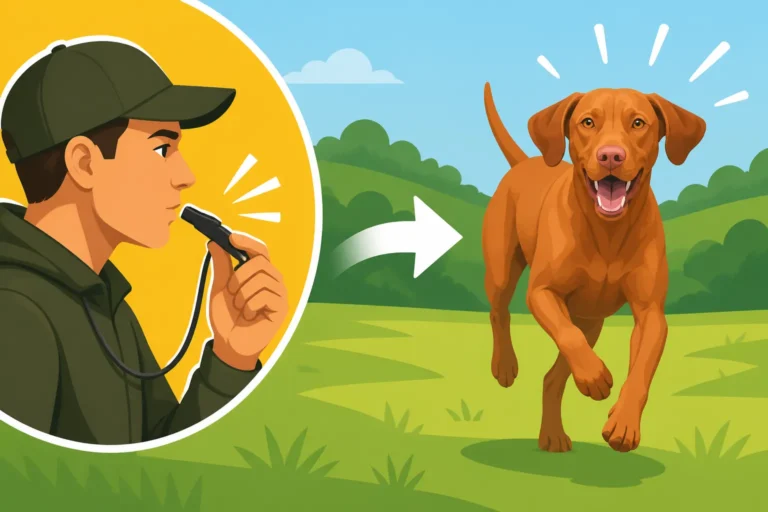
Teaching a Vizsla to Quarter a Field
It’s a common scenario for Vizsla owners: you let your beautiful, energetic dog loose in a field, full of hope they'll gracefully sweep back and forth, sniffing out birds like the hunting machine they were bred to be. Instead, they often blast off in a straight line, nose to the ground, disappearing into the distance, leaving you shouting their name and wondering if they’ll ever come back. This guide will walk you through the practical, patient steps to teach your Vizsla the art of quartering a field, transforming that wild, joyful energy into focused, productive searching.
Understanding the Vizsla's Instinct for Quartering and Why it's Not Always Neat
Vizslas are bird dogs through and through, meaning they possess an innate drive to hunt and search for game. This instinct is what makes them so captivating to watch when they're working. However, "instinct" doesn't always translate into a perfectly executed pattern right out of the gate. Think of it like a child with a natural talent for music; they still need lessons to learn scales and read sheet music. Your Vizsla has the talent, but they need guidance to learn the "sheet music" of quartering.
What Quartering Really Means for a Vizsla
Quartering, at its heart, is a systematic search pattern where your dog works back and forth in front of you, covering the ground efficiently to find game birds. The idea is for them to scent the wind and crisscross the field, ensuring no patch of potential bird cover is missed. For a Vizsla, who often possesses a strong desire to range wide and fast, this can feel restrictive at first. They want to fly, covering huge swathes of land, and sometimes this means they over-run scent or miss birds entirely because they're simply too far out.
They aren't being disobedient; they're just following their powerful drive in the most direct way they know how, which is often a straight line or a wide, arcing run. The challenge is to teach them that a pattern is actually more effective and allows them to utilize their incredible nose and speed in a way that benefits both them and their handler. This isn't about crushing their spirit or making them robotically obedient, but rather channeling that magnificent energy into a partnership.
Why Untrained Quartering is Inefficient
An untrained Vizsla might bound through a field, nose to the ground or held high, but without a pattern, they're likely to cover some areas multiple times and completely miss others. Imagine trying to mow a lawn by just running randomly across it; you'd miss strips, go over others repeatedly, and likely run out of gas before you finished. The same principle applies to your Vizsla.
Their natural speed, while impressive, can work against them if not properly directed. They might run past scent cones without fully investigating, or they might range so far ahead that by the time they hit a hot scent, they're out of your sight and control. This leads to frustrated handlers and dogs who burn out quickly because they're expending a lot of energy without the satisfaction of finding game. It's also incredibly difficult to work effectively as a team if your dog is off in the next county while you're still in this one. Building a Recall on a Vizsla That Ranges is absolutely paramount before you even begin to think about quartering, because without it, you have no foundation for communication.
Building the Foundation: Essential Pre-Quartering Skills
Before you even step foot in a large field with the intention of teaching quartering, your Vizsla needs to have a solid grasp of several foundational skills. Without these, you're building on sand. These aren't just "good to haves," they're non-negotiables.
A Reliable Recall and Check-In
This is probably the most important skill for any dog, but especially for a Vizsla. Their instinct to range is strong, and if they catch a scent, they might decide that following it is more rewarding than coming back to you. A reliable recall means they will drop whatever they're doing and return to you, no matter the distraction. Practice this everywhere: in your yard, at the park, in increasingly distracting environments. Use high-value treats and enthusiastic praise. Your voice should be a beacon of positive reinforcement, not a harbinger of doom.
Equally important is the "check-in." This means your dog periodically looks back at you while working, even without a specific command. It shows they are aware of your presence and open to direction. You can encourage this by changing directions frequently yourself while walking, or by occasionally stopping and waiting for them to notice you and come investigate. When they do, reward them generously. This builds a strong communication loop.
Responsiveness to Directional Cues
Your Vizsla needs to understand basic directional commands. This isn't just "come" and "sit," but cues like "whoa" (to stop and hold position), "over" or "hup" (to move left or right), and "hunt on" (to continue searching). Start teaching these in a low-distraction environment, associating the command with the action you want. For example, use a long line and gently guide them in the desired direction while giving the verbal cue.
Whistles are incredibly useful here too, as they carry further than your voice in windy conditions and are less emotionally charged. A single peep might mean "whoa," while a series of short peeps could mean "come." Consistency is key. Every time you use a cue, make sure your dog understands what it means and follows through. If your Vizsla is sensitive, remember The Soft Vizsla That Shuts Down When You Raise Your Voice; keep your tone encouraging and your corrections gentle and informative, not punitive.
Comfort on a Long Line or E-Collar
For the early stages of quartering training, especially with a dog that loves to range, you'll need a way to maintain control without being right next to them. A long line (15-30 feet) is an excellent tool for this. It allows them freedom to explore while you can still guide their direction and reinforce your recall. This also helps them learn the boundaries of how far they should be working from you. You can find durable long lines on platforms like Amazon, often made from Biothane, which is fantastic for field work as it doesn't absorb water or get tangled easily.
For more advanced stages, or with dogs who are particularly independent, a properly conditioned electronic collar (e-collar) can be an invaluable tool. Note that I said "properly conditioned." This is not a punishment device, but a communication tool that should be introduced slowly and positively, always paired with known verbal commands. Never use it to "shock" your dog into submission; use it as a subtle tap on the shoulder to remind them of a command they already know. If your dog isn't responding to your directional cues on a long line, an e-collar, used responsibly, can help extend your reach. However, be incredibly careful, as Whether an E-Collar Ruins a Vizsla's Confidence is a real concern if not used correctly and sensitively.
The Step-by-Step Process of Teaching Quartering
Now that your Vizsla has the foundational skills, we can start putting them to use in the field. This process is gradual and requires patience and consistency.
Step 1: Starting in a Small, Contained Area
Don't jump into a 40-acre field right away. Begin in a smaller, fenced area, perhaps a large yard or a community park during off-peak hours. The goal here is to introduce the idea of working back and forth. Walk in a straight line, then make a wide turn, then walk back. Your dog will naturally follow you, especially if you've been working on their "Velcro" tendencies.
As you walk, encourage them to explore the edges. Use your directional cues (e.g., "over" or a hand signal) to send them slightly wider, always bringing them back towards your general line of travel. Keep the sessions short and positive. The emphasis isn't on finding birds yet, but on establishing the rhythm of the pattern. Reward any instance where they naturally turn and come back across your path, even if it's not perfect.
Step 2: Introducing the Wind and Scent
Vizslas are primarily scent-driven hunters, so understanding how to work the wind is crucial for effective quartering. The dog should ideally work into the wind, allowing bird scent to be carried directly to their nose. Find a field where you can walk with the wind at your back, and your dog will naturally be working into it as they range out in front of you.
Start by releasing your dog downwind, letting them run into the wind ahead of you. As they hit the edge of the field, use your directional cue to turn them, bringing them back across your path. Then, as they approach the other side, turn them again. You are essentially creating a zigzag pattern with your body language and verbal cues. Use a long line initially to help guide them if they struggle to turn. The goal is to get them to understand that turning into the wind and working back and forth will lead them to the rewards of scent.
| Quartering Element | Ideal Behavior | Untrained Vizsla Tendency | Training Focus |
|---|---|---|---|
| Pattern | Systematic zigzag, covering ground thoroughly | Random dashes, straight lines, overshooting | Handlers lead the pattern with turns, cues |
| Range | Works within reasonable distance of handler | Ranges too wide, out of sight/control | Long line, check-ins, e-collar conditioning |
| Wind Use | Works into the wind for optimal scenting | Ignores wind direction, runs wherever | Handler position, directional cues, scent work |
| Focus | Engaged in searching for birds | Distracted by other scents, movement, speed | High-value rewards for finding game, consistency |
Step 3: Adding Controlled Scent Work and Birds
Once your Vizsla understands the pattern of quartering, it's time to introduce actual bird scent. Start by planting a few training birds (like pigeons or quail, often available from game bird farms) in the field before you release your dog. Place them strategically along the path where you want your dog to quarter. This gives them a tangible reward for following the pattern.
As your dog works the pattern, they'll inevitably hit the scent cone of a planted bird. When they do, encourage them to investigate. If they point, reward them with praise. If they flush, that's okay initially, but the long-term goal is to teach them to "whoa" on point. For this, you might need a check cord, or even a remote release trap to control the flush. This phase is critical for teaching them that quartering leads to finding birds, and finding birds is the ultimate reward. You'll quickly discover What a Vizsla Will Work For — birds are often at the top of that list!
For more structured training, consider programs like BAXTER & Bella, which offer comprehensive online resources that can guide you through these detailed steps, often including tips for introducing birds and refining field work skills.
Step 4: Extending Range and Weaning Off Aids
As your Vizsla becomes more proficient in the pattern and consistently finds birds, you can gradually increase the size of the field and the distance they work from you. This is where your reliable recall and directional cues really shine. Use your whistle to signal turns, making your signals distinct and clear. For example, two short peeps might mean "turn left," and three short peeps "turn right."
Slowly transition from the long line to working off-leash in controlled environments. The e-collar, if you've chosen to use it, becomes a backup for reinforcing known commands at a distance. Remember, the goal is for your Vizsla to choose to quarter for you because they understand the system and find it rewarding, not because they are being constantly forced. This builds confidence and a true partnership in the field. This systematic search also ties into Whether a Vizsla Ranges Wider Than a Shorthair; your goal is to teach them effective range, whatever their natural inclination.
Common Challenges and Troubleshooting
Teaching a Vizsla to quarter is a marathon, not a sprint. You will encounter bumps along the way, and that's perfectly normal.
The Vizsla Who Ranges Too Wide
This is perhaps the most common frustration. Your Vizsla, with their boundless energy and incredible speed, just wants to go. When they start to range too far, immediately use your recall command. Don't chase them; that just teaches them to run faster. When they come back, reward them. Then, restart your quartering pattern, perhaps in a slightly smaller area or with a longer line.
You can also use physical barriers (fences, hedgerows) to your advantage in early training, using them to naturally guide your dog's turns. If they're blowing past these natural turns, it’s a sign that your recall isn’t strong enough or your directional cues aren’t clear. Go back to basics in a contained space. Whether a Vizsla Should Wear a GPS Collar is also worth considering, not as a training tool, but as a safety measure if your dog has a tendency to get out of sight while you're still working on their range control. It offers immense peace of mind.
Over-Running Scent or Bypassing Birds
Sometimes, a Vizsla is so focused on covering ground that they run right past a bird's scent cone without registering it or giving it proper attention. This often happens if they are running too fast or not paying enough attention to the wind. The solution here is to slow things down. Go back to planted birds in a controlled environment.
When your dog is working, watch their body language closely. Do they lift their head, sniff the air, slow down? These are all signs they are processing scent. If they blow past it, bring them back, put them back into the scent cone, and encourage them to investigate. You might even physically guide their nose to the area. Make it a huge celebration when they do acknowledge the scent. The idea is to teach them that methodical searching, not just raw speed, is what leads to birds.
Losing Interest or Becoming Distracted
A Vizsla is a smart dog, and if the training isn't engaging or consistently rewarding, they can lose interest. If they're constantly looking for other things to chase (like deer or rabbits), it means your training isn't as high-value as those distractions yet. Ensure you're using the highest-value rewards possible during training sessions – whether that's prized treats, enthusiastic praise, or the opportunity to work a bird.
Keep sessions short, especially in the beginning, ending on a high note before your dog gets bored or tired. Vary your training locations to keep things fresh. Sometimes, a Vizsla just needs mental work too alongside their physical exercise to stay engaged and focused during training. Puzzle toys, scent games, and obedience drills can all contribute to a sharper, more attentive field dog. If you find your Vizsla is easily distracted, perhaps their daily exercise isn't meeting their needs; consider How Far a Vizsla Should Run Daily to ensure they are adequately tired before training.
Frustration and Giving Up
It's easy to get discouraged when your Vizsla isn't performing perfectly, especially when you see other dogs seemingly glide through a field. Remember, every dog is an individual. Be patient with your Vizsla and, perhaps more importantly, be patient with yourself. If you're getting frustrated, end the session on a positive note and take a break. Come back to it when you're both refreshed.
Celebrate the small victories. Did they make a beautiful turn today? Did they check in with you more frequently? Did they acknowledge a scent they might have blown past yesterday? These are all steps forward. Consistency, positive reinforcement, and a deep understanding of your Vizsla's natural drives are your best tools for success.
Disclaimer
This article is for general informational purposes only and does not constitute professional advice. Laws, prices and regulations vary by location and change over time. Consult a qualified professional for guidance on your specific situation.