What a Vizsla Destroys When Left Alone
One of the most heart-wrenching realities for many Vizsla owners is coming home to a scene of utter chaos, a landscape of shredded cushions, gnawed table legs, or even excavated carpets. This isn't just a mischievous quirk; it's often a desperate plea from a highly sensitive and energetic breed. This guide will walk you through the reasons behind such destructive behavior, the common targets of their frustration, the real financial implications, and, most importantly, actionable strategies to help your beloved Vizsla cope with being left alone.
The Root Cause: Why Vizslas Become Destructive
It’s easy to feel angry or frustrated when your home looks like a small tornado ripped through it, but understanding why your Vizsla resorts to destructive behavior is the first step toward finding a solution. It's rarely out of spite; it's almost always an expression of unmet needs or profound distress.
Separation Anxiety vs. Boredom: Untangling the Motivation
Many owners mistakenly lump all destructive behavior into the "separation anxiety" basket, but it's crucial to differentiate between true separation anxiety and simple boredom. The signs can sometimes look similar on the surface, but the underlying emotional states are vastly different, requiring different approaches.
A truly anxious Vizsla might start showing signs of distress even before you leave the house – whining, pacing, trembling, or trying to block your exit. Once you're gone, their destruction is often accompanied by excessive vocalization (barking, howling), house soiling, and self-injurious behaviors like licking or chewing themselves raw. They might focus their destructive energy on exit points, like doors and windows, in an attempt to get to you. It's a full-blown panic attack, manifesting in physical ways. This kind of distress isn't about having nothing to do; it's about an overwhelming fear of being alone, a deep-seated panic at the perceived abandonment. These dogs aren't just chewing; they're trying to escape their profound discomfort, and sometimes that means tearing up everything in their path. For more on this, you might find Signs a Vizsla Is Suffering Alone helpful.
Boredom, on the other hand, is usually less emotionally charged. A bored Vizsla might quietly wait for you to leave, then systematically work their way through items in the house. Their destruction might be more exploratory or chewing-focused, aimed at things that smell interesting or offer a satisfying texture. They might target cushions, remote controls, or shoes – items that are readily available and provide some form of "entertainment." While still frustrating for you, the dog isn't in a state of panic; they're simply finding their own fun because no suitable alternatives have been provided. They often settle down after a period of destruction, whereas an anxious Vizsla remains agitated for much of the time you are away. This type of behavior often stems from a lack of mental and physical stimulation, prompting them to create their own excitement.
The Energy Drain: Insufficient Exercise and Mental Stimulation
Vizslas are a breed built for endless fields and demanding hunts. They were bred to work tirelessly alongside their human companions, covering vast distances and maintaining intense focus. When this innate drive isn't adequately channeled, the energy simply has to go somewhere.
If your Vizsla isn't getting enough strenuous physical exercise, you're practically inviting destruction. A short walk around the block twice a day just won't cut it for a Vizsla. They need to run, sniff, explore, and expend that incredible athletic energy. Without it, they become restless, coiled springs of untapped power, and when left alone, that energy explodes into destructive behavior. Imagine being told to sit still all day with boundless energy – you'd find something to do, too, even if it's not what your owner wants. You might want to consider The Exercise a Vizsla Needs Every Day for a good baseline.
Beyond physical exercise, Vizslas are highly intelligent and need mental stimulation. Their brains were designed for problem-solving in the field – scent tracking, pointing, retrieving. If they're not given puzzles, training challenges, or scent games, their minds will seek stimulation in other ways. This could mean dismantling a sofa to see how it works, or chewing through wires to understand the internal structure. A tired Vizsla, both physically and mentally, is much less likely to be destructive. A quick trip to a specialty pet store or a look through Chewy's enrichment toy section can offer many options for interactive feeders and puzzle toys to engage their minds.
The Puppy Phase: Normal Chewing vs. Destructive Habits
Ah, the joys of a Vizsla puppy! They’re bundles of boundless energy and adorable clumsiness, but also tiny, sharp-toothed chewing machines. During puppyhood, chewing is a completely normal, instinctual behavior driven by teething, exploration, and learning about their world. They use their mouths to investigate everything, much like human toddlers use their hands.
However, this normal puppy chewing can easily escalate into destructive habits if not managed properly. If a puppy is allowed to chew on inappropriate items without redirection, they learn that shoes, furniture legs, or remote controls are fair game. This creates a deeply ingrained habit that becomes much harder to break later on. It’s a fine line between a puppy exploring with its mouth and a puppy developing a taste for your favorite armchair. The key is consistent supervision, providing a wide array of appropriate chew toys, and immediate redirection away from forbidden items. Understanding What a Vizsla Chews Through as a Puppy can help set realistic expectations and proactive management strategies.
Common Targets of Vizsla Destruction
When a Vizsla decides to redecorate, they often have a particular methodology, though it can feel entirely random to the distraught owner. Their chosen targets typically reflect their motivation, whether it's anxiety, boredom, or simply a lack of appropriate outlets.
Furniture and Fixtures: The Big-Ticket Items
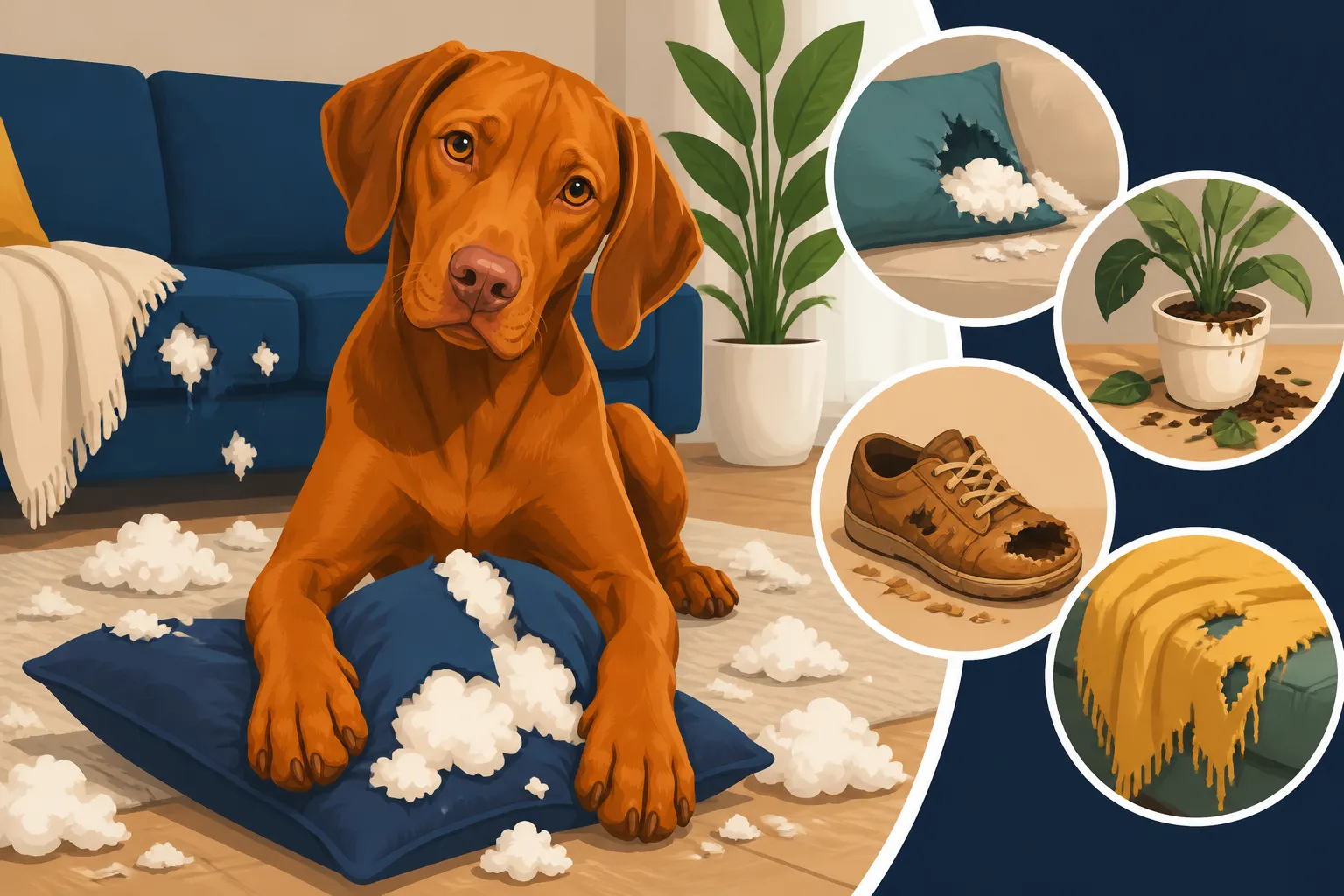
This is where the real financial pain often begins. Sofas, chairs, coffee tables, and even bed frames become prime targets for a determined Vizsla. The destruction can range from minor gnawing on legs to complete evisceration of cushions, stuffing flying everywhere like a snowy indoor landscape. Why these big, expensive items? They offer a substantial challenge, often a satisfying texture, and sometimes, a way to access something interesting hidden inside (like that remote control you thought was safe!).
Chewing on furniture legs might be a sign of teething in a younger Vizsla, but in an adult, it's more likely boredom or anxiety. The wood provides a good, hard surface to work on, satisfying an urge to chew and grind. Fabric furniture, particularly plush sofas, offers the enticing challenge of tearing, pulling, and ultimately, disemboweling. The sensation of ripping fabric and scattering stuffing can be incredibly self-reinforcing for a bored or stressed dog. This can be particularly frustrating when you return home, as these items are hard to hide and immediately broadcast the extent of the damage.
Fixtures like baseboards, door frames, and window sills also fall victim. This type of chewing often indicates a higher level of anxiety, especially if the damage is concentrated around exit points. The dog might be frantically trying to "dig" or "chew" their way out of the house to find you. Not only is this damage costly to repair, but it also reflects a dog in a state of genuine distress, trying to escape a perceived threat or separation.
Personal Belongings and Clothing: Sentimental Losses
Beyond the structural integrity of your home, Vizslas have a knack for targeting items with significant personal value. Shoes, clothing, books, eyeglasses, and electronics frequently end up in tatters. The loss here isn't just financial; it's often sentimental and deeply frustrating.
Shoes are a perennial favorite. They carry your scent, are often made of interesting materials like leather or canvas, and their shape provides perfect grip for chewing. A single expensive pair of running shoes can be reduced to an unrecognizable pulp in minutes. Similarly, clothing items like socks, underwear, or even a favorite jacket, carry your scent and offer a soft, tearable texture. For an anxious Vizsla, tearing up something that smells strongly of you can be a way to feel closer to you, even if it's destructive. For a bored Vizsla, it's just a fun texture and a good challenge.
Smaller, more valuable items like remote controls, cell phones, or glasses are also frequently destroyed. These are often picked up because they were left within reach, but for a Vizsla with separation anxiety, the compulsion to chew anything nearby can be overwhelming. The small, hard plastic of a remote or the smooth surface of glasses can provide a satisfying crunch, but the consequences for you are substantial. Recovering these items, even if partially intact, often means they're no longer functional.
Walls, Doors, and Floors: Damage to the House Itself
This level of destruction goes beyond replaceable items and strikes at the very structure of your home, making it one of the most expensive and challenging forms of Vizsla-induced damage. When a Vizsla starts on walls, doors, or floors, it's a clear sign that their distress or boredom has reached a critical level.
Gnawing on drywall can create huge holes, exposing insulation and wiring. Doors might be scratched, splintered, or chewed through, especially around the handle or the bottom, indicating a persistent attempt to get out. Hardwood floors can be deeply gouged or scratched, and carpets can be pulled up, shredded, or even eaten. This kind of damage is not only aesthetically devastating but also incredibly costly and time-consuming to repair, often requiring professional help.
For many Vizslas, this stems from severe separation anxiety. They might scratch or chew at doors and windows in a desperate attempt to reunite with their owners. The physical exertion involved in this level of destruction can be immense, and it often accompanies other signs of distress like excessive vocalization. If you're seeing this kind of damage, it's a huge red flag that your Vizsla is truly struggling and needs urgent intervention. It's not just "bad behavior"; it's a sign of profound emotional suffering. What an Anxious Vizsla Destroys often includes precisely this type of damage.
The Financial Fallout: What Destruction Really Costs
Beyond the emotional toll of seeing your home damaged and your beloved Vizsla in distress, the financial cost of destructive behavior can be staggering. It's not just the immediate replacement of a chewed-up shoe; it's a cascade of expenses that can quickly add up.
Repair and Replacement Costs: Beyond the Initial Damage
Let's be honest, furniture isn't cheap. Replacing a sofa that's been disemboweled, a coffee table with gnawed legs, or a ruined mattress can set you back hundreds, if not thousands, of dollars. And it's not always a quick fix; finding matching furniture or waiting for new deliveries adds to the stress. This doesn't even account for the small things that get destroyed, like a charger cable, a favorite book, or prescription glasses – individually minor, but cumulatively significant.
Then there's the damage to the house itself. Repairing chewed door frames, patching holes in drywall, or replacing sections of flooring isn't a simple DIY job for everyone. You might need to hire carpenters, painters, or flooring specialists. These professional services come with a hefty price tag, not just for labor but for materials too. A simple chewed baseboard can turn into an expensive project once you factor in stripping paint, sanding, filling, repainting, and ensuring it matches the rest of your trim. This kind of ongoing repair can really eat into your household budget, making you dread leaving your home. It makes you wonder What a Vizsla Costs a Year to Keep when you factor in these unexpected repairs.
Unexpected Vet Bills: Ingested Items and Injuries
Perhaps the most frightening and expensive consequence of destructive behavior is when your Vizsla ingests parts of what they're chewing. Fabric, stuffing, wood splinters, plastic, or even parts of batteries can cause serious internal damage. This can lead to intestinal blockages, perforations, or toxicity, all of which require emergency veterinary care.
An emergency vet visit can involve diagnostics like X-rays or ultrasounds, blood work, medication, and potentially, life-saving surgery. These procedures are incredibly expensive, often running into thousands of dollars, and even then, there's no guarantee of a positive outcome. Beyond ingestion, a Vizsla can also injure themselves while destructively chewing – broken teeth, lacerations to the gums or tongue, or paw injuries from digging at carpets. These also require vet attention and add to the mounting bills.
This is where having pet insurance can be a literal lifesaver. Companies like Healthy Paws are designed to help mitigate these unexpected financial burdens, covering accidents and illnesses that arise from such unfortunate incidents. Without insurance, these emergency vet bills can be financially devastating, forcing owners to make incredibly difficult decisions.
Impact on Insurance and Property Value
While homeowners' insurance might cover some accidental damage caused by pets, it's not a given, and repeated claims could lead to higher premiums or even policy cancellation. Furthermore, damage to the internal structure of your home, especially extensive chewing on walls or flooring, can impact its resale value. Potential buyers might be deterred by visible damage or concerned about lingering odors, requiring even more investment in repairs before you can list your home.
| Type of Destruction | Potential Cost Range (Estimate) | Common Triggers | Prevention Strategies |
|---|---|---|---|
| Sofa/Furniture | $500 – $5,000+ | Boredom, Anxiety | Tough chew toys, long walks, crate training |
| Door/Wall Damage | $200 – $2,000+ | Separation Anxiety, Panic | Counter-conditioning, management, professional help |
| Personal Items (Shoes, glasses) | $50 – $500+ | Boredom, Puppy Teething | Put items away, designated chew toys, mental stimulation |
| Ingested Objects (Vet Bill) | $1,000 – $10,000+ | Anxiety, Curiosity | Supervise, remove hazards, pet insurance |
| Carpet/Floor Damage | $300 – $3,000+ | Anxiety, Digging Instinct | Secure areas, provide enrichment, manage stress |
This table illustrates that the costs are not insignificant, and a multi-pronged approach to prevention is always the most economical and humane choice.
Preventative Measures and Management Strategies
The good news is that destructive behavior, whether born of anxiety or boredom, can often be managed and even overcome with consistent effort, appropriate training, and a deep understanding of your Vizsla's needs.
Creating a Safe and Stimulating Environment
Before you even think about leaving your Vizsla alone, you need to ensure their environment is safe, secure, and stimulating enough to keep them occupied and out of trouble. This often starts with careful management of their space.
One of the most effective tools for managing a Vizsla left alone is a properly introduced and utilized crate. Whether Crate Training Helps a Vizsla is a common question, and for many Vizslas, it can be a den of security rather than a cage. When introduced positively and never used as punishment, a crate provides a safe, contained space where your Vizsla can't get into mischief or damage your home. It should be comfortable, with soft bedding, and large enough for them to stand up, turn around, and lie down comfortably. Fill it with high-value, long-lasting chews or puzzle toys. However, a crate is not a substitute for exercise or addressing underlying anxiety; it's a management tool to use in conjunction with other strategies.
Beyond the crate, consider dog-proofing your home or the specific room your Vizsla will be in. Remove anything valuable or hazardous: put shoes in closets, secure trash cans, move electrical cords out of reach, and elevate breakable items. Provide a rotating selection of appropriate chew toys. Some Vizslas love KONG toys stuffed with peanut butter or treats and then frozen, which can keep them occupied for a significant period. Others prefer durable chews made from tough rubber or natural materials. Chewy offers a huge selection of robust toys specifically designed for strong chewers, ensuring you can find something to captivate your Vizsla's attention. The key is variety and novelty to keep their interest piqued.
Training and Conditioning for Alone Time
Simply confining your Vizsla won't solve the underlying issue if it's anxiety-driven. You need to teach them to be comfortable and confident when you're not around. This is a gradual process that requires patience and consistency.
Start by practicing very short absences. Leave the room for a few seconds, then return before your Vizsla shows signs of distress. Gradually increase the duration. The goal is for them to learn that you always come back and that being alone isn't scary. During these training sessions, avoid making a big fuss when you leave or return; this can inadvertently heighten their anxiety. A calm departure and an understated return reinforce the idea that your absence is no big deal.
You can also use counter-conditioning and desensitization techniques. If your Vizsla gets anxious when you pick up your keys, practice picking up your keys and then not leaving. Repeat this many times a day until the keys no longer trigger an anxious response. Similarly, give your Vizsla a high-value chew toy or a treat-filled puzzle just before you leave. This helps them associate your departure with something positive and engaging. Ollie's fresh food options, when used as high-value, rare treats, can be fantastic for this kind of positive association, as the novelty and taste can distract and reward them for calm behavior.
Exercise and Enrichment Before You Leave
This is absolutely fundamental for a high-energy breed like the Vizsla. A tired Vizsla is a well-behaved Vizsla. Before you plan to leave your dog alone, ensure they've had a substantial physical and mental workout.
This means more than just a quick walk. Aim for a vigorous run, a long session of fetch, or a demanding hike where they can really stretch their legs and engage their senses. Many Vizslas excel at activities like canicross or bikejoring, which allow them to run alongside you for miles. Beyond physical exercise, incorporate mental stimulation. Practice obedience commands, engage in scent work, or work on retrieving drills. Even a 15-20 minute training session before you leave can make a huge difference in their ability to settle. Remember, The Two Hours a Vizsla Needs Before It Will Settle isn't just about physical activity; it's about comprehensive engagement.
When they are physically and mentally fatigued, they are far more likely to settle down and rest while you're gone, rather than seeking out destructive ways to expend their pent-up energy. Think of it as 'draining their battery' before you leave them unsupervised. This proactive approach significantly reduces the likelihood of boredom-induced destruction and can even help alleviate some anxiety.
When to Seek Professional Help
Sometimes, despite your best efforts, destructive behavior persists or even escalates. This is not a sign of failure on your part, but rather an indication that your Vizsla needs more specialized intervention. Knowing when to call in the cavalry can save your sanity, your home, and potentially, your dog's life.
Recognizing Red Flags in Destructive Behavior
While some chewing is normal, especially in puppies, certain behaviors should immediately signal that you need professional help. If your Vizsla is causing significant self-injury, such as chewing their paws raw, breaking teeth on crates, or repeatedly escaping their confinement in a frantic manner, this goes beyond typical destructive tendencies.
Another major red flag is if the behavior is accompanied by severe vocalization (incessant barking, howling), house soiling (urinating or defecating indoors, even if previously house-trained), or intense panting and drooling when left alone. These are classic signs of clinical separation anxiety, which is a serious panic disorder, not just a behavioral quirk. If you've tried basic management and training techniques for several weeks without improvement, or if the behavior worsens, it's time to seek expert advice. Simply putting them in a crate might contain the destruction, but it won't resolve the underlying emotional suffering.
Consulting a Vet for Underlying Health Issues
Before embarking on any major behavioral modification plan, the very first step should always be a visit to your veterinarian. It’s crucial to rule out any underlying medical conditions that could be contributing to or exacerbating the destructive behavior. Pain, discomfort, hormonal imbalances (such as Thyroid Failure in a Vizsla), or even certain neurological conditions could manifest as restlessness, anxiety, or an increased urge to chew.
Your vet can perform a thorough physical examination, and potentially recommend blood work or other diagnostic tests to ensure your Vizsla is healthy. For example, some gastrointestinal issues could cause discomfort that leads to pacing and destructive behavior. While less common, certain medical conditions might mimic anxiety. Getting a clean bill of health provides peace of mind and ensures that any behavioral interventions you implement are addressing the true root cause. Your vet can also be a valuable resource for referring you to certified veterinary behaviorists or qualified dog trainers in your area.
Working with Certified Professional Trainers or Behaviorists
If medical issues are ruled out and your Vizsla’s destructive behavior is severe or resistant to your efforts, it's time to bring in a professional. Look for a Certified Professional Dog Trainer (CPDT-KA), a Certified Separation Anxiety Trainer (CSAT), or a Veterinary Behaviorist (DACVB). These professionals have specialized knowledge and experience to diagnose and treat complex behavioral issues like separation anxiety.
A good behaviorist or trainer will start with a comprehensive assessment, often including video recordings of your Vizsla when you're away. They will develop a tailored plan that addresses your dog's specific triggers and anxieties, utilizing humane, positive reinforcement methods. This might involve structured counter-conditioning protocols, desensitization exercises, medication (prescribed by a vet or veterinary behaviorist if necessary), and environmental modifications. They won't just offer quick fixes; they'll guide you through a systematic process, providing the expertise and support needed to help your Vizsla build confidence and cope with being alone. While it's an investment, understanding What a Behaviorist Costs a Vizsla Owner can help you budget for the lasting benefits of a calmer, happier Vizsla and a restored home.
Disclaimer
This article is for general informational purposes only and does not constitute professional advice. Laws, prices and regulations vary by location and change over time. Consult a qualified professional for guidance on your specific situation.