Whether a Vizsla Panics When You Shut a Door
It’s a scenario many Vizsla owners know all too well: you just need to step out of the room for a moment, perhaps to grab a forgotten item, or head to the bathroom, and the instant that door clicks shut, a symphony of whines, scratches, or even panicked barking erupts. This isn’t just an inconvenience; it’s a heartbreaking signal that your sensitive Vizsla might be struggling with genuine anxiety when separated from you, even by something as simple as a closed door. This guide will delve into why Vizslas often react this way, how to distinguish between mild protest and true distress, and provide actionable strategies to help your dog feel more secure and calm when doors close.
Understanding the Vizsla's "Velcro" Nature and Door Sensitivity
Vizslas are famously known as "Velcro dogs" for a very good reason. They thrive on companionship, constantly seeking to be by their human's side, often touching or leaning against them. This deep attachment, while endearing, can also be the root cause of significant distress when they perceive separation, even a temporary one.
Why Vizslas Struggle with Solitude
Our beautiful, lean, and athletic Vizslas were bred for close partnership with hunters, requiring them to be highly attuned to human direction and presence. This inherent drive for connection means that being left alone, even just behind a closed door, can feel incredibly unnatural and alarming to them. They're not just being dramatic; their biology and history predispose them to seek proximity and feel insecure when that proximity is suddenly removed. For a Vizsla, the closing of a door often signals a frightening shift from being connected to being isolated. It’s not simply a barrier; it's a profound statement of absence.
Imagine being in a quiet house, your Vizsla curled up contentedly nearby. You get up to go to the kitchen, and as you close the door behind you, a whimper starts. It quickly escalates to a frantic scratching, a desperate plea to rejoin you. This isn't just about missing you; it's about a sudden perceived abandonment, a fear that their world has been abruptly cut off. This feeling can be particularly acute for puppies or newly adopted Vizslas who haven't yet learned that doors open again and that you always come back. Their bond is so strong that even a short separation can feel like an eternity, triggering their innate need to reconnect.
The Difference Between Mild Annoyance and True Panic
It's important to differentiate between a Vizsla who is mildly annoyed by a closed door and one who is experiencing genuine panic. A mild reaction might be a brief whine or a sigh, quickly settling down, perhaps just expressing a preference to be with you. They might pace a little, then find a spot to lie down and wait patiently. This dog is capable of self-soothing and doesn't display escalating distress. It's an expression of their "Velcro" nature but not full-blown anxiety.
True panic, however, looks very different. This is when your Vizsla exhibits frantic, uncontrolled behaviors. You might hear incessant, high-pitched barking or howling, furious scratching at the door frame, or destructive chewing on nearby furniture or the door itself. You might return to find puddles of urine or feces, even if your dog is perfectly house-trained. Their breathing might be rapid, they could be drooling excessively, or they might engage in self-destructive behaviors like excessive licking of their paws. These are clear indicators that your Vizsla isn't just bored or complaining; they're experiencing significant mental distress, bordering on or already full-blown separation anxiety. Understanding Signs a Vizsla Is Suffering Alone is crucial here.
Common Triggers Beyond Just the Door
While the door itself is a major trigger, Vizslas are incredibly perceptive and often pick up on a string of pre-departure cues that signal impending solitude. These subtle actions become part of a routine that builds their anxiety even before you reach the door. Think about your morning routine: picking up your car keys, grabbing your jacket, putting on your shoes, or even just turning off the television. For your Vizsla, each of these actions can be a countdown to the moment you step outside and the door closes.
It's not uncommon for owners to notice their Vizsla becoming visibly agitated or "clingy" as soon as they start these actions. They might follow you from room to room with an increasingly worried expression, or block your path to the door. Even changes in your scent, like putting on perfume or cologne, can be a subtle signal. Recognizing these precursors is the first step in interrupting the anxiety cycle. By becoming aware of the entire sequence of events that lead to the door closing, you can begin to introduce new strategies to desensitize your Vizsla to these triggers, rather than just focusing on the door itself.
Recognizing the Signs of Door-Related Anxiety and Escalation
When your Vizsla panics behind a closed door, it’s not misbehavior; it's a cry for help. Understanding what those cries look and sound like is critical to addressing the underlying anxiety.
Immediate Reactions to a Closed Door
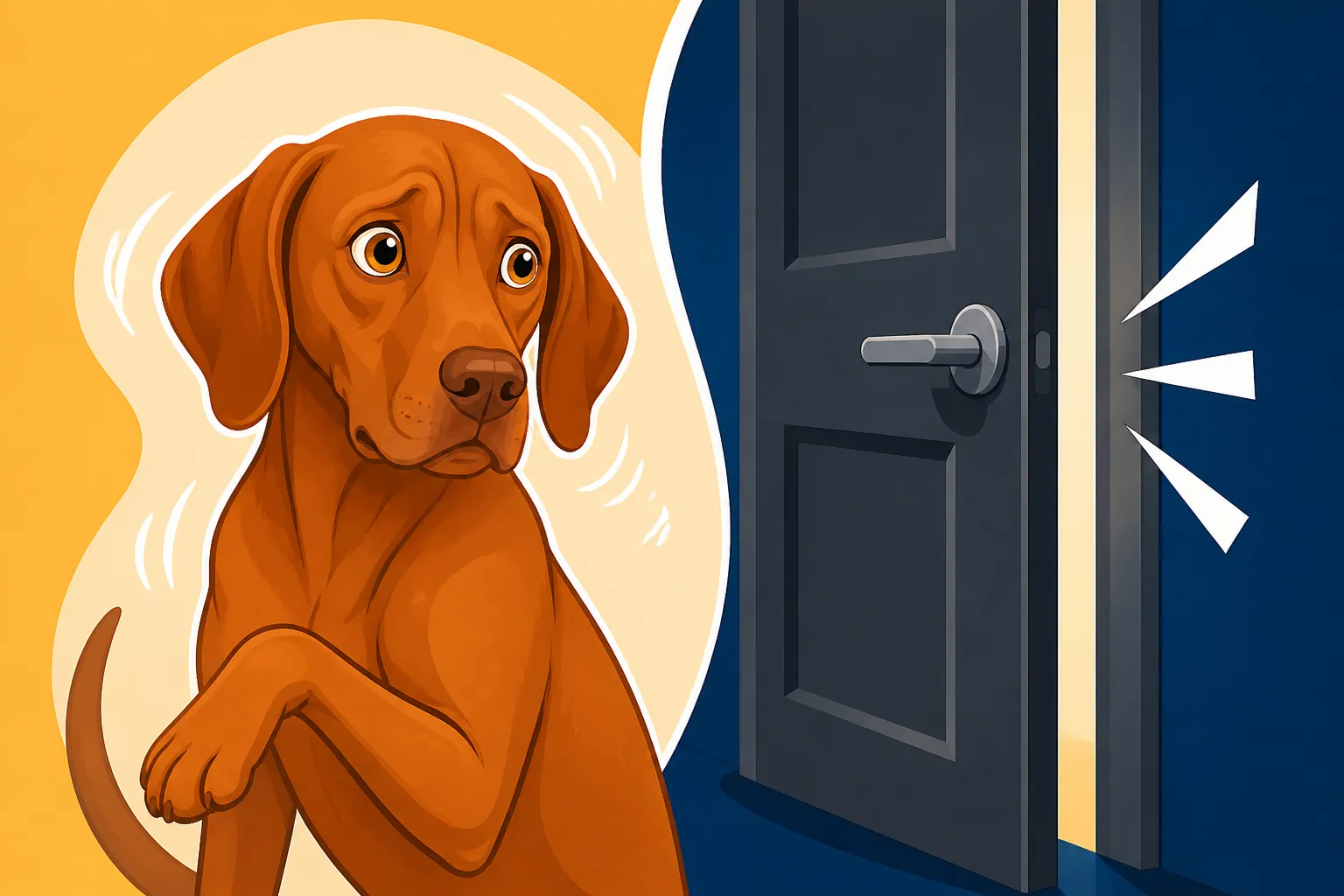
The moment that door shuts, many Vizslas will exhibit a predictable set of immediate reactions. The most common is vocalization: a persistent, mournful whine that quickly escalates to barking or even howling. This isn't just a "hello" bark; it's often a desperate, high-pitched sound aimed at getting you back. Simultaneously, you might hear frantic scratching, chewing, or digging at the door, door frame, or even the wall adjacent to the door. This is an attempt to physically breach the barrier that separates them from you.
Beyond these audible signs, a Vizsla in distress might also pant excessively, even in a cool room, indicating heightened stress. They may pace restlessly, unable to settle, or stand by the door with a worried, wide-eyed expression. If you were to observe them through a pet camera (easily found on Amazon), you might see them circle, jump on the door, or even try to squeeze under it. These behaviors are manifestations of intense fear and a feeling of being trapped or abandoned, rather than simply being unruly. It’s their primal instinct to reunite with their pack.
Escalation to Full-Blown Separation Anxiety
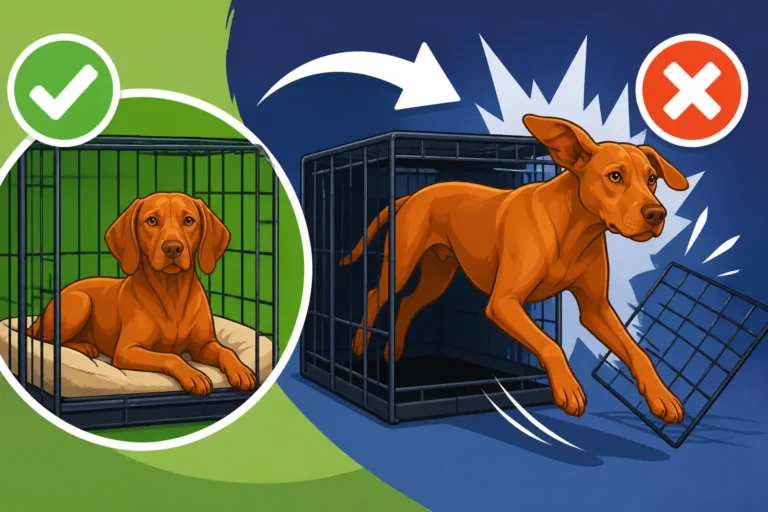
While door-related panic can sometimes be an isolated issue, it often serves as a red flag for broader separation anxiety. If left unaddressed, the dog's distress can escalate, manifesting in more severe and destructive ways whenever they are left alone, not just when a door closes. This could include complete destruction of household items, beyond just the door area, such as chewing furniture, rugs, or personal belongings. It's not uncommon for an anxious Vizsla to attempt to escape, potentially harming themselves by breaking through windows, crates, or doors.
House-soiling is another distressing symptom, where a perfectly house-trained Vizsla will urinate or defecate indoors, even shortly after being outside. This isn't out of spite; it's a physiological response to extreme stress. Some Vizslas might also engage in self-mutilation, such as excessive licking or chewing their paws until they are raw, creating painful hot spots. The emotional toll on the dog is immense, and the impact on the owner's life, from damaged property to constant worry, can be overwhelming. Recognizing that this isn't just a "door problem" but a deeper anxiety is the first step toward effective intervention. For more insight into managing these feelings, consider reading Whether a Vizsla Cries When You Leave the Room.
Impact on the Vizsla's Well-being and Household Peace
The constant cycle of anxiety and distress takes a heavy toll on your Vizsla's overall well-being. A dog that is perpetually stressed when left alone can suffer from chronic anxiety, which can affect their physical health, leading to digestive issues, a weakened immune system, and even behavioral problems that spill over into other areas of their life. Their general happiness and confidence can diminish, and they may become more clingy or insecure even when you are present.
For the household, this behavior can be incredibly disruptive. Beyond the financial cost of repairing damaged property, there's the emotional strain of dealing with a distressed pet. Neighbors might complain about incessant barking, making owners reluctant to leave their homes. The joy of Vizsla ownership can quickly be overshadowed by frustration and guilt. It's a challenging situation that can erode the bond between owner and dog if not handled with empathy and consistent training. Addressing these issues not only brings peace to your home but significantly improves your Vizsla's quality of life.
Practical Strategies for Helping Your Vizsla Cope
Helping your Vizsla overcome their fear of closed doors requires patience, consistency, and a multi-faceted approach. It's about gradually building their confidence and teaching them that separation isn't a threat.
Desensitization and Counter-Conditioning Around Doors
The core of addressing door-related anxiety lies in desensitization and counter-conditioning. This means gradually exposing your Vizsla to the door-closing action in a way that doesn't trigger panic, and then associating that action with positive experiences. Start small: simply walk to the door, touch the doorknob, and then immediately return to your dog and reward them with a high-value treat or praise. Repeat this many times over several sessions, never actually closing the door until your dog shows no reaction.
Once they are calm with you touching the knob, progress to opening and closing the door for just a second while you are still in the room. Reward calm behavior. Slowly increase the duration of the door being closed, moving from seconds to minutes, always returning before your Vizsla gets anxious and rewarding them. The key is to keep these practice sessions short and frequent, ending on a positive note. Never make a big fuss when leaving or returning; act like it's no big deal. This teaches them that the door closing is a neutral event, not a signal for impending doom. This strategy is a cornerstone of Teaching a Vizsla to Be Alone.
Creating a Safe, Positive "Alone Space"
A crucial element in managing door anxiety and broader separation issues is creating a dedicated "safe space" where your Vizsla feels secure and content when you're not physically present. This could be a comfortable crate, a dog bed in a quiet room, or a small, dog-proofed area. The space should be associated with positive things – stuffed Kongs, favorite chew toys, or calming music. The crate, if introduced properly, can be a den-like sanctuary. It's not a punishment; it's their personal retreat. Whether Crate Training Helps a Vizsla is a good resource for this.
Introduce this space gradually, never forcing your Vizsla into it. Feed meals there, offer special treats only in this spot, and ensure it's cozy and inviting. The goal is for your Vizsla to choose to go there and feel relaxed. When you do leave, even if it's just behind a closed door, make sure they have access to this safe space and high-value, long-lasting distractions. This provides them with an anchor of comfort and engagement, shifting their focus from your absence to a positive activity.
Utilizing Tools and Resources
There are many tools and resources available to support you and your Vizsla through this process. A pet camera, readily available on Amazon, can be invaluable for monitoring your Vizsla's behavior when you're gone. This allows you to gauge their anxiety levels, identify specific triggers, and know exactly when to intervene or return during training sessions. It provides objective data beyond just the sounds you hear.
Interactive puzzle toys, also widely available, can keep your Vizsla mentally stimulated and distracted. Stuffing a Kong with frozen peanut butter or cream cheese can occupy them for a good chunk of time. Calming diffusers or pheromone sprays can also help some dogs feel more at ease in their alone space. For structured guidance, online dog training platforms like BAXTER & Bella offer comprehensive courses that often include modules on separation anxiety, providing step-by-step instructions and support for owners dealing with these challenging behaviors. They can guide you through the desensitization process with expert advice.
When to Seek Professional Guidance
While many mild cases of door-related anxiety can be managed with consistent owner-led training, there are times when professional intervention is necessary. If your Vizsla is exhibiting severe signs of panic, such as self-harm, destructive escape attempts that endanger them, or prolonged, intense vocalization that doesn't improve with your efforts, it’s time to consult an expert. A certified professional dog trainer specializing in separation anxiety can provide a tailored behavior modification plan.
For very severe cases, especially those with extreme physiological signs of stress, a veterinary behaviorist might be recommended. These specialists are veterinarians who have pursued further training in animal behavior and can prescribe medication if necessary, alongside behavior modification, to help reduce your Vizsla's anxiety to a manageable level. They can assess your Vizsla holistically, considering any underlying medical conditions that might contribute to anxiety. Don't feel like a failure for seeking help; it's a responsible step towards ensuring your Vizsla's well-being.
Proactive Prevention and Long-Term Management
The best way to deal with door anxiety is often to prevent it from becoming a problem in the first place, or to consistently manage it throughout your Vizsla's life. This involves building a solid foundation of confidence and independence from an early age.
Establishing a Strong Foundation with a Puppy
For Vizsla puppies, prevention is truly better than cure. From the moment they come home, begin teaching them that being alone is a normal and even pleasant experience. Start with very short, intentional separations – just seconds in another room, gradually increasing the duration. Make sure they have a comfy, safe space, like a crate with a soft bed and a chew toy. Reward calm behavior when you return. Never make goodbyes or hellos dramatic; keep them low-key to avoid reinforcing the idea that your departure or return is a major event.
Expose your puppy to different noises and environments, fostering confidence. Puppy classes, like those recommended by BAXTER & Bella, can be excellent for building socialization skills and exposing them to new experiences in a positive way. These early experiences help them develop resilience and a robust sense of self, reducing the likelihood of intense separation distress later on. Consistent, positive reinforcement training during The First Year With a Vizsla Puppy lays the groundwork for a well-adjusted adult dog.
Consistent Routine and Predictability
Dogs thrive on routine and predictability, and Vizslas are no exception. A consistent daily schedule helps them feel secure, as they know what to expect. Establish regular times for feeding, walks, play, training sessions, and quiet time. This includes predictable "alone time" sessions, even if you are home. By routinely practicing short periods of separation, your Vizsla learns that these are part of the normal rhythm of life and that you will always return.
Varying the exact length of your absences during practice sessions also helps. Don't always leave for 5 minutes; sometimes leave for 2, sometimes for 7, sometimes for 1 minute. This prevents them from predicting your return too precisely and developing anxiety if you deviate. Consistency in your behavior, calm departures, and quiet returns reinforce that your absence is temporary and not a cause for alarm.
Ensuring Adequate Physical and Mental Stimulation
A tired Vizsla is a happy, and usually calmer, Vizsla. These intelligent, high-energy dogs need a significant amount of physical exercise and mental stimulation every single day to be well-adjusted. If a Vizsla isn't getting enough outlets for their energy, they can become restless, anxious, and prone to destructive behaviors, including those related to separation. Ensure your Vizsla gets at least The Two Hours a Vizsla Needs Before It Will Settle of vigorous exercise daily, which might include running, hiking, or field work.
Beyond physical exertion, mental stimulation is equally important. Engage them with puzzle toys, scent work, obedience training, or other canine sports. A dog whose brain is actively engaged is less likely to fixate on your absence. Before you plan to leave them alone, make sure they've had a good run and some mental games. This helps burn off excess energy and leaves them in a more relaxed state, making them more likely to settle down rather than panic when that door closes.
Here's a quick comparison of behaviors to help you distinguish:
| Behavior Aspect | Normal "Door Manners" | Anxiety-Driven "Door Panic" |
|---|---|---|
| Vocalization | Brief whine, soft sigh, maybe one "woof" then quiet | Incessant barking, high-pitched whining, howling, distressed cries |
| Physical Action | May follow you, sit by door, then lay down | Frantic scratching, digging, chewing at door/frame/walls |
| Body Language | Relaxed posture, alert but not tense | Pacing, panting, trembling, drooling, wide eyes, tucked tail |
| Duration | Short-lived, settles quickly | Prolonged, escalates, does not settle down easily |
| Self-Soothing | Able to find a toy, chew, or settle down to nap | Unable to self-soothe, frantic attempts to escape or destroy |
| Departure Cues | Observes you, but remains calm | Becomes visibly agitated, clingy, or anxious as you prepare |
Disclaimer
This article is for general informational purposes only and does not constitute professional advice. Laws, prices and regulations vary by location and change over time. Consult a qualified professional for guidance on your specific situation.