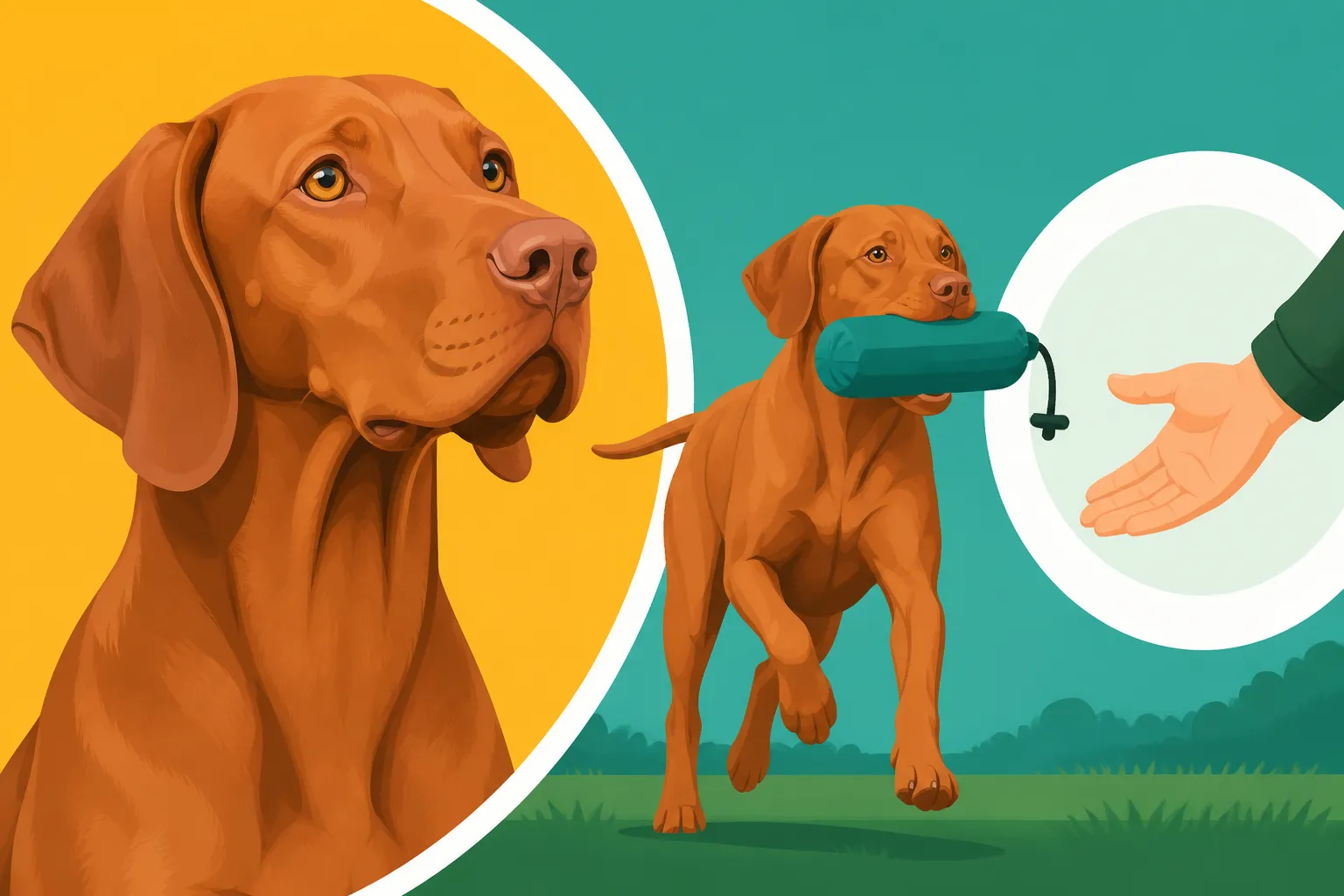
Whether a Vizsla Retrieves to Hand
One of the most common frustrations for Vizsla owners, especially those looking to hunt with their beloved dogs, is when their enthusiastic retriever brings back a prized bird or bumper, only to drop it a few feet away, initiating an exasperating game of chase. This guide is here to unravel the complexities of teaching your Vizsla a reliable "retrieve to hand," addressing the innate instincts, common pitfalls, and effective, empathetic training methods to ensure your dog proudly delivers its treasure right into your waiting grasp.
Understanding the Vizsla's Natural Retrieve Instincts
Vizslas are bird dogs through and through, bred for centuries to locate, point, and retrieve game. This means they generally have a strong natural inclination to pick things up and bring them back. However, that powerful instinct doesn't always translate directly to a polite, consistent "to hand" delivery. It's crucial to understand the difference between a natural retrieve and a trained retrieve to address any gaps in your dog's behavior.
The Vizsla's Innate Drive for Bringing Things Back
From the moment they are tiny puppies, many Vizslas show an almost obsessive fascination with picking things up. A crumpled sock, a dropped toy, a leaf – anything can become a "trophy" to be carried around. This is a foundational trait of a retrieving breed. They want to interact with objects by mouthing them and moving them. In the field, this manifests as an eager desire to pick up a fallen bird, driven by their deep hunting heritage. It's a joy to watch them confidently race out, snatch the bird, and turn back towards you, tail wagging, knowing they've done their job. This natural inclination is a huge advantage, as you're not trying to create a retrieve drive, but rather refine and direct it.
What often happens, though, is that we, as owners, inadvertently shape the retrieve into something less than perfect. When a puppy brings you a toy and drops it at your feet, we often bend down, praise them, and pick it up. This teaches them that dropping it near you is acceptable. Or, if they drop it and run away, and we chase them, we've just reinforced a fun game for them, not the desired behavior. Understanding this innate drive is the first step to harnessing it effectively; your Vizsla wants to please you and bring things to you, we just need to teach them how to do it exactly as we wish.
Why "Retrieve" Doesn't Always Mean "to Hand"
For a Vizsla, "retrieve" naturally means to go get something and return with it. The "to hand" part is a human-imposed refinement, an additional layer of manners and control that isn't inherently part of their genetic programming. Think about it from your Vizsla's perspective: they've performed the heroic feat of locating and bringing back the treasure. They're excited! They're proud! Dropping it near you might feel like a job well done, or perhaps they anticipate you reaching for it, which for some dogs can feel like a challenge or even an invitation to a playful tug-of-war.
Another factor is perceived value. If your Vizsla values the object more than your praise or the subsequent treat, they might be reluctant to relinquish it. This is particularly true with prized items like a real bird or a favorite bumper. They might want to chew it, carry it around more, or even try to keep it. The process of giving it to you, "to hand," requires trust and a clear understanding that surrendering the item is not a loss, but a pathway to even greater rewards. This is where deliberate training comes in, establishing a clear expectation and a positive exchange. This subtle distinction is often overlooked by new owners, leading to frustration when a dog who loves to retrieve doesn't quite get the final step.
Common Challenges with Instinctual Retrievers
Even with a strong natural retrieve, Vizslas can present a few common challenges when it comes to delivering to hand. One significant issue is the "keep-away" game. Your dog brings the item close, perhaps even bumps it against your legs, but as soon as you reach out, they pivot and trot just out of reach, tail wagging, inviting you to chase them. This is often an unintentionally trained behavior, developed because chasing them was, for a time, a fun game. It's a tough habit to break once established, as the dog genuinely enjoys the interaction.
Another challenge can be a lack of confidence or a history of being corrected too harshly for mouthing an object. The Soft Vizsla That Shuts Down When You Raise Your Voice is a great reference for understanding how sensitive these dogs can be. If a Vizsla has been scolded for putting teeth marks on a bumper, or if they've been roughly forced to drop an item, they might become hesitant to bring it close, fearing punishment. They might develop a "soft drop" where they just open their mouth and let it fall, rather than actively placing it in your hand. Overcoming these challenges requires patience, consistency, and a deeply positive reinforcement-based approach to rebuild trust and redefine the retrieve process as a truly rewarding experience for your dog.
Building the Foundation: Puppyhood and Early Training
Establishing a solid retrieve to hand starts much earlier than you might think, ideally during puppyhood. Laying a strong foundation with positive, engaging methods will make all the difference in achieving a reliable retrieve that your Vizsla offers willingly and proudly.
Starting Early with Play-Based Retrieving
The absolute best way to introduce retrieving is through play. Forget formal drills initially; just make it a fun game! Start with soft, easily carried objects – a rolled-up sock, a small plush toy, or a soft bumper. Toss it a very short distance, perhaps just a few feet away. When your puppy picks it up, make exciting, happy noises and encourage them to come back to you. Don't worry about "to hand" yet. Just celebrate their return. As they come closer, crouch down, open your arms, and continue to be enthusiastic. If they drop it near you, great! Pick it up, praise them lavishly, and immediately offer another toss. The key here is to build a positive association with picking up, bringing back, and the subsequent interaction with you.
As they get a bit older, you can gradually increase the distance. Use different types of soft, appropriately sized bumpers or toys. The goal is to make the entire sequence of "go get it, bring it back" a joyous, self-rewarding activity. Remember, Vizslas are incredibly smart and eager to engage. How Fast a Vizsla Learns a New Cue confirms their quick learning ability, so starting early with these positive interactions sets them up for success. You want them to think: "This is the best game ever, and my human is the best playmate!"
The Importance of a Positive and Gentle Approach
Vizslas are known for being incredibly sensitive dogs, often referred to as "Velcro Vizslas" because of their intense desire to be close to their people. This sensitivity means that harsh corrections or forceful methods can be incredibly detrimental to their training, especially for a retrieve. Instead of forcing a dog to drop an item by prying open their mouth or scolding them, focus on creating a positive association with giving it up. This means never taking something away from them without giving them something equally or more desirable in return, even if it's just lavish praise and another toss.
When your Vizsla brings an item back, your response should be a celebration. Use a happy, encouraging tone. If they hesitate to give it, avoid grabbing or reaching aggressively. Instead, offer a high-value treat right next to your hand where you want them to drop the item. As soon as they open their mouth to take the treat, gently take the retrieved item. Pair this with a clear, calm cue like "Give" or "Out." This teaches them that giving up the item leads to a reward, making the act of releasing it a positive experience rather than a coercive one. This gentle approach builds trust and confidence, essential for a dog that will reliably retrieve to hand.
Introducing the Concept of "Hold" and "Give"
Once your Vizsla is happily bringing items back, the next step is to introduce the specific concepts of "Hold" and "Give" (or "Out"). This is where you transition from a general retrieve to a precise retrieve to hand. Start with your dog sitting calmly next to you. Gently place a soft, non-descript object (like a towel or a soft bumper) in their mouth and immediately give a "Hold" command in a soft, encouraging tone. Hold your hand under their chin to support the item. Keep the duration very short, just a second or two. Then, offer a treat right at their nose, saying "Give" or "Out" as they open their mouth to take the treat and you gently remove the item. Praise enthusiastically!
Repeat this in short, frequent sessions. Gradually increase the "hold" time and reduce the reliance on your supporting hand. The key is to make "Hold" mean "keep this in your mouth gently until I tell you otherwise" and "Give" mean "release this directly into my hand for a reward." Many trainers advocate for this method, sometimes called "force-free hold," before moving on to actual retrieves. You can find excellent resources, including online platforms like BAXTER & Bella, that break down these foundational steps with positive reinforcement methods, ensuring a calm and confident learner. Once your dog understands these cues, you can incorporate them into your short, playful retrieves. When they return with the bumper, give your "Hold" command, then "Give," and reward the successful transfer.
Troubleshooting Common Retrieve to Hand Issues
Even with the best foundational training, some Vizslas will develop habits that make the retrieve to hand inconsistent. Addressing these issues early and with patience is key to developing a truly reliable retriever.
The "Drop It and Run" Game
This is perhaps the most infuriating retrieve problem: your Vizsla bolts out, snags the bumper, and proudly brings it back, only to drop it just out of reach and invite you to play chase. This behavior is almost always an accidental reinforcement. When you chased your puppy, even playfully, you taught them that dropping the item and running away leads to a fun game and attention. To fix this, you need to change the rules of the game.
First, stop chasing. When your Vizsla drops the item out of reach, turn your back, cross your arms, and become utterly boring. They thrive on your attention, so withdrawing it is a powerful message. Wait them out. They will eventually come closer, perhaps nudge the item with their nose, or even pick it up again. The moment they pick it up or move closer with the item, re-engage with soft, encouraging praise. Lure them the last few steps to your hand with a high-value treat, if necessary, and immediately reward the retrieve to hand.
Another tactic is to use a long line. If you're practicing in a distraction-free area, put your dog on a very long lead. When they drop the item and try to run, simply reel them gently in. This prevents the "run away" part of the game. You're physically preventing the escape, making the only option to come to you. Once they are at your side, practice your "Hold" and "Give" commands. It takes consistency, but by removing the reward (the chase) and making the desired behavior (coming to hand) the only option, you can retrain this behavior. Remember, your Vizsla isn't trying to be naughty; they're just doing what has worked for them in the past.
The "Soft Mouth" vs. "Hard Mouth" Dilemma
Retrieving involves using the mouth, and how a Vizsla carries an object can vary. A "soft mouth" is highly desirable – it means the dog carries the item gently without damaging it. A "hard mouth," on the other hand, means the dog bites down too hard, crushing or puncturing the retrieved object. This is a significant issue for hunters, as a damaged bird is unacceptable. While Vizslas are generally known for their natural soft mouths, sometimes poor training or anxiety can lead to a harder grip. If a dog feels insecure about giving up an item, they might clamp down on it defensively.
To encourage a soft mouth, always start with objects that are pleasant to carry and won't be easily damaged. Avoid hard plastic. If you notice your Vizsla gripping too hard, gently remind them with a calm "Easy" or "Soft." Never scold or yank the item, as this can make them clamp down harder. Instead, practice the "Hold" command extensively with various objects, always rewarding for a gentle, steady grip. If they chew, say "No," remove the item, wait a moment, and try again, rewarding for non-chewing.
The opposite extreme is a dog that's too soft, almost dainty, with their retrieve, often dropping it too early. This can stem from being corrected too often for mouthing. In this case, you need to rebuild confidence. Make retrieving incredibly fun and stress-free. Use lightweight, enticing items. Reward generously for simply picking up and carrying, gradually moving towards holding it all the way to hand. Sometimes, a dog is just too excited and loses control of their mouth. In these cases, consistent "Hold" training, focusing on calm, deliberate carrying, is crucial.
Distractions and Environmental Factors
A perfect retrieve in your living room might fall apart the moment you step into a busy park or, even more so, a field full of stimulating scents and sounds. Distractions are a massive hurdle for any trained behavior, and retrieve to hand is no exception. A Vizsla's instincts kick in powerfully in a hunting environment. Whether a Vizsla Comes Back Off Game highlights the challenge of recall when game is present, and delivering to hand can be similarly affected.
To proof your retrieve to hand against distractions, you need to train in progressively more distracting environments. Start in a quiet room, then move to a quiet yard, then a park during off-peak hours, and finally, a field. Introduce distractions gradually: another person walking by, another dog at a distance, light sounds, then stronger sounds. Always ensure you have a highly rewarding treat or toy that outweighs the distraction. If your Vizsla struggles, reduce the distraction level and build back up.
For field work, it's particularly important to build value for delivering to hand. The bird itself is a huge reward for them, so delivering it to you should be even more rewarding. This means combining the joy of the retrieve with super high-value treats and enthusiastic praise at the moment they release the bird into your hand. Consistency is critical; every retrieve, whether it's a dummy or a bird, should end with a clean retrieve to hand, especially in a hunting context where precision matters.
Advanced Retrieve to Hand Techniques
Once your Vizsla has a solid understanding of basic retrieve and "hold" commands, you can begin to refine their retrieve to hand with more advanced techniques, including introducing them to different types of retrieves and environments.
Force Fetch: A Detailed Look (and why it's a last resort for Vizslas)
Force fetch, sometimes called "conditioned retrieve," is a traditional gun dog training method designed to make the retrieve non-negotiable. It involves teaching the dog to pick up, hold, and deliver an object under mild pressure, ensuring a consistent and reliable retrieve even under challenging conditions. Typically, it starts with ear pinch or toe hitch pressure, applying discomfort until the dog picks up the object, then releasing the pressure. The process continues to teach holding and delivering to hand using similar pressure-release techniques.
While highly effective for creating a reliable retrieve, force fetch is a controversial method, especially for sensitive breeds like Vizslas. The premise is to create a conditioned response, not necessarily a joyful one. For a The Soft Vizsla That Shuts Down When You Raise Your Voice, this method can be emotionally damaging, potentially leading to a dog that retrieves out of fear of discomfort rather than a desire to please or inherent joy. Many Vizsla owners and trainers find that positive reinforcement alone is sufficient to build a reliable retrieve, as Vizslas are so eager to work with their people.
Therefore, for most Vizsla owners, force fetch should be considered a last resort, if at all, and only performed by an experienced professional trainer who understands the nuances of working with a highly sensitive breed. The goal with a Vizsla should always be to cultivate a retrieve that is enthusiastic and willing, not merely compliant. If you are considering this method, make sure you thoroughly research the trainer's approach and observe their methods firsthand.
Using Different Objects and Environments
To truly proof your Vizsla's retrieve to hand, you need to generalize the behavior across a wide range of objects and environments. Don't just stick to one type of bumper in the yard. Start introducing variations once your dog is consistent. Use different textures: plastic bumpers, canvas dummies, soft plush toys, even cold, wet items like a damp bird dummy. Introduce varying sizes and weights, ensuring they are always comfortable for your Vizsla to carry without causing them to chew or drop prematurely.
Practice in diverse locations: your home, your yard, a local park, a field with varying cover (short grass, tall grass, light brush), and even water if your Vizsla enjoys swimming. Whether a Vizsla Works Water is an important consideration here, as retrieving from water introduces unique challenges like cold temperatures and the added effort of swimming. The more varied the training scenarios, the more robust and reliable your Vizsla's retrieve to hand will become, regardless of the real-world conditions. Always remember to maintain the high value of the reward for a clean retrieve to hand, making it the most desirable outcome in any situation.
Consistency and Proofing the Retrieve
Consistency is the bedrock of any successful training, and retrieve to hand is no different. Every single time you ask your Vizsla to retrieve, whether it's a dropped sock or a bumper in the field, the expectation should be the same: a clean retrieve to hand. If you sometimes allow them to drop it at your feet or play keep-away, you're muddying the waters and making it harder for them to understand the precise behavior you want.
Proofing the retrieve means practicing it under all sorts of conditions until it's second nature. This includes:
- Varying distractions: As discussed, gradually increase the presence of other people, dogs, sounds, and scents.
- Varying distances: Start short and slowly extend the retrieve distance.
- Varying handlers: Have other trusted family members or friends practice the retrieve with your Vizsla, ensuring the dog understands the command applies universally.
- Introducing "blind" retrieves: Once skilled, teach your Vizsla to retrieve objects they haven't seen fall, relying solely on your direction.
A consistent routine, where every retrieve ends with a clear "Hold," "Give," and reward, will solidify the behavior. What a Vizsla Needs Every Day includes mental stimulation, and consistent training in specific tasks like retrieve to hand is a fantastic way to provide that. It’s not just about getting the bird back, it’s about refining communication and building an unbreakable bond of trust and understanding.
Tools and Resources to Aid Training
Successful retrieve to hand training can be greatly enhanced by using the right tools and seeking appropriate guidance. From physical aids to expert advice, there are many resources available to help you and your Vizsla succeed.
Essential Training Aids for Retrieve Work
Having the right equipment can make a significant difference in your retrieve training.
- Bumpers and Dummies: These are essential. Start with soft, lightweight rubber or canvas bumpers. As your Vizsla progresses, you can introduce different colors, textures, and even scented dummies to simulate real game. Look for durable options from places like Amazon, where you can find a wide variety. Having several allows for quick succession retrieves, keeping your Vizsla engaged.
- Long Lines: As mentioned earlier, a long line (15-30 feet) can be invaluable for preventing the "drop and run" game and for practicing recall during retrieves in open spaces. It allows you to maintain control without chasing.
- Whistle: A whistle can be a powerful communication tool for recall during retrieves, especially in the field where your voice might not carry. Building a Recall on a Vizsla That Ranges is a testament to the importance of a reliable recall, and a whistle can be a key part of that.
- High-Value Treats: Keep a supply of your Vizsla's absolute favorite treats on hand. These are crucial for rewarding that perfect "retrieve to hand" and making it the most desirable outcome.
- Training Vest/Pouch: A vest or pouch helps you carry treats, bumpers, and a whistle easily, making spontaneous training sessions convenient.
Choosing quality tools that are safe and effective for your Vizsla is paramount. Avoid anything that could injure their mouth or discourage their natural retrieving instincts.
Online Programs and Professional Help
For many Vizsla owners, an online training program can provide structured guidance and support. Platforms like BAXTER & Bella offer comprehensive online puppy and dog training programs that cover foundational behaviors, including retrieve work, using positive reinforcement methods. These programs often include video tutorials, live Q&A sessions, and a community of fellow dog owners, which can be incredibly helpful for troubleshooting and staying motivated. The flexibility of online learning means you can work at your own pace from home, which is ideal for a sensitive breed like the Vizsla.
However, sometimes you might hit a wall, or you might be aiming for high-level field performance. In these cases, working with a professional dog trainer, particularly one specializing in gun dog training for Vizslas, can be invaluable. A good trainer can observe your dog's specific behaviors, identify nuanced issues, and provide personalized coaching. They can introduce concepts like Starting a Vizsla on Birds safely and effectively, and help refine your retrieve to hand in real-world hunting scenarios. When seeking a trainer, look for someone who uses positive, force-free methods first, understands the Vizsla temperament, and can demonstrate results with similar breeds.
Maintaining the Retrieve to Hand for Life
A reliable retrieve to hand isn't a "one-and-done" training task; it's a skill that needs to be maintained throughout your Vizsla's life. Regular, short practice sessions are key to keeping the behavior sharp. Even if your Vizsla is an experienced retriever, occasional refreshers with a bumper or toy will reinforce the habit. This is especially true if they spend time away from regular retrieving, such as during the off-season.
Continue to make retrieving fun and rewarding. Don't let it become a chore. Vary your locations, objects, and incorporate it into other games. The more positively associated retrieving is with you, the stronger the bond and the more enthusiastic their deliveries will be. As your Vizsla ages, their enthusiasm might wane slightly, or their physical capabilities might change. The Old Vizsla That Still Wants to Hunt reminds us that even older Vizslas still have that drive, but training might need to be adjusted. You might need to use softer objects, shorter distances, or be even more generous with your praise and rewards. Maintaining that reliable retrieve to hand is a testament to the enduring partnership you share with your Vizsla, a bond built on trust, clear communication, and shared joy.
| Retrieve to Hand Training Stages | Key Actions | Common Challenges | Vizsla Specific Considerations |
|---|---|---|---|
| 1. Foundation (Puppyhood) | Play-based retrieves, short tosses, enthusiastic praise | Dropping early, getting distracted easily | Leverage natural drive, gentle approach needed |
| 2. Core Commands | Introduce "Hold" and "Give" with positive reinforcement | Reluctance to release, chewing | Sensitive to harsh corrections, reward focused |
| 3. Generalization | Practice in various environments, with different objects | Distractions, "drop & run" game | Build confidence slowly in new settings |
| 4. Proofing | Introduce controlled distractions, increase distance | Inconsistency under pressure, ignoring cues | Keep sessions positive, high-value rewards |
| 5. Maintenance | Regular, short practice sessions, keep it fun | Skill degradation over time | Adapt for age/physical changes, positive reinforcement is always key |
Disclaimer
This article is for general informational purposes only and does not constitute professional advice. Laws, prices and regulations vary by location and change over time. Consult a qualified professional for guidance on your specific situation.