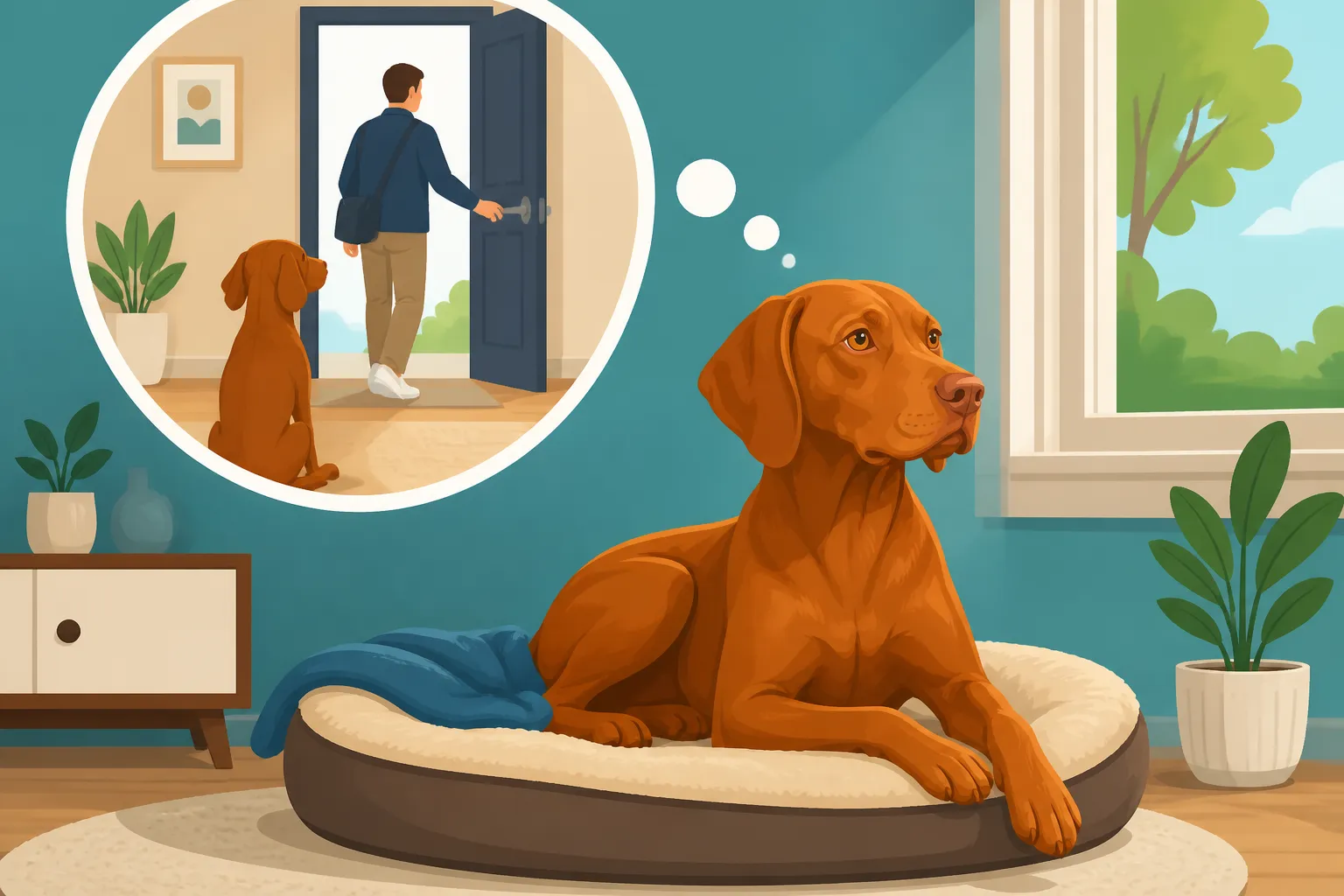
Teaching a Vizsla to Be Alone
One of the most heartwarming, yet sometimes frustrating, traits of our beloved Vizslas is their intense need for companionship. We often call them "Velcro Vizslas" for a reason – they want to be with you, on you, or at least in the same room as you, at all times. This beautiful bond, however, can quickly turn into a significant challenge when you need to leave them alone, leading to barking, destruction, and heartbreaking displays of distress. This comprehensive guide is here to walk you through practical, empathetic strategies to teach your Vizsla to be comfortable and confident when left to their own devices, ensuring peace for both of you.
Understanding the Vizsla's Need for Companionship
It's easy to dismiss a dog's distress when left alone as "being naughty" or "just needing to get over it," but with a Vizsla, it's often a deep-seated instinctual need that manifests as genuine anxiety. Understanding this is the first step toward helping them.
The "Velcro Vizsla" Phenomenon
If you own a Vizsla, you know exactly what I'm talking about. They aren't just affectionate; they're practically an extension of your shadow. You move, they move. You sit, they want to be on your lap, or at least pressed firmly against your side. This isn't just a cute quirk; it's deeply ingrained in the breed's history and temperament. Vizslas were originally bred as close-working hunting dogs in Hungary, meant to stay within sight and easy reach of their human handler, forming an incredibly tight bond. They weren't kennel dogs; they were family dogs, sleeping by their owner's side.
This historical role has created a genetic predisposition for intense attachment. Your Vizsla isn't trying to manipulate you when they follow you from room to room, even to the bathroom; they're simply fulfilling their innate need to be near their primary companion. This can be incredibly endearing and one of the reasons we adore the breed so much. They're constantly seeking connection, physical touch, and reassurance, which makes them fantastic, loving family members.
However, this intensity of connection also means they can struggle profoundly when that connection is broken, even for short periods. They don't just miss you; they can genuinely feel lost and insecure without your presence. It's a double-edged sword: the very trait that makes them such devoted companions can also make alone time a significant hurdle. Why They Call It a Velcro Vizsla delves deeper into this unique bond.
The Impact of Separation Anxiety
When a Vizsla struggles with being alone, it's often more than just a bit of boredom or protest; it can escalate into full-blown separation anxiety. This isn't a deliberate act of defiance; it's a panic attack for a dog. Imagine feeling utterly abandoned and unsafe, with no way to understand when or if your most important connection will return. That's what true separation anxiety can feel like for them.
The symptoms can range from subtle to utterly destructive. You might come home to chewed furniture, scratched doors, urine or feces on the floor even if they're house-trained, or neighbors complaining about incessant barking or howling. Some Vizslas will even resort to self-harm, licking or chewing their paws raw, or trying to escape their crate or home with such force that they injure themselves. These are not signs of a "bad dog," but rather a dog in profound distress, desperately trying to cope with an unbearable situation. Signs a Vizsla Is Suffering Alone provides more details on identifying these critical signals.
Recognizing separation anxiety as a genuine welfare issue, rather than a behavioral problem stemming from disobedience, is crucial for addressing it effectively. Punishment only increases their anxiety and damages your bond, making the problem worse. Our goal isn't to make them "tougher," but to help them feel safe and secure, even when you're not physically present.
Why Alone Time is Crucial
While your Vizsla might prefer to be surgically attached to you, teaching them to comfortably tolerate alone time is not just for your convenience; it's vital for their emotional well-being and independence. A dog that cannot cope with being left alone is a dog that lives in a constant state of low-grade stress or outright panic whenever you're out of sight. This constant emotional turmoil can take a serious toll on their overall health and happiness.
Learning to be alone fosters self-soothing skills and builds resilience. It teaches them that your departures are temporary, predictable, and not something to fear. It gives them confidence in their ability to handle absence. For you, the owner, it means freedom from guilt and the ability to live your life without constant worry about your dog's state. It prevents the escalation of destructive behaviors that can damage your home and strain your relationship.
Ultimately, a Vizsla that is comfortable alone is a more balanced, secure dog. It allows them to relax and truly rest when you're gone, rather than spending hours in a hyper-vigilant state of distress. It ensures that your deep bond remains positive, rather than being overshadowed by the anxieties associated with your inevitable absences.
Laying the Foundation: Early Training and Management
Building a Vizsla's ability to be alone successfully starts long before you ever walk out the door for an extended period. It's about proactive training, managing their environment, and ensuring their fundamental needs are met.
Crate Training for Comfort and Security
For many Vizslas, a well-introduced crate becomes their safe haven, their personal den where they can feel secure when left alone. It's important to view the crate not as a jail, but as a cozy bedroom. The goal is to make it a positive, inviting space, not a place associated with punishment or fear. Whether Crate Training Helps a Vizsla explains the nuances of this approach.
Start by making the crate irresistible. Put soft bedding, favorite toys, and high-value treats inside. Feed meals in the crate, with the door open. Let them explore it at their leisure. Once they're comfortable going in, begin short periods with the door closed while you are still in the room. Give them a special chew toy or a stuffed Kong. As they calmly chew, gradually increase the time, always releasing them before they start to fuss. If they cry, wait for a brief lull in the noise before opening the door, so you're not rewarding the vocalization.
The crate serves several purposes. It prevents destructive behaviors by limiting access to household items, keeping both your home and your Vizsla safe. It aids in house-training, as most dogs won't soil their sleeping space. Most importantly, it provides a consistent, predictable environment, a safe sanctuary that remains the same even when you're not there. This predictability is calming for an anxious dog.
Building Independence from Day One
The "Velcro" tendency can begin early, and it's easy to inadvertently reinforce it with a cute puppy. While snuggles are wonderful, it's important to gently encourage independence right from the start. This doesn't mean ignoring your puppy, but rather teaching them that it's okay, and even good, to not always be in physical contact with you.
For puppies, this might mean having them play in a designated puppy-proofed area or a playpen while you're in the same room but not directly interacting. Give them toys to explore independently. Periodically, move out of their sight for a few seconds – just stepping behind a door or into another room – and then return calmly. Don't make a big deal out of leaving or returning. The idea is to normalize your comings and goings, showing them that you always come back.
Avoid the habit of always holding or touching your Vizsla whenever they seek attention. Sometimes, a gentle pat and then redirecting them to a toy or a comfortable bed nearby can help them learn to settle independently. These small, consistent efforts build a foundation of confidence that makes structured alone time training much smoother later on.
The Role of Exercise and Mental Stimulation
Let's be real: a tired Vizsla is a well-behaved Vizsla. These dogs are athletes, bred for endurance and mental acuity. If they're under-exercised, physically or mentally, they will have a surplus of energy and a frustrated mind that will likely manifest in unwanted behaviors, including anxiety when left alone. Think of it this way: if you're buzzing with unspent energy and then suddenly confined, you'd likely feel agitated too.
Before you even think about leaving your Vizsla alone, ensure they've had a substantial workout. This means more than a leisurely walk around the block. Vizslas need at least two hours of vigorous exercise daily, which could include running, hiking, off-leash romps in a secure area, or swimming. The Two Hours a Vizsla Needs Before It Will Settle is a good resource here. The physical exertion helps to burn off excess energy and releases endorphins, promoting a sense of calm and well-being.
Beyond physical exercise, mental stimulation is equally critical. Engage their intelligent minds with puzzle toys, scent work games (hiding treats for them to find), or short training sessions. A busy brain is a happy brain, and mental work can be just as tiring as physical activity. Providing a mentally engaging activity immediately before you leave can help them transition into alone time more easily, giving them something positive to focus on rather than your departure.
Gradual Desensitization Strategies
This is the core of teaching your Vizsla to be alone: gradually exposing them to your absence in a controlled way, ensuring they always have a positive or neutral experience, and never pushing them past their threshold for anxiety.
Practicing Departures and Arrivals
One of the biggest mistakes we make as dog owners is creating a huge production out of leaving and coming home. We give lengthy, emotional goodbyes, filling our dogs with anticipation and then guilt. Then we come home to an overjoyed dog and reward that excitement with an equally effusive greeting. This inadvertently teaches them that your departure is a big, stressful event and your return is an equally big, exciting, and emotional relief.
Instead, aim for neutrality. Practice making your departures incredibly low-key. Gather your keys, grab your bag, put on your shoes – all the cues that signal you're leaving – but don't actually leave. Do this repeatedly throughout the day. Pick up your keys, walk to the door, put them down, and sit back on the sofa. This desensitizes them to these "departure cues," making them less predictive of your actual absence. When you do leave, just go. Don't say goodbye, don't make eye contact. Just walk out the door calmly.
Similarly, when you arrive home, ignore your Vizsla for the first few minutes. Resist the urge to greet them until they've settled down and are calm. Once they're quiet and relaxed, then you can offer a calm, gentle greeting. This teaches them that your return is not a frantic celebration, but a normal, predictable event that happens when they are settled. This process helps to defuse the high emotional charge around your comings and goings.
Short, Controlled Absences
This is where you truly start building tolerance for alone time, step by tiny step. The key is to start incredibly small and always return before your Vizsla shows signs of anxiety. For this, a pet camera can be a game-changer. An Amazon Basics pet camera, or any similar affordable option, can allow you to monitor your Vizsla's behavior remotely, giving you crucial insight into when they start to get anxious.
Begin by leaving for literally a few seconds. Put your Vizsla in their designated safe space (crate or puppy-proofed room) with a high-value chew, walk out the door, close it, count to five, and come back in. If they were calm, great! Next time, try ten seconds. If they showed any signs of distress (whining, pacing, barking), you went too far, too fast. Shorten the duration for the next attempt. The goal is to set them up for success every single time.
As you gradually increase the duration, mix things up. Don't just go from 10 seconds to 20, then 30. Try 15 seconds, then 5 seconds, then 30 seconds. This prevents them from learning a pattern and anticipating exactly when you'll return, helping to build genuine confidence. This process can be slow, sometimes agonizingly so, but patience is your best friend here. It's about quality over quantity; many short, successful alone times are far more beneficial than one long, traumatic one. How Many Hours a Vizsla Can Be Left Alone gives more insight into achievable durations.
Increasing Duration and Variability
Once your Vizsla is consistently comfortable with short absences (up to 15-20 minutes) while you're still nearby, you can start to gradually increase the duration and introduce more variability into your departures. This means not just leaving the house, but also simply going to another room for extended periods, or stepping outside for a quick chore.
Continue to use your pet camera to monitor. When you increase the time, do so in small increments – 5 to 10 minutes at a time. The moment you see any pre-anxiety behaviors on the camera (pacing, sighing, starting to look restless), make a mental note, and aim to return before full-blown anxiety takes hold. The next time, reduce the duration slightly so they succeed again. This method is called "working below threshold."
Vary the context of your departures. Sometimes leave for errands, sometimes just step out to grab the mail, sometimes go to the gym. The more diverse and unpredictable your absences are, the more your Vizsla learns that all departures are temporary and manageable. This also means you don't always need to leave them with a high-value treat if they are truly comfortable, but in the early stages, it's a fantastic aid. Consistency in your calm departures and neutral arrivals remains paramount throughout this process.
Tools and Resources to Aid Alone Time
Even with the best training strategies, some additional tools and resources can make a significant difference in helping your Vizsla feel more secure and content during your absence.
Interactive Toys and Chews
When you leave your Vizsla alone, especially during the initial training phases, providing appropriate and engaging enrichment is vital. This redirects their energy and focus away from your departure and onto something positive and distracting. Long-lasting chews are fantastic for this purpose. Think sturdy bully sticks, Himalayan dog chews, or even a raw bone (if your vet approves and you supervise initially). Always choose chews appropriate for your dog's size and chewing style to prevent choking hazards.
Interactive puzzle toys are another excellent resource. These require your Vizsla to engage their brain to get a reward. Kongs, particularly when stuffed with wet dog food, peanut butter (check ingredients for xylitol!), or yogurt and then frozen, can keep a Vizsla occupied for a significant amount of time. Lick mats, smeared with a tasty treat, also offer a calming, prolonged activity. The act of licking is naturally soothing for dogs, helping to reduce stress. Rotate these toys to keep them novel and exciting. Always introduce new toys while you're home to ensure they are safe and your dog knows how to use them.
These tools serve a dual purpose: they provide mental and physical engagement, and they associate your departure with a positive experience. They learn that "you leaving" means "I get this awesome thing to do!" This shifts their emotional response from dread to anticipation.
Calming Aids and Environmental Enrichment
Beyond physical items, creating a calming environment can significantly impact your Vizsla's ability to settle alone. Pheromone diffusers, such as those that emit dog-appeasing pheromones, can sometimes help create a sense of security. These are odorless to humans but can have a calming effect on some dogs, mimicking the pheromones a mother dog releases to soothe her puppies.
Consider using calming music specifically designed for dogs, or simply white noise or a fan to muffle outside sounds that might trigger anxiety. A quiet, consistent soundscape can be much more relaxing than sudden, unpredictable noises from outside. Providing a comfort item, like your old unwashed T-shirt, can also offer a sense of your presence through smell.
Ensure their safe space is truly comfortable and den-like. This might mean covering part of their crate with a blanket to make it feel more enclosed and secure. A comfortable, supportive bed is also key, especially for a breed as prone to joint issues as the Vizsla. The more inviting and reassuring their environment is, the more likely they are to relax when you're gone. Whether a Vizsla Panics When You Shut a Door details the need for a truly secure space.
The Value of Online Training Programs
Sometimes, despite your best efforts, the path to alone-time confidence feels overwhelming, or you hit a plateau. This is where structured online training programs can be incredibly beneficial. They offer expert guidance, step-by-step instructions, and often a supportive community to help you navigate the complexities of separation anxiety.
Programs like those offered by BAXTER & Bella provide comprehensive, force-free training methods that can be adapted to your Vizsla's specific needs. They often break down complex behaviors into manageable steps, focusing on positive reinforcement and building confidence. These types of programs can guide you through the desensitization process, offer troubleshooting tips, and help you understand the subtle cues your dog is giving you.
The advantage of an online program is flexibility and the ability to learn at your own pace. You can revisit lessons, access resources whenever you need them, and often get direct feedback from certified trainers. This kind of structured support can be invaluable, especially for issues like separation anxiety that require a very systematic and patient approach. It's like having a professional trainer in your pocket, helping you implement effective strategies without constant in-person appointments.
Addressing Common Challenges and Setbacks
Even with a thoughtful plan, you're bound to encounter bumps in the road. It's important to know how to respond to setbacks without losing hope or damaging your Vizsla's progress.
What to Do if Your Vizsla Panics
Despite your careful planning, there will be times when you return home or check your camera to find your Vizsla in a state of panic. Maybe they whined the entire time, or perhaps they started chewing something inappropriate. The absolute most important thing to remember in these moments is: never punish anxiety. Your Vizsla is not being "bad"; they are in distress. Punishment will only increase their fear and confusion, making them more anxious about being left alone, and possibly even more anxious about your return.
If you observe panic, it means you pushed them past their threshold too quickly. The immediate action is to revert to shorter durations for your next few training sessions. Go back to a point where they were consistently successful and comfortable, even if it feels like a step backward. This isn't a failure; it's vital information. It tells you exactly where your Vizsla's current comfort level lies, and you need to respect that.
After reverting, take a moment to assess the situation. Were they adequately exercised before you left? Did they have a high-value chew? Was anything in the environment different? Sometimes a small change, like a new noise outside or a different routine, can throw them off. If panic is persistent despite your best efforts, it's a strong signal that you need external help, which we'll discuss next.
Managing Destructive Behavior and Noise
Coming home to a chewed-up sofa or angry notes from neighbors about incessant barking is incredibly frustrating. However, these behaviors are almost always symptoms of underlying anxiety, boredom, or unfulfilled needs, rather than spite. Understanding the root cause is key to effective management. What an Anxious Vizsla Destroys goes into more depth on this.
Prevention is the first line of defense. Ensure your Vizsla is physically exhausted and mentally stimulated before you leave. Provide safe, engaging chew toys and puzzles that they are excited about. If using a crate, ensure it's secure, comfortable, and that your Vizsla is genuinely happy to be in it. If they are prone to destruction, a sturdy, escape-proof crate designed for powerful chewers might be necessary.
For barking and howling, consider white noise machines or a radio tuned to a talk show (voices can be calming). You might also try a dog camera that allows for two-way audio, so you can calmly speak to them if you see them starting to vocalize, though this should be used sparingly as a temporary measure, not a long-term solution. The ultimate goal is to remove the underlying anxiety that causes the destructive behavior and noise, rather than just suppressing the symptoms.
When to Seek Professional Help
There are certainly times when your Vizsla's anxiety is beyond what you can reasonably manage on your own. If your Vizsla exhibits severe signs of separation anxiety – such as self-mutilation, extreme and prolonged vocalization, attempts to escape causing injury, or house soiling even after thorough training – it's definitely time to bring in the professionals.
Your first stop should be your veterinarian. They can rule out any underlying medical conditions that might be contributing to the anxiety. In some severe cases, medication might be prescribed as an adjunct to behavioral modification training. This isn't a "cure-all" but can help to lower your Vizsla's overall anxiety levels enough for them to be receptive to training. Think of it as taking the edge off their panic so they can actually learn.
Beyond your vet, seek out a Certified Professional Dog Trainer (CPDT-KA) specializing in separation anxiety, or ideally, a Veterinary Behaviorist (DACVB). These professionals have specialized knowledge and experience in diagnosing and treating complex behavioral issues like separation anxiety. They can develop a tailored training plan, identify triggers you might have missed, and provide ongoing support and adjustments as needed. Don't be afraid or ashamed to ask for help; separation anxiety is a challenging condition, and professional guidance dramatically increases the chances of success.
Long-Term Management for a Confident Vizsla
Teaching your Vizsla to be alone isn't a one-and-done process. It's an ongoing commitment to consistency, meeting their needs, and adapting as they grow and change throughout their lives.
Consistency is Key
Just like with any training, consistency is the bedrock of success when it comes to alone time. Every interaction, every departure, every arrival contributes to your Vizsla's understanding and emotional state. Sporadic training or inconsistent responses will only confuse them and undermine the confidence you've worked so hard to build.
This means continuing to practice your low-key departures and neutral arrivals, even when you're just stepping out for a few minutes. It means occasionally leaving your Vizsla alone for short periods even when you don't have to, just to reinforce their comfort and independence. If you only ever leave them alone when it's absolutely necessary and you're feeling stressed, they will pick up on that emotional energy.
Maintain a predictable routine as much as possible, especially around exercise, feeding, and alone time. Predictability creates a sense of security for dogs. While life happens, striving for a consistent rhythm helps your Vizsla feel grounded and understand what to expect, reducing anticipatory anxiety. The more consistent you are, the more ingrained their comfort with alone time will become.
Ongoing Exercise and Mental Engagement
I'm going to sound like a broken record here, but it bears repeating: for a Vizsla, exercise and mental engagement are non-negotiable, not just during puppyhood or when dealing with anxiety, but for their entire lives. A Vizsla's drive and energy levels don't magically disappear as they mature. If anything, they become more adept at finding "jobs" for themselves if you don't provide them, and those jobs are often not what you want (like redecorating your couch with their teeth).
Continue to provide those two hours of vigorous daily exercise. The Exercise a Vizsla Needs Every Day is your reminder. Think beyond just walks; incorporate running, fetch, swimming, or even dog sports like agility or canicross. These activities are essential for both their physical health and their mental equilibrium. A Vizsla that is regularly challenged and exhausted in a positive way is much more likely to be a calm, content companion at home, whether you're there or not.
Regularly introduce new puzzle toys, practice new tricks, or engage in scent games. Keeping their intelligent minds occupied prevents boredom, which is a significant precursor to destructive behavior and anxiety. Think of it as preventative medicine for behavioral issues. A truly happy Vizsla is one whose natural instincts and energy levels are consistently met.
Adjusting as Your Vizsla Ages
Life changes, and so do dogs. Just because your Vizsla mastered alone time as a young adult doesn't mean the work is over forever. Separation anxiety can sometimes re-emerge later in life due to various factors. A change in routine (e.g., you start a new job with different hours), a move to a new home, the loss of a human or animal companion, or even age-related cognitive decline or physical discomfort can trigger old anxieties.
As your Vizsla enters their senior years, their needs will shift. An old Vizsla might not be able to run for two hours, but they still need mental stimulation and gentle exercise. Their tolerance for cold might decrease, or new aches and pains might make their usual sleeping spot uncomfortable. The Old Vizsla That Still Wants to Hunt highlights how their drive persists, but their physical capacity changes. These physical changes can make them feel more vulnerable and lead to increased clinginess or anxiety.
Be observant of any changes in behavior. If an older Vizsla who was once fine alone suddenly starts showing signs of distress, rule out medical issues with your vet first. Then, be prepared to revisit your training strategies, possibly reducing alone time initially, revamping their comfort zone, or trying new calming aids. The goal is always to meet them where they are and provide the support they need to feel safe and secure throughout their entire lives.
Comparing Mild Boredom vs. Separation Anxiety
It's crucial to differentiate between a Vizsla who is simply bored and might chew something out of mischief, versus one suffering from genuine separation anxiety. Their behaviors can sometimes overlap, but understanding the underlying motivation changes your approach dramatically.
| Behavior Category | Signs of Mild Boredom / Puppy Mischief | Signs of True Separation Anxiety (Panic) |
|---|---|---|
| Destructive Chewing | Targets items with interesting textures, easily accessible items (shoes, toys). Occurs sporadically. | Focuses on escape routes (door frames, windows, crates), owner's items (clothing). Often severe, consistent. |
| Vocalization | Occasional barks at external stimuli (mailman, squirrel), brief whining. Stops if no response. | Persistent, high-pitched howling, frantic barking, crying. Continues until owner returns or exhausts self. |
| House Soiling | Accidental (not fully house-trained), sometimes protest peeing on an item when bored. | Urinates/defecates even if recently relieved, usually in a specific spot. Often accompanied by other anxiety signs. |
| Self-Harm | None, or minor nipping at paws if bored. | Licking/chewing paws until raw, scratching face/body, breaking teeth trying to escape. |
| Body Language | Relaxed posture, might pace a bit, then settle. Happy greetings upon return. | Pacing, panting, drooling, trembling, hyper-vigilance, dilated pupils. Frantic, uncontrolled greetings. |
| Timing of Behavior | Can occur at any time, even with owner present, if bored. | Almost exclusively begins immediately after owner leaves, or when owner is preparing to leave. |
| Response to Departure | May watch you leave, then find something to do. | Panics when owner shows cues of leaving (keys, coat), tries to block exit. |
Disclaimer
This article is for general informational purposes only and does not constitute professional advice. Laws, prices and regulations vary by location and change over time. Consult a qualified professional for guidance on your specific situation.