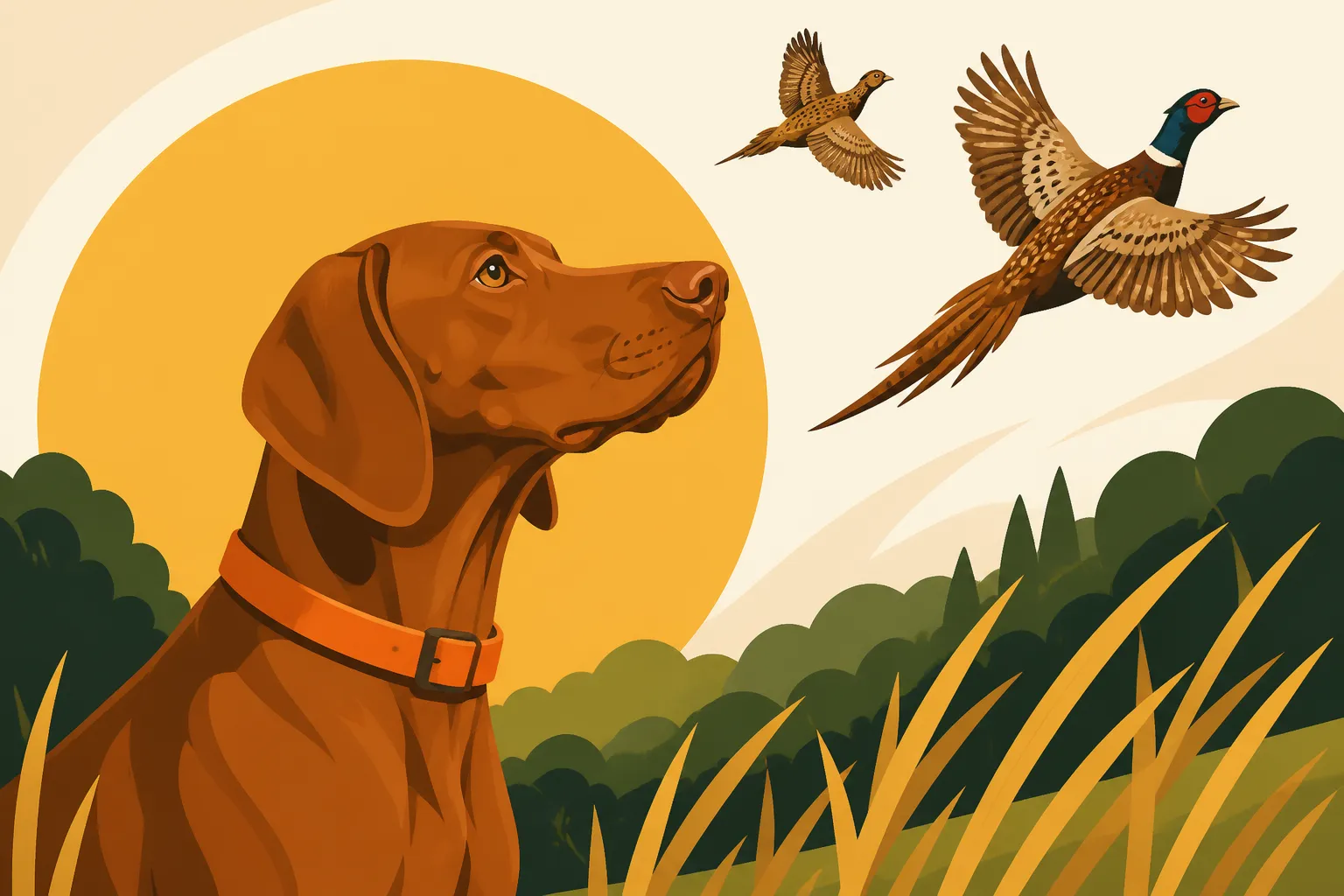
Starting a Vizsla on Birds
Bringing a Vizsla into your life often means embracing their incredible drive and heritage as a hunting dog. There’s nothing quite like seeing that keen intelligence spark to life when they encounter their first bird, but getting there isn't always straightforward. Many new Vizsla owners, even those with experience with other breeds, can feel a bit lost on how to properly nurture this instinct without overwhelming their sensitive companion or rushing the process. This guide is here to walk you through a thoughtful, step-by-step approach to starting your Vizsla on birds, honoring their natural abilities while building a strong, trusting partnership.
Understanding Your Vizsla's Instincts
Before you even think about introducing your Vizsla to a feather, it's absolutely crucial to understand the very core of what makes them tick. These dogs are purpose-bred, and that purpose is deeply ingrained in their DNA. Dismissing or misunderstanding this can lead to frustration for both you and your dog, so let's dig into that foundational drive.
The Vizsla's Innate Drive to Hunt
Vizslas were developed over centuries in Hungary as versatile hunting companions for nobility, designed to point, retrieve, and track. This isn't just a casual pastime for them; it's practically their identity. When you see your Vizsla sniffing intently in the tall grass, nose twitching, or locking onto a bird in the distance, you're witnessing generations of selective breeding at play. This isn't just curiosity; it's a deep-seated, instinctual need to hunt. They possess a powerful prey drive, an incredible nose, and an athletic build perfectly suited for covering ground. This inherent drive is why many owners choose a Vizsla in the first place, but it's also why they need an outlet. Without appropriate stimulation and training, this energy can manifest in less desirable ways, like chasing squirrels with abandon or exhibiting restless behaviors around the house. When starting your Vizsla on birds, you're not teaching them to hunt; you're teaching them how to hunt with you, channeling that raw instinct into a cooperative art form. It’s about refining what’s already there, giving their innate talents direction and purpose.
Softness and Sensitivity in Training
One of the defining characteristics of the Vizsla breed is their incredible sensitivity. They are often referred to as "Velcro Vizslas" not just because they want to be physically close to you, but because they are deeply attuned to your moods, your tone of voice, and your body language. This sensitivity is a double-edged sword in training, particularly when it comes to something as exciting and potentially high-pressure as bird work. A harsh word, a loud correction, or an overly forceful hand can easily cause a Vizsla to shut down. They might become hesitant, lose confidence, or even develop an aversion to the very thing you're trying to encourage. Think of them as eager students who thrive on encouragement and positive reinforcement. They want to please you more than almost anything, and a stern look can feel like a world-ending disappointment. Because of this, positive, reward-based methods are not just preferred for Vizslas; they are practically essential. You'll want to avoid anything that could make them associate birds or training with fear or punishment. Understanding The Soft Vizsla That Shuts Down When You Raise Your Voice is critical for any owner, especially when introducing them to such a stimulating activity.
Early Signs of Bird Interest
Even before formal bird training begins, your Vizsla puppy will likely start to show hints of their natural abilities. You might notice them fixating on birds in your yard, their tail giving a stiff, slow wag, or their body tensing as they stalk a butterfly. This isn't just cute puppy behavior; it's the genesis of their pointing instinct. They might pounce playfully on leaves moved by the wind, or show an unusual intensity when a pigeon lands nearby. These are precious moments to observe and encourage, not to dismiss. You can gently praise them when they show this focus, reinforcing that this behavior is desirable. Some Vizslas will start to air-scent, lifting their heads high and sniffing the wind for distant odors, while others will meticulously track ground scent with their noses glued to the earth. Noticing these early signs helps you gauge their natural inclination and gives you a starting point for more structured training. It's a window into their world, revealing the hunter within.
Foundation Training: More Than Just Sit and Stay
Before you introduce your Vizsla to live birds, or even dead birds for that matter, you need to ensure they have a rock-solid foundation of general obedience. Think of this as building the sturdy frame of a house before you start decorating. Without these core skills, bird training can quickly devolve into chaos, frustration, and potentially even danger for your dog.
Reliable Recall is Non-Negotiable
A strong, immediate recall is arguably the most critical command your Vizsla needs, especially for bird work. These dogs were bred to range, to cover vast amounts of ground in search of game. Their powerful prey drive means that once they're on a scent, the world around them can cease to exist. Imagine your Vizsla locking onto a pheasant scent, bolting into thick cover, and ignoring your frantic calls – not only is it unproductive for training, but it can put them in serious danger, whether from roads, other hunters, or getting lost. You need to be confident that when you call them, they will come, no matter the distraction. This means practicing recall in increasingly distracting environments, starting in your backyard and slowly moving to parks, open fields, and eventually, areas with mild bird scent. Use high-value rewards, enthusiastic praise, and make coming back to you the most wonderful thing in their world. Building a Recall on a Vizsla That Ranges is a continuous effort, but it's an absolute prerequisite before you introduce the ultimate distraction: live birds.
Steadiness and Impulse Control
Steadiness refers to a dog's ability to remain calm and in position despite exciting stimuli – in this case, a bird flushing or falling. Impulse control, on the other hand, is the ability to resist acting on instinct. For a Vizsla, whose instincts scream "CHASE!", teaching steadiness and impulse control is a marathon, not a sprint. This starts with simple "stay" commands, gradually increasing duration and distraction. You might begin by having them stay while you toss a toy, then while you walk away, and eventually, while someone else moves around nearby. The goal is for your Vizsla to understand that your command to stay overrides their instinct to move. This is crucial for safety and effective hunting. You want your Vizsla to point the bird, but then remain steady until you command them to flush or retrieve. If they break prematurely, they could flush the bird out of range, get shot at accidentally, or simply ruin the hunting opportunity. Patience is key here; pushing too fast will lead to frustration for both of you.
Building a Strong Bond and Communication
Ultimately, bird training is a dance between you and your Vizsla, built on mutual trust and understanding. A strong bond isn't just about cuddles on the sofa; it's about clear communication, consistency, and your dog’s belief that you are their leader and protector. Spending time together outside of formal training, playing games, going on adventures, and simply existing in each other's company, strengthens this bond. When your Vizsla trusts you implicitly, they are more likely to listen and respond to your commands, even when their instincts are screaming otherwise. This bond also allows for more nuanced communication. You'll learn to read their subtle cues – the twitch of an ear, the shift in weight, the intensity of their gaze – which will inform your training decisions. Platforms like BAXTER & Bella offer comprehensive online training programs that can really help build this foundational bond and clear communication from puppyhood, laying the groundwork for more advanced work like bird training. Remember, a well-trained dog is a confident dog, and a confident dog is a happy and effective hunting partner.
The First Introduction to Birds: Making it Positive
This is perhaps the most exciting, and often the most anxiety-inducing, step for new Vizsla owners. It's the moment where all that foundational work finally meets the raw instinct. The key here is to make this initial experience overwhelmingly positive, building desire and confidence without introducing fear or excessive pressure.
Choosing the Right First Bird
The type of bird you introduce first can make a significant difference. For most Vizslas, a flight-conditioned pigeon or a quail is an excellent choice. Pigeons are hardy, fly well, and are readily available from many breeders. Quail are smaller and often less intimidating for a young dog, and their scent can be very enticing. Avoid using domestic fowl like chickens or ducks, as they don't behave like game birds and can create confusion or bad habits. You also want to ensure the bird is healthy and active. A lethargic or injured bird won't provide the stimulating experience needed to ignite their prey drive properly. Some trainers might start with a frozen bird on a string to gauge interest, or even just a wing, but there's nothing quite like the real thing to engage a Vizsla's senses. The goal is to spark their natural curiosity and drive, not to scare them or make them feel threatened.
Controlled Environments for Success
The first introduction should always happen in a controlled, safe environment. Think of a large, securely fenced area, free from other dogs, people, or major distractions. A small paddock, a private field, or even a large, empty baseball diamond can work. The ground cover should be relatively short so the bird can be seen, but still offer enough cover for it to hide briefly, encouraging the dog to use its nose. You'll want to use a long line or check cord on your Vizsla, attached to a comfortable harness, not their regular collar. This gives you control without putting pressure on their neck, which can be sensitive. With the long line, you can guide them, prevent them from chasing wildly if they break, and ensure their safety. The purpose of this control isn't to restrict their natural urges but to manage the experience, ensuring they don't get into trouble or learn undesirable behaviors like chasing a bird out of sight.
Avoiding Fear or Overwhelm
A Vizsla's sensitive nature means you need to be extra cautious not to overwhelm them during their first bird introduction. Never just throw a bird at them or let a bird flap wildly in their face. This can be terrifying for a young dog and could create a bird-shy or fearful Vizsla. Instead, place the bird gently in a bird launcher or under a small mesh trap in the field, allowing your Vizsla to naturally scent it. Walk them on the long line towards the bird from downwind, so they get a good whiff. Watch their body language closely – the moment they show interest, praise them calmly and enthusiastically. When you release the bird, ensure it has a clean flight away from the dog, giving them a positive visual chase without the chance to actually catch it too easily. If they seem hesitant, back off and try again another day, or simplify the setup. The goal is to build desire, not to create a stressful memory. Remember, a good experience here sets the tone for all future bird work. The Age a Vizsla Should Meet Its First Bird is important – usually after they have a good foundation of basic obedience and are confident in different environments.
Developing the Point: Nurturing Natural Instinct
The point is the Vizsla's signature move, a frozen stance that signals the presence of game. It's a beautiful expression of their hunting heritage, and nurturing this natural instinct is one of the most rewarding aspects of bird training.
Encouraging a Natural Point
Vizslas are born with the instinct to point; you don't really teach it, you cultivate it. The key is to expose them to birds in a way that allows this instinct to emerge naturally. When your Vizsla is introduced to a bird, they will likely "lock up" as soon as they get a strong scent. Their body will stiffen, their head will turn towards the bird, one front leg might lift, and their tail will often become rigid. This is their natural point. Your job is to recognize it and reinforce it calmly. As they approach a hidden bird in a controlled setting, let them work the scent. The moment they show that characteristic stance, freeze with them. Don't rush in, don't yell, just acknowledge their behavior with quiet praise like "Good point!" or "Yes!" This quiet reinforcement helps them understand that this specific behavior is what you want. You want them to own the point, not to feel rushed through it. Whether a Vizsla Points Naturally is a common question, and the answer is overwhelmingly yes, but it needs careful nurturing.
Holding the Point and Steadiness
Initially, a Vizsla might point for a fleeting second before wanting to pounce or chase. The next step is to encourage them to hold that point. This is where the long line and your foundational steadiness training come into play. As your Vizsla points, gently take up the slack on the line, but don't pull or apply pressure. Just be there to prevent them from breaking. Walk quietly around them, praising them for holding their position. You might take a few steps in front of them, mimicking a hunter flushing the bird, then return to their side. If they start to creep forward, a gentle, steadying pressure on the long line, combined with a calm "Whoa," can help them stay put. The goal is to gradually extend the duration of the point, teaching them that waiting patiently is rewarded. This is where patience and repetition are paramount. You're building their confidence that the bird won't disappear if they hold still, and that you will handle the flush.
Understanding Different Pointing Styles
Not all Vizslas point in exactly the same way, and it's important to appreciate these individual differences. Some Vizslas will have a classic, high-head, aristocratic point, with a rigid tail held straight out. Others might have a lower, more intense crouch, almost belly-crawling towards the scent before freezing. Some might use a more "cat-like" stalk, while others might simply stop dead in their tracks, their body coiled and ready. You might even notice subtle differences in how they use their nose – some are natural air-scenters, while others rely heavily on ground scent. While there's an ideal "classic" point often celebrated in field trials, for a versatile hunting companion, what truly matters is that your Vizsla reliably finds and indicates game. Don't try to force your dog into a pointing style that isn't natural to them. Instead, observe how your Vizsla points and work with their natural tendencies. The beauty is in their individual expression of this ancient instinct.
Introducing the Retrieve: From Soft Mouth to Delivery
Once your Vizsla is confidently pointing birds, the next logical step is to teach them to retrieve the game. Vizslas are natural retrievers, but like pointing, it's a skill that benefits from careful development to ensure a soft mouth and reliable delivery to hand.
Building Desire to Retrieve
Before you even think about "force fetching," you want to cultivate an immense desire in your Vizsla to pick up and carry objects. Start with simple games of fetch using soft toys, dummies, or even rolled-up socks. Make it incredibly fun and rewarding. Throw the item a short distance, encourage them to pick it up, and praise them lavishly when they bring it back, even if they drop it at your feet at first. The goal is to make retrieving a highly desirable activity. Some Vizslas will naturally pick up a dead bird with enthusiasm, while others might be a bit hesitant at first due to the unfamiliar texture or weight. If they show hesitation, revert to dummies or even a soft, defrosted bird wing attached to a rope to build their confidence. You want them to see the retrieve as a natural extension of the hunt, a reward in itself. Whether a Vizsla Retrieves Without Being Taught is often yes, but 'to hand' is the key.
Gentle Mouth and Handling Skills
A "soft mouth" is paramount for a hunting Vizsla. This means they retrieve game without crushing or damaging it. This is partly genetic, but also heavily influenced by training. When building retrieve desire, always encourage gentle handling. If your Vizsla bites down too hard on a dummy, a quick, calm "Easy!" or a gentle hand guiding their grip can help. Never yank the dummy from their mouth, as this can encourage them to hold on tighter or play keep-away. Instead, make the act of giving you the dummy the most rewarding part. Trade them for a treat, or give them enthusiastic praise.
For actual bird retrieves, use fresh, whole dead birds, like pigeons or quail, that haven't been torn up. Their natural instinct is often to carry gently, but it's vital to reinforce this. If you notice them chewing or being rough, immediately stop the retrieve, take the bird away calmly, and try again later with a focus on gentleness. The formal "force fetch" or "trained retrieve" method, which teaches the dog to retrieve on command regardless of desire, can be very useful for ensuring consistency and a soft mouth, but it requires careful, gentle application given the Vizsla's sensitive nature. If considering this, definitely seek guidance from an experienced bird dog trainer or a program like those available through BAXTER & Bella, which offers structured ways to teach complex commands gently.
The Importance of "Hold" and "Fetch"
Two key commands for a reliable retrieve are "Hold" and "Fetch." "Fetch" initiates the retrieve, telling your Vizsla to go get the bird. "Hold" teaches them to maintain a gentle grip on the bird until you command them to release it.
Start with "Hold" by placing a dummy or a soft, defrosted bird in your Vizsla's mouth and calmly saying "Hold." Gently support their jaw if needed, preventing them from dropping it. Praise them for holding for even a few seconds, then command "Give" or "Release" and reward them. Gradually increase the duration they hold the item.
Once "Hold" is solid, integrate "Fetch." Begin by tossing the dummy a short distance, giving the "Fetch" command as it lands. When they pick it up, immediately give the "Hold" command, then "Give" when they return it to you. The ultimate goal is for your Vizsla to retrieve the bird and bring it directly back to your hand without dropping it along the way. This "delivery to hand" is the mark of a well-trained retriever and ensures you don't lose precious game. Consistency and positive reinforcement are absolutely vital through this entire process.
Gradually Increasing Difficulty and Realism
Once your Vizsla has a good grasp of pointing and retrieving in controlled settings, it's time to slowly introduce more realistic challenges, mimicking actual hunting conditions. This stage is about desensitization to distractions and building confidence in varied environments.
Working in Different Cover and Terrain
Real hunting doesn't happen on a manicured lawn. Birds hide in thick cover, tall grasses, dense brush, and sometimes even wetlands. To prepare your Vizsla, you need to gradually expose them to these different terrains. Start with fields with taller grass, then move to areas with light brush. Observe how they navigate, how their nose works in different scenting conditions, and how they react to obstacles. Some cover might be scratchy, requiring you to consider protection like a vest, particularly given The Thin Skin a Vizsla Takes Into the Field.
Working in varied cover teaches them problem-solving skills and builds their physical stamina. Practice retrieving dummies or planted birds in these areas. The goal isn't just to find the bird, but to do so efficiently and confidently, regardless of the challenges the environment presents. This also helps them learn to quarter a field effectively, working the scent cones provided by the wind and the cover.
Introducing Gunfire and Environmental Distractions
A gun-shy dog is a non-hunting dog, and Vizslas, with their sensitive nature, can be prone to this. Introducing gunfire must be done very carefully and gradually. Never introduce gunfire when your Vizsla is stressed, scared, or focused on anything other than a bird.
Start by having someone fire a .22 caliber blank pistol from a great distance (several hundred yards) while your Vizsla is enthusiastically focused on a bird being flushed or retrieved. Make sure the dog is enjoying the bird work so much that the sound is barely a blip. Praise them immediately after the shot if they show no adverse reaction. Slowly, over many, many sessions, you can decrease the distance and increase the caliber of the gun, always associating the sound with the excitement of the bird. Never fire a gun directly over their head, or when they are not having fun. If your Vizsla flinches or shows any fear, back off immediately and go back to a greater distance or lighter sound. How to Introduce a Vizsla to Gunfire is a critical step that cannot be rushed.
Other environmental distractions include other dogs, people, sounds of vehicles, or even changes in weather. Systematically introduce these distractions, always ensuring your Vizsla remains focused on their task and on you.
Field Simulation and Hunt Tests
Once your Vizsla is performing well in increasingly realistic training scenarios, consider participating in field simulations or hunt tests. Organizations like the North American Versatile Hunting Dog Association (NAVHDA) or the American Kennel Club (AKC) offer structured tests that evaluate a dog's natural abilities and trained skills. These tests are not just about competition; they are invaluable training tools. They provide a controlled environment to see how your Vizsla performs under pressure, with judges and other dogs present. They also expose your Vizsla to a wider variety of birds and terrain, pushing them to hone their skills. Passing these tests is a huge confidence booster for both you and your dog and signifies that your Vizsla is truly a versatile hunting companion. It’s also a great way to meet other Vizsla owners and trainers, learn from their experiences, and find mentors.
Common Pitfalls and How to Avoid Them
Even with the best intentions, it's easy to fall into common traps when training a sensitive and enthusiastic breed like the Vizsla for bird work. Understanding these pitfalls ahead of time can save you a lot of heartache and setbacks.
Pushing Too Fast, Too Hard
This is perhaps the biggest mistake Vizsla owners make. Their dogs are so eager to please and so naturally gifted that it's tempting to rush through the steps. You see them point perfectly once, so you immediately move to gunfire. You see them retrieve a dummy, so you expect them to flawlessly retrieve a shot bird. But pushing a Vizsla too fast, introducing too many variables at once, or escalating the pressure before they are truly ready, can lead to a breakdown in confidence. A Vizsla doesn't just need to know a skill; they need to be confident in performing it under various conditions. When you rush, you don't allow them time to generalize the skill, leading to hesitation, avoidance, or even a complete shutdown. Be patient. Celebrate small victories. Repeat each step many, many times until it's ingrained. It's far better to progress slowly and build a solid foundation than to rush and have to backtrack.
Over-Correcting a Sensitive Vizsla
As discussed earlier, Vizslas are incredibly sensitive. A harsh correction that might barely register with another breed can be devastating to a Vizsla. Yelling, jerking on a leash, or using force often backfires, making them fearful, resentful, or causing them to shut down entirely. Instead of correcting a mistake with punishment, try to prevent the mistake in the first place through careful management and clear communication. If your Vizsla makes an error, think about why. Did you introduce a distraction too soon? Was the command unclear? Were they tired or overwhelmed? Respond with a calm, guiding hand, or simply reset the situation and make it easier for them to succeed. Positive reinforcement, rewarding the behaviors you do want, is far more effective than punishing the ones you don't. Remember, you want your Vizsla to love working with you, not fear making a mistake. Whether an E-Collar Belongs on a Vizsla is a hotly debated topic, but if used, it should be with extreme caution and professional guidance due to their sensitivity.
Maintaining Enthusiasm Without Overstimulation
Vizslas are bundles of energy and enthusiasm. They approach bird work with incredible gusto. Your challenge is to channel that enthusiasm effectively without letting it tip over into overstimulation. An overstimulated Vizsla might start breaking point, chasing wildly, becoming deaf to commands, or even exhibiting frantic behaviors. This often happens when training sessions are too long, too frequent, or too intense. Keep training sessions short, especially when introducing new concepts – 10-15 minutes is often ideal. End on a positive note, even if it means finishing after a successful simple retrieve rather than pushing for a complex one. Vary your training locations and activities to keep things fresh. Allow plenty of downtime for your Vizsla to decompress and process what they've learned. And critically, ensure they get plenty of The Two Hours a Vizsla Needs Before It Will Settle through other outlets like running, swimming, or long walks, so they aren't bringing pent-up energy to bird training sessions. A calm, focused Vizsla is a trainable Vizsla.
The Lifelong Journey of a Bird Dog
Training a Vizsla for bird work isn't a destination; it's a continuous journey. Even a titled champion benefits from ongoing practice, new challenges, and a maintained connection with their human partner. The relationship between a Vizsla and their owner in the field is a dynamic, evolving partnership.
Continued Exposure and Practice
Just like any skill, bird work requires regular practice to stay sharp. This doesn't mean you need to be in the field with live birds every single day, but consistent exposure to bird scent, dummies, and simulated hunting scenarios is crucial. Regularly take your Vizsla to fields where you can plant birds, or even just fields where wild birds are known to be. Practice your recall, steadiness, and retrieving in these environments. Go back to basics occasionally, reinforcing the foundational commands. The more exposure your Vizsla gets to various scenarios, types of cover, and even different bird species, the more adaptable and confident they will become. This also helps prevent them from becoming rusty, especially during the off-season. Consider joining a local bird dog club for regular training days, which offer structured opportunities and access to facilities and birds.
Balancing Hunt Drive with Home Life
A Vizsla bred for the field has an intense drive, and that drive doesn't disappear when they come home from a hunt. It's essential to balance their working life with their role as a beloved family companion. This means ensuring they get enough physical and mental exercise daily to satisfy their energy levels, even when you're not actively training birds. Long runs, challenging hikes, scent games, and agility classes can all provide outlets for their boundless energy and intelligence. A tired Vizsla is a well-behaved Vizsla, more content to settle down and be that "Velcro" companion you adore. If their drive isn't adequately met, you might find them restless, destructive, or prone to separation anxiety. It's a testament to the breed's versatility that they can be fierce hunters in the field and gentle, loving companions at home, but this balance requires conscious effort on your part. The Exercise a Vizsla Needs Every Day is non-negotiable for their well-being.
When to Seek Professional Guidance
While this guide provides a solid framework, there will inevitably be times when you encounter challenges that feel beyond your scope. This is perfectly normal, and it's a sign of a responsible owner to know when to seek help. Professional bird dog trainers have years of experience, a deep understanding of canine behavior, and access to specialized equipment and birds. They can diagnose specific issues, provide tailored solutions, and offer hands-on guidance that no book or article can fully replicate. If you're struggling with a particular aspect, like a hesitant point, a hard mouth, gun-shyness, or simply feel stuck in your progress, don't hesitate to reach out to a reputable professional. They can offer invaluable insights, provide new perspectives, and help you and your Vizsla overcome hurdles. Investing in professional training isn't a failure on your part; it's an investment in your Vizsla's potential and your shared future in the field. What a Professional Trainer Charges for a Vizsla can vary, but it's often a worthwhile expense.
| Training Stage | Key Focus | Environment | Essential Commands | Common Challenges |
|---|---|---|---|---|
| Foundation | Obedience, Bond, Impulse Control | Home, Leash walks, Secure yard | Recall, Sit, Stay, Heel, Whoa | Over-excitement, short attention span |
| First Bird Intro | Positive association, Scenting, Curiosity | Secure, low-distraction field | Praise, Gentle encouragement | Fear, chasing, grabbing bird |
| Developing Point | Holding point, Steadiness, Focus | Field with planted birds | Whoa, Stay, Point, Praise | Breaking point, creeping, lack of focus |
| Retrieving Basics | Desire to retrieve, Gentle mouth, Delivery | Yard, short tosses, dummies | Fetch, Hold, Give | Hard mouth, dropping bird, keep-away |
| Realism & Refinement | Cover work, Gunfire, Distractions | Varied terrain, Game areas | All foundational commands | Gun-shyness, overstimulation, losing focus on scent |
| Ongoing Mastery | Consistency, Problem-solving, Adaptability | Hunting grounds, Hunt tests | All commands, field craft | Rustiness, complacency, new distractions |
Disclaimer
This article is for general informational purposes only and does not constitute professional advice. Laws, prices and regulations vary by location and change over time. Consult a qualified professional for guidance on your specific situation.