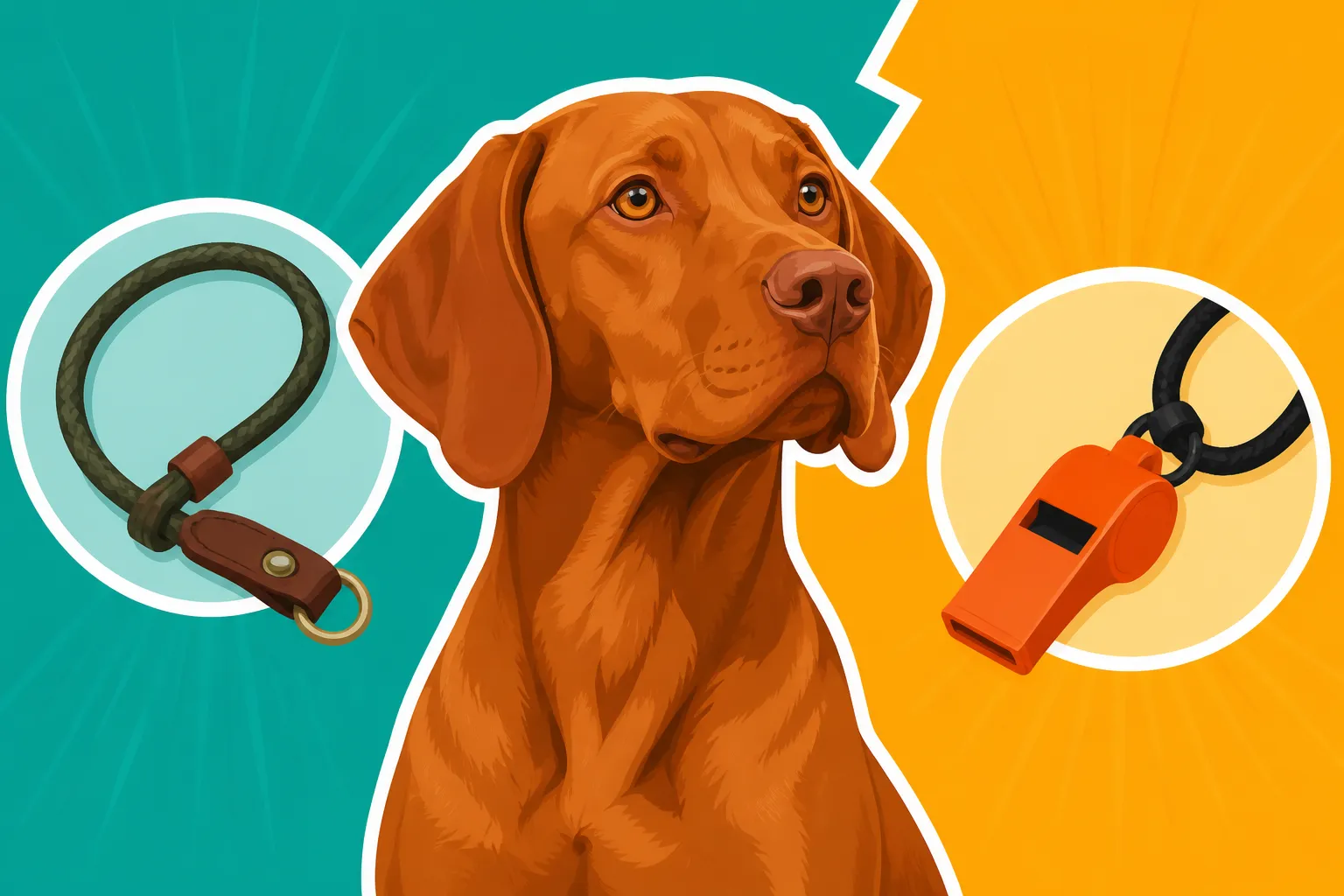
What a Check Cord and Whistle Cost
Bringing a Vizsla into your life is an incredible adventure, but let's be honest, the sheer volume of gear and training considerations can feel a little overwhelming, especially when you start looking at what everything costs. One common frustration for new and seasoned Vizsla owners alike is figuring out the real investment for foundational training tools like a check cord and a good whistle. It’s not just about the sticker price; it's about getting the right tools that will genuinely help you build that crucial bond and reliable obedience. This guide is here to break down exactly what you can expect to spend on a check cord and whistle, why they're so important for your energetic Vizsla, and how to make smart choices without breaking the bank.
The Essential Tools for Vizsla Training: Check Cords and Whistles
When you bring home a Vizsla, you're not just getting a dog; you're adopting a lean, golden-rust-colored athlete with an incredible drive and intelligence. These dogs were bred for hunting, which means they come pre-loaded with instincts that need careful channeling and consistent training. Two of the most fundamental tools for any Vizsla owner, whether you plan to hunt or simply want a well-behaved companion, are a check cord and a training whistle. These aren't just accessories; they are vital for safety, communication, and establishing reliable control.
Why These Tools Are Non-Negotiable for a Vizsla
Vizslas are renowned for their energy and their desire to range. While their athleticism is captivating, it also means they can cover a lot of ground in a very short amount of time. A strong prey drive, common in pointing breeds, means that a squirrel, a bird, or even a rustling bush can instantly capture their attention and send them off on an adventure, often oblivious to your calls. This is where a check cord and whistle become indispensable.
A check cord provides a physical connection to your dog while still allowing them a sense of freedom, especially in open, distraction-filled environments where an off-leash recall isn't yet perfect. It’s your safety net, preventing them from bolting into dangerous situations like roads or unknown territories. For a Vizsla, who loves to explore and push boundaries, it's about giving them the space to learn appropriate ranging without the risk of getting lost or having a negative encounter. Without this physical control, early training can be a recipe for frustration and even danger. When you're trying to perfect that crucial recall, a check cord lets you reinforce the behavior positively, reining them in gently if they fail to respond, rather than resorting to shouting or chasing. This breed can be quite sensitive, so a calm, consistent approach is always best. The Soft Vizsla That Shuts Down When You Raise Your Voice is a real phenomenon, and a check cord helps you avoid those harsh corrections.
The training whistle serves a different, but equally critical, purpose. It provides a consistent, clear, and far-reaching signal that cuts through environmental noise much better than your voice. Unlike your voice, which can be affected by emotion, fatigue, or distance, a whistle always sounds the same. This consistency is paramount for a Vizsla, a dog that thrives on clear communication. A whistle command travels further in the field, making it ideal for calling back a dog that has ranged wide, as Vizslas are prone to do. Building a Recall on a Vizsla That Ranges is a core part of Vizsla ownership, and a whistle is your best friend in that endeavor. It becomes a distinct signal that means "come to me," "stop," or "change direction," allowing for precise instruction even when your dog is out of sight.
Understanding Different Types of Check Cords
Check cords come in various materials and lengths, each suited for different training stages and environments. Knowing the differences will help you choose the best fit for your Vizsla's specific training needs.
- Nylon Check Cords: These are perhaps the most common and generally the most affordable. Nylon is durable, relatively lightweight, and comes in many colors. They are a good all-around choice for general obedience training in a park or open field. However, nylon can sometimes tangle easily, especially in thicker brush, and if it gets wet, it can become heavy and prone to knotting. For shorter cords, nylon works well, but for longer lengths, the tangling can be a real hassle.
- Cotton Webbing Check Cords: Cotton cords are softer on the hands, which is a big plus when you're working with a strong Vizsla who might be pulling. They offer a good grip and are less likely to burn your hands if they slide quickly. Cotton also tends to absorb less heat than nylon. The downside is that cotton can absorb water, becoming heavy and taking a long time to dry, which can lead to mildew if not properly cared for. They also tend to snag more easily on burrs and twigs in the field.
- Biothane Check Cords: This material is a game-changer for many dog owners, especially those training in wet or muddy conditions. Biothane is a polyester webbing with a PVC coating, making it waterproof, odor-proof, and incredibly durable. It feels like leather but is much easier to clean – a quick wipe is often all it takes. Biothane doesn't absorb water, so it stays lightweight even when wet, and it doesn't pick up burrs or debris. While generally more expensive upfront, its longevity and ease of maintenance often make it a worthwhile investment. For a Vizsla owner whose dog loves water work or frequently encounters wet cover, a biothane cord is often the superior choice.
Length Matters:
- 15-20 feet: Excellent for initial recall training in a somewhat contained area, or for teaching specific commands like "whoa" or "stay" with a bit of distance. It offers enough length for your Vizsla to feel like they have room to move but still keeps them relatively close.
- 30-50 feet: This is the workhorse length for advanced recall training, proofing commands in open fields, and starting bird work. It allows your Vizsla to range further, mimicking real hunting scenarios, while you still maintain a crucial safety line. This length is particularly vital for a breed like the Vizsla, known for its wide-ranging instinct. Whether a Vizsla Ranges Wider Than a Shorthair is a common question, and yes, they do, making these longer cords invaluable.
- Longer than 50 feet: While available, these can become cumbersome for most owners. They are typically reserved for very specific professional training scenarios, as the risk of tangling and difficulty in handling increases significantly.
Choosing the Right Training Whistle for Your Vizsla
Just like check cords, dog whistles aren't all created equal. The key is to find one that is consistent, durable, and that you can comfortably use.
- Pea Whistles: These are traditional whistles with a small pea inside that vibrates to produce the sound. They offer a good, clear tone and are widely available. However, they can sometimes freeze up in very cold weather if moisture gets in, and the sound can vary slightly depending on how hard you blow.
- Pealess Whistles: These whistles do not have a pea, producing a consistent, high-pitched tone regardless of how hard you blow or the weather conditions. They are often preferred by professional trainers and hunters because of their reliability and consistent sound. The consistent tone is crucial for a Vizsla, who needs clear, unambiguous signals.
- High-Frequency/Silent Whistles: These are designed to emit a sound that is primarily audible to dogs, often in the ultrasonic range. While the idea of a "silent" whistle sounds appealing, in practice, it can be difficult for the handler to gauge if the whistle is actually working and if the dog is hearing it. For most training purposes, an audible pealess whistle is more effective, ensuring both you and your Vizsla clearly receive the signal. Brands like Acme produce excellent pealess whistles specifically designed for dog training.
The most important factor is consistency. Once you choose a whistle, stick with it. Your Vizsla will learn to associate that specific sound with your commands, so changing whistles can confuse them and set back your training progress.
Breaking Down the Costs: What to Expect
Let's get down to the brass tacks: what will these essential training tools actually cost you? While prices can vary based on brand, material, and where you buy them, we can give you a realistic overview. Remember, thinking of these as investments in your Vizsla's safety and your peace of mind rather than just expenses helps put the cost into perspective.
The Price Tag of a Quality Check Cord
The cost of a check cord largely depends on its material and length. As a general rule, the longer and more specialized the material (like Biothane), the higher the price will be.
-
Nylon Check Cords:
- 15-20 feet: You can typically find these for a very accessible price. Think around $10 to $20. These are widely available at major pet retailers and online stores.
- 30-50 feet: Longer nylon cords will run you a bit more, usually in the $15 to $30 range.
While they are budget-friendly, consider the trade-offs in terms of tangle-resistance and durability, especially if you're frequently in thick cover.
-
Cotton Webbing Check Cords:
- 15-20 feet: These are often comparable to nylon in price, perhaps $12 to $25.
- 30-50 feet: For the longer lengths, expect to pay around $20 to $40. They offer a good feel in the hand but require more care to prevent mildew if they get wet.
-
Biothane Check Cords:
- 15-20 feet: Biothane commands a higher price point due to its superior qualities. A shorter biothane cord might start around $25 to $40.
- 30-50 feet: For the popular longer lengths, you're looking at an investment typically from $40 to $70, or even a bit more for premium brands or extra heavy-duty options.
While the initial outlay is higher, many Vizsla owners find the durability, ease of cleaning, and overall performance of Biothane to be well worth the cost. You can often find a good selection of all these types of check cords on pet supply websites like Chewy, which makes comparing options and reading reviews quite easy.
It’s worth noting that "quality" isn't always about the highest price. A well-made nylon cord from a reputable brand can last a long time if cared for. The "justification" for higher costs often comes down to specific features like material (Biothane's waterproof nature), hardware (solid brass clasps for rust resistance), and craftsmanship that ensures stitching holds up to a strong, pulling Vizsla.
Investing in a Reliable Training Whistle
Compared to check cords, whistles are a relatively modest investment, but choosing the right one is no less important.
- Basic Pea Whistles: These are the most economical option, often costing just $5 to $10. They work perfectly fine for many, especially if you're not training in extreme weather or requiring precise, consistent tones over very long distances.
- Pealess Dog Whistles (Standard Frequency): These are generally the sweet spot for many Vizsla owners. You can expect to pay between $10 and $25 for a high-quality pealess whistle from brands known for dog training equipment. These offer excellent consistency and durability, making them a solid choice for serious training.
- Specialty/High-End Whistles: Some brands offer whistles with slightly different frequencies or enhanced ergonomics. These might go up to $30 or $40, but for most Vizsla owners, a good standard pealess whistle will do everything you need.
Remember, the goal isn't the most expensive whistle, but the most consistent one. A $15 pealess whistle that consistently produces the same clear tone is far more valuable than a "fancy" one that doesn't hold up or whose sound varies. When purchasing your whistle, consider also grabbing a lanyard (often just a few dollars) so you can wear it around your neck or wrist, keeping it readily accessible and preventing it from getting lost in the field.
Hidden Costs and What Else You Might Need
While a check cord and whistle are fundamental, they are just two pieces of the broader training puzzle for a Vizsla. It's wise to budget for other related expenses that enhance your training efforts or become necessary due to your Vizsla's active lifestyle.
- Training Dummies and Scent Kits: If you're focusing on retrieve work or bird introduction, training dummies (often $10-$30 each) and perhaps some bird scent (another $10-$20) will be crucial. These help stimulate your Vizsla's natural retrieving instincts.
- Training Birds: For serious bird dog training, you might invest in live pigeons or quail. The cost of these can vary significantly based on location and availability, but expect to pay a few dollars per bird. What Training Birds Cost a Vizsla Owner gives a more detailed breakdown.
- Longer Leashes/Line for Tracking: Sometimes, a regular check cord isn't quite right for specific tracking exercises. You might want a dedicated tracking line, which can range from $20-$50.
- GPS Collars: For a wide-ranging Vizsla, a GPS collar is an invaluable safety tool, particularly once they are working off-leash in large fields or woods. These are a significant investment, often hundreds of dollars, but they offer immense peace of mind. What a GPS Collar Costs for a Vizsla is a topic worth exploring further.
- Pet Insurance: Accidents can happen, especially with an active, curious Vizsla in the field. A dog that gets tangled in wire, steps on something sharp, or has an unexpected medical issue can incur substantial vet bills. Pet insurance can help cushion these blows. While it's not a direct training cost, it's a vital part of responsible Vizsla ownership, especially for a breed prone to certain conditions. Companies like Healthy Paws offer various plans that can help cover unexpected injuries or illnesses. Thinking proactively about potential veterinary costs is crucial. What a Vizsla's Emergency Field Injury Costs can quickly add up.
- Professional Training Sessions: While many owners train their Vizslas themselves, some opt for professional guidance, especially for specific issues or advanced gun dog work. A single session or a board-and-train program can add substantially to your overall investment. What a Professional Trainer Charges for a Vizsla is an important consideration.
Maximizing Your Investment: Tips for Longevity and Effectiveness
Buying quality gear is only half the battle; knowing how to care for it and use it effectively will ensure your investment pays off in the long run. These tools are meant to be used regularly and often in challenging outdoor conditions, so maintenance and smart usage are key.
Proper Care and Maintenance for Your Gear
Treating your check cord and whistle well will extend their lifespan and ensure they are always ready when you need them.
- Check Cord Care:
- Cleaning: After each use, especially if it's muddy or wet, clean your check cord. For nylon and cotton, a simple rinse with water and mild soap, followed by thorough drying, is usually sufficient. Hang them to dry completely to prevent mildew, especially for cotton. Biothane is the easiest – just wipe it down with a damp cloth or rinse under the tap.
- Storage: Avoid just tossing your check cord into a tangled heap. Roll it neatly or coil it before storing it. This prevents knots and makes it ready for your next training session. Keep it in a dry, well-ventilated area, away from direct sunlight which can degrade materials over time.
- Inspection: Regularly inspect the cord for fraying, especially near the clip, and check the integrity of the hardware. A worn clasp or a frayed cord can fail when you least expect it, potentially putting your Vizsla at risk.
- Whistle Care:
- Keep it Clean: If it's a pea whistle, ensure the pea area is free of debris. Pealess whistles generally require less cleaning, but a quick wipe down now and then is good.
- Prevent Loss: Always use a lanyard! It's incredibly easy to drop a small whistle in tall grass or thick cover. Keeping it around your neck means it's always there when you need to Building a Recall on a Vizsla That Ranges or stop a chase.
- Protect from Damage: Avoid stepping on your whistle or letting it get crushed in a gear bag. While durable, they can still break.
Training Strategies for Optimal Use
Having the best tools means nothing without proper application. Your check cord and whistle are extensions of your training philosophy, not magic wands.
- Consistency is King: For both the check cord and whistle, consistency is paramount. Use your whistle commands every single time for the same action. If your whistle means "come," it should always mean "come." The same goes for the check cord; use it to gently guide and reinforce, not to yank aggressively. Vizslas are sensitive, and clear, consistent signals build trust and understanding.
- Start Simple: Don't throw a 50-foot check cord on your Vizsla and expect perfect recall in a busy park on day one. Start in a quiet, low-distraction environment. Practice with the cord in your backyard, letting them drag it, then gently picking it up and guiding them back to you. Gradually increase distractions and length.
- Positive Reinforcement: Pair every successful recall or desired action with positive reinforcement – praise, a favorite toy, or a tasty treat (perhaps even some of that healthy dog food from Ollie if your Vizsla is food motivated!). The goal is for your Vizsla to associate the whistle and the return to you with something wonderful.
- Phased Introduction: For the whistle, introduce it slowly. Blow the whistle, then immediately give a treat. Repeat this many times in various locations. Soon, the whistle itself will become a predictor of good things, making your recall much stronger. Then, start asking for the "come" command after the whistle, guiding them with the check cord if necessary.
- Safety First: The check cord is your safety line. Never let your Vizsla drag a check cord unsupervised, especially long ones, as it can get caught on obstacles, leading to injury or strangulation. Always be actively engaged when your Vizsla is on a check cord. If you're worried about accidental injuries during active training or hunting, remember that pet insurance, like plans from Healthy Paws, can be a lifesaver.
When to Upgrade or Replace
Even the best gear has a lifespan. Knowing when to replace your check cord or whistle can save you headaches and ensure your training remains effective and safe.
- Visible Wear and Tear: This is the most obvious sign. Frayed cords, stretched material, rusted or bent clasps, or cracked whistle casing all signal it's time for a replacement. A broken clasp on a check cord means you've lost your safety net.
- Performance Issues: If your whistle's sound becomes inconsistent, muffled, or if your check cord is constantly tangling beyond repair, it might be time for a new one. Sometimes, a new cord's smoother texture or better weighting can make a surprising difference in handling.
- Changing Needs: As your Vizsla matures and your training progresses, your needs might change. You might start with a shorter nylon cord and eventually find a longer Biothane one better suits advanced field work or water retrieves. Don't be afraid to invest in different types as your Vizsla's skills evolve. Whether a Vizsla Returns to the Field After Surgery could also impact your gear needs, as you might need more controlled training equipment during recovery.
Always prioritize your Vizsla's safety and the effectiveness of your training. A small investment in new, reliable gear is always better than dealing with a broken tool in a critical moment.
Check Cord and Whistle Cost Comparison
To give you a clearer picture, here’s a breakdown of typical price ranges and considerations for check cords and whistles.
| Item Category | Type / Material | Typical Length | Estimated Price Range | Key Considerations |
|---|---|---|---|---|
| Check Cord | Nylon | 15-20 feet | $10 – $20 | Affordable, lightweight, can tangle, less durable. |
| Nylon | 30-50 feet | $15 – $30 | Good for moderate range, tangles more when longer. | |
| Cotton Webbing | 15-20 feet | $12 – $25 | Soft on hands, good grip, absorbs water, mildews. | |
| Cotton Webbing | 30-50 feet | $20 – $40 | Comfortable, but heavy when wet, snags burrs. | |
| Biothane | 15-20 feet | $25 – $40 | Waterproof, odor-proof, easy clean, highly durable. | |
| Biothane | 30-50 feet | $40 – $70+ | Premium, excellent for wet/muddy conditions, long-lasting. | |
| Whistle | Pea Whistle | N/A | $5 – $10 | Traditional, good tone, can freeze, sound varies. |
| Pealess Whistle | N/A | $10 – $25 | Consistent tone, durable, reliable in all weather. | |
| Specialty Whistle | N/A | $25 – $40+ | Enhanced features, specific frequencies, not always necessary. | |
| Accessories | Whistle Lanyard | N/A | $3 – $10 | Essential for keeping whistle accessible and safe. |
Investing in the right check cord and whistle for your Vizsla isn't just about paying a price; it's about equipping yourself with the tools to build a strong, safe, and successful relationship with your amazing dog. By understanding the options and how to use them, you're setting both of you up for many happy years of adventure and reliable companionship.
Disclaimer
This article is for general informational purposes only and does not constitute professional advice. Laws, prices and regulations vary by location and change over time. Consult a qualified professional for guidance on your specific situation.