What Happened to Hungarian Vizslas During the War
For Vizsla owners and enthusiasts, hearing about the breed's past often brings up questions about hardship, and few periods were more challenging than the World Wars, especially the second one, which threatened to wipe this beloved Hungarian Pointer from the face of the earth. This guide will take a deep dive into the harrowing journey of the Hungarian Vizsla through these tumultuous times, exploring how the breed teetered on the brink of extinction and the incredible efforts made by dedicated individuals to preserve its unique heritage.
The Vizsla's Fragile Existence Before Global Conflict
Long before the world plunged into the chaos of the 20th century's major wars, the Vizsla was already a rare and treasured breed, mostly confined to its native Hungary. This wasn't a breed you'd find casually strolling through every village; it was the dog of noblemen and gentry, used for hunting in the vast Hungarian plains. This exclusivity, while granting them a certain status, also meant their numbers were never truly robust.
The very nature of how the Vizsla developed contributed to its delicate population. Unlike some breeds that emerged from a diverse gene pool of working dogs, the Vizsla was carefully cultivated over centuries, often kept within specific aristocratic lines. This meant that while their characteristics were refined and consistent – that distinctive golden-rust coat, the keen intelligence, and the incredible drive – their genetic diversity, and therefore their numbers, remained relatively low. They weren't just common farm dogs that could bounce back quickly from a downturn.
In fact, the Vizsla had already faced a near-extinction event around the turn of the 20th century, specifically by 1900. Modern efforts to revive the breed began then, but it was a painstaking process, relying on a very small number of existing individuals and carefully selected crosses to rebuild their population. This historical bottleneck meant that when the first global conflict erupted, the Vizsla was still in a precarious state, far from having a stable, widespread population that could easily weather significant losses. They were still very much on the rebound, making them incredibly vulnerable to any large-scale disruption. The Vizsla Came Back From Extinction Twice speaks volumes about their historical challenges.
Think of it this way: imagine a rare wildflower that only grows in a specific, protected habitat. If that habitat is suddenly threatened, the entire species is at risk. The Vizsla was much like that wildflower – beautiful, unique, and deeply rooted in its specific cultural and environmental niche, but without the widespread numbers to ensure its survival against unprecedented societal upheaval. Owners back then knew they were custodians of something precious and vulnerable.
World War I and the Shadows of Uncertainty
When the First World War broke out in 1914, Hungary, as part of the Austro-Hungarian Empire, was deeply embroiled in the conflict. While the direct impact on dog breeds might not seem like a primary concern amidst human suffering, war profoundly affects animal populations, especially those tied to human activities like hunting. For the Vizsla, the war brought a new layer of uncertainty to an already fragile existence.
Many landowners and noblemen, the traditional keepers of Vizslas, were called to serve on the front lines. Their estates, once meticulously maintained with staff and resources, often fell into disrepair or were repurposed for war efforts. This meant less time, fewer resources, and often outright neglect for dog breeding programs. Food became scarce, and the focus shifted entirely to human survival and military needs. Breeding goals were put on hold, and the careful selection processes that had been slowly rebuilding the Vizsla population largely ceased. The focus became survival, not preservation.
Furthermore, the general disruption of society meant that dogs, especially hunting dogs like the Vizsla, were often displaced. Some might have been used in military roles, though their specific talents as pointers weren't as directly applicable as some other breeds. Others might have been abandoned, fallen victim to disease, or simply starved. With borders in flux and communities devastated, accurate records of dog populations became impossible to maintain, leaving historians and breed enthusiasts with fragmented information about specific losses. The future of the breed became shrouded in doubt, a grim foreshadowing of the even greater challenges to come.
While the First World War didn't deliver the near-fatal blow that the second did, it served as a brutal stress test for the breed's recovery efforts. It paused the slow, painstaking work of population regrowth and genetic consolidation, leaving the Vizsla numerically weak and geographically dispersed right when it needed to be strong and cohesive. The lessons learned, or perhaps the fears confirmed, from this period undoubtedly influenced the desperate measures taken by breed lovers in the subsequent, even more destructive, conflict. What Two World Wars Did to the Vizsla highlights just how impactful these periods were.
World War II: The Brink of Annihilation and Heroic Rescues
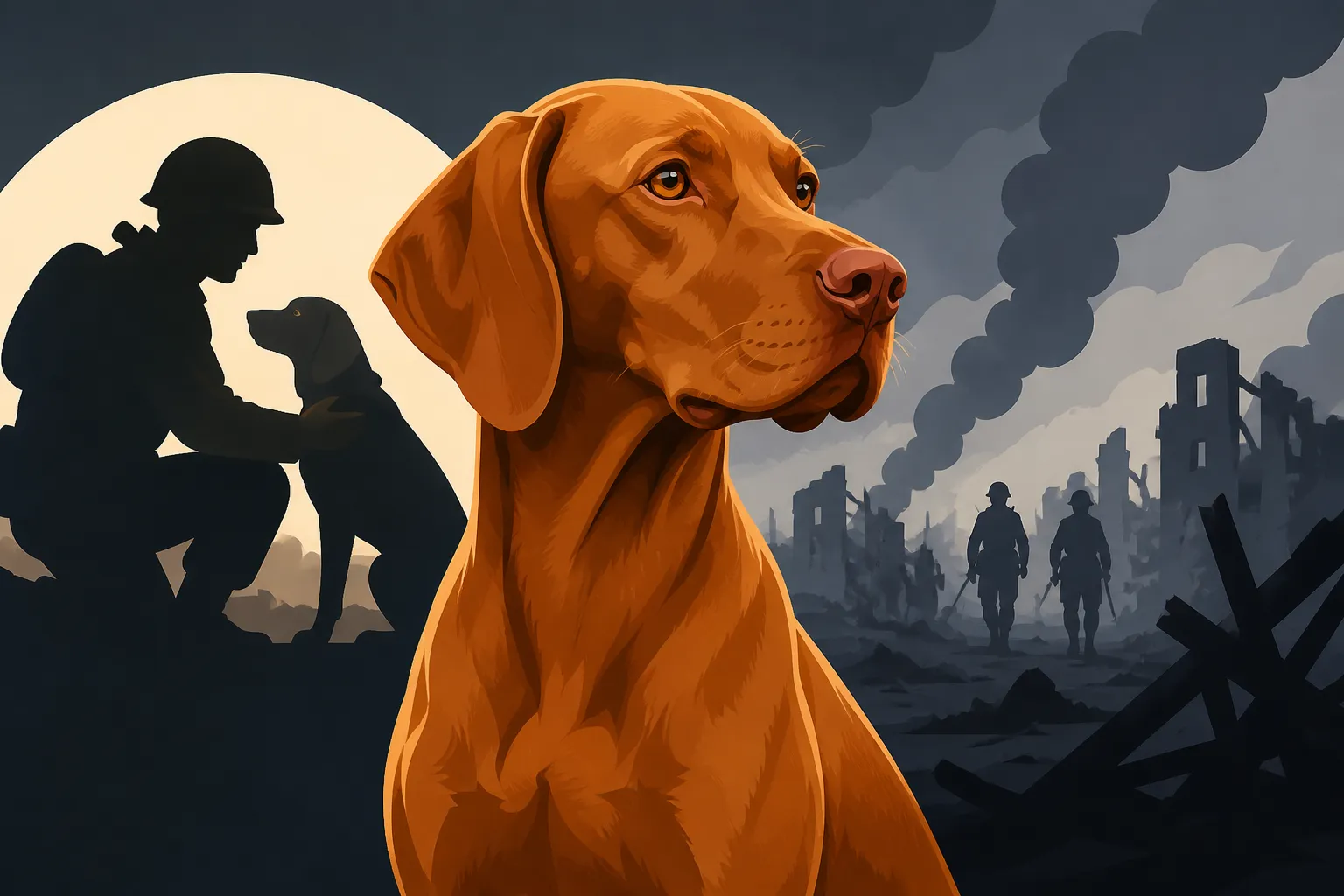
The Second World War brought an unimaginable level of devastation to Hungary, and with it, the Vizsla breed faced its gravest threat yet. This conflict was not just about soldiers on distant battlefields; it was total war, impacting every aspect of civilian life, including beloved companion animals. Hungary found itself in the eye of the storm, caught between warring ideologies and armies, leading to immense destruction and societal collapse.
As the war intensified, especially during the brutal Soviet advance through Eastern Europe, entire cities were ravaged, and the countryside became a battleground. Food supplies dwindled, and starvation became a real threat for people and animals alike. Keeping a large, active dog like a Vizsla became an incredible luxury, if not an impossibility. Many dogs perished from lack of food, disease, or direct casualties of war. Records vanished, kennels were destroyed, and the continuity of breeding lines was shattered. It felt like an irreversible loss for many who watched their communities, and their dogs, disappear.
However, amidst this chaos, a few incredibly dedicated individuals recognized the urgency of saving the Vizsla. These were not just dog owners; they were ardent breed enthusiasts, often from the very noble families who had cherished these dogs for centuries. They understood that the loss of the Vizsla would be more than just the loss of a hunting dog; it would be the erasure of a living piece of Hungarian heritage. Stories abound of heroic, desperate efforts to smuggle Vizslas out of Hungary. People risked their lives, hiding dogs in their luggage, in secret compartments of trains, or guiding them on foot across perilous borders, all while dodging soldiers and facing unimaginable dangers. This was not a casual undertaking; it was an act of profound courage and love for the breed.
One of the most famous examples of this bravery is the story of Panni XV. While the specifics are often told with a dash of legend, the core truth is that several Vizslas, including one named Panni, were instrumental in ensuring the breed's survival by being spirited out of Hungary to safety in other countries. These efforts weren't coordinated on a grand scale; they were individual acts of defiance against the destruction of war. They represented a last-ditch attempt to preserve a genetic legacy, a desperate hope that somewhere, in a new land, the golden-rust coat of the Vizsla could continue to shine. Who Panni XV Was really encapsulates this period of extraordinary measures.
These smuggled Vizslas, arriving in places like America and Western Europe, became the foundation of modern Vizsla lines outside of Hungary. They were few in number, meaning the genetic bottleneck was severe, but they carried the hopes of the breed's future. It was a race against time, with the future of the Vizsla literally resting on the shoulders of these refugees and their precious canine cargo.
| Threat to Vizslas During WWII | Description | Impact on Breed |
|---|---|---|
| Starvation & Disease | Widespread food shortages and breakdown of sanitation. | Direct loss of life for many Vizslas. |
| Direct Casualties | Dogs killed in bombings, fighting, or by soldiers. | Immediate population reduction, loss of valuable breeding stock. |
| Displacement & Abandonment | Owners forced to flee, leaving dogs behind or unable to care for them. | Dogs lost to the streets, dispersed, or perished. |
| Breakdown of Breeding | Cessation of planned breeding programs, destruction of kennels. | Loss of genetic diversity, interruption of breed development. |
| Political Danger | Owning certain breeds or association with former elites could be risky. | Led to hiding or destruction of dogs, as Whether Owning a Vizsla Was Politically Dangerous explores. |
The Aftermath and Rebuilding Under the Iron Curtain
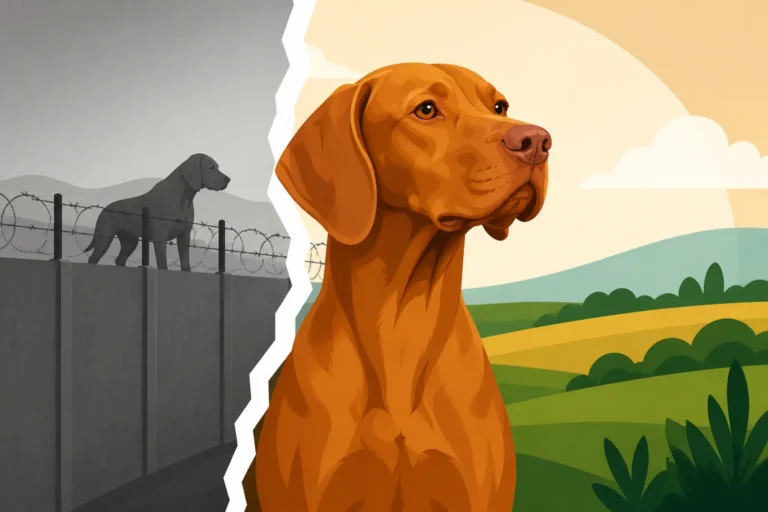
Even after the guns fell silent, the challenges for the Vizsla were far from over. Post-war Hungary fell under Soviet influence, becoming part of the Eastern Bloc behind the Iron Curtain. This new political reality created a very different set of obstacles for breed preservation and development, especially for a breed so historically tied to Hungarian nobility and traditional hunting.
The Iron Curtain effectively isolated Hungarian Vizslas from those that had been successfully smuggled to the West. For decades, there was little to no exchange of breeding stock or genetic information between the Eastern and Western populations. This geographical and political separation meant that two distinct lines of Vizslas began to develop, each with its own nuances. While breeders in the West focused on establishing the breed in new countries, adhering to newly formed club standards, those in Hungary worked to rebuild their lines from the few remaining dogs within a closed system.
Within Hungary, the emphasis shifted. The old aristocratic hunting culture was suppressed, and dog breeding, if it occurred, was often done under different priorities and with limited resources. However, the Hungarian people's pride in their national dog remained strong, and dedicated individuals continued to breed Vizslas, often under difficult circumstances. They faced challenges in maintaining genetic diversity with a limited pool of founders. This period of isolation also saw some Vizslas crossbred, sometimes deliberately to introduce new traits or simply due to lack of suitable purebred mates, further complicating the preservation efforts.
Meanwhile, the Vizslas in the West flourished, albeit from a very small genetic foundation. Thanks to the efforts of those who had brought them to safety, breed clubs formed in countries like the United States, and the Vizsla began to gain recognition and popularity. How Vizslas Reached America is a testament to those early efforts. The existence of these Western populations was crucial, as they preserved the breed's essence even while the original homeland was recovering under challenging conditions. It wasn't until the fall of the Iron Curtain much later that the possibility of reuniting some of these genetic lines and exchanging breeding stock became a reality, further strengthening the overall breed.
The experience of the World Wars and the subsequent Cold War era left an indelible mark on the Vizsla. It shaped their genetic heritage, highlighting the incredible resilience of the breed and the unwavering dedication of its human champions. Today, when you see a Vizsla, with its elegant form and devoted gaze, remember that it's not just a beautiful dog; it's a survivor, a living testament to a history of love, loss, and ultimately, triumph against overwhelming odds. Modern owners, in choosing ethical breeders who prioritize genetic health and diversity, continue this legacy. Understanding this history also informs how we appreciate the breed's temperament, its intense bond with humans, and its inherent need for companionship, all traits perhaps amplified by generations of surviving through such close human connection.
Disclaimer
This article is for general informational purposes only and does not constitute professional advice. Laws, prices and regulations vary by location and change over time. Consult a qualified professional for guidance on your specific situation.