Whether a Vizsla Retrieves Without Being Taught
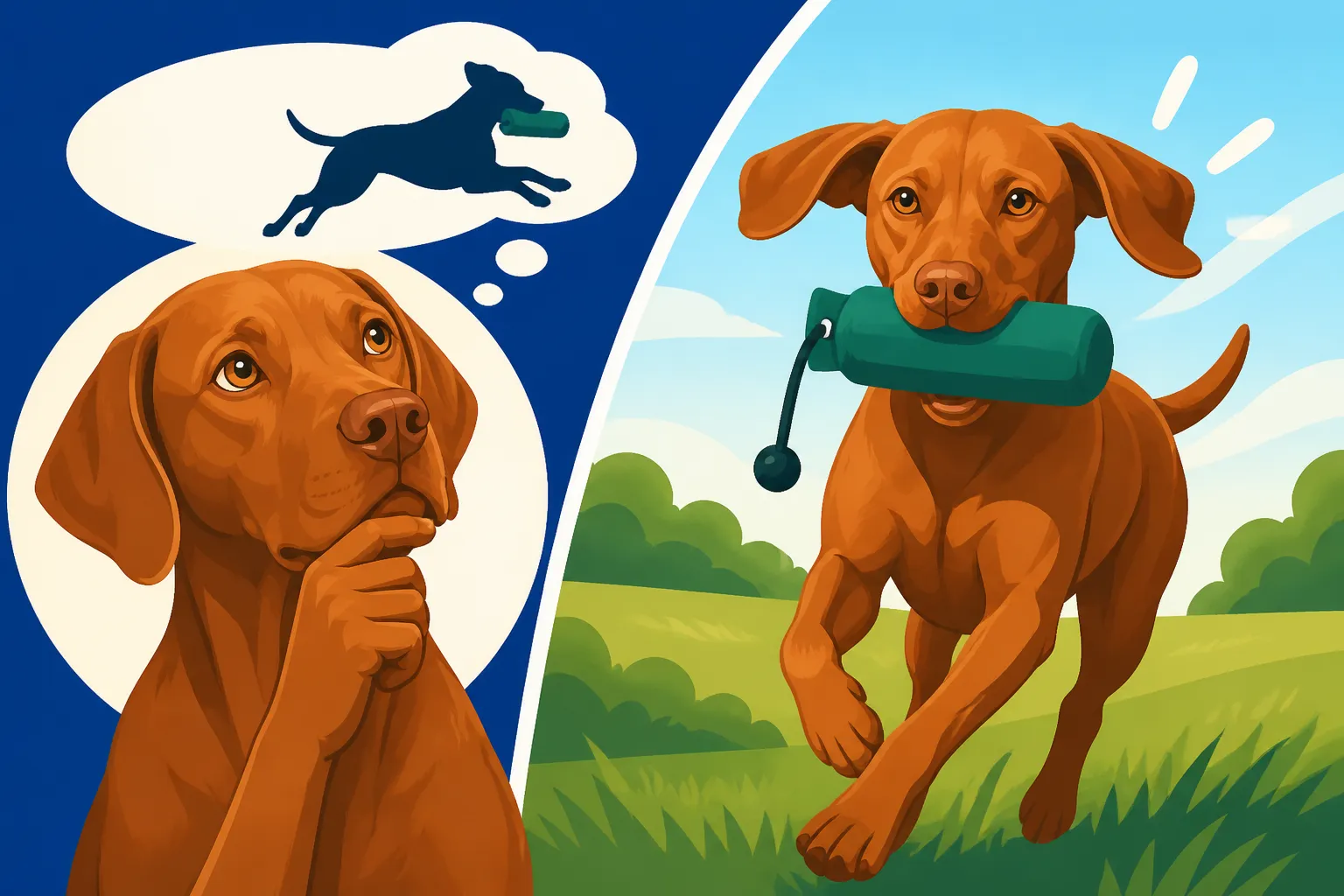
It's a common dream for many Vizsla owners, especially those new to the breed, to picture their beautiful rust-colored dog effortlessly retrieving a thrown object and delivering it gently to hand. You might have heard whispers about their natural instincts, making you believe that retrieving is just something they do. While Vizslas certainly possess many of the inherent traits that make them excellent retrievers, the reality is that "without being taught" is a rather high bar, and a truly reliable, consistent retrieve almost always requires thoughtful guidance and training.
The Vizsla's Innate Drive to Hunt and Carry
Vizslas were bred over centuries to be versatile hunting companions, working closely with their human partners. This means they were selected for specific traits that contribute to their effectiveness in the field, and a strong prey drive coupled with a desire to engage with game is definitely one of them. You'll often see these instincts manifest in their everyday play.
The Strong Desire to Engage and Please
One of the defining characteristics of a Vizsla is their profound bond with their human family. They are often called "Velcro Vizslas" for a reason; they want to be with you, near you, and involved in whatever you're doing. This intense desire to please is a massive asset in training. When it comes to retrieving, this translates into a willingness to participate in activities that involve you, including chasing objects you throw. They thrive on interaction and positive feedback from their owner, making them highly motivated learners.
However, a desire to please isn't automatically a perfectly executed retrieve. It means they're eager to try, eager to participate, and eager for your approval. This foundational trait is what makes teaching them to retrieve so rewarding, because you're working with their natural inclinations, not against them. You'll find that for a Vizsla, the act of retrieving isn't just about the object; it's about the shared experience with you. What a Vizsla Will Work For often includes this kind of partnership.
The Instinct to Chase and Mouth Objects
Vizslas have a natural instinct to chase moving objects. Throw a ball, a dummy, or even a crumpled piece of paper, and you'll likely see that burst of speed as they launch themselves after it. This prey drive is inherent in their breed makeup. Once they catch up to the object, most Vizslas will pick it up in their mouths. This "mouthing" or "carrying" is a vital component of retrieving. They also famously have a "soft mouth," meaning they are less likely to crush or damage game birds, a trait that makes them valuable bird dogs. Whether a Vizsla Is Soft Mouthed is a common question, and generally, the answer is yes.
But here's the crucial distinction: picking it up is not the same as delivering it to hand. Many Vizslas will pick up the object, proudly carry it a short distance, and then drop it. Or they might run past you, expecting you to chase them for it. Some might even engage in a fun game of keep-away, which, while endearing, isn't a trained retrieve. This is where the gap between natural inclination and trained behavior becomes evident. They have the raw ingredients, but they need guidance on how to assemble them into a useful skill.
Distinguishing Instinct from a Trained Retrieve
It's easy to conflate a dog's natural tendency with a fully formed behavior. With Vizslas, their strong drives can sometimes mask the need for specific training, leading owners to believe their dog should just "know" what to do.
What "Natural" Really Means for Retrieving
When we talk about a Vizsla's natural retrieving ability, we're talking about the components of the retrieve, not the finished product. They are wired to:
- Spot movement: Their keen eyesight makes them excellent at tracking thrown objects.
- Chase: Their speed and athleticism mean they can quickly cover ground to reach the object.
- Pick up gently: Their soft mouths ensure they don't damage what they pick up.
- Carry: They enjoy holding objects in their mouths.
These are incredible building blocks! However, a "natural retriever" still needs to learn the sequence and rules of the game you want them to play. Think of it like a child having a natural talent for running. They might be fast, but they still need to be taught the rules of a specific sport, like soccer or track and field, to truly excel. A Vizsla has the athleticism, but not necessarily the discipline for a precise retrieve without your input.
The Marks of a Truly Trained Retrieve
A trained retrieve is a skill that is reliable, consistent, and performed on command, regardless of distractions. It includes several key elements:
- Going on command: The dog waits for a cue ("fetch," "retrieve," "go get it") before chasing.
- Prompt pickup: They pick up the object without hesitation.
- Direct return: They return directly to the handler, without deviation or playing games.
- Delivery to hand: They present the object gently into the handler's outstretched hand.
- Holding until released: They hold the object until given a "give" or "release" command.
This sequence of behaviors is not something a dog typically performs perfectly without training. It requires patience, repetition, and a clear understanding between you and your Vizsla. Many Vizslas will excel at the "go get it" part but struggle with the "bring it back to me and give it" portion. This is where owners often feel frustrated, believing their dog is being stubborn when in fact, the dog just hasn't fully understood the complete desired behavior.
Guiding Your Vizsla to a Flawless Retrieve
Even with strong natural instincts, guiding your Vizsla to a reliable retrieve is incredibly rewarding and strengthens your bond. It's about channeling that natural enthusiasm into a polished skill.
Starting with Positive Play and Building Drive
The foundation of a great retrieve is making it fun and highly reinforcing. Never turn retrieving into a chore or a battle.
Make It a Game, Not a Command
Start by simply making retrieving a fun game. Use toys your Vizsla genuinely loves. Roll a ball a short distance and get excited when they chase it. When they pick it up, clap, praise, and encourage them to come back to you. If they drop it, don't rush to pick it up for them. Instead, back away, get low, and enthusiastically encourage them to come to you with the item. This often taps into their natural desire to be near you and share their "prize."
You can also try the "puppy push" method: if they drop it just out of reach, gently nudge the toy back towards them with your foot while still encouraging them to bring it closer. The goal is to make the journey to you with the object the most rewarding part of the entire process. Toys from a reliable source like Amazon can be a great way to experiment with what your Vizsla loves best.
Building Retrieval Drive
Some Vizslas have a higher natural drive than others. If your Vizsla is less enthusiastic about bringing things back, focus on building that drive. Use soft, interesting toys that mimic game birds if you plan to hunt, or simply their favorite squeaky toy. Play tug-of-war before you start throwing; this builds value for the object and teaches them to engage with it.
When you do throw, keep the throws short and allow immediate success. Lots of praise, a small treat, and maybe even another quick game of tug can make them eager for the next retrieve. Remember, What a Vizsla Will Work For is often attention and praise from you! Avoid long, boring sessions; keep it fun and energetic.
Introducing Formal Retrieve Commands
Once your Vizsla is enthusiastically bringing items back in a playful context, you can start to formalize the retrieve with specific commands.
Teaching "Hold" and "Give"
Before you ask for a full retrieve to hand, it's crucial that your Vizsla understands "hold" and "give." Start by gently placing an object they like (but not one they're tempted to chew) in their mouth and saying "hold." If they hold it for even a second, praise and release them with "give," immediately taking the object. Build up the duration of the "hold" gradually.
Once they can hold, practice the "give." With the object in their mouth, offer a high-value treat right under their nose as you say "give." As they open their mouth for the treat, gently take the object. This teaches them that releasing the object to you leads to something even better. This foundation is essential for preventing chewing on the retrieve or playing keep-away. For detailed guidance on positive reinforcement techniques, resources like BAXTER & Bella can be incredibly helpful for structured lessons.
Practicing the Full Sequence
With "hold" and "give" established, you can start putting it all together.
- Throw a short distance: Use a soft dummy or toy.
- Give the "fetch" command: As you throw, clearly say your retrieve command.
- Encourage the return: As they pick it up, encourage them to come back to you. You can back up to entice them.
- Practice "hold" on return: As they approach, gently take their collar (if they're not quite delivering to hand) and reinforce "hold."
- Command "give": Once they are close and holding, give your "give" command and take the object, immediately rewarding them.
Repeat this many times in a low-distraction environment. If they drop the object before reaching you, use a long line or check cord to guide them back. This ensures they complete the entire sequence. What a Check Cord and Whistle Cost is a good investment for this phase of training, as it allows you to maintain control without chasing them.
| Trait/Action | Natural Instinct (Common Vizsla Tendencies) | Trained Retrieve (Desired Outcome) |
|---|---|---|
| Desire to Chase | High; will sprint after thrown objects. | Waits for command, then chases. |
| Pickup | Likely to pick up the item. | Picks up promptly on command. |
| Delivery | May drop far away, play keep-away, or run past you. | Returns directly and promptly to handler. |
| Item Handling | May mouth, chew, or play tug with the item. | Holds gently without chewing; releases on "give" command. |
| Consistency | Variable; depends on mood, item, and distractions. | Reliable and consistent across different environments and items. |
| Motivation | Fun of the chase, object novelty. | Desire to please, reward from owner, ingrained habit. |
Troubleshooting Common Retrieving Issues
Even with the best intentions, you might run into bumps along the way.
The "Drop It Far Away" Dog
If your Vizsla consistently drops the item just out of reach, it's often because they haven't learned that bringing it all the way to you is the most rewarding part. Start by making yourself the "jackpot." When they pick up the item, get excited, back away a few steps, and praise them as they come closer. As soon as they are within reach, offer a treat or praise before taking the item. You can also use the long line to gently reel them in the last few feet, ensuring they come all the way to you every time. Never chase after them for the item; always make them come to you.
The "Play Keep-Away" Dog
This is usually a result of the dog learning that having the item makes you chase them, which is a fun game for them! To fix this, stop chasing. When they try to play keep-away, turn your back and walk away. This immediately ends the "game." They'll soon learn that the only way to keep the fun going is to bring the item back to you. When they do, reward them generously and immediately. You can also use a second, identical toy. When they bring one back, show them the second toy, enticing them to drop the first to get the next.
The "Chew It Up" Dog
If your Vizsla is prone to chewing on the retrieved item, it means they need more work on the "hold" command and understanding that the item is not a chew toy. Use less exciting items for training first, like a wooden dowel or a harder dummy, so they aren't as tempted to chew. Reinforce "hold" for longer durations and be very clear with your "give" command and reward. If they start to chew, immediately give a sharp, firm "no" (without yelling, as The Soft Vizsla That Shuts Down When You Raise Your Voice reminds us, they are sensitive) and replace the item with one they are allowed to chew, teaching them the distinction.
A Vizsla's natural inclinations are an incredible starting point for retrieving, but they are just that: a starting point. With patience, consistent positive reinforcement, and a clear understanding of the steps involved, you can absolutely guide your Vizsla to a reliable, impressive retrieve that will make every outing, whether in the field or the park, a true joy.
Disclaimer
This article is for general informational purposes only and does not constitute professional advice. Laws, prices and regulations vary by location and change over time. Consult a qualified professional for guidance on your specific situation.