Whether a Vizsla Sulks After a Correction
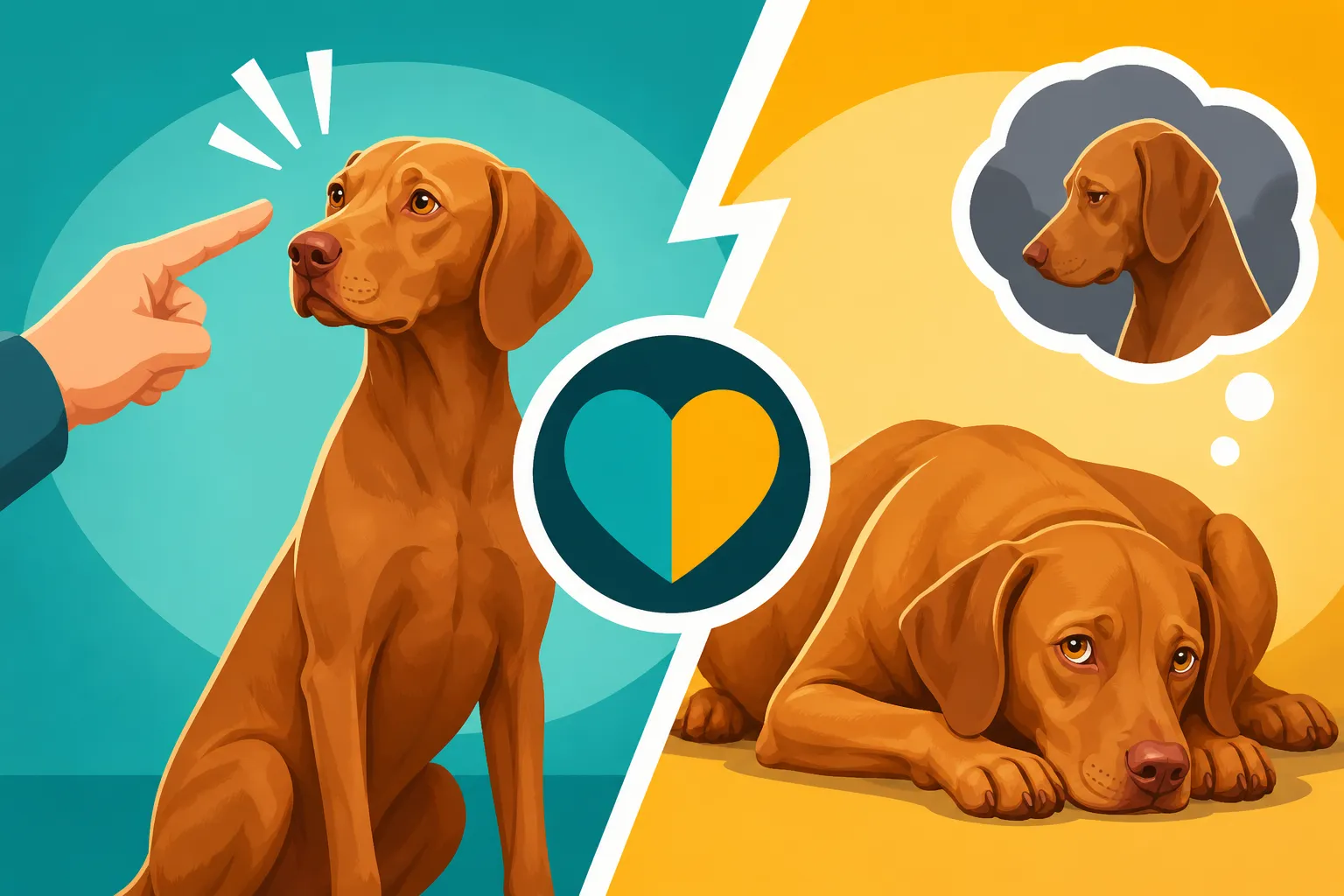
You raise your voice just a fraction of a octave to correct your dog for snatching a sock, and suddenly it feels like the energy in the room has completely shifted. Your dog lowers their head, slinks off to the farthest corner of the sofa, turns their back to you, and gives you a mournful side-eye that could melt steel. If you have ever wondered whether a dog is genuinely capable of holding a grudge or brooding over a reprimand, you are far from alone.
This guide breaks down why a Hungarian Vizsla sulks after a correction, what is truly happening inside their sensitive nervous system, and how to effectively set boundaries without breaking your dog’s trust or drive.
The Sensitive Nature of the Hungarian Vizsla
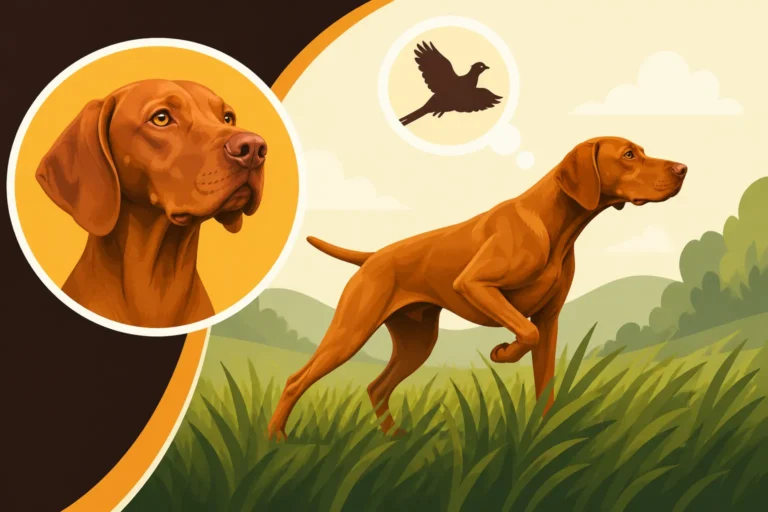
To understand why your dog retreats into a state of profound melodrama after a minor verbal slip, you have to look at what this breed was engineered to do. Vizslas were developed over centuries in Hungary to work closely alongside human handlers in open fields. Unlike independent livestock guardian breeds or headstrong terriers designed to fight quarry underground, the Vizsla was built to rely entirely on human direction, visual cues, and subtle changes in vocal tones.
Because their working style depends on intense focus on the handler, their emotional baseline is tightly linked to human approval. When a handler expresses frustration, the bird dog does not just hear a reprimand; they absorb the negative emotional charge of the environment. This high degree of emotional sensitivity makes them incredible companions, but it also means that basic training corrections can feel far more dramatic to them than they would to a Labrador or an English Bulldog.
THE VIZSLA SENSITIVITY CYCLE
Handler Frustration / Raised Voice
Unclear Handler Reaction → Deepens Stress/Confusion
▼
| ▼ | |
| Vizsla Absorbs Negative Emotional Energy | |
| ▼ | |
| Nervous System Overload (Appears as “Sulking”) | |
| ▼ | |
| Avoidance Behavior (Slinking, Dropped Ears, Turn Back) | |
The Genetic Blueprint of a Soft Working Dog
In gundog terminology, a dog is often classified as either “hard” or “soft.” A hard dog absorbs firm pressure, stern physical corrections, and high levels of stress without breaking stride or losing enthusiasm. A soft dog, by contrast, registers minimal pressure deeply. The Vizsla is widely considered one of the softest breeds in the sporting group, a trait thoroughly explored in The Soft Vizsla That Shuts Down When You Raise Your Voice.
This softness is not a flaw; it is an asset in the field when managed correctly. A soft dog requires very little force to shape behaviors, fine-tune pointing, or polish recalls. However, this genetic blueprint means that standard dog-training advice meant for more resilient, stubborn breeds often backfires spectacularly. If you apply heavy-handed methods to a dog genetically wired for light guidance, their internal pressure gauge immediately hits the red zone.
When a soft dog experiences a correction that exceeds their emotional tolerance threshold, they do not retaliate or push back. Instead, they collapse inward. What looks like human-style sulking, spite, or pouting is actually an involuntary survival response designed to diffuse perceived conflict and protect themselves from further emotional escalation.
Distinguishing Between Real Emotional Distress and Manipulative Sulking
It is common for owners to anthropomorphize their dogs and assume that a dog sitting on the opposite side of the room is thinking, “I can’t believe my human yelled at me, I’m going to ignore them until dinner.” Canines simply do not possess the complex cognitive architecture required to plan retaliatory pouting or engage in moral grudges. What appears to be “sulking” is almost always a combination of confusion, appeasement behavior, and emotional fatigue.
Appeasement behaviors are subtle body language signals dogs use to communicate non-aggression and placate a perceived threat. When your dog licks their lips, yawns repeatedly, averts their eyes, or turns their body away from you after a correction, they are using clear canine language to say, “I hear your anger, I am not a threat, please lower your intensity.”
If you interpret these appeasement signals as petty defiance or stubborn attitude, you run the risk of escalating your tone, which only drives the dog deeper into a state of stress. Understanding Why Harsh Handling Ruins a Vizsla is vital for any owner trying to navigate this delicate balance. If your dog retreats, they are not manipulating you; they are overwhelmed and trying to de-escalate the environment.
Why Voice Tone Impacts a Vizsla More Than Physical Corrections
Many first-time owners are shocked to realize that simply harsh acoustic energy—a sharp, loud “NO!” or a frustrated scream across the yard—can demoralize a sensitive dog just as much as, or more than, a physical leash pop. The acoustics of human emotion carry enormous weight for this breed. They pick up on pitch, posture, volume, and muscle tension instantly.
When a handler loses emotional control and shouts, the dog’s auditory environment is flooded with aggressive cues. Because they are so tuned into human vocalizations, a sharp yell can trigger a sudden drop in dopamine and a rise in cortisol. This biological reaction slows down their brain’s ability to process information and learn.
Instead of processing what behavior earned the noise, the dog’s focus shifts entirely to safety and self-preservation. They freeze, melt toward the floor, or retreat to a safe space like a dog bed or crate. If you want to train effectively, you must learn to govern your voice. A low, calm, firm tone is infinitely more instructive than a high-volume outburst.
Common Behaviors When a Vizsla Feeds Off Negative Energy
When negative energy fills a room during training or everyday life, a dog’s response is visible in every inch of their body. Because of their sleek, short coats and expressive faces, their non-verbal cues are remarkably clear once you learn how to read them. Recognizing these physical signals early prevents you from pushing your dog past their emotional limit.
Owners often report that after a stern verbal reprimand, their dog looks like they have aged five years in five seconds. Understanding these physical responses helps you judge whether your correction was fair and clear, or whether it simply overwhelmed your companion’s nervous system.
CANINE STRESS & APPEASEMENT SIGNS
Ears pinned back flat against the skull
Tail tucked tightly or lowered into a slow, cautious wag
Avoiding direct eye contact (“Whale Eye” showing whites of eyes)
Licking lips repeatedly when no food is present
Yawning suddenly in high-stress moments
Curling into a tight circle with back turned to the handler
Pacing slowly or slinking along walls and behind furniture
The Classic “Velocity of Sadness” and Body Language Clues
Experienced owners often joke about the “velocity of sadness”—the dramatic speed with which a vibrant, energetic red dog can turn into a tragic figure. One second they are leaping through the air after a tennis ball, and the next they are walking as if their limbs are made of lead because you scolded them for jumping on the kitchen counter.
The key body language cues to watch for include:
- Ears: Pinned flat back against the skull, losing their natural velvet fold.
- Tail: Tucked tightly between the hind legs or held low with a tiny, nervous, stiff wag at the tip.
- Eyes: Glanced away, often revealing the white crescent of the sclera (known as “whale eye”).
- Posture: The spine curves downward, the neck lowers, and the entire body appears to shrink toward the floor.
- Movement: Deliberate, slow-motion steps that look like an agonizing attempt to avoid taking up space.
These signs are clear evidence that the dog’s nervous system has shifted out of an active learning state and into an appeasement or avoidance state.
Avoidance, Head Dropping, and the Avoidant Glare
Avoidance is one of the most common manifestations of canine “sulking.” After a correction, your dog may deliberately walk to another room, lay under a dining table, or climb onto their bed and stare fixedly at a wall. When you call their name, they might twitch an ear or offer a single, heavy sigh, but refuse to make direct eye contact with you.
This cold-shoulder behavior is often mistaken for spite, but canine behavioral science reveals a different story: direct eye contact is a assertive cue in animal language. When your dog avoids looking at you, they are actively trying to decrease confrontation. They are taking a self-imposed time-out to process the negative feedback and allow the emotional temperature in the room to cool down.
If you follow the dog into the other room, stand over them, and demand that they “come say sorry” or engage with you immediately, you are ignoring their request for space. This can increase their anxiety, making them even more hesitant to approach you in the future.
Shutdown vs. Resistance: Understanding Neural Overload
There is a critical difference between a dog that is resisting a command out of stubbornness and a dog that has emotionally shut down due to neural overload. Confusing these two states is one of the most dangerous missteps a dog owner can make, as detailed in Whether a Vizsla Remembers a Bad Experience.
- Active Resistance: The dog is alert, dynamic, and actively choosing an alternative reward (e.g., sniffing a bush, chasing a squirrel, or holding onto a stolen shoe while keeping a playful distance). Their energy remains high, and their body language is bold.
- Emotional Shutdown: The dog stops moving entirely, ignores high-value treats, stares blankly into space, and stops responding to basic, well-known commands like “sit” or “here.” Their brain is overwhelmed by cortisol, temporarily halting their ability to process cues or make decisions.
When a dog enters emotional shutdown, further corrections will not improve compliance. Pushing harder in this moment creates learned helplessness, where the dog simply gives up trying because nothing they do feels safe. When neural overload hits, the training session must stop immediately, and the environment must return to a state of emotional neutral.
How Correction Styles Impact the Vizsla Mindset
Not all corrections are created equal, and how you deliver feedback determines whether your dog learns a clear lesson or sinks into a corner to broodingly recover. Because of their sensitive nature, the line between an informative boundary and an overwhelming punishment is thin.
To raise a confident, well-behaved dog, you must balance clear boundaries with gentle execution. Learning how to deliver feedback without damaging your working partnership requires an understanding of how different pressure styles land on sensitive dogs.
CORRECTION STYLES: IMPACT COMPARISON
| STYLE | IMMEDIATE RESULT | LONG-TERM EFFECT |
|---|---|---|
| Loud Screaming | Sudden panic, shutdown | Erosion of trust |
| Chronic anxiety | ||
| Physical Force | Fear, appeasement | Hand-shyness |
| Complete avoidance | Field performance drop | |
| Spatial Pressure | Attentive pause | Clear boundary |
| Immediate re-engagement | High trust retained | |
| Negative Punishment | Disappointment | Fast problem-solving |
| (Resource Removal) | High focus on handler | Strong emotional resilience |
Traditional Harsh Corrections vs. Fair Boundaries
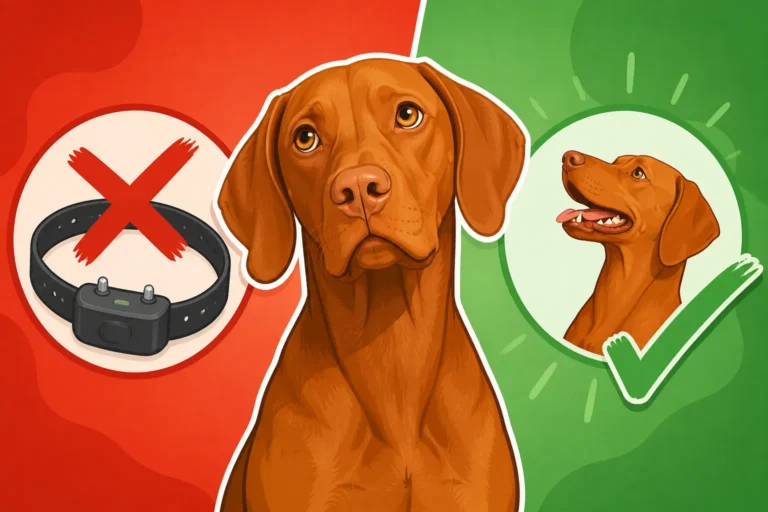
Traditional training systems designed decades ago often relied heavily on physical dominance, alpha-roll techniques, and high-intensity corrections. While a tough, hard-headed working dog might bounce back from those methods without losing their edge, applying them to a sensitive sporting dog usually creates serious behavioral issues.
Fair boundaries, on the other hand, do not require anger, physical force, or intimidating outbursts. A fair boundary is clear, predictable, and unemotional. For example, if your dog jumps on you, a fair boundary might involve immediately turning your back, withholding attention, and using spatial pressure to step into their bubble until they place four paws on the floor.
When boundaries are set calmly, the dog learns that their actions carry logical consequences, but that their handler remains a consistent, safe leader. This approach prevents the prolonged stress that leads to sulking and confusion.
The Role of Timing and Consistency in Corrective Training
One of the main reasons dogs “sulk” after a reprimand is that the correction was poorly timed, leaving the dog completely confused about what they did wrong. A dog lives entirely in the present moment. If you correct your dog for chewing a shoe five minutes after they dropped it, they will associate your anger with whatever they are doing right now—which might simply be standing near you or looking at your face.
To deliver an effective correction, the feedback must occur within 1 to 2 seconds of the unwanted behavior starting. If you catch your dog midway through reaching for a counter item, a sharp marker like “Ah-ah!” followed by an immediate redirection to an acceptable chew toy works remarkably well.
Consistency is equally vital. If jumping on the sofa is punished on Tuesday but rewarded with cuddles on Thursday while watching TV, the dog faces an unpredictable environment. This inconsistency creates chronic anxiety, causing the dog to act hesitant and defeated because they can never accurately predict your reaction.
Comparative Analysis of Correction Responses across Sporting Breeds
Understanding how different breeds process stress highlights why standard gundog training advice must be customized for your specific companion.
| Breed | Sensitivity Level | Typical Reaction to Harsh Voice | Recovery Time From Correction | Ideal Training Approach |
|---|---|---|---|---|
| Hungarian Vizsla | Very High | Immediate shutdown, avoidance, appeasement | Slow (Minutes to Hours) | Light spatial pressure, high reward, clear timing |
| German Shorthaired Pointer | Medium-Low | Shrugs off voice, may push back | Rapid (Seconds to Minutes) | Firm, consistent boundaries, high physical drive |
| Labrador Retriever | Medium | Mild concern, eager to appease | Fast (Minutes) | Food-driven redirection, balanced feedback |
| Golden Retriever | Medium-High | Softening posture, quick to re-engage | Moderate (Minutes) | Positive reinforcement, gentle spatial guidance |
| English Pointer | High | Avoidance, field range expansion | Moderate to Slow | Gentle handling, freedom-based motivation |
As shown in the table above, the Vizsla sits at the far end of the emotional sensitivity spectrum. Methods that work effortlessly on a German Shorthaired Pointer can leave a Vizsla feeling completely broken and unwilling to work. Understanding these differences helps explain why reading broad gundog literature can sometimes lead owners astray.
Rebuilding Confidence and Resetting After a Bad Moment
When a training session goes off the rails or an emotional correction leaves your dog slinking into a corner, you need a reliable strategy to reset the mood. Allowing a dog to marinate in stress for hours is harmful to their long-term confidence and weakens the bond you have worked hard to build.
Resetting does not mean spoiling the dog with treats right after they misbehaved, nor does it mean ignoring bad behavior. It means cleanly closing the chapter on the mistake and giving the dog a clear, achievable path back into your good graces.
THE 4-STEP RECOVERY PROTOCOL
1. TAKE A NEUTRAL PAUSE
Stop speaking, take a breath, lower internal stress.
2. CHANGE THE ENVIRONMENT
Move to a new room, garden, or path to clear context.
3. ASK FOR A SIMPLE HIGH-SUCCESS COMMAND
Cue an easy, fun behavior (e.g., “Touch” or “Hand Shake”).
4. RE-ENGAGE WITH HIGH-VALUE REWARD
Deliver enthusiastic praise to officially clear the air.
The Golden Rule of Leaving Mistakes in the Past
Humans love to dwell on frustration, analyze past mistakes, and harbor subtle residual annoyance long after an argument is over. Dogs do not operate this way. Once a moment has passed, your dog wants nothing more than to return to a balanced, safe relationship with you.
The moment a correction is delivered and the unwanted behavior stops, your internal emotion should instantly return to neutral. If you continue to glare at your dog, heave frustrated sighs, or give them the cold shoulder for the next two hours, you are feeding a cycle of confusion. The dog senses your lingering tension, assumes you are still upset, and continues their appeasement behavior, which you then interpret as continuous “sulking.”
Adopt the gundog trainer’s golden rule: Correct, correct, move on. The second the dog stops the bad behavior, clear your energy, take a deep breath, and reset your baseline. This allows your dog to rebound immediately rather than sinking into prolonged distress.
Structured Repair Protocols and Online Coaching Support
If you find yourself stuck in a bad emotional cycle with your dog, having a structured, step-by-step reset protocol can help you both find your footing. A reliable reset sequence looks like this:
- Take a Neutral Pause: Step back, stop talking, and take three deep breaths to drop your own heart rate.
- Change the Environment: Walk into a different room, step out into the backyard, or move to a clean piece of grass away from the conflict spot.
- Ask for an Easy Win: Give your dog a simple, low-stakes command they love and know perfectly, such as a hand-target (“Touch”) or a basic “Sit.”
- Throw a Micro-Party: The instant they complete the easy command, offer genuine, warm praise and a high-value treat to show them that the air is clear and the partnership is fully restored.
For owners who struggle to stay calm or find themselves regularly overwhelming their sensitive companions, structured guidance can make a world of difference. Comprehensive platforms like BAXTER & Bella offer excellent step-by-step video courses and live coaching options specifically tailored toward positive, relationship-based training. Having access to professional guidance helps human handlers learn emotional self-regulation, ensuring corrections stay fair, minimal, and informative.
Utilizing High-Value Motivation and Engagement Drills
When a soft dog loses confidence after a bad moment, their internal drive drops. To pull them out of a shutdown state, you need to reignite their enthusiasm using movement and high-value rewards. Static exercises like stay work or long down-positions force a stressed dog to linger in their thoughts, which can prolong their emotional slump.
Instead, switch to dynamic, movement-based engagement games:
- Treat Tosses: Scatter high-value treats (like freeze-dried liver or cheese) into grass and encourage your dog to use their nose to hunt for them. Sniffing naturally lowers a dog’s heart rate and reduces stress.
- Chaser Games: Drag a favorite tug toy along the ground like prey to tap into their natural chase drive.
- Hand Targeting: Ask your dog to bump their nose against your palm, rewarding them immediately for moving toward you.
Equipping yourself with appropriate engagement tools found on Amazon, such as long lines, flirt poles, and durable puzzle toys, gives you practical ways to redirect nervous energy into productive, confidence-building fun.
Long-Term Consequences of Poorly Managed Corrections
Consistently mishandling corrections with a sensitive breed does not just cause occasional sulking; it can fundamentally alter your dog’s personality and derail your training goals. Over time, repeated emotional overload erodes the foundation of trust required for both everyday living and advanced field work.
Understanding the long-term risks of heavy-handed training serves as a powerful reminder to prioritize patience, consistency, and clear communication above quick-fix physical or vocal reprimands.
CHRONIC STRESS VS. CONFIDENT PARTNERSHIP
| POORLY MANAGED CORRECTIONS | BALANCED POSITIVE FRAMEWORK |
|---|---|
| • Hesitant, slow responses | • Fast, enthusiastic execution |
| • Fear of making decisions | • Creative problem-solving |
| • Weak recall, range anxiety | • Reliable, joyful recall |
| • Constant appeasement behaviors | • Relaxed posture and eye contact |
| • Increased risk of field burnout | • High drive and stamina |
Ruining the Velcro Bond and Creating Chronic Anxiety
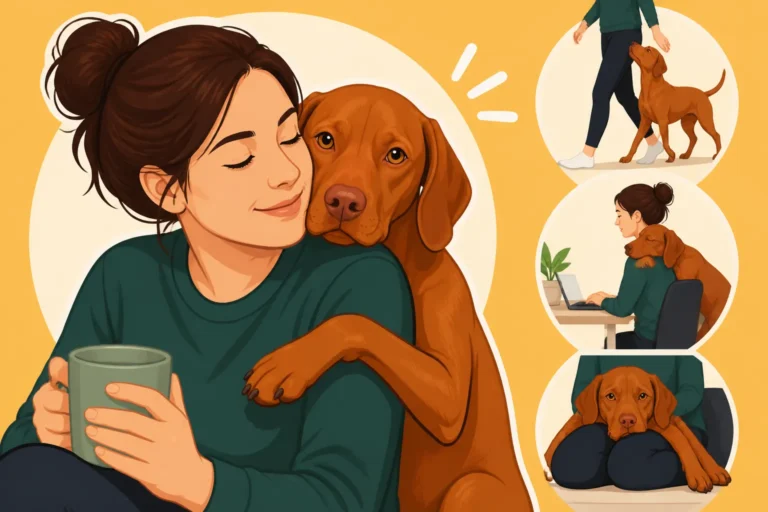
The intense, affectionate connection that defines this breed is often called the “Velcro bond.” They thrive on physical closeness, deep affection, and active partnership. However, when corrections are harsh, frequent, or unpredictable, that famous loyalty can turn into anxious hyper-vigilance.
Instead of leaning on you as a secure base, the dog begins walking on eggshells. They may monitor your every movement, scan your face for signs of anger, and exhibit signs of separation anxiety when left alone. As discussed in depth in Whether Shouting at a Vizsla Sets It Back Weeks, a single major emotional blowout can destroy months of trust, requiring extensive time and effort to rebuild.
When a dog exists in a chronic state of emotional uncertainty, their overall health can suffer. Chronic anxiety suppresses the immune system, leads to digestive issues, and can even trigger or exacerbate underlying skin conditions that plague sensitive lines.
Field Burnout and Loss of Pointing or Retrieving Drive
For owners who intend to hunt, run field trials, or participate in hunt tests, mismanaging pressure can ruin a dog’s working potential. A good bird dog needs immense confidence to range through thick cover, make independent decisions, and handle birds with care.
If a dog is repeatedly corrected with high intensity during field work, they quickly lose their spark. They will stop hunting for game and instead range close to the handler, constantly checking in with worried glances. They may refuse to pick up birds for fear of doing it wrong, or freeze on point indefinitely out of fear that breaking point will bring a reprimand.
Field burnout is tragic because it strips away the very joy the dog was bred to experience. Re-establishing drive in a burned-out gundog requires months of zero-pressure exposure, careful praise, and slow, patient rebuilding.
Preventing Sulking Through Positive Reinforcement Frameworks
The best way to eliminate sulking is to adopt a training framework built on positive reinforcement, clear criteria, and proactive management. Rather than constantly waiting for your dog to make a mistake and then punishing them, focus your energy on teaching them what you want them to do.
Key principles for preventing emotional shutdowns include:
- Reward the Opposite Behavior: If your dog tends to counter-surf, proactively reward them every time they choose to sit quietly on their mat in the kitchen instead.
- Break Down Training Steps: If your dog makes a mistake during a session, do not raise your voice. Simply treat it as broken communication, lower the difficulty level, and help them succeed on the next attempt.
- Set Clear Boundaries Calmly: Use reward removal, spatial pressure, or quiet time-outs rather than yelling or physical corrections.
- Keep Sessions Short and Fun: End training sessions while your dog is excited and eager for more, leaving them with high confidence and a positive association with learning.
By evaluating Whether a Vizsla Needs a Firm Hand at All and adopting a thoughtful, modern approach to dog training, you can build a polite, well-mannered companion without ever souring their spirit or causing them to retreat into a corner.
Comparing Behavioral Traits and Stress Responses
To help visualize how sensitive sporting dogs respond to different handling styles, consider the following chart detailing stress markers and ideal correction strategies:
HANDLING STYLES & STRESS OUTCOMES
| APPROACH | STRESS LEVEL | CANINE RESPONSE | IDEAL USE CASE |
|---|---|---|---|
| Heavy Verbal / | Extremely | Complete shutdown | Never recommended |
| Physical Force | High | Panic, avoidance | for soft dogs |
| Sudden Outburst / | High | Freeze, slinking | Emergency safety |
| Loud Shouting | Deep appeasement | hazards only | |
| Calm Spatial | Moderate | Attentive pause | Boundary setting |
| Pressure | Quick reset | Counter jumping | |
| Negative | Low | Disappointment | Resource control |
| Punishment | High engagement | Leash pulling | |
| Proactive Marker / | Minimal | Enthusiastic | Daily habit |
| Redirect | Problem solving | building |
As the data shows, high-stress handling styles yield poor long-term training results while harming your relationship with your dog. By lowering your volume and raising your clarity, you can establish strong boundaries while keeping your companion’s tail wagging and mind fully engaged.
Frequently Asked Questions
Why does my dog act dramatic after a minor verbal correction?
Your dog is genetically wired to be deeply attentive to human emotion and vocal tone. A raised voice signals a shift in environmental safety, triggering appeasement behaviors like slinking away or averting eye contact to lower the tension.
Is my dog holding a grudge when they sit across the room from me?
No. Dogs do not possess the complex cognitive ability to plan grudges or act spiteful. Sitting far away and avoiding eye contact is canine appeasement language meant to de-escalate stress and give you space until the air clears.
What should I do when my dog shuts down during training?
Stop the training session immediately. Take a deep breath to reset your own energy, move to a neutral environment, and give your dog a very easy command to rebuild their confidence before wrapping up with praise and high-value rewards.
How can I set boundaries without hurting my dog’s feelings?
Use calm, unemotional methods like spatial pressure, withholding attention, or removing access to resources instead of shouting or using physical force. Keep your timing precise so your dog clearly understands which action caused the outcome.
Can a soft dog recover after being handled too harshly?
Yes, but it takes time, consistency, and patience. Focus on positive reinforcement, keep training sessions short and fun, use clear non-verbal cues, and avoid yelling to help rebuild your dog’s trust and confidence over time.
Conclusion
So, does a Hungarian Vizsla sulk after a correction? Not in the human sense of petty spite or holding a grudge. But if “sulking” means dropping their head, slinking away with a heavy heart, and looking profoundly sad because they feel they have disappointed you, then the answer is an undeniable yes.
Their high emotional intelligence and sensitivity make them wonderfully attuned companions, but these same traits mean they need a handler who leads with emotional control, consistency, and gentle clarity. By replacing loud outbursts and harsh pressure with calm boundaries and clear communication, you can guide your dog without damaging their confidence or breaking that incredible Velcro bond that brought you together in the first place.
For further reading on navigating training dynamics, check out our deep dives into Whether Positive Training Alone Works on a Vizsla, Whether a Vizsla Handles a Professional Trainer, Whether a Vizsla Recovers From Rough Handling, and Whether a Vizsla Is Softer Than a Weimaraner.
Disclaimer
This article is for general informational purposes only and does not constitute professional advice. Laws, prices and regulations vary by location and change over time. Consult a qualified professional for guidance on your specific situation.