Building a Recall on a Vizsla That Ranges
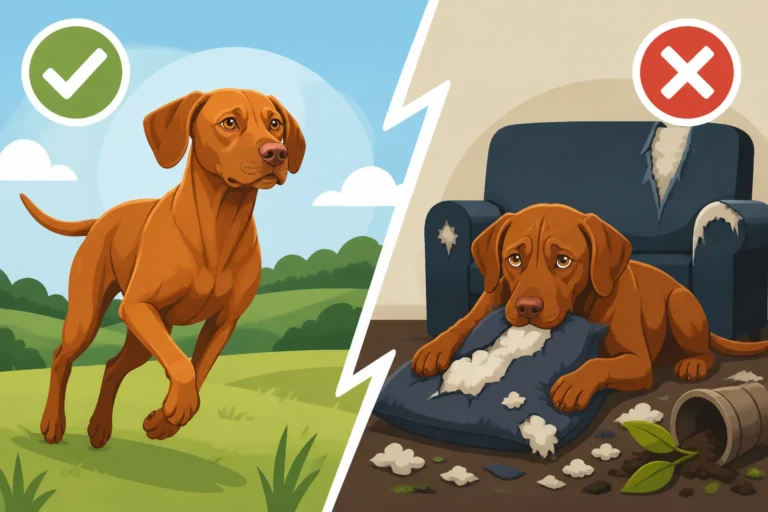
Few things are more heart-stopping for a Vizsla owner than calling your dog, only for them to launch into the horizon after a deer, a bird, or just because the wind felt good. Their incredible prey drive and boundless energy mean they can cover ground faster than you can shout, leaving you feeling helpless and panicked. This guide is all about understanding why your Vizsla loves to range and, more importantly, how to build a rock-solid recall that brings them back to you, no matter the distraction.
Understanding the Vizsla's Instinct to Range
Vizslas are magnificent creatures, renowned for their stunning looks, affectionate nature, and, let's be honest, their sometimes infuriating independence when a compelling scent hits the air. Their tendency to range widely isn't a sign of disobedience; it's a deeply ingrained part of their genetic makeup, a legacy passed down through generations of working dogs. Ignoring this fundamental aspect of their breed is like trying to convince a fish not to swim.
The Vizsla's Hunter's Heart
Imagine for a moment being bred for centuries specifically to cover vast stretches of land, to track, point, and retrieve game for human companions. That's the Vizsla. They come from a long line of Hungarian hunting dogs, developed to be efficient, tireless partners in the field. This history means they are innately programmed to seek out stimuli, follow fascinating smells, and explore their environment with an almost unstoppable drive. Their senses are incredibly acute, picking up nuances in the air and ground that we could never perceive, and these stimuli act as powerful magnets, drawing them further and further away.
It's not that they don't love you or want to be with you; it's that their ancient instincts are compelling them to fulfill a purpose. When a Vizsla catches a whiff of a pheasant across a field or spots a rabbit darting into the undergrowth, their entire being shifts into hunting mode. Every fiber of their muscle and every neuron in their brain screams "go!" This instinctual drive is incredibly powerful, often overriding even the most well-intentioned training if the foundation isn't strong enough. A true recall means your voice becomes more compelling than that ancient urge.
What "Ranging" Truly Means for a Vizsla
When we talk about a Vizsla ranging, we're describing their tendency to move far from their handler while working or exploring, often staying within scenting or hearing distance but not necessarily within easy visual range. For many other breeds, "off-leash" might mean staying within 20 feet. For a Vizsla, it can easily mean half a mile away, quartering a field, or weaving through dense woods, all while checking the wind for scent. They are efficient ground-coverers, light on their feet, and possess incredible stamina. How Far a Vizsla Should Run Daily gives you a better idea of just how much ground they can cover.
This isn't malicious behavior; it's how they're built to hunt. They need to explore broadly to find game, and their intelligence allows them to navigate complex terrain and keep track of their position relative to you. The challenge for us, as modern owners, is to harness this natural ranging behavior in a safe and controllable way. We need to teach them that coming back to us is not just a command, but the most rewarding part of their adventurous outing. This means understanding their drive and working with it, rather than trying to stifle it entirely, which would be a battle you'd likely lose and frustrate your dog immensely.
Why Their Breed Traits Make Recall Challenging
Beyond the sheer speed and prey drive, several other Vizsla traits contribute to recall challenges. Firstly, their high energy levels mean they are often moving at a pace that makes hearing or processing a command difficult. In the middle of a full-speed dash, their focus is on the chase, not on your voice. Secondly, their intelligence, while a blessing in many training contexts, can sometimes be a curse for recall. They are problem-solvers; if coming back to you consistently yields a boring outcome or ends their fun, they'll quickly learn to optimize their choices in favor of the more exciting option (the chase!).
Another factor is their intense curiosity. Everything is interesting to a Vizsla, and every new smell is a potential adventure waiting to unfold. This makes them easily distracted by the environment, particularly when they're off-leash in a novel area. Finally, their "soft" nature means they can be sensitive to harsh corrections or frustration in your voice. If a recall is ever associated with a negative experience – being yelled at, getting an unpleasant yank, or immediately being put back on the leash – they will develop a negative association, making them even less likely to return willingly in the future. The Soft Vizsla That Shuts Down When You Raise Your Voice really highlights this sensitivity.
Laying the Foundation: Early Recall Training
Recall isn't a trick you teach once and then forget; it's a lifelong conversation and a cornerstone of trust between you and your Vizsla. The earlier you start, the better, but it's never too late to reinforce good habits. Think of it as building a strong bridge between two islands – your dog and you – where every successful recall strengthens the structure.
Puppy Recall: The First Steps
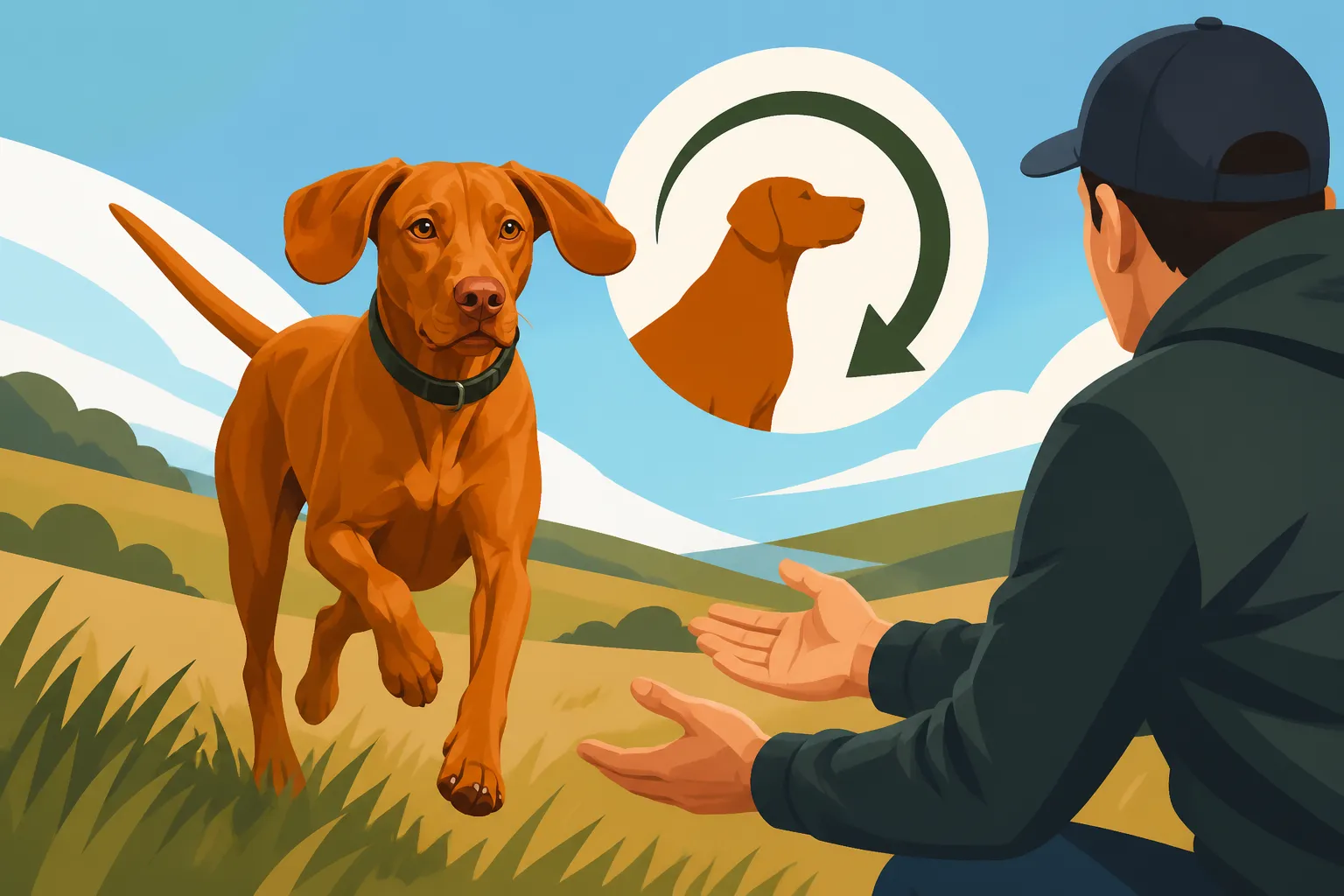
When you first bring your Vizsla puppy home, recall training should begin immediately, not just as a formal command, but as a fun game. Start in a very low-distraction environment, like your living room or a securely fenced yard. Get down on their level, use an enthusiastic, happy voice, and say their name followed by your recall word (e.g., "Rusty, COME!"). As they take even one step towards you, praise them profusely ("YES! Good boy!"). When they reach you, reward them with a high-value treat, a quick game of tug, or an exciting toy. The key is to make coming back the absolute best thing that could happen to them in that moment.
Practicing multiple short sessions throughout the day is far more effective than one long, boring one. At this stage, you're not just teaching the word "come"; you're building a deeply positive emotional association with the act of returning to you. Every time your puppy chooses to come to you when called, you are reinforcing that you are the source of all good things, solidifying their desire to stay connected. Remember, a puppy's attention span is short, so keep it fun and keep them wanting more.
Making Recall a Party, Not a Punishment
This is perhaps the most crucial mindset shift for successful Vizsla recall: your call should always, without exception, lead to something positive. If your Vizsla only gets called when it's time to end their fun – to go home, to get bathed, or to be scolded – they will quickly learn that "come" is the signal that the good times are over. This is known as "recall poisoning," and it's incredibly hard to undo. Instead, make coming back a celebration!
Practice calling your Vizsla for no reason at all. Call them, reward them lavishly, and then immediately release them to go play again. This teaches them that coming to you doesn't always mean the end of their freedom; it often means a quick, fun pit stop before more adventures. Use an excited, high-pitched voice, drop to one knee, clap your hands, or even run a few steps away from them to encourage them to chase you. These actions make you more inviting and dynamic than any static tree or distant scent. Keep a variety of truly high-value treats on hand – small pieces of cooked chicken, cheese, or their absolute favorite kibble – to make the reward irresistible.
Building Value in Coming Back
For a Vizsla that loves to range, the intrinsic reward of exploring or chasing a scent is incredibly high. Your job is to elevate the "value" of coming back to you even higher. This isn't just about treats, though treats are a vital part of it. It's about making yourself the most interesting, most rewarding, and most fun thing in their environment. Think about what your Vizsla absolutely adores – is it a squeaky toy, a vigorous scratch behind the ears, or a wild game of chase? Incorporate these into your recall rewards.
Vary your rewards to keep things exciting. Sometimes it's a treat, sometimes a favorite toy, sometimes a burst of enthusiastic praise and a mini-wrestle. The unpredictability keeps them engaged and eager to find out what amazing thing will happen when they return. Additionally, never use recall as a means to punish or scold your dog, even if they took their sweet time getting back to you. If they finally arrive, after what felt like an eternity, greet them with warmth and praise. Any negative reaction from you will only make them more hesitant next time. Your reaction upon their return sets the stage for every future recall attempt.
Essential Tools for Recall Success
While training is paramount, certain tools can significantly aid in building and maintaining a reliable recall with a wide-ranging Vizsla. These aren't shortcuts, but aids that help you safely manage your dog while they're learning, and provide peace of mind as their independence grows.
The Power of the Long Line
A long line is arguably the most indispensable tool for training recall with a Vizsla. This isn't your standard 6-foot leash; we're talking about 20, 30, or even 50 feet of lightweight rope or webbing. The long line allows your Vizsla to explore and range, giving them a sense of freedom, while still keeping you connected and in control. You can purchase these easily from retailers like Amazon, often in various lengths and materials.
Start using a long line in a safe, open area with minimal distractions. Let your Vizsla wander to the end of the line, then give your recall cue. If they don't respond immediately, you can gently reel them in, giving a slight tug on the line while repeating the cue. The moment they start moving towards you, release the tension, praise them, and reward heavily when they reach you. This teaches them that resisting the recall cue is futile, and responding promptly leads to rewards, without ever having to chase them down or get frustrated. It's about setting them up for success and preventing them from practicing ignoring you.
Whistles and Consistent Cues
While your verbal "come" cue is important, a whistle can be an incredibly powerful tool for recall, especially with a dog like a Vizsla that might range out of earshot. A whistle's sound carries further and is more consistent than the human voice, which can vary greatly depending on your mood, fatigue, or stress levels. The distinct sound cuts through distractions more effectively, and because it's only used for recall, it won't become "poisoned" by being associated with other commands or negative experiences.
Introduce the whistle in the same low-distraction environments as your verbal cue. When your dog is close to you, give one consistent whistle blast (or whatever pattern you choose), immediately followed by a high-value treat. Repeat this many, many times, associating the whistle with an instant, wonderful reward. Once this association is solid, you can start using it on the long line, gradually increasing the distance and distractions. Remember, the whistle means "come here right now for the best reward ever!" Consistency is key here; everyone who handles the dog should use the same whistle pattern and reward method. Whether a Whistle Recall Works on a Vizsla can offer more insights.
Considering a GPS Tracker
For Vizslas who love to push the boundaries of their range, or for owners who frequently take their dogs into vast, open spaces, a GPS tracker can offer invaluable peace of mind. While it's not a training tool for recall itself, it's a safety net that can help you locate your dog if your recall fails, or if they get disoriented and can't find their way back to you. What a GPS Collar Costs for a Vizsla might be helpful to review if you're considering this option.
Many modern GPS trackers attach directly to your dog's collar and connect to an app on your smartphone, allowing you to see their real-time location. Some even offer features like setting virtual fences or tracking their activity. While an excellent recall should always be your primary goal, a GPS tracker acts as an insurance policy, especially when your Vizsla might be Whether a Vizsla Ranges Wider Than a Shorthair or if you hunt in challenging terrain. Products available on Amazon often offer a range of features and price points, so you can find one that fits your needs and budget. It's an investment in safety that many Vizsla owners find well worth it.
Proofing Your Recall in Distracting Environments
A perfect recall in your backyard is a great start, but it means little if your Vizsla disappears the moment a squirrel crosses their path in the park. "Proofing" your recall means systematically practicing and strengthening it in increasingly challenging environments, under escalating levels of distraction. This process requires patience, consistency, and a realistic understanding of your Vizsla's powerful instincts.
Starting Small: Controlled Distractions
Once your Vizsla has a solid recall in a quiet, familiar environment, it's time to introduce controlled distractions. The emphasis here is on "controlled." Don't jump straight to a dog park or a field full of rabbits. Begin with mild, predictable distractions that you can easily manage. For instance, start practicing in your yard while a family member walks by a few feet away, or has a quiet conversation. The goal is for your Vizsla to still choose you over the minor distraction.
Gradually increase the intensity: a toy rolling by, another dog playing calmly at a distance, or someone lightly jogging. Each time, set your Vizsla up for success. Keep them on a long line initially, so you can gently guide them if they start to ignore you. Reward heavily for every successful recall, even if you had to give a slight reminder on the line. The objective is to build a positive history of choosing to return to you, even when there's something else vying for their attention. This slow, deliberate escalation helps generalize the recall behavior, making it less dependent on the specific location or lack of external stimuli.
Gradually Escalating the Challenge
As your Vizsla masters recall with minor distractions, you can slowly escalate the challenge. This means moving to new locations with slightly more going on – perhaps a quiet park, a hiking trail without heavy foot traffic, or an open field without known wildlife. The key is to introduce only one or two new elements at a time. For example, if you're adding a new location, keep the distraction level low. If you're adding a new type of distraction (like another dog), do it in a familiar, controlled environment.
Remember that a Vizsla's prey drive is incredibly strong. Introducing game animals too early can be a major setback. Only when your Vizsla is consistently ignoring squirrels and distant birds in less stimulating environments should you even consider moving to areas where actual game might be present. Even then, always start with the long line. It's a progressive journey, not a race. Each successful recall in a more distracting setting adds another layer of reliability to your dog's understanding that coming to you is always the best option, no matter what captivating thing might be happening around them.
The Importance of Consistency Across Locations
A common pitfall for owners is assuming that once recall is solid in one place, it's solid everywhere. For a Vizsla, this simply isn't true. They are incredibly adept at associating behaviors with specific contexts. A dog might have a perfect recall at home, but act "deaf" at the local park because they haven't been taught that the rules apply universally. To truly proof your recall, you need to practice it in as many different environments as possible.
This means varying your training locations frequently: different parks, different trails, even different times of day. Each new environment presents unique sights, sounds, and smells that will test your Vizsla's focus. Always start with your long line in a new area until you're confident in their responsiveness. Continue to make yourself exciting and rewarding. If you notice a particular environment or type of distraction causes your Vizsla to falter, go back a step. Practice with that specific distraction at a lower intensity or a greater distance until they are consistently succeeding. This relentless, positive consistency across varied settings is what builds a truly bombproof recall.
Troubleshooting Common Recall Problems
Even with the best intentions and consistent training, Vizsla owners often encounter specific challenges when it comes to recall. Their inherent drives can be formidable, and understanding these common stumbling blocks is the first step toward overcoming them.
When Your Vizsla "Ignores" You
It's a familiar scenario: you call, and your Vizsla freezes, ears twitching, nose to the ground, or they simply glance back at you before continuing their exploration. It feels like they're ignoring you, and in a way, they are – because something else is currently more rewarding. This isn't usually an act of defiance, but rather a calculation of value. The environment is offering a higher payout (a great smell, a chase) than your recall cue.
First, evaluate your reward system. Are your treats truly high-value? Are you making coming back an exciting, unpredictable event? If your rewards are always dry kibble and a pat on the head, while the field offers exciting scents, your Vizsla will opt for the field every time. Second, consider the context. Did you ask for a recall in an environment too distracting for their current skill level? If so, you've set them up to fail. Go back to a less distracting area and rebuild confidence. Third, never repeat the recall command endlessly. If they don't respond to the first or second clear command, it's not a failure on their part; it's a failure of your training setup. Repeat the command while gently reeling them in on a long line, ensuring they complete the action. This teaches them that the command is non-negotiable, but still leads to a reward.
Dealing with Game Scent and Prey Drive
The Vizsla's incredible prey drive is their defining characteristic and often the biggest hurdle for recall. When a Vizsla hits a hot game scent, their instincts take over. They go "deaf" to everything else, their mind laser-focused on the hunt. This isn't something you can train out of them entirely, but you can teach them that coming back to you even when on scent is more rewarding. Whether a Vizsla Comes Back Off Game is a critical question for owners.
This requires extremely high-value rewards and relentless practice. Use a long line in areas where you know there might be game. The moment your Vizsla sniffs something interesting and starts to stiffen or pull, give your recall cue. If they hesitate, give a gentle but firm tug on the long line while repeating the cue. The instant they turn back, praise wildly and offer that cooked chicken or piece of cheese. The goal is to interrupt the prey sequence before they fully engage in the chase, and redirect that intense focus onto you. Over time, with enough positive reinforcement, you can increase the probability that they will choose you over the irresistible call of the wild.
Avoiding Recall Poisoning
Recall poisoning occurs when your recall cue becomes associated with negative experiences. For example, if you only call your Vizsla to:
- End their fun outing.
- Put them on a leash immediately after a recall (especially if they love being off-leash).
- Scold them for something they did (even if it was 10 minutes ago, they'll associate the punishment with coming to you).
- Take them to the vet for a shot.
If any of these scenarios happen consistently, your Vizsla will quickly learn that "come" equals something unpleasant, and they will naturally become hesitant or outright refuse to return. To avoid this, make recall a frequent, positive, and often "pointless" exercise. Call them, reward them lavishly, and then immediately tell them "Go play!" or release them. Do this several times during an outing. This ensures that the recall cue is primarily associated with treats, praise, and the continuation of fun, rather than its abrupt end. Remember, the vast majority of recalls should lead to a release back to play, preventing the association that "come" means "fun over."
Advanced Recall Techniques and Drills
Once your Vizsla has a solid foundation and can consistently recall in moderately distracting environments, it's time to introduce some advanced techniques. These drills not only strengthen the recall but also make the process more engaging for your highly intelligent and active Vizsla.
The "Hide and Seek" Game
Vizslas are incredibly bonded to their people, often earning the nickname "Velcro Vizsla" for their desire to be constantly by your side. You can leverage this natural attachment to strengthen your recall through a game of "hide and seek." This drill builds attentiveness and reinforces the idea that you are the most interesting thing in their environment, something they always want to find. Why They Call It a Velcro Vizsla explains this bond perfectly.
Start in an open, safe area where your Vizsla is focused on you. As they are sniffing or wandering slightly, hide behind a tree, a bush, or a large rock. Don't call them immediately. Wait for them to notice you're gone and start looking for you. The moment they show signs of searching, or when they turn to look for you, give your enthusiastic recall cue. When they find you, praise and reward them exuberantly. As they get better, you can hide in more challenging spots or wait a little longer. This game teaches them to keep track of your location and reinforces that coming to you is a delightful reunion, not a chore.
Emergency Recall Cue
Every Vizsla owner should have an "emergency recall" cue – a distinct word or sound reserved only for life-or-death situations and never used in regular training. This cue needs to be charged with the absolute highest-value rewards imaginable. Think freeze-dried liver, an entire hot dog cut into pieces, or a favorite squeaky toy that only comes out for this specific training. The idea is that if you ever need to use it, your Vizsla's response is automatic, immediate, and utterly unwavering.
Choose a unique word or whistle command that you don't use for anything else. Practice this cue in quiet environments by giving the cue and instantly showering your Vizsla with an overwhelming amount of high-value treats and praise. The goal is to create such a powerful positive association that this cue becomes a reflex. Do this sparingly and only in controlled settings, so its power is never diluted. You hope you never have to use it, but having this "break glass in case of emergency" recall can literally save your Vizsla's life if they're running towards a road or an unknown danger.
The "Ping-Pong" Recall
If you have two people available, the "ping-pong" recall is an excellent drill for building speed and enthusiasm for recall. This is particularly effective for Vizslas who need to learn that coming back isn't just about reaching one person, but about responding reliably to the cue regardless of who gives it.
Stand about 20-30 feet apart in a low-distraction environment. One person calls the Vizsla, rewards them heavily when they arrive, and then the other person immediately calls the Vizsla to them. Continue alternating calls, making each arrival a huge celebration with treats, praise, and maybe a quick toss of a toy. The Vizsla learns that coming to a call is a fun, dynamic game with continuous rewards, and that the "fun" moves between people. This drill is fantastic for building speed and ensuring your Vizsla is just as happy to come to other trusted family members as they are to you.
Maintaining a Lifetime Recall
Building a reliable recall is a marathon, not a sprint. For a breed as intelligent, driven, and energetic as the Vizsla, maintaining that solid recall throughout their life requires ongoing effort, adaptability, and an unwavering commitment to positive reinforcement.
Daily Reinforcement in All Settings
Even when your Vizsla seems to have a "perfect" recall, you can never truly stop reinforcing it. Think of it like a muscle – if you don't use it, it atrophies. Integrate recall practice into your daily routine, both indoors and outdoors. Call them for their meals, for a quick cuddle, or just randomly during playtime, always making sure to reward them lavishly. This keeps the recall "fresh" and prevents it from becoming a forgotten command.
When you're out on walks, randomly call your Vizsla for a check-in, even if they're already close. Reward them, and then immediately release them to continue exploring. This reinforces that coming to you is a normal, positive part of their outdoor adventures, not just something that happens when trouble arises or when it's time to go home. The more positive experiences they have with recall, the stronger that behavior becomes ingrained. Teaching a Vizsla to Check In is a perfect complementary skill to practice.
Adapting as Your Vizsla Ages
A Vizsla's needs and behaviors can change as they mature. A boisterous puppy might be easily distracted, while a confident adolescent might test boundaries more, and a senior Vizsla might have slower reactions or diminished hearing. Your recall training needs to adapt to these changes. With an adolescent Vizsla, you might need to ramp up the excitement and value of your rewards to compete with their burgeoning independence and interest in the world.
For an older Vizsla, patience becomes even more important. Their senses might not be as sharp, or they might move a little slower. Be sure to speak or whistle clearly and give them a moment longer to process the command. Keep their rewards equally enticing, perhaps even more so, to motivate them. Regularly vet check-ups can also help identify any underlying health issues that might affect their responsiveness or stamina, as The Age a Vizsla Counts as Senior and The Old Vizsla That Still Wants to Hunt highlights. Regardless of age, the core principle remains: make coming back to you the most desirable outcome in any situation.
The Unending Journey of Trust and Training
Ultimately, building a reliable recall with a Vizsla is about fostering a deep, trusting relationship. Your Vizsla needs to believe, without a shadow of a doubt, that coming to you is always safe, always rewarding, and always the best decision they can make. This trust is built on countless positive interactions, consistent expectations, and your unwavering commitment to their well-being.
There will be days when their prey drive gets the better of them, or when a particularly enticing smell momentarily blinds them to your call. Don't get discouraged. Re-evaluate your training, increase the value of your rewards, and go back to basics with your long line. Every successful recall strengthens that bond and that invaluable life skill. A well-trained Vizsla with a solid recall is a joy to behold, a true partner in adventure, capable of exploring the world with you safely and happily. Keep the training positive, keep it fun, and cherish the bond you're building.
| Recall Training Tool | Purpose & Benefit | Key Considerations |
|---|---|---|
| High-Value Treats | Primary motivator for positive reinforcement; makes coming back irresistible. | Must be truly loved by your Vizsla (e.g., meat, cheese); vary to keep exciting; small and easy to swallow. |
| Whistle | Consistent, far-carrying, and distinctive recall cue; less affected by human emotion. | Choose a unique sound; introduce in low-distraction settings; associate only with recall for maximum impact. |
| Long Line (20-50ft) | Allows safe practice of recall with a sense of freedom; maintains control during distractions. | Prevents successful ignoring of command; choose appropriate length for space; ensure proper attachment to a harness, not just a collar. |
| GPS Tracker | Safety net for wide-ranging Vizslas; helps locate if recall fails or dog gets lost. | Not a training tool, but a safety device; requires subscription for most models; check battery life regularly. |
| Favorite Toy | Alternative high-value reward for dogs who prefer play over food; can be used for "ping-pong" recall. | Should be a toy only used for recall or specific training; creates excitement and desire to engage with you. |
| Training Pouch/Vest | Keeps rewards easily accessible and hands-free for quick delivery during training. | Essential for timely reinforcement; helps avoid fumbling for treats when your Vizsla arrives. |
Disclaimer
This article is for general informational purposes only and does not constitute professional advice. Laws, prices and regulations vary by location and change over time. Consult a qualified professional for guidance on your specific situation.