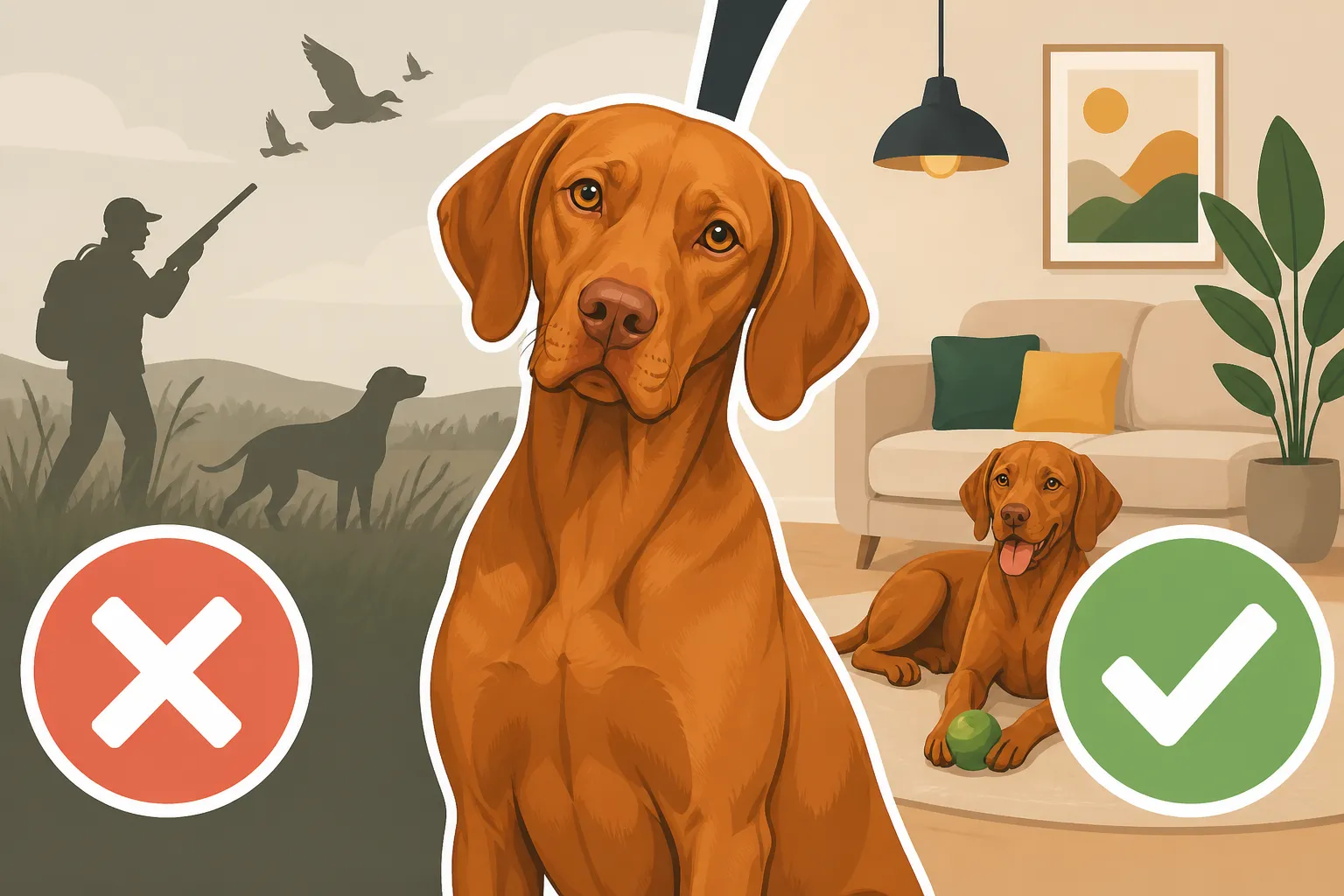
Whether a Vizsla Suits a Non Hunting Home
A Vizsla can be a loving companion in a non-hunting home, but affection alone does not make the breed an easy fit. The real question is whether your household can give this athletic, people-focused dog enough exercise, training, and company without relying on hunting to provide it. This guide explains what daily life can look like and how to judge whether it suits you.
Can a Vizsla Be Happy Without Hunting
Hunting is not the same as exercise
A Vizsla does not have to hunt to have a satisfying life. Many live happily as companions, runners, hiking partners, or participants in dog sports. But they were bred to work with people in the field, and that history still shows up in their energy, curiosity, and interest in moving through the world nose-first.
A long walk around the block may be pleasant, but it usually will not meet the needs of a healthy young Vizsla by itself. These dogs often need a mix of physical activity and mental work: a brisk walk, a training session, scent games, retrieving, or a safe opportunity to run. A fenced yard can help, but it is not a substitute for time spent doing something with you. Many Vizslas will simply follow their person back inside once the novelty of the yard wears off.
Think about a weekday, not just a lovely Saturday hike. If you work full time, who will exercise the dog before work and give them attention during the day? What happens when it rains, you are sick, or your schedule gets busy? A non-hunting home can work very well, but it needs a repeatable plan that does not depend on occasional big outings. For a closer look at what regular activity can involve, see The Exercise a Vizsla Needs Every Day and Whether a Vizsla Needs Mental Work Too.
A working instinct still needs an outlet
Not taking a Vizsla hunting does not switch off the instincts that make hunting rewarding. Some dogs will be drawn to birds, squirrels, rabbits, or scents on a trail. They may range ahead, stop to investigate, or struggle to respond when something exciting catches their attention. That behavior is not a sign of spite or a dog trying to dominate you; it is an instinct that needs patient training and sensible management.
A companion dog can get satisfying outlets through activities such as scent work, tracking games, retrieving, hiking on a long line, agility, or structured training. You do not need to turn your weekends into competitions. Even small routines—hiding treats around the home, practicing a recall in a quiet field, or asking the dog to find a toy—can add focus and purpose to an ordinary day.
Off-leash freedom should be earned rather than assumed. A dog that comes reliably in the garden may not come back when it spots a deer or a flock of birds. Build recall in low-distraction settings, use a long line where appropriate, and follow local leash rules. If you are wondering how to make free-running safer, Whether a Vizsla Is Safe Off Leash and Teaching a Vizsla to Check In cover the skills behind reliable outings.
What Everyday Life With a Non Hunting Vizsla Requires
Plan for exercise and mental engagement
A good routine is more varied than simply trying to tire the dog out. Repeatedly throwing a ball until a Vizsla is exhausted can create a very fit dog who still expects more activity, while high-speed, repetitive exercise may not be right for every dog. A balanced day might include a purposeful walk, time to sniff, a short training session, and a calmer activity at home. Adjust the amount and intensity to the individual dog’s age, health, and fitness.
Mental work can be surprisingly useful on days when a long outing is not possible. Try scattering part of a meal for the dog to find, practicing basic cues in short bursts, or setting up a simple search game with a favorite toy. Puzzle feeders and sniffing games can also occupy a dog, though they do not replace exercise or company. If you use food puzzles, choose one suited to your dog’s chewing habits and supervise until you know how they use it. Chewy may be one place owners look for food puzzles and other enrichment supplies, but the important part is choosing a safe, appropriate activity rather than buying a particular product.
It helps to think in terms of a weekly rhythm rather than a single daily target. Some days might include a longer hike or a training class; others may be made up of walks, play, and indoor scent games. A dog that has learned to relax is valuable, too. Teach settling on a mat after activity so that exercise does not turn into a constant cycle of increasing intensity. Whether a Vizsla Ever Lies Still explores why rest and the ability to settle matter alongside movement.
Make room for a dog that wants to be close
Vizslas are often strongly attached to their people. That closeness can be lovely: many are affectionate companions who want to share the sofa and follow family members from room to room. It can also be demanding if you picture a dog that is content to spend most of the day alone or outdoors. A dog can have exercise and toys and still find long stretches without company difficult.
Teach independence gradually. Begin with short, calm separations while the dog is settled, and build up at a pace that does not leave them panicking. A crate may help some dogs feel secure if introduced positively, but it is not a fix for distress or a way to make long absences manageable. If the dog is barking, pacing, drooling, trying to escape, or damaging doors and windows when alone, take those signs seriously and ask a veterinarian or qualified behavior professional for help. Teaching a Vizsla to Be Alone and Signs a Vizsla Is Suffering Alone offer more detail on this challenge.
Before bringing a Vizsla home, be honest about your normal workday and backup options. Could a trusted dog walker, family member, or suitable daycare help on longer days? Would the dog have a quiet place to rest when people are home but busy? Chewy is also a familiar option for some owners who order everyday pet supplies, which may make routine restocking more convenient; it does not, however, solve a dog’s need for human interaction or exercise.
Is Your Home and Lifestyle a Good Fit
Consider your schedule, space, and experience
A large rural property is not a requirement. A Vizsla can live in a smaller home if the people in it consistently provide activity, training, and companionship. Conversely, a big yard will not make the breed an easy match for a household with little time to engage with the dog. The more useful question is not “Do I have enough land?” but “Can I meet this dog’s needs on ordinary days?”
First-time owners can succeed, especially when they are willing to learn and seek help early. Still, a Vizsla’s energy and sensitivity can surprise people who expect an affectionate dog to be naturally easy. Many respond best to clear, kind training rather than harsh corrections. A young dog that jumps, mouths, pulls toward scents, or gets overexcited is not unusual, but those behaviors need consistent guidance. If you are still comparing breeds and households, Whether a Vizsla Suits a First Time Owner and What Vizsla Owners Wish They Had Known can help you think through the realities.
Household details matter, too. A family with children may be a good match if adults can supervise interactions, teach children respectful handling, and provide the dog with a place to rest undisturbed. Other pets require thoughtful introductions and management, especially if the Vizsla is keen to chase smaller animals. The individual dog’s temperament, early experiences, training, and environment all matter; breed tendencies are useful clues, not guarantees.
Match the dog to the life you can actually offer
A practical way to assess fit is to compare the needs of a Vizsla with the time and routines your household can reliably provide. Be candid about weak points. If your schedule changes frequently, for example, identify who will cover exercise and companionship before choosing a puppy. If you live in an apartment, plan outdoor activity and training rather than assuming that indoor space will be enough.
| Your household situation | What to consider | A more realistic fit when |
|---|---|---|
| You enjoy daily outdoor activity | The dog still needs training, sniffing, and downtime, not only mileage | You can make activity part of your regular routine |
| You work away from home | Long stretches alone may be difficult for a people-focused dog | You can arrange breaks, company, and gradual alone-time training |
| You have a yard | Outdoor space helps, but does not provide engagement on its own | You will still take the dog out and interact with them |
| You have young children | Excitement and close contact need adult supervision | Adults can supervise, teach safe handling, and protect the dog’s rest |
| You want a quiet, low-maintenance companion | A young Vizsla may be more active and involved than expected | You are open to daily training and an energetic routine |
| You do not hunt | Hunting is not essential, but working instincts remain | You can offer suitable alternatives such as scent work, retrieving, or hiking |
Use the table as a conversation starter, not a pass-or-fail test. A retired person who enjoys long walks and training may be a better fit than an active household where everyone is away most of the day. Likewise, a young Vizsla may need more structure than an adult dog whose energy and habits are already known. Meeting adult dogs and speaking with responsible breeders or rescue volunteers can help you picture the day-to-day reality.
If you decide a Vizsla fits, plan for the less glamorous parts as well as the fun ones: muddy paws, training setbacks, cold-weather walks, and days when the dog needs activity even though you would rather stay in. This short-coated breed can feel cold, so outdoor plans may also mean adding a warm layer during chilly weather. Chewy is one retail option people may use when looking for basic supplies such as a suitable coat, but check fit and comfort carefully, and remember that clothing cannot replace limiting exposure when conditions are unsuitable. For a wider view of what the breed expects from its people, read The Household a Vizsla Was Built For.
How to Decide Before Bringing One Home
Test the routine before you commit
Try living a week as though a Vizsla is already part of your household. Set aside morning and evening time for walks and training, even if the weather is poor. Add a short activity during the day if your schedule allows, and notice whether the routine feels sustainable or leaves you resentful and rushed. It is much better to discover that mismatch before a dog is relying on you.
If possible, spend time with adult Vizslas in more than one setting. See how they behave at home, on a walk, and around everyday distractions. A dog running happily through a field may look like the perfect match, but the more useful picture is what happens after the outing: can the dog relax, or does the household need to keep them busy all evening? Ask owners what they find difficult, not only what they love.
Consider fostering or adopting an adult dog if you want a clearer sense of the individual’s established temperament and activity level. That does not mean every adult dog is predictable or effortless; transitions can take time, and a rescue dog may need support settling into a new home. But adult dogs can offer information about size, habits, and energy that a puppy cannot yet show. Whether a Rescue Vizsla Settles in a Pet Home is a useful related read.
Choose alternatives thoughtfully
If you want a devoted, athletic companion and are ready to provide daily engagement, not hunting may be no barrier at all. Scent games, hiking, retrieving, running where appropriate, and classes can all give a Vizsla meaningful ways to use body and brain. The right mix depends on the dog, and exercise should be built up gradually, especially for a puppy or a dog returning to activity after a break.
If what you want is a dog that is content with a brief walk, can be left alone for most of the day, or rarely needs training and interaction, a Vizsla is more likely to frustrate you. That does not make the dog bad or your lifestyle wrong; it means the match may be unfair to both of you. Considering other breeds or an adult dog with a calmer known temperament can be a thoughtful choice.
The best non-hunting Vizsla home does not try to imitate a hunting household in every detail. It recognizes the dog’s energy, closeness, and instincts, then builds an everyday routine that gives those traits a safe and satisfying outlet. If you can offer that consistently—including on ordinary Tuesdays, not just adventurous weekends—a Vizsla can be a deeply rewarding companion.
Disclaimer
This article is for general informational purposes only and does not constitute professional advice. Laws, prices and regulations vary by location and change over time. Consult a qualified professional for guidance on your specific situation.