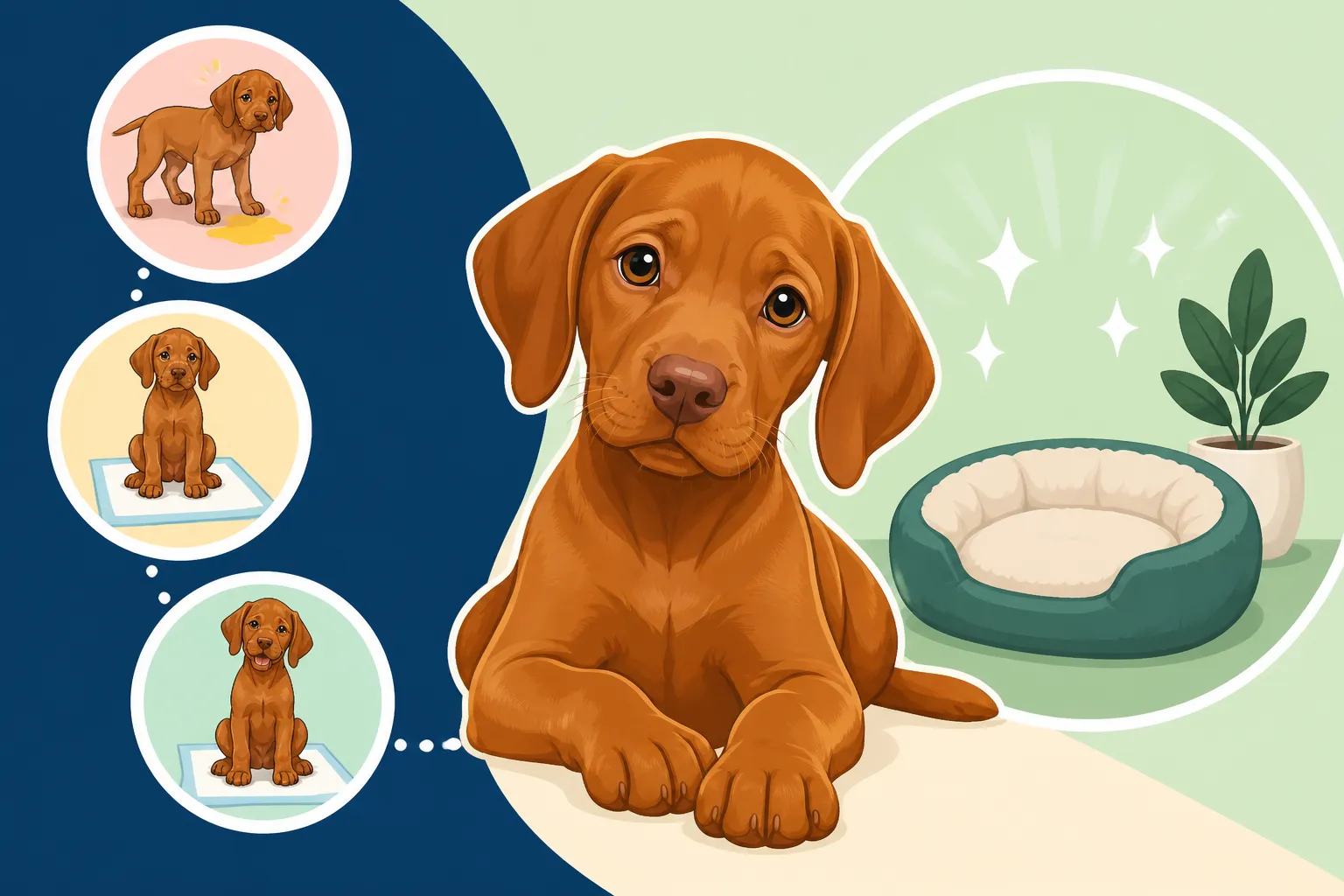
The Weeks a Vizsla Puppy Takes to Be Clean
Bringing a Vizsla puppy home is an exciting time, but many new owners quickly face the universal challenge of house training. It can feel like an endless cycle of accidents, dashed hopes, and wondering if your intelligent, energetic companion will ever truly "get it." This guide is here to walk you through the realistic timeline and effective strategies for house training your Vizsla puppy, helping you understand their unique traits and navigate the inevitable ups and downs on the path to a clean home.
Understanding the Vizsla Puppy's Learning Curve for House Training
House training isn't just about teaching a puppy where not to go; it's about establishing a consistent routine, teaching them to hold it, and giving them clear signals about the appropriate place to relieve themselves. For a Vizsla, with their characteristic intelligence and sometimes intense drive, this process can be both rewarding and, at times, frustratingly slow.
The Typical Timeline: What to Expect
Let's be realistic: there's no magic "aha!" moment where every Vizsla puppy suddenly becomes perfectly house trained overnight. While some prodigies might grasp it quickly, for most puppies, it's a gradual process that takes weeks, sometimes even months, of consistent effort. Typically, you can expect a Vizsla puppy to be reliably house trained between four to six months of age, but this is a broad average.
Some Vizslas, especially those with particularly high energy or a more easily distracted nature, might take a bit longer. Factors like the individual puppy's personality, your consistency, and even their physical development (bladder control improves with age) all play a significant role. It's common to see a solid week of no accidents, only for a few slip-ups to occur when you relax your vigilance. This isn't a failure on your part or theirs; it's just part of the learning journey. Expecting immediate perfection will only lead to stress, so settle in for a marathon, not a sprint. Remember that The First Year With a Vizsla Puppy is full of learning opportunities, and house training is just one of many important milestones.
Why Vizslas Might Be Different
Vizslas are a unique breed, and their temperament can influence house training in interesting ways. They are incredibly intelligent, which means they can quickly pick up on routines and associate certain actions (like going outside) with rewards. This works in your favor. If you're consistent, your Vizsla will likely understand the "rules" of house training fairly quickly.
However, their high energy and zest for life can sometimes be a double-edged sword. A Vizsla puppy might be so engrossed in exploring the great outdoors or playing with a toy that they forget their primary mission when they first step outside. You might take them out, they sniff around, play, and then come inside and immediately squat. This isn't defiance; it's often a combination of being easily distracted and still developing bladder control. Their "Velcro" nature, while sometimes a lot to handle, can actually be an asset. Because they want to be so close to you, you're more likely to notice their subtle cues that they need to go out, allowing you to intervene before an accident happens. Unlike some breeds that might be content to wander off and soil a hidden corner, many Vizslas prefer not to soil their immediate living space, which makes crate training particularly effective.
Essential Strategies for Successful Vizsla Potty Training
Successfully house training your Vizsla puppy hinges on a few core principles: consistency, positive reinforcement, and clear communication. Deviating from these can prolong the process and create confusion for your smart, sensitive companion.
The Power of a Consistent Schedule
Consistency is the absolute bedrock of house training, especially for a routine-loving Vizsla. Puppies thrive on predictability. You need a schedule for feeding, sleeping, playing, and, most importantly, potty breaks. Take your puppy out first thing in the morning, immediately after waking from naps, after every meal or drink, before and after play sessions, and right before bedtime. Even if they just went five minutes ago, if they've eaten, played, or woken up, take them out again.
The younger your puppy, the more frequently they'll need to go. A general rule of thumb is that a puppy can hold their bladder for about one hour per month of age, plus one. So, a two-month-old puppy might only be able to hold it for three hours. This means frequent trips outside are non-negotiable. Establish a specific spot in your yard for them to relieve themselves, and always take them to that spot. This helps them associate that location with doing their business. Also, consider The Meal Schedule a Vizsla Puppy Needs as feeding times directly impact potty times.
Crate Training as a House Training Ally
Crate training is arguably the most effective tool for house training a Vizsla, largely because it taps into their natural instinct not to soil their sleeping area. A crate should be just large enough for your puppy to stand up, turn around, and lie down comfortably. If it's too big, they might use one end as a bathroom and the other as a bed, defeating the purpose.
Introduce the crate as a positive, safe den. Feed meals in it, offer special chew toys (like a Kong stuffed with peanut butter) only inside the crate, and never use it for punishment. When your Vizsla is in their crate, they're learning to hold their bladder and bowels. This gives you peace of mind when you can't actively supervise them. For more details, explore Whether a Vizsla Puppy Should Be Crated at Night and Whether Crate Training Helps a Vizsla. It's a game-changer for many Vizsla owners trying to get their puppies clean quickly and effectively.
Positive Reinforcement and Clear Communication
This is where your Vizsla's desire to please truly shines! Every single time your puppy goes potty in the correct spot outside, throw a party! Use a happy, high-pitched voice, lavish praise, and offer a tiny, high-value treat immediately after they finish. The timing is crucial: the reward must come within seconds of the action to create a strong association. Also, use a consistent verbal cue like "Go potty" or "Do your business" right as they are squatting. Over time, this command can help them understand what you want them to do when you take them outside.
On the flip side, never punish your Vizsla for accidents inside the house. They don't understand punishment in the same way we do, and scolding them after the fact only teaches them to fear you or to hide their accidents, making the problem worse. If you catch them in the act, a sharp clap or "No!" might interrupt them, and then you immediately scoop them up and rush them outside to their designated spot. If they finish outside, praise and reward. If you find an accident after the fact, simply clean it up thoroughly with an enzymatic cleaner (like those found on Amazon) to eliminate the scent, and resolve to supervise more closely next time. Remember that Whether a Vizsla Is Too Soft for Pressure Training suggests that harsh handling can be detrimental to this sensitive breed. Focus on positive experiences.
Common Challenges and Troubleshooting for Vizsla Owners
Even with the best intentions and consistent effort, you're bound to hit some bumps in the road during your Vizsla's house training journey. It's important to remember that these are normal and can be overcome with patience and a willingness to reassess your approach.
When Accidents Keep Happening
If your Vizsla puppy seems to be having an excessive number of accidents despite your best efforts, it's time to troubleshoot. First, re-evaluate your schedule. Are you taking them out frequently enough? Are you mistaking play time outside for potty time? Many puppies need a separate "potty trip" from a "play trip." Take them out on a leash to their designated spot, stand still, and wait for them to go. Only when they've relieved themselves do they get to play or come back inside.
Secondly, rule out any medical issues. Urinary tract infections (UTIs) are common in puppies and can cause frequent accidents. A quick trip to the vet can rule this out. Thirdly, ensure you're cleaning up accidents properly. If the scent of urine remains, even imperceptibly to humans, it acts as a beacon for your puppy, telling them "this is a good place to go!" Enzymatic cleaners are specifically designed to break down and eliminate these odors. If your puppy is chewing things in the house, it might be a sign of boredom or anxiety, which can sometimes correlate with accidents, so address that by providing appropriate chew toys. Consider what What a Vizsla Chews Through as a Puppy might reveal about your puppy's habits.
Dealing with Submissive or Excitement Urination
Sometimes, what appears to be a house training failure is actually a completely different behavior: submissive urination or excitement urination. These often occur when a puppy is overly excited (e.g., when you come home), scared, or trying to show deference. You'll notice a small puddle, usually accompanied by crouching, tail tucking, or rolling over.
This isn't a deliberate "potty" accident, and punishing it will only make it worse, increasing their fear or anxiety. Instead, manage the situation. When you arrive home, ignore your puppy for the first few minutes until they calm down. Avoid overly exuberant greetings. Let them approach you on their terms. If they tend to pee when visitors arrive, ask guests to also ignore the puppy initially or greet them outside. Take your puppy out to potty before expecting them to meet new people or engage in exciting play. With maturity, most puppies grow out of this, but patience and a calm approach are key.
The Stubborn Phase and Regression
Just when you think you've got it all figured out, your Vizsla puppy might hit a "stubborn phase" or experience a period of regression. They might start having accidents inside again, despite having been clean for weeks. This can be incredibly disheartening, but it's often a normal part of development. Adolescence, changes in routine, or simply testing boundaries can all trigger these setbacks.
The best approach is to go back to basics. Re-establish your strict schedule, increase supervision, and be even more vigilant with crate time. Don't assume they've forgotten; simply reinforce the training you've already done. Remember, consistency, patience, and positive reinforcement will see you through. It’s also wise to keep training sessions short and engaging. Whether Short Sessions Suit a Vizsla confirms that this breed benefits from frequent, brief, and fun learning periods rather than long, drawn-out drills.
Tools and Resources to Help Your Vizsla Get Clean
Beyond consistent routines and positive reinforcement, there are several practical tools and resources that can significantly aid your Vizsla's house training journey. Leveraging these can make the process smoother and less stressful for both of you.
Puppy Pads: A Crutch or a Tool?
Puppy pads can be a contentious topic among dog trainers and owners. For some, they're a lifesaver, especially for apartment dwellers or when a puppy can't physically go outside every hour. They offer an acceptable indoor spot for a puppy to relieve themselves. For Vizslas, with their intelligence, puppy pads can be a tool to teach them where to go, even if it's indoors.
However, the biggest challenge with puppy pads is transitioning off them. You're essentially teaching your puppy that it's okay to potty inside, albeit on a specific surface. This can make the eventual transition to only going outside more difficult, as your puppy might not understand why the rules have suddenly changed. If you choose to use them, do so with a clear plan to gradually move them closer to the door and eventually outside. Never let a pad become a long-term solution, or you might find yourself with a six-month-old Vizsla who still thinks your living room rug is a giant puppy pad.
Beneficial Training Resources
In addition to physical tools, knowledge and support are invaluable. There are numerous online resources, books, and even professional trainers who specialize in puppy behavior. Investing in a good online puppy training course can provide structured guidance and address specific Vizsla traits. For instance, platforms like BAXTER & Bella offer comprehensive online puppy training programs that cover everything from house training to obedience, providing a step-by-step approach that many Vizsla owners find helpful. They understand that a Vizsla needs both mental engagement and clear communication.
Furthermore, make sure you have the right supplies on hand. A good quality crate (Amazon has a wide selection), enzymatic cleaners for inevitable accidents, and plenty of high-value training treats are non-negotiable. Consulting resources that discuss The Age a Vizsla Puppy Stops Mouthing or How Much a Vizsla Puppy Eats at Four Months can also provide a broader understanding of your puppy's developmental stages, which are all interconnected with their ability to learn and adhere to house training rules. Building a strong foundation early on, even before you bring your pup home, by understanding What a Vizsla Costs Before It Ever Hunts and preparing your environment can make a world of difference.
| Puppy Age | Typical Bladder Control (Approx.) | Key Potty Training Focus | Common Challenges |
|---|---|---|---|
| 8-12 Weeks | 2-3 hours | Frequent trips, crate introduction, designated spot. | Frequent accidents, short attention span. |
| 3-4 Months | 3-4 hours | Reinforce routine, increase holding time, ignore accidents. | Distraction outside, excitement urination. |
| 5-6 Months | 4-5 hours | Solidify reliability, consistency, prepare for longer holds. | Regression, "testing" boundaries, some medical issues. |
| 6 Months + | 6+ hours | Maintain consistency, trust with more freedom. | Adolescence, marking behaviors (intact males). |
The journey to a fully house-trained Vizsla puppy is a testament to your patience, consistency, and understanding of your unique dog. There will be good days and bad days, but with a structured approach, plenty of positive reinforcement, and realistic expectations, your energetic companion will soon be clean and reliable indoors. Celebrate every success, learn from every setback, and remember that this phase, while demanding, is temporary.
Disclaimer
This article is for general informational purposes only and does not constitute professional advice. Laws, prices and regulations vary by location and change over time. Consult a qualified professional for guidance on your specific situation.